
Sign up to save your podcasts
Or

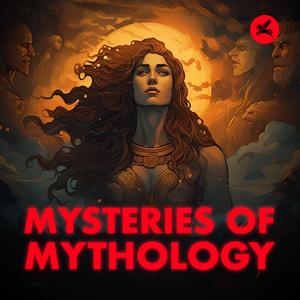


Baba Yaga is one of the most feared witches in Slavic folklore. But why does she help some travellers and try to eat others?Deep in the Russian forest, her mysterious house stands on chicken legs, surrounded by human bones. And the truth about her origins may be stranger than the stories themselves.Baba Yaga has haunted Russian fairy tales for centuries, but she's far more complicated than the wicked witch we recognise today. In some stories, she threatens to cook and eat children. In others, she gives heroes the magical objects, knowledge or help they need to survive. Through traditional tales including Vasilisa the Fair, Marya Morevna and The Frog Queen, we explore the contradictions behind this mysterious figure. Why does Baba Yaga travel in a mortar and pestle? What inspired her extraordinary house on chicken legs? And could she have originated as something other than a witch? Drawing on the Russian folktales collected by Alexander Afanasyev and the research of Vladimir Propp, Marija Gimbutas and Andreas Johns, we investigate the history, folklore and possible origins of Baba Yaga.
Hachishakusama is famous as Japan’s eight-foot-tall woman: a pale, towering figure who stalks young people and calls out with a strange “po… po… po…”But the supposed ancient legend appears to begin in 2008 — even though Japanese folklore already contained some remarkably similar giant women.Hachishakusama, or the “Eight-Shaku Woman”, is often treated as a traditional Japanese yōkai, yet her recorded history leads back to a single anonymous 2channel post from 26 August 2008. That makes her a modern internet legend — but perhaps not one created from nothing. Long before Hachishakusama appeared online, folklorist Kunio Yanagita recorded enormous women in Japanese mountain traditions, including figures around seven or eight shaku tall. Yamauba, or yamamba, could also be gigantic, dangerous and connected with remote places and children, while the Edo-period Taka-onna offers another striking image of an impossibly tall woman. Then, only months after Hachishakusama appeared, Slender Man emerged from another internet forum. The similarities raise a bigger question: when does an invented horror story become genuine folklore?
On the English-Scottish border, the Redcap was said to haunt ruined castles, outrun travellers and kill anyone unlucky enough to enter its home.But the blood-soaked hat, iron boots and strange link to Hermitage Castle may hide a more complicated history than the familiar monster story suggests.The Redcap, also called Redcomb or Bloody Cap, is one of the darker creatures of British and Scottish Border folklore. William Henderson described a small, powerful old man with eagle-like claws, enormous teeth, a pike and heavy iron boots, lurking in castles already associated with cruelty and bloodshed. But earlier traditions suggest “Redcap” may once have meant something broader: a class of spirits haunting ruined Scottish strongholds. From the violent world of the Border reivers and the lonely ruins of Hermitage Castle to William de Soulis and his supernatural servant Old Redcap Sly, the legend blurs history, folklore and later storytelling. And perhaps its strangest detail is not how the creature killed its victims, but what people believed could stop it.
Bram Stoker’s Dracula is often linked to Vlad the Impaler, but the evidence is far less certain than popular culture suggests.
Could an Irish revenant called Abhartach offer another clue to the origins of the world’s most famous vampire?
Dracula’s origins are more complicated than the familiar story of Vlad III of Wallachia inspiring Bram Stoker’s Count. Stoker certainly encountered the name “Dracula”, yet his surviving research notes reveal surprisingly little interest in Vlad the Impaler himself. That leaves room for other influences, including Gothic fiction, European vampire folklore and a disturbing Irish legend from County Derry. Abhartach was described by Patrick Weston Joyce as a tyrannical dwarf and magician who repeatedly returned from his grave until he was buried upside down. Later retellings transformed him into something even closer to a vampire, demanding blood from the living and becoming associated with the neamh-mairbh, or walking dead. Folklorist Bob Curran argued that Stoker might have encountered the tale through Ireland’s literary and folklore circles. But how much of that connection can actually be proved?
The Draugr wasn't just a Viking zombie. It remembered who you were, where it lived, and exactly who still owed it money. Discover the terrifying Norse undead from Icelandic sagas, where the dead returned with their grudges intact.
A Draugr was one of the most feared creatures in Norse folklore because it was never a mindless monster. Drawn from Icelandic sagas including Grettis Saga and Eyrbyggja Saga, this video explores the terrifying stories of Þórólfr Twist-Foot, Glámr, Grettir Ásmundarson and the monstrous bull Glæsir. Learn why Viking Age traditions feared the restless dead, how burial mounds, treasure, revenge and ancient funeral customs shaped beliefs about Draugar, and why fire became the final defence against them. Rather than simply telling ghost stories, these medieval Icelandic tales reveal a haunting idea: death did not always change a person's character. Sometimes the dead came back exactly as they were, only far stronger and far more dangerous.
Medusa wasn't always the snake-haired monster most people imagine. The oldest Greek myths tell a very different story.Was Medusa born a Gorgon, or did a Roman poet completely reshape one of mythology's most famous legends? The story of Medusa has changed more than almost any other figure in Greek mythology. This episode follows her journey from Hesiod's earliest account through Homer, Perseus, the Gorgons, Athena and Poseidon, before reaching Ovid's Metamorphoses, the version that shaped the modern world. Along the way you'll discover why ancient Gorgons looked nothing like today's image, why Medusa's head became a protective symbol, how Pegasus and Chrysaor were born, and why there was never just one "correct" version of the myth. If you've ever wondered whether Athena cursed Medusa, whether Ovid invented the famous transformation, or why the Greeks accepted multiple versions of the same story, this episode reveals how one of history's most recognisable myths evolved across nearly three thousand years.
Pazuzu was one of the most feared demons of ancient Mesopotamia—but people hung his image in their homes for protection.Why would the king of the evil wind demons become a guardian against even darker supernatural forces?
Pazuzu is one of the most recognisable figures from Mesopotamian mythology, largely because of The Exorcist. Yet the real story is far stranger than the horror films. In this video, we explore the origins of Pazuzu in ancient Assyria and Babylonia, his role as the king of the evil wind demons, and why his terrifying image appeared on protective amulets across the ancient Near East. You'll also meet Lamashtu, the child-stealing demon feared by pregnant women and families, and discover why people believed only Pazuzu could drive her away. Drawing on archaeology, ancient inscriptions and Mesopotamian beliefs, this episode separates Hollywood fiction from the mythology that inspired it.
Dionysus was far more than the Greek god of wine. Discover how theatre, mystery cults, rebirth, Bacchus in Rome, and one of Greece's oldest gods shaped ancient religion in ways that still fascinate today.
Dionysus is best known as the Greek god of wine, but his influence reached far beyond feasting and celebration. In this video, we explore how Dionysus became the patron of ancient Greek theatre, why the City Dionysia gave rise to the tragedies of Aeschylus, Sophocles, and Euripides, and how later traditions linked him with Zagreus, rebirth, and the hope of life beyond death. We also examine his journey into the Underworld to rescue Semele, his Roman identity as Bacchus, the Senate's famous crackdown on the Bacchanalia, and why modern historians question parts of Livy's dramatic account. Finally, we look at the Linear B evidence showing that Dionysus was already worshipped in Mycenaean Greece, revealing that the mysterious outsider may have been one of Greece's oldest gods all along.
Credits:
Shadows And Dust by Scott Buckley | www.scottbuckley.com.au
Music promoted by https://www.chosic.com/free-music/all/
Creative Commons CC BY 4.0
https://creativecommons.org/licenses/by/4.0/
For centuries, people across the world have reported seeing their own doubles. Known as doppelgängers, these mysterious figures appear in folklore, mythology, literature, paranormal accounts, and even modern neuroscience. In this video, we explore the famous case of Emilie Sagée, the spectral doubles of Norse and Celtic tradition, Abraham Lincoln’s strange mirror vision, Helen’s phantom double from Greek mythology, and the scientific explanations behind autoscopic hallucinations, mirrored self-misidentification, and the strange-face illusion. Are doppelgängers supernatural beings, fragments of the soul, warnings of death, or simply tricks of the brain?
The Tengu is one of Japan’s strangest mythological beings. From heavenly omens and bird-like demons to mountain guardians and samurai teachers, this yokai changed completely over more than a thousand years.Hidden behind the “Japanese Goblin” emoji is a creature tied to Buddhism, mountain ascetics, martial arts legends, and supernatural possession stories from medieval Japan.
From the ancient Nihon Shoki to the martial arts legends of Minamoto no Yoshitsune, the Tengu evolved into one of the most important creatures in Japanese folklore. This video explores the origins of the Tengu, its connection to the Chinese Tiangou, Buddhist demonology, yamabushi mountain monks, yokai traditions, and the famous long-nosed spirits linked to Mount Kurama and Mount Atago. Discover how these supernatural beings transformed from terrifying omens into protectors of sacred mountains and masters of hidden knowledge.
From the publisher's feed
44,989 Listeners
23,432 Listeners

111,791 Listeners

12,663 Listeners

99,697 Listeners

46,884 Listeners

15,585 Listeners

29,144 Listeners

1,421 Listeners
1,146 Listeners
344 Listeners

604 Listeners

52 Listeners

1,294 Listeners

5 Listeners