
Sign up to save your podcasts
Or

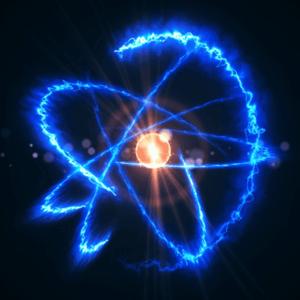

In this episode, we dive into one of the most mind-bending and philosophically challenging experiments in modern science: the Delayed-Choice Quantum Eraser.
We begin with a thought experiment proposed by physicist Maria Violaris in 2025, imagining a magazine whose text remains a blurry mix of overlapping possibilities until you focus on a paragraph, forcing the letters to settle into a single, definitive story.
We trace this paradox back to its roots: Thomas Young’s famous 1801 double-slit experiment, which proved light behaves like a wave, and the subsequent quantum realizations that tracking a particle's path destroys its wave-like behavior, collapsing it into a simple particle clump.
But what if you could cheat the system? We look at how legendary physicist John Wheeler pushed this boundary by asking what happens if we delay the choice to observe a particle until after it has already passed through the slits.
Finally, we break down Kim’s famous 1999 hardware setup, an optical maze of barium borate crystals, beam splitters, and a coincidence counter, to explore the ultimate quantum twist: how erasing the "memory" of a photon's path, long after it has finished its journey, miraculously forces its past reality to rewrite itself.
 View all episodes
 By TheTuringApp.Com

4.7
33 ratings
In this episode, we dive into one of the most mind-bending and philosophically challenging experiments in modern science: the Delayed-Choice Quantum Eraser.
We begin with a thought experiment proposed by physicist Maria Violaris in 2025, imagining a magazine whose text remains a blurry mix of overlapping possibilities until you focus on a paragraph, forcing the letters to settle into a single, definitive story.
We trace this paradox back to its roots: Thomas Young’s famous 1801 double-slit experiment, which proved light behaves like a wave, and the subsequent quantum realizations that tracking a particle's path destroys its wave-like behavior, collapsing it into a simple particle clump.
But what if you could cheat the system? We look at how legendary physicist John Wheeler pushed this boundary by asking what happens if we delay the choice to observe a particle until after it has already passed through the slits.
Finally, we break down Kim’s famous 1999 hardware setup, an optical maze of barium borate crystals, beam splitters, and a coincidence counter, to explore the ultimate quantum twist: how erasing the "memory" of a photon's path, long after it has finished its journey, miraculously forces its past reality to rewrite itself.

43,898 Listeners

26,984 Listeners

5,520 Listeners
321 Listeners

2,599 Listeners
4,170 Listeners
2,359 Listeners
1,645 Listeners

3,177 Listeners
381 Listeners

15,592 Listeners

3,336 Listeners

2,040 Listeners

1,183 Listeners
572 Listeners