
Sign up to save your podcasts
Or

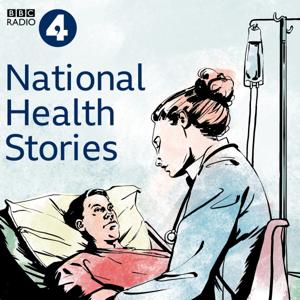


In a series tracing decisive moments in the life of our National Health Service, medical historian Sally Sheard explores how the contraceptive pill forced the NHS to acknowledge all women's healthcare needs, sexual health included.
When the NHS began, sexual health was frowned upon. It was left to local authorities to deal with and many turned a blind eye. While family planning clinics existed, like those run by the charitable Family Planning Association, they were few and far between.
Dr Shirley Nathan, who was a young GP in the 1950s, and also worked for the Family Planning Association, recalls the dual revolution that the contraceptive pill brought about.
Not only did it promise freedom for women, it also set in motion a completely new way of thinking within the health service. All of a sudden, the NHS had to acknowledge all women's healthcare needs; sexual health included.
Producer: Beth Eastwood.
In a series tracing decisive moments in the life of our National Health Service, medical historian Sally Sheard tells the story of how the modern hospitals built in the early decades of the NHS transformed not only the lives of staff, who worked and often lived in hospitals, but the experiences of patients too.
When Health Minister, Enoch Powell's, ambitious 'Hospital Plan' launched in 1962, it wasn't a moment too soon. Its aim was to replace the crumbling Victorian buildings with state-of-the-art efficient designs, fit for the purposes of modern medicine.
New treatments, like chemotherapy and dialysis, were changing how patients were being treated. They involved new machines and equipment, and new medical teams, all of which needed space.
While the new space was welcome, the new hospital designs also transformed the relationships of the staff and patients within them.
Producer: Beth Eastwood.
In a series tracing decisive moments in the life of our National Health Service, medical historian Sally Sheard explores how the life-saving invention of the 'artificial kidney' machine in the 1960s came at a cost, bringing moral dilemmas in its wake, for doctors and society as a whole.
As demand for new treatments and devices rose, especially for costly ones like kidney dialysis, doctors were faced with increasingly difficult choices - which patients should they treat?
Producer: Beth Eastwood.
In a series tracing decisive moments in the life of our National Health Service, medical historian Sally Sheard reveals how the early years of the NHS gave doctors the opportunity and freedom to innovate, like John Charnley who invented the first effective artificial hip.
With the advent of antibiotics and better anaesthetics, patients now had shorter hospital stays. This left doctors with time on their hands.
Now they could turn their minds to the intractable health problems that plagued their patients. At Wrightington Hospital, near Wigan, patients were in dire need of a remedy for their painful arthritic hips. So Orthopaedic Surgeon, John Charnley, set to work to solve the problem.
Producer: Beth Eastwood
Archive clips of Harry Craven, Hugh Howorth & Maureen Abraham: courtesy of the John Charnley Trust.
In a series tracing decisive moments in the life of our National Health Service, medical historian Sally Sheard tells the story of a mysterious epidemic in the 1950s which forced the NHS to acknowledge its responsibility to not just treat disease, but prevent it too.
When lung cancer, a new deadly disease, began to grip the nation, the NHS was focused on treatment, not prevention.
This was a disease that doctors couldn't treat. The suggestion that something you could prevent - cigarette smoking - might be causing it, signalled a radically new way of thinking about the role of the health service.
While researchers were arguing the case for prevention, by not smoking, the Treasury was worried about the impact this would have on tobacco revenues, on which the NHS depended.
The government's top doctors had to use devious tactics to get the facts to the public.
Producer: Beth Eastwood.
In a series tracing decisive moments in the life of our National Health Service, medical historian Sally Sheard charts the highs and lows following the launch of the NHS on 5 July 1948.
A world first achievement - Britain now provided free healthcare for all, paid for by general taxation.
The public were delighted. Waiting rooms overflowed with patients seeking free treatment for illnesses they'd previously had to live with. There was a rush on spectacles, hearing aids and false teeth.
As demand soared, the bills mounted. A solution had to be found to cope with the spiralling debt, one which would challenge the philosophy upon which Bevan's health service had been created.
Producer: Beth Eastwood.
In a series tracing decisive moments in the life of our National Health Service, medical historian Sally Sheard tells the story of Aneurin Bevan's fight to convince the doctors to sign up to his new health service - the very people he'd need to run it.
Bevan's passionate proposal of his plan in Parliament wasn't quite what the doctors had in mind. Not only did he want to nationalise all hospitals, he also wanted to choose where doctors worked and how much they were paid.
The question was, how did Bevan persuade them to give up their highly valued freedom?
Producer: Beth Eastwood.
In a series tracing decisive moments in the life of our National Health Service, medical historian Sally Sheard tells the story of how emergency medical provision during the Second World War gave the British public a taste of what a national health system might look like.
As the Second World War loomed, it was clear that Britain's crumbling health service would be unable to cope with the expected casualties.
There was also a growing fear that overcrowded hostels and air raid shelters would trigger epidemics of diseases like diphtheria.
So the government was galvanised into action. They brought Britain's patchwork of hospitals into one integrated Emergency Medical Service and introduced mass immunisation for children.
Producer: Beth Eastwood.
In a series tracing decisive moments in the life of our National Health Service, medical historian Sally Sheard tells the story of some enterprising individuals who took matters into their own hands to improve health in their own communities.
While the Peckham Experiment revealed the value of preventing illness in South London, the Tredegar Medical Aid Society provided miners and their families with free healthcare in their Welsh mining town.
Having grown up in Tredegar, Health Minister, Aneurin Bevan, began to envisage a far more ambitious scheme to meet the health needs of the whole nation.
He later took that vision from the Welsh coalmines to Westminster.
Producer: Beth Eastwood.
In a series tracing decisive moments in the life of our National Health Service, medical historian Sally Sheard begins by going back to the 1930s to reveal what life was like before the National Health Service began.
Back then, the, nation's health was in a desperate state and there was no such thing as a health service.
Many hospitals were on the brink of collapse. Access to care was determined by your ability to pay and treatments were basic. Surgery, for example, was often performed on the kitchen table.
The health of the nation was so poor that it was common for adults to have all their teeth extracted.
Producer: Beth Eastwood
Music credit: composed & played, and 'Now is the Hour' arranged & played, by Andy Skinnard.
From the publisher's feed
On 5 July 1948, for the first time anywhere in the world, healthcare in Britain became free for all. Sally Sheard reveals the characters, innovations and heroic standoffs that have shaped the…

7,594 Listeners

1,044 Listeners

5,493 Listeners

1,795 Listeners

1,826 Listeners

1,040 Listeners

1,969 Listeners

4,188 Listeners

3,211 Listeners

717 Listeners