
Sign up to save your podcasts
Or

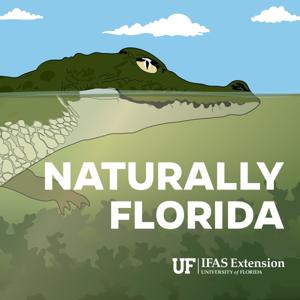


The state of Florida is famous for its sunshine, beaches, and summertime fun. However, as Floridians, we know that summer also means thunderstorms, and thunder doesn’t happen without lightning.
In this episode, we will explore the basic science of lightning and thunder, and how you can keep yourself safe this summer. We hope this brief introduction to thunderstorms in Florida will help you feel more informed and prepared for our summer rainy season.
If you enjoyed this episode, please consider sharing it with a friend who might enjoy learning about Florida's natural areas and the wild things that live here!
Thunderstorm sound clips licensed from Bidgee, CC BY-SA 3.0 AU, via Wikimedia Commons
In our last episode, we discussed how rodenticides, also known as rat poisons, can have a negative impact on our birds of prey. Today, we’ll be talking about Florida’s five resident owl species and how to identify them by the calls they make. These owls are valuable predators in our local ecosystems, both rural and urban, and can be easily identified with just a little practice.
If you enjoyed this episode, please consider sharing it with a friend who might enjoy learning about Florida's natural areas and the wild things that live here!
Nobody likes pests, hence why pesticides were invented. Rodenticides are a specific type of pesticide used to control rats and mice, but they can have impacts throughout the food chain if not used correctly. In this episode, we will explore the science behind rodenticides, the impact of rodenticides, and of course, best management practices when it comes to controlling rodents in our yards and neighborhoods.
If you enjoyed this episode, please consider sharing it with a friend who might enjoy learning about Florida's natural areas and the wild things that live here!
If you're active on iNaturalist, consider joining our iNaturalist project, Naturally Florida's Listener Observations, here: https://www.inaturalist.org/projects/naturally-florida-s-listener-observations
Plastic pollution has been a known problem for decades, but more recently researchers have been focusing on this idea of microplastics, that is plastic particles about 5mm in size or smaller. Where do microplastics come from? What are the threats? And what can we do? Find out in this episode.
If you enjoyed this episode, please consider sharing it with a friend who might enjoy learning about Florida's natural areas and the wild things that live here!
If you're active on iNaturalist, consider joining our iNaturalist project, Naturally Florida's Listener Observations, here: https://www.inaturalist.org/projects/naturally-florida-s-listener-observations
Cane toads are well known for posing a threat to our pets. They are one of many invasive animal species we have here in Florida. In this episode you will learn all about this invasive toad species, how it became established in Florida, impacts of its presence, and ways you can help.
If you enjoyed this episode, please consider sharing it with a friend who might enjoy learning about Florida's natural areas and the wild things that live here!
If you're active on iNaturalist, consider joining our iNaturalist project, Naturally Florida's Listener Observations, here: https://www.inaturalist.org/projects/naturally-florida-s-listener-observations
Coyotes have been in Florida since the 1970s but still feel like a relatively new species for many. In this episode, Shannon and Lara explore the latest research, facts, findings, and realities of living with coyotes.
If you enjoyed this episode, please consider sharing it with a friend who might enjoy learning about Florida's natural areas and the wild things that live here!
If you're active on iNaturalist, consider joining our iNaturalist project, Naturally Florida's Listener Observations, here: https://www.inaturalist.org/projects/naturally-florida-s-listener-observations
The University of Florida's Institute of Food and Agricultural Sciences (UF/IFAS) is a federal-state-county partnership dedicated to developing knowledge in agriculture, human and natural resources, and the life sciences. Join Lara and Shannon as they interview Dr. J. Scott Angle, UF Senior Vice President for Agriculture and Natural Resources and leader of UF/IFAS.
If you enjoyed this episode, please consider sharing it with a friend who might enjoy learning about Florida's natural areas and the wild things that live here!
Florida is a hotspot for nonnative and invasive species, but there hasn't been a consistent way to talk about these species until now. In this episode, we explore the various words biologists, park rangers, the public, and news media use to describe nonnative and invasive species. We will define and explain invasive species vocabulary and clarify what these words mean.
Learn more:
If you enjoyed this episode, please consider sharing it with a friend who might enjoy learning about Florida's natural areas and the wild things that live here!
If you're active on iNaturalist, consider joining our iNaturalist project, Naturally Florida's Listener Observations, here: https://www.inaturalist.org/projects/naturally-florida-s-listener-observations
Florida is known for being hot in the summer, but Florida cities are even hotter. Energy from the sun gets absorbed by buildings and paved areas (like roads) which makes the whole urban area significantly hotter than natural areas. This is a phenomenon known as an urban heat island. Today we are going to explore urban heat islands and their associated impacts on our natural world.
If you enjoyed this episode, please consider sharing it with a friend who might enjoy learning about Florida's natural areas and the wild things that live here!
American white pelicans are one of the largest birds in North America with wingspans up to 9.5 feet across. These majestic birds migrate to Florida for winter feeding grounds, before retreating north and west for the breeding season. Floridians may see these snowy white cousins of the year-round resident brown pelican, feeding in shallow water or soaring across the sky in silent flying V’s.
Read more about why, here: https://edis.ifas.ufl.edu/publication/UW193
American White Pelicans are very shy, compared to other water birds. Harassment of their flocks may lead them to abandon a feeding area, increasing their risk of exhaustion or starvation during their migration. So, consider avoiding flocks you may encounter on our beautiful waterways, give them a wide berth.
American white pelicans and other migratory waterbirds in Florida, such as ducks, depend on healthy aquatic ecosystems with ample vegetation, prey items, and good water quality.
If you enjoyed this episode, please consider sharing it with a friend who might enjoy learning about Florida's natural areas and the wild things that live here!
If you're active on iNaturalist, consider joining our iNaturalist project, Naturally Florida's Listener Observations, here: https://www.inaturalist.org/projects/naturally-florida-s-listener-observations
From the publisher's feed
38,717 Listeners
26,151 Listeners

8,731 Listeners

4,065 Listeners

4,028 Listeners
10,731 Listeners

6,431 Listeners
566 Listeners

24,539 Listeners
3,415 Listeners
5,079 Listeners
124 Listeners
15 Listeners

2,165 Listeners
29 Listeners