
Sign up to save your podcasts
Or

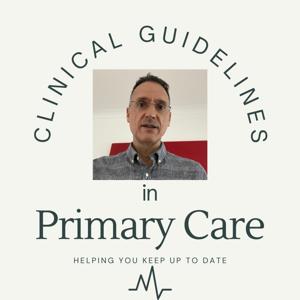

My name is Fernando Florido and I am a GP in the United Kingdom. In today’s episode I go through the NICE guidelines “Attention deficit hyperactivity disorder: diagnosis and management” or NICE guideline NG87, Published in March 2018 and last updated in September 2019.
I am not giving medical advice; this video is intended for health care professionals; it is only my interpretation of the guidelines and you must use your clinical judgement.
There is a YouTube version of this and other videos that you can access here:
· The NICE GP YouTube Channel: NICE GP - YouTube
The full NICE guidance can be found here:
· NICE Guideline NG87: https://www.nice.org.uk/guidance/ng87
· ADHD NICE CKS: https://cks.nice.org.uk/topics/attention-deficit-hyperactivity-disorder/
You can download my summaries here:
· Summary of NICE guideline NG87: https://1drv.ms/b/s!AiVFJ_Uoigq0mAekn-9SQlZAl5kD?e=WYqHT7
· Additional Clinical ADHD information: https://1drv.ms/b/s!AiVFJ_Uoigq0mAhXL3J6CRjq5QoD?e=P8cL7K
Intro / outro music: Track: Halfway Through — Broke In Summer [Audio Library Release]
Music provided by Audio Library Plus
Watch: https://youtu.be/aBGk6aJM3IU
Free Download / Stream: https://alplus.io/halfway-through
Transcript
Hello everyone and welcome. My name is Fernando Florido and I am a GP in the United Kingdom.
In today’s episode I go through the NICE guidelines on ADHD from a primary care perspective. Make sure that you stay for the whole episode because at the end, I am going to give you additional information on the condition including possible causes, pathophysiology, prognosis and the biochemical reasons why pharmacological treatment is so beneficial in ADHD.
By the way, I am not giving medical advice; this is for health care professionals and it is only my interpretation of the guidelines so you must use your own clinical judgement.
If you want to download a copy of my summaries of the NICE guidelines or the additional clinical information, the links are in the episode description.
Remember that there is also a Youtube version of these episodes so have a look in the episode description.
Right, so let’s get straight into it.
The guideline covers the recognition, diagnosis and management of ADHD both in children and adults. It is aimed at doctors who specialise in ADHD but I have summarised it focusing on what we need to know in Primary care.
We should be aware that there is an increased prevalence of ADHD in people:
· with any mental health condition or conduct disorder
· with epilepsy or neurodevelopmental disorders
· with a FH of ADHD
· who are born preterm or have an acquired brain injury
· who are looked-after or are known to the Justice System
But we also need to remember that ADHD is under-recognised in females.
If a child has symptoms suggestive of ADHD, NICE says that we should refer to secondary care if the symptoms are severe or persist after a period of watchful waiting of up to 10 weeks with group-based ADHD-focused support. This support can be offered without waiting for a formal diagnosis.
In adults suspected of ADHD we should refer them if they have a childhood diagnosis of ADHD or without a childhood diagnosis if the symptoms are moderate or severe and cannot be explained by other psychiatric diagnoses
But a diagnosis of ADHD:
· Should be made by a specialist.
· Should not be made solely based on a rating scale.
· In children, we should assess their parents' or carers' mental health.
We should offer information about the importance of structure in daily activities and how ADHD could affect their life including relationships and driving because the diagnosis must be declared to the DVLA if it affects safe driving.
And we should involve, with consent, other healthcare professionals and educational centres so that reasonable adjustments and environmental modifications can be implemented. ADHD is considered a disability and there are legal obligations on employers and education providers to make sure patients are not substantially disadvantaged in their jobs or education.
Although the management of ADHD is going to be decided by the specialist team, I am going to give a brief outline of what we can expect in Primary Care:
· In Patients under 17 years of age, the first line treatment is an ADHD-focused group parent-training programme, followed by medication and CBT if there is significant impairment. Medication should not be offered to children under 5 without a second specialist opinion, preferably from tertiary care.
· In Adults, CBT and medication should be offered for symptoms that persist after environmental modifications.
· Examples of environmental modifications may include changes to seating arrangements, changes to lighting and noise, reducing distractions (for example, using headphones), shorter periods of focus with movement breaks, reinforcing verbal requests with written instructions and, for children, the appropriate use of teaching assistants at school.
In terms of diet, we should not advise elimination of artificial colouring and additives but if there are foods or drinks that appear to influence hyperactive behaviour:
· They should keep a food diary
· We will refer to a dietitian if the diary supports a link
· Any specific dietary elimination should have specialist input.
We will not advise dietary fatty acid supplementation and we will explain that there is no long-term evidence about a 'few food' diet for children.
Before starting medication, a full health assessment should be performed, including:
· Height and weight
· Pulse and blood pressure
· A cardiovascular assessment: However, an ECG is not needed before starting stimulants, atomoxetine or guanfacine, if cardiovascular history and examination are normal and the person is not on medicines that increase cardiovascular risk
A cardiology opinion should be sought before starting medication if there are cardiac concerns of a high BP
A paediatric hypertension specialist should be involved if the BP is above the 95th centile.
The recommended medication choices are as follows:
· For Patients aged 5 to 17 years of age
o Methylphenidate first line
o then lisdexamfetamine if methylphenidate ineffective.
o then dexamfetamine if responding to but not tolerating lisdexamfetamine.
o Atomoxetine or guanfacine only if previous choices have not been effective or tolerated
· For Adults
o We can give Either lisdexamfetamine or methylphenidate first-line
o Then switch between them if the first choice is ineffective
o then dexamfetamine if responding to but not tolerating lisdexamfetamine and
o Atomoxetine is an option if previous choices are not effective or tolerated
· Unless advised by a tertiary service, the following should not be given:
o guanfacine for adults
o clonidine for children
o atypical antipsychotics in addition to stimulants
o medication not included in the recommendations
Some considerations when prescribing ADHD medication are:
· modified-release once-daily preparations are generally preferred
· Immediate-release preparations offer more flexible dosing during initial titration to determine correct dosing levels but there is more risk of stimulant misuse and diversion
· A modified-release preparation of methylphenidate in the morning can be used with an immediate-release preparation at another time of the day to extend the duration of effect.
· We should be aware of the risk of diversion for cognitive enhancement or appetite suppression.
· After dose stabilisation, prescribing and monitoring of ADHD medication should be carried out under Shared Care Protocol with primary care.
In terms of general monitoring, apart from monitoring the effectiveness of the medication on ADHD symptoms we should monitor other aspects such as:
· Height and weight, measuring every 3 to 6 months depending on the patient’s age and we will seek advice if there are clinical concerns
· Heart rate and blood pressure should be checked before and after each dose change and every 6 months.
· We will not offer routine blood tests or ECGs unless clinically indicated.
· Dose adjustments and referral may be necessary if there are cardiovascular concerns
If a person taking stimulants develops tics, we should think about whether:
· the tics are related to the stimulant (tics naturally wax and wane) and whether
· the tics outweighs the benefits of ADHD treatment.
· If tics are stimulant related, the treatment should be reviewed.
Other possible side effects include:
· Erectile and ejaculatory dysfunction with atomoxetine.
· New or worsening seizures: In this case we will stop any medication that might be contributing to the seizures, cautiously reintroducing it if appropriate
· Disturbance of sleep and behaviour: which may require dose adjustment.
In terms of supporting adherence to treatment
There is a whole section on this, reminding us to be aware that adherence may be an issue precisely because of the nature of the patients’ ADHD symptoms.
And finally,
· ADHD specialists should review medication at least once a year
· trials of stopping medication or reducing the dose when appropriate should be considered.
Right, so this is the end of the actual guideline. However, when I read it, I missed a bit more of general clinical information on ADHD and, as promised, let’s cover these areas now:
And let’s remind ourselves that Attention Deficit-Hyperactivity Disorder is a psychiatric condition that has three subtypes:
Inattentive symptoms include: lack of attention, lack of concentration, difficulty completing tasks, being forgetful, losing things, etc. Hyperactive symptoms include: fidgeting, leaving their seat, being loud, talking excessively or out of turn, having trouble waiting their turn, etc.
In adults, however, some of the core symptoms may be missing, and they may manifest as other problems such as procrastination, mood instability, and low self-esteem. They will likely be more impulsive or inattentive, as the hyperactivity symptoms can be better controlled.
Different scales are used to measure the symptoms, which can be used in adults to help identify the disorder. However ADHD is a clinical diagnosis and does not have any specific laboratory or radiologic tests. The neuropsychological tests are not always appropriate, and hence it should be diagnosed based upon the history of the patient.
The aetiology of ADHD includes both a genetic and an environmental component. It is one of the most heritable conditions in terms of psychiatric disorders. Siblings have twice the risk of having ADHD than the general population. Similarly, viral infections, smoking and alcohol during pregnancy and nutritional deficiencies in the foetus have also been explored as possible causes of the disorder.
ADHD is generally found in a 2:1 male to female ratio but it is thought that it is under-recognised in females. It has also been found that the inattentive subtype is more common amongst the female population.
From a pathophysiological perspective, ADHD is associated with deficits that relate to frontal lobe activity. Therefore, these patients show disability not only in attention and focus but also in decision making and emotional regulation. There is evidence for the role of dopamine and noradrenaline receptors and pharmacotherapy is directed onto them.
Pharmacological therapy is divided into two major categories, stimulants and non-stimulants. Stimulants are further broken into amphetamines and methylphenidates. Both types of stimulants block the reuptake of dopamine. Amphetamines also directly release dopamine. Stimulants are the mainstay of treatment for ADHD and they are effective in about 70% of patients. Side effects of stimulants include changes in blood pressure, decreasing appetite and sleep, and risk of dependency.
Of the non-stimulant option, there are also two types: antidepressants and alpha agonists. Within the antidepressant category, atomoxetine is the best known and works as a selective norepinephrine reuptake inhibitor. It is not nearly as effective as stimulants and it has minimal antidepressant effects. It is often used in children who don't tolerate stimulants or have anxiety. Other antidepressants not endorsed by NICE include bupropion, which targets dopamine and serotonin, and as the last choice, TCAs, which work by targeting norepinephrine.
Finally, alpha agonists such as clonidine and guanfacine can be used but are associated with multiple cardiovascular effects like lowering blood pressure, sedation, weight gain, dizziness, etc. They are found to be more effective in younger children than adults.
Trigeminal nerve stimulation has recently been shown to be helpful for children not on medications. The device generates a low-level electrical pulse which seems to suppress hyperactivity.
In terms of prognosis, the general rule of thumb is that 50% of patients will "grow out of" ADHD, especially with treatment, and another 25% do not need treatment into adulthood. The theory is, first, that stimulants help improve the development of the frontal lobe over time, and second, that adults often choose careers that don't require sustained attention so these patients can achieve their vocational goals.
But remember that this is only a summary and my interpretation of the guidelines.
We have come to the end of this episode. I hope that you have found it useful. Thank you for listening and good-bye
 View all episodes
 By Juan Fernando Florido Santana

4
22 ratings
My name is Fernando Florido and I am a GP in the United Kingdom. In today’s episode I go through the NICE guidelines “Attention deficit hyperactivity disorder: diagnosis and management” or NICE guideline NG87, Published in March 2018 and last updated in September 2019.
I am not giving medical advice; this video is intended for health care professionals; it is only my interpretation of the guidelines and you must use your clinical judgement.
There is a YouTube version of this and other videos that you can access here:
· The NICE GP YouTube Channel: NICE GP - YouTube
The full NICE guidance can be found here:
· NICE Guideline NG87: https://www.nice.org.uk/guidance/ng87
· ADHD NICE CKS: https://cks.nice.org.uk/topics/attention-deficit-hyperactivity-disorder/
You can download my summaries here:
· Summary of NICE guideline NG87: https://1drv.ms/b/s!AiVFJ_Uoigq0mAekn-9SQlZAl5kD?e=WYqHT7
· Additional Clinical ADHD information: https://1drv.ms/b/s!AiVFJ_Uoigq0mAhXL3J6CRjq5QoD?e=P8cL7K
Intro / outro music: Track: Halfway Through — Broke In Summer [Audio Library Release]
Music provided by Audio Library Plus
Watch: https://youtu.be/aBGk6aJM3IU
Free Download / Stream: https://alplus.io/halfway-through
Transcript
Hello everyone and welcome. My name is Fernando Florido and I am a GP in the United Kingdom.
In today’s episode I go through the NICE guidelines on ADHD from a primary care perspective. Make sure that you stay for the whole episode because at the end, I am going to give you additional information on the condition including possible causes, pathophysiology, prognosis and the biochemical reasons why pharmacological treatment is so beneficial in ADHD.
By the way, I am not giving medical advice; this is for health care professionals and it is only my interpretation of the guidelines so you must use your own clinical judgement.
If you want to download a copy of my summaries of the NICE guidelines or the additional clinical information, the links are in the episode description.
Remember that there is also a Youtube version of these episodes so have a look in the episode description.
Right, so let’s get straight into it.
The guideline covers the recognition, diagnosis and management of ADHD both in children and adults. It is aimed at doctors who specialise in ADHD but I have summarised it focusing on what we need to know in Primary care.
We should be aware that there is an increased prevalence of ADHD in people:
· with any mental health condition or conduct disorder
· with epilepsy or neurodevelopmental disorders
· with a FH of ADHD
· who are born preterm or have an acquired brain injury
· who are looked-after or are known to the Justice System
But we also need to remember that ADHD is under-recognised in females.
If a child has symptoms suggestive of ADHD, NICE says that we should refer to secondary care if the symptoms are severe or persist after a period of watchful waiting of up to 10 weeks with group-based ADHD-focused support. This support can be offered without waiting for a formal diagnosis.
In adults suspected of ADHD we should refer them if they have a childhood diagnosis of ADHD or without a childhood diagnosis if the symptoms are moderate or severe and cannot be explained by other psychiatric diagnoses
But a diagnosis of ADHD:
· Should be made by a specialist.
· Should not be made solely based on a rating scale.
· In children, we should assess their parents' or carers' mental health.
We should offer information about the importance of structure in daily activities and how ADHD could affect their life including relationships and driving because the diagnosis must be declared to the DVLA if it affects safe driving.
And we should involve, with consent, other healthcare professionals and educational centres so that reasonable adjustments and environmental modifications can be implemented. ADHD is considered a disability and there are legal obligations on employers and education providers to make sure patients are not substantially disadvantaged in their jobs or education.
Although the management of ADHD is going to be decided by the specialist team, I am going to give a brief outline of what we can expect in Primary Care:
· In Patients under 17 years of age, the first line treatment is an ADHD-focused group parent-training programme, followed by medication and CBT if there is significant impairment. Medication should not be offered to children under 5 without a second specialist opinion, preferably from tertiary care.
· In Adults, CBT and medication should be offered for symptoms that persist after environmental modifications.
· Examples of environmental modifications may include changes to seating arrangements, changes to lighting and noise, reducing distractions (for example, using headphones), shorter periods of focus with movement breaks, reinforcing verbal requests with written instructions and, for children, the appropriate use of teaching assistants at school.
In terms of diet, we should not advise elimination of artificial colouring and additives but if there are foods or drinks that appear to influence hyperactive behaviour:
· They should keep a food diary
· We will refer to a dietitian if the diary supports a link
· Any specific dietary elimination should have specialist input.
We will not advise dietary fatty acid supplementation and we will explain that there is no long-term evidence about a 'few food' diet for children.
Before starting medication, a full health assessment should be performed, including:
· Height and weight
· Pulse and blood pressure
· A cardiovascular assessment: However, an ECG is not needed before starting stimulants, atomoxetine or guanfacine, if cardiovascular history and examination are normal and the person is not on medicines that increase cardiovascular risk
A cardiology opinion should be sought before starting medication if there are cardiac concerns of a high BP
A paediatric hypertension specialist should be involved if the BP is above the 95th centile.
The recommended medication choices are as follows:
· For Patients aged 5 to 17 years of age
o Methylphenidate first line
o then lisdexamfetamine if methylphenidate ineffective.
o then dexamfetamine if responding to but not tolerating lisdexamfetamine.
o Atomoxetine or guanfacine only if previous choices have not been effective or tolerated
· For Adults
o We can give Either lisdexamfetamine or methylphenidate first-line
o Then switch between them if the first choice is ineffective
o then dexamfetamine if responding to but not tolerating lisdexamfetamine and
o Atomoxetine is an option if previous choices are not effective or tolerated
· Unless advised by a tertiary service, the following should not be given:
o guanfacine for adults
o clonidine for children
o atypical antipsychotics in addition to stimulants
o medication not included in the recommendations
Some considerations when prescribing ADHD medication are:
· modified-release once-daily preparations are generally preferred
· Immediate-release preparations offer more flexible dosing during initial titration to determine correct dosing levels but there is more risk of stimulant misuse and diversion
· A modified-release preparation of methylphenidate in the morning can be used with an immediate-release preparation at another time of the day to extend the duration of effect.
· We should be aware of the risk of diversion for cognitive enhancement or appetite suppression.
· After dose stabilisation, prescribing and monitoring of ADHD medication should be carried out under Shared Care Protocol with primary care.
In terms of general monitoring, apart from monitoring the effectiveness of the medication on ADHD symptoms we should monitor other aspects such as:
· Height and weight, measuring every 3 to 6 months depending on the patient’s age and we will seek advice if there are clinical concerns
· Heart rate and blood pressure should be checked before and after each dose change and every 6 months.
· We will not offer routine blood tests or ECGs unless clinically indicated.
· Dose adjustments and referral may be necessary if there are cardiovascular concerns
If a person taking stimulants develops tics, we should think about whether:
· the tics are related to the stimulant (tics naturally wax and wane) and whether
· the tics outweighs the benefits of ADHD treatment.
· If tics are stimulant related, the treatment should be reviewed.
Other possible side effects include:
· Erectile and ejaculatory dysfunction with atomoxetine.
· New or worsening seizures: In this case we will stop any medication that might be contributing to the seizures, cautiously reintroducing it if appropriate
· Disturbance of sleep and behaviour: which may require dose adjustment.
In terms of supporting adherence to treatment
There is a whole section on this, reminding us to be aware that adherence may be an issue precisely because of the nature of the patients’ ADHD symptoms.
And finally,
· ADHD specialists should review medication at least once a year
· trials of stopping medication or reducing the dose when appropriate should be considered.
Right, so this is the end of the actual guideline. However, when I read it, I missed a bit more of general clinical information on ADHD and, as promised, let’s cover these areas now:
And let’s remind ourselves that Attention Deficit-Hyperactivity Disorder is a psychiatric condition that has three subtypes:
Inattentive symptoms include: lack of attention, lack of concentration, difficulty completing tasks, being forgetful, losing things, etc. Hyperactive symptoms include: fidgeting, leaving their seat, being loud, talking excessively or out of turn, having trouble waiting their turn, etc.
In adults, however, some of the core symptoms may be missing, and they may manifest as other problems such as procrastination, mood instability, and low self-esteem. They will likely be more impulsive or inattentive, as the hyperactivity symptoms can be better controlled.
Different scales are used to measure the symptoms, which can be used in adults to help identify the disorder. However ADHD is a clinical diagnosis and does not have any specific laboratory or radiologic tests. The neuropsychological tests are not always appropriate, and hence it should be diagnosed based upon the history of the patient.
The aetiology of ADHD includes both a genetic and an environmental component. It is one of the most heritable conditions in terms of psychiatric disorders. Siblings have twice the risk of having ADHD than the general population. Similarly, viral infections, smoking and alcohol during pregnancy and nutritional deficiencies in the foetus have also been explored as possible causes of the disorder.
ADHD is generally found in a 2:1 male to female ratio but it is thought that it is under-recognised in females. It has also been found that the inattentive subtype is more common amongst the female population.
From a pathophysiological perspective, ADHD is associated with deficits that relate to frontal lobe activity. Therefore, these patients show disability not only in attention and focus but also in decision making and emotional regulation. There is evidence for the role of dopamine and noradrenaline receptors and pharmacotherapy is directed onto them.
Pharmacological therapy is divided into two major categories, stimulants and non-stimulants. Stimulants are further broken into amphetamines and methylphenidates. Both types of stimulants block the reuptake of dopamine. Amphetamines also directly release dopamine. Stimulants are the mainstay of treatment for ADHD and they are effective in about 70% of patients. Side effects of stimulants include changes in blood pressure, decreasing appetite and sleep, and risk of dependency.
Of the non-stimulant option, there are also two types: antidepressants and alpha agonists. Within the antidepressant category, atomoxetine is the best known and works as a selective norepinephrine reuptake inhibitor. It is not nearly as effective as stimulants and it has minimal antidepressant effects. It is often used in children who don't tolerate stimulants or have anxiety. Other antidepressants not endorsed by NICE include bupropion, which targets dopamine and serotonin, and as the last choice, TCAs, which work by targeting norepinephrine.
Finally, alpha agonists such as clonidine and guanfacine can be used but are associated with multiple cardiovascular effects like lowering blood pressure, sedation, weight gain, dizziness, etc. They are found to be more effective in younger children than adults.
Trigeminal nerve stimulation has recently been shown to be helpful for children not on medications. The device generates a low-level electrical pulse which seems to suppress hyperactivity.
In terms of prognosis, the general rule of thumb is that 50% of patients will "grow out of" ADHD, especially with treatment, and another 25% do not need treatment into adulthood. The theory is, first, that stimulants help improve the development of the frontal lobe over time, and second, that adults often choose careers that don't require sustained attention so these patients can achieve their vocational goals.
But remember that this is only a summary and my interpretation of the guidelines.
We have come to the end of this episode. I hope that you have found it useful. Thank you for listening and good-bye
703 Listeners
504 Listeners

304 Listeners

25 Listeners

1,151 Listeners
376 Listeners

254 Listeners
7 Listeners

16 Listeners
440 Listeners
377 Listeners

8,439 Listeners

327 Listeners

3,292 Listeners

6 Listeners