
Sign up to save your podcasts
Or

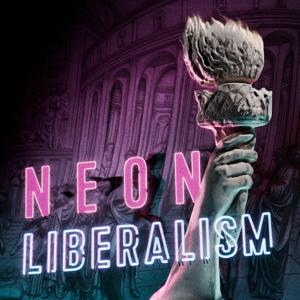


According to all current polling, Graham Platner will be Maine's next senator--despite a Nazi tattoo, a history of "controversial" social media posts, and an almost-total lack of political experience. To try and understand what this tells us about the direction of the Democratic Party, Chance Phillips recently traveled to Maine to speak with Platner's supporters. Chance and Samantha Hancox-Li discuss his findings on this episode of Neon Liberalism. Democratic elites may want moderation and conciliation--but the Democratic base has different opinions. You can read Chance's full essay here: https://www.liberalcurrents.com/platners-supporters-in-their-own-words/
Samantha Hancox-Li and guest David Lay Williams, author of The Greatest of All Plagues, discuss the nature of extreme wealth inequality in America and across history, from Plato to Occupy Wall Street. Williams argues that extreme wealth warps the soul, leading to "pleonexia"--a restless desire for more and more that will never be fulfilled. Reducing wealth inequality is therefore not about redistribution or envy, but rather self-protection against overweening power.
Samantha and returning guest Jamelle Bouie take a step back and assess the overall arc of the Trump Administration. Bouie argues that Trump's theory of the case when he came into office was fundamentally based on speed: move fast, break things, and present American society with strongman rule as a fait accompli.
But instead of producing compliance and popularity, Trump's authoritarian policies have produced increasing backlash from numerous sectors of society. Now we see a presidency adrift, out of ideas and trapped in its own echo chamber. What comes next?
Samantha Hancox-Li and guest Ryan C. Smith, author and economic historian, discuss the possibility of publicly-owned electric utilities in America. Smith argues that there is a strong case for public power. Electricity distribution is a "natural monopoly," and existing private companies—like Pacific Gas and Electric—are often inefficient and incompetent. Meanwhile, Nebraska and other states already include some publicly-owned power companies, which provide affordable and reliable electricity. Is it time to switch to a new model of power?
Samantha and essayist John Banks discuss what steps Canada is taking to fight back against Trump's aggression. Mark Carney's "variable geometry" Davos speech, the dilemmas facing middle powers, and the future of liberal internationalism are covered. In Banks' view, the Republican Party has adopted the ideology of a continental "civilization-state," and as long as they remain a political force in America, Canadian-American relations will never again be quite so friendly.
Samantha and guest Professor Xavier Márquez talk the nature of non-democratic politics, and why the concept of "personalism" is the key to understanding the dynamics and dysfunctions of the second Trump administration. Along the way they discuss the difference between totalitarianism and authoritarianism, the ongoing importance of elections to non-democratic regimes, and how authoritarian regimes can nevertheless fail.
Samantha interviews Professor Omar Wasow, challenging him to reflect on the first year of the second Trump administration. What forms of resistance have worked? What forms have been less successful? Why is the regime trying to "recreate 2020," and why are they failing? Professor Wasow tells a story about why nonviolence, adaptation, and creativity are essential building blocks for retaking power.
Samantha and guest Will Stancil talk the murder of Renée Good and the Trump administration's larger assault on Minneapolis. Will is on the front lines of monitoring ICE in Minneapolis, working with his neighborhood rapid reaction group, and remains a vital commentator and activist in this disturbing time.
Will recounts witnessing ICE abductions, confronting ICE agents, and the personal experience of living in a city under siege. He also talks the larger questions of how resistance has been organized, why this isn't 2020 all over again, why this isn't about immigration, but terror—and how we can beat them.
Join Samantha and Giselle Donnelly, foreign policy analyst and American Enterprise Institute alumna, as they discuss the recent attack on Venezuela. Does this reflect a considered strategy? Or multiple factions "working towards the sleepy Führer"? Can we make predictions about future American foreign policy, or is it all just chaos?
Take a step back and recall where you were on election night 2024. Recall the way the future looked in January 2025 at Trump's inauguration. In this episode, Samantha and Adam Gurri, editor-in-chief of Liberal Currents, evaluate the long game against Trump—and argue that the Trump revolution is stalling out, even as he flails his way through imperial misadventure in Venezuela.Read Adam's essay We Are Going To Win: https://www.liberalcurrents.com/we-are-going-to-winSupport the Reconstruction Papers: https://www.gofundme.com/f/the-liberal-currents-startup-fund
From the publisher's feed
Ranked by our users in the last 21 days

1,461 Listeners

428 Listeners

1,583 Listeners
1,869 Listeners

2,065 Listeners

573 Listeners

635 Listeners

361 Listeners

613 Listeners
423 Listeners
320 Listeners

576 Listeners
118 Listeners

603 Listeners
11 Listeners