
Sign up to save your podcasts
Or

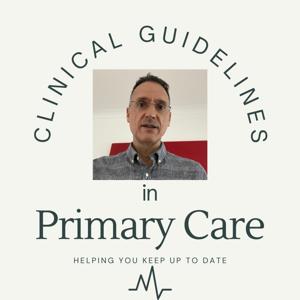

My name is Fernando Florido and I am a General Practitioner in the United Kingdom. Welcome to the latest instalment in our monthly video series, "NICE News," where we discuss new and updated guidelines published by the National Institute for Health and Care Excellence (NICE), specifically as it relates to primary care.
In this episode, I'll be focusing on the NICE guidance and advice published in April 2023. We'll be reviewing the latest recommendations that are relevant to primary care practitioners, with the goal of keeping you informed and up-to-date on the latest developments. This month we are focusing on hypertension disorders in pregnancy
By way of disclaimer, I am not giving medical advice; this video is intended for health care professionals, it is only my interpretation of the guidelines and you must use your clinical judgement.
There is a YouTube version of this and other videos that you can access here:
The Full NICE News bulleting for April 2023 can be found at:
· Published guidance, NICE advice and quality standards | Guidance | NICE
The full NICE guideline on “Hypertension in pregnancy: diagnosis and management” can be found here:
· Overview | Hypertension in pregnancy: diagnosis and management | Guidance | NICE
Intro / outro music: Track: Halfway Through — Broke In Summer [Audio Library Release]
Free Download / Stream: https://alplus.io/halfway-through
Transcript
Hello and welcome to another episode of NICE News. My name is Fernando Florido, a GP in the United Kingdom. Today, we'll be discussing the NICE Guidance and advice published in April 2023, specifically for Primary Care.
Now, in April there was only one guideline relevant to primary care, which was Hypertension disorders in pregnancy.
However, I must admit that the updated information was not easily accessible, as it was buried in the middle of the guideline. So, to save time and effort, I have gone through and summarised the whole guideline. But please keep in mind that my summary is an extremely simplified version, and it may not contain all the nuances and details that NICE often includes. If you'd like to dive deeper into the guideline, I have included a link to it in the episode description.
Before we begin, I want to remind you that this episode is not medical advice. It is only my interpretation of the guideline, and you must use your clinical judgement.
Finally, I'd like to remind you that there is a YouTube version of this episode which can be found in the episode description.
And to help you remember the key points, I'll be sharing some fictitious clinical cases at the end so make sure that you listen to the whole episode.
Now, onto the guideline itself. Hypertension disorders in pregnancy are generally managed in secondary care by the obstetricians, but in Primary Care, we must still be familiar with the recommendations so let’s get straight into it.
Firstly, for the assessment of Proteinuria we will use an automated reagent-strip
· If dipstick screening is positive (1+ or more), we will use albumin:creatinine ratio or protein:creatinine ratio to quantify proteinuria.
· But we will not use an early morning or a 24‑hour urine sample
· If using protein:creatinine ratio, 30 mg/mmol is the threshold for pre-eclampsia.
· Wheras if using albumin:creatinine ratio, it is 8 mg/mmol.
In terms of Management of Chronic Hypertension in Pregnancy, that is, hypertensive women that get pregnant, we must make sure that
· We refer them appropriately
· We stop and prescribe an alternative to ACE inhibitors, ARBs and thiazide or thiazide-like diuretics as soon as we know that they are pregnant or planning a pregnancy. This is because of the teratogenic potential
· We will discontinue treatment if BP< 110/70 mmHg, or if there is symptomatic hypotension.
· We will offer treatment if BP> 140/90 mmHg
· We will use a target BP of 135/85 mmHg.
· In terms of drug treatment, we will give labetalol first line, then nifedipine if labetalol is not suitable, and then methyldopa if both labetalol and nifedipine are not suitable.
· And we will also offer aspirin 75–150 mg once daily from 12 weeks’ gestation.
In terms of Management of Gestational Hypertension, that is, a woman that becomes hypertensive during pregnancy we will say the following:
· A full assessment should be carried out in secondary care, including BP monitoring, urine tests, foetal monitoring, medication, and delivery planning.
· We will admit to hospital if the BP is 160/110 mmHg or higher
· And the treatment is also labetalol first line, then nifedipine if labetalol is not suitable, and then methyldopa if both labetalol and nifedipine are not suitable.
In terms of antihypertensive Treatment during the Postnatal Period if the woman is breastfeeding, we will say that:
· amounts in breastmilk are unlikely to have any clinical effect.
· However, we will need to monitor babies’ BP and symptoms in case of hypotension, although this should be done in secondary care.
· Enalapril can be offered during the postnatal period
· But Nifedipine or amlodipine should be offered for women of black African or Caribbean family origin
· If the BP is not controlled on one drug, a combination of enalapril with nifedipine or amlodipine can be considered.
· And if this combination is not tolerated or is ineffective, atenolol or labetalol can be added
· But we will avoid diuretics and ARBs if the woman breastfeeding or expressing milk.
However, if not breastfeeding, there are no special considerations and we will follow the normal guidelines on hypertension.
And finally, in terms of advice and follow-up:
· We will advise that the overall risk of recurrence in future pregnancies is approximately 1 in 5
· We will also advise that HTA in pregnancy is associated with an increased risk of hypertension and cardiovascular disease in later life and we will give lifestyle advice
· If there has been prematurity before 34 weeks, we will consider pre-pregnancy counselling.
Now let’s use Chat GPT to give us some practical cases in the form of 5 fictitious patients:
· The first patient is Sarah, a 30-year-old woman who is in her second trimester of pregnancy and has no previous history of hypertension. Although she is asymptomatic, her blood pressure reading during a routine check-up reveals 145/92, and a urine dipstick test shows 1+ protein. What is the next step? According to guidelines, the next step is to request an ACR or PCR to quantify the proteinuria. However, given the potential for Sarah to have pre-eclampsia, it is advisable to refer her urgently to the obstetricians for a full assessment, including foetal monitoring.
· Our second patient, Jane, is a 35-year-old woman with a history of chronic hypertension. She is on ramipril 5 mg daily and she comes to see you because she is pregnant. What should we do? Our first step is to refer her to the obstetricians. Additionally, we need to stop the ACEI due to their teratogenic effects and switch to an alternative medication. Labetalol, starting at 100 mg twice daily, is the first-line option. We will need to titrate the dosage to achieve a target BP of below 135/85 mmHg, though this will likely be done in secondary care.
Aside from the medication switch, Jane should also be prescribed aspirin 75 -150 mg once daily from 12 weeks' gestation to decrease the risk of preeclampsia.
· Helen, a 37-year-old pregnant woman with a family history of hypertension but no prior hypertension herself, is the third patient. At 36 weeks of gestation, she sees you with no symptoms but a BP reading of 160/110 mmHg. What should our advice be? Considering the high BP level, hospital admission for close monitoring and management is recommended. Induction of labour may also be necessary due to the severity of her hypertension and gestational age.
· Maria, a 32-year-old woman of black African descent who has recently given birth to her first child, is our fourth patient. She is currently taking labetalol 400mg BD for gestational hypertension and wishes to breastfeed her baby. However, she has been experiencing tiredness and cold extremities which she attributes to the beta blockers. What should we recommend? As per the NICE guidance for women of black African or Caribbean family origin, we should switch her labetalol to nifedipine or amlodipine, which are known to be more effective in this population and safe for use during breastfeeding. Although the medication in her breastmilk is unlikely to affect her baby, we will arrange for the baby's blood pressure to be monitored in secondary care. Ongoing medication monitoring should also be done in secondary care.
· Let's consider the case of Stephanie, our fifth and final patient. Stephanie is a 39-year-old woman who has a medical history of chronic hypertension and has recently given birth to her third child. She is currently taking labetalol 200 mg BD and has decided not to breastfeed. How should we manage her? In such a scenario, it is simply recommended to refer to the NICE guideline on hypertension. If you require a refresher, you can refer to the relevant episode on this channel.
We have come to the end of this episode. I hope that you have found it useful. Thank you for listening and good-bye
 View all episodes
 By Juan Fernando Florido Santana

4
22 ratings
My name is Fernando Florido and I am a General Practitioner in the United Kingdom. Welcome to the latest instalment in our monthly video series, "NICE News," where we discuss new and updated guidelines published by the National Institute for Health and Care Excellence (NICE), specifically as it relates to primary care.
In this episode, I'll be focusing on the NICE guidance and advice published in April 2023. We'll be reviewing the latest recommendations that are relevant to primary care practitioners, with the goal of keeping you informed and up-to-date on the latest developments. This month we are focusing on hypertension disorders in pregnancy
By way of disclaimer, I am not giving medical advice; this video is intended for health care professionals, it is only my interpretation of the guidelines and you must use your clinical judgement.
There is a YouTube version of this and other videos that you can access here:
The Full NICE News bulleting for April 2023 can be found at:
· Published guidance, NICE advice and quality standards | Guidance | NICE
The full NICE guideline on “Hypertension in pregnancy: diagnosis and management” can be found here:
· Overview | Hypertension in pregnancy: diagnosis and management | Guidance | NICE
Intro / outro music: Track: Halfway Through — Broke In Summer [Audio Library Release]
Free Download / Stream: https://alplus.io/halfway-through
Transcript
Hello and welcome to another episode of NICE News. My name is Fernando Florido, a GP in the United Kingdom. Today, we'll be discussing the NICE Guidance and advice published in April 2023, specifically for Primary Care.
Now, in April there was only one guideline relevant to primary care, which was Hypertension disorders in pregnancy.
However, I must admit that the updated information was not easily accessible, as it was buried in the middle of the guideline. So, to save time and effort, I have gone through and summarised the whole guideline. But please keep in mind that my summary is an extremely simplified version, and it may not contain all the nuances and details that NICE often includes. If you'd like to dive deeper into the guideline, I have included a link to it in the episode description.
Before we begin, I want to remind you that this episode is not medical advice. It is only my interpretation of the guideline, and you must use your clinical judgement.
Finally, I'd like to remind you that there is a YouTube version of this episode which can be found in the episode description.
And to help you remember the key points, I'll be sharing some fictitious clinical cases at the end so make sure that you listen to the whole episode.
Now, onto the guideline itself. Hypertension disorders in pregnancy are generally managed in secondary care by the obstetricians, but in Primary Care, we must still be familiar with the recommendations so let’s get straight into it.
Firstly, for the assessment of Proteinuria we will use an automated reagent-strip
· If dipstick screening is positive (1+ or more), we will use albumin:creatinine ratio or protein:creatinine ratio to quantify proteinuria.
· But we will not use an early morning or a 24‑hour urine sample
· If using protein:creatinine ratio, 30 mg/mmol is the threshold for pre-eclampsia.
· Wheras if using albumin:creatinine ratio, it is 8 mg/mmol.
In terms of Management of Chronic Hypertension in Pregnancy, that is, hypertensive women that get pregnant, we must make sure that
· We refer them appropriately
· We stop and prescribe an alternative to ACE inhibitors, ARBs and thiazide or thiazide-like diuretics as soon as we know that they are pregnant or planning a pregnancy. This is because of the teratogenic potential
· We will discontinue treatment if BP< 110/70 mmHg, or if there is symptomatic hypotension.
· We will offer treatment if BP> 140/90 mmHg
· We will use a target BP of 135/85 mmHg.
· In terms of drug treatment, we will give labetalol first line, then nifedipine if labetalol is not suitable, and then methyldopa if both labetalol and nifedipine are not suitable.
· And we will also offer aspirin 75–150 mg once daily from 12 weeks’ gestation.
In terms of Management of Gestational Hypertension, that is, a woman that becomes hypertensive during pregnancy we will say the following:
· A full assessment should be carried out in secondary care, including BP monitoring, urine tests, foetal monitoring, medication, and delivery planning.
· We will admit to hospital if the BP is 160/110 mmHg or higher
· And the treatment is also labetalol first line, then nifedipine if labetalol is not suitable, and then methyldopa if both labetalol and nifedipine are not suitable.
In terms of antihypertensive Treatment during the Postnatal Period if the woman is breastfeeding, we will say that:
· amounts in breastmilk are unlikely to have any clinical effect.
· However, we will need to monitor babies’ BP and symptoms in case of hypotension, although this should be done in secondary care.
· Enalapril can be offered during the postnatal period
· But Nifedipine or amlodipine should be offered for women of black African or Caribbean family origin
· If the BP is not controlled on one drug, a combination of enalapril with nifedipine or amlodipine can be considered.
· And if this combination is not tolerated or is ineffective, atenolol or labetalol can be added
· But we will avoid diuretics and ARBs if the woman breastfeeding or expressing milk.
However, if not breastfeeding, there are no special considerations and we will follow the normal guidelines on hypertension.
And finally, in terms of advice and follow-up:
· We will advise that the overall risk of recurrence in future pregnancies is approximately 1 in 5
· We will also advise that HTA in pregnancy is associated with an increased risk of hypertension and cardiovascular disease in later life and we will give lifestyle advice
· If there has been prematurity before 34 weeks, we will consider pre-pregnancy counselling.
Now let’s use Chat GPT to give us some practical cases in the form of 5 fictitious patients:
· The first patient is Sarah, a 30-year-old woman who is in her second trimester of pregnancy and has no previous history of hypertension. Although she is asymptomatic, her blood pressure reading during a routine check-up reveals 145/92, and a urine dipstick test shows 1+ protein. What is the next step? According to guidelines, the next step is to request an ACR or PCR to quantify the proteinuria. However, given the potential for Sarah to have pre-eclampsia, it is advisable to refer her urgently to the obstetricians for a full assessment, including foetal monitoring.
· Our second patient, Jane, is a 35-year-old woman with a history of chronic hypertension. She is on ramipril 5 mg daily and she comes to see you because she is pregnant. What should we do? Our first step is to refer her to the obstetricians. Additionally, we need to stop the ACEI due to their teratogenic effects and switch to an alternative medication. Labetalol, starting at 100 mg twice daily, is the first-line option. We will need to titrate the dosage to achieve a target BP of below 135/85 mmHg, though this will likely be done in secondary care.
Aside from the medication switch, Jane should also be prescribed aspirin 75 -150 mg once daily from 12 weeks' gestation to decrease the risk of preeclampsia.
· Helen, a 37-year-old pregnant woman with a family history of hypertension but no prior hypertension herself, is the third patient. At 36 weeks of gestation, she sees you with no symptoms but a BP reading of 160/110 mmHg. What should our advice be? Considering the high BP level, hospital admission for close monitoring and management is recommended. Induction of labour may also be necessary due to the severity of her hypertension and gestational age.
· Maria, a 32-year-old woman of black African descent who has recently given birth to her first child, is our fourth patient. She is currently taking labetalol 400mg BD for gestational hypertension and wishes to breastfeed her baby. However, she has been experiencing tiredness and cold extremities which she attributes to the beta blockers. What should we recommend? As per the NICE guidance for women of black African or Caribbean family origin, we should switch her labetalol to nifedipine or amlodipine, which are known to be more effective in this population and safe for use during breastfeeding. Although the medication in her breastmilk is unlikely to affect her baby, we will arrange for the baby's blood pressure to be monitored in secondary care. Ongoing medication monitoring should also be done in secondary care.
· Let's consider the case of Stephanie, our fifth and final patient. Stephanie is a 39-year-old woman who has a medical history of chronic hypertension and has recently given birth to her third child. She is currently taking labetalol 200 mg BD and has decided not to breastfeed. How should we manage her? In such a scenario, it is simply recommended to refer to the NICE guideline on hypertension. If you require a refresher, you can refer to the relevant episode on this channel.
We have come to the end of this episode. I hope that you have found it useful. Thank you for listening and good-bye

710 Listeners
505 Listeners

295 Listeners

27 Listeners

1,143 Listeners

366 Listeners

253 Listeners

9 Listeners

26 Listeners

439 Listeners
377 Listeners

8,472 Listeners

322 Listeners

3,810 Listeners

6 Listeners