
Sign up to save your podcasts
Or

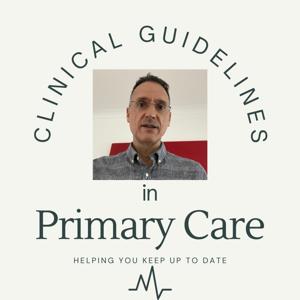

My name is Fernando Florido and I am a General Practitioner in the United Kingdom. Welcome to the latest instalment in our monthly video series, "NICE News," where we discuss new and updated guidelines published by the National Institute for Health and Care Excellence (NICE), specifically as it relates to primary care.
In this video, I'll be focusing on the NICE guidance and advice published in June 2023. We'll be reviewing the latest recommendations that are relevant to primary care practitioners, with the goal of keeping you informed and up-to-date on the latest developments.
By way of disclaimer, I am not giving medical advice; this video is intended for health care professionals, it is only my interpretation of the guidelines and you must use your clinical judgement.
There is a YouTube version of this and other videos that you can access here:
The Full NICE News bulleting for June 2023 can be found at:
· https://www.nice.org.uk/guidance/published?from=2023-06-01&to=2023-06-30&ndt=Guidance&ndt=Quality+standard
The links to the update guidance covered can be found here:
Depression in adults:
· https://www.nice.org.uk/guidance/qs8
Dapagliflozin for treating chronic heart failure with preserved or mildly reduced ejection fraction:
· https://www.nice.org.uk/guidance/ta902
Atopic eczema in under 12s: diagnosis and management:
· https://www.nice.org.uk/guidance/cg57
Decision aid to guide healthcare professional-patient discussions on sleeping pill prescriptions published:
· https://www.nice.org.uk/news/article/decision-aid-to-guide-healthcare-professional-patient-discussions-on-sleeping-pill-prescriptions-published
· One page summary for patients: https://www.nice.org.uk/guidance/ng215/resources/should-i-stop-my-benzodiazepine-or-zdrug-patient-decision-aid-summary-pdf-13072600333
Intro / outro music: Track: Halfway Through — Broke In Summer [Audio Library Release]
Transcript
Hello and welcome to another episode of NICE News. My name is Fernando Florido, a GP in the United Kingdom. Today, we'll be discussing the NICE Guidance and advice published in June 2023, specifically for Primary Care.
This month we are focusing on Depression, Dapagliflozin in chronic heart failure, Atopic eczema, and we will briefly touch on the prescribing of sleeping pills
Before we begin, I want to remind you that this episode is not medical advice. It is only my interpretation, and you must use your clinical judgement.
I'd like to remind you that there is a YouTube version of this episode which can be found in the episode description.
Now, with that said, let’s get straight into it.
The first clinical area refers to Depression in adults and the updated quality standards are mostly common sense, but the one that caught my eye was the advice that spells out what we instinctively knew, that when stopping antidepressants, the dose needs to be reduced in stages. We should agree with the patient the speed and duration of the withdrawal and offer follow-up appointments to check both for withdrawal symptoms and the return of depression, ensuring that any withdrawal symptoms have resolved or are tolerable before making the next dose reduction.
The next clinical area covers Dapagliflozin in heart failure. You may know that there is already guidance that recommends Dapagliflozin for chronic heart failure with reduced ejection fraction but this update refers to heart failure with preserved or mildly reduced ejection fraction.
Current treatment of heart failure with preserved ejection fraction is loop diuretics, which manage symptoms, but do not reduce hospitalisations.
However, Dapagliflozin in chronic heart failure with reduced ejection fraction reduces cardiovascular deaths and hospitalisations for heart failure.
The clinical experts noted that chronic heart failure with reduced and preserved ejection fractions should not necessarily be considered as 2 separate conditions, and that they exist on a continuum. And therefore, the committee concluded that when its preferred assumptions are incorporated, dapagliflozin is cost-effective and therefore, recommended also for chronic heart failure with preserved ejection fraction.
The next update is in the management of atopic eczema in under 12s and the main outcome is that we should now not offer emollient bath additives, because evidence has shown that, although not harmful, they are not clinically or cost effective.
Emollient creams continue to be vital in helping to manage eczema, but we need to be aware that there are warnings about fire hazards associated with build-up of emollient on clothing and bedding.
We should prescribe large quantities of leave-on emollients (up to 500 g weekly) and explain:
· That leave-on emollients can be added to bath water
· That they should use emollients or emollient soap substitutes instead of soap and
· That children aged under 12 months should use emollients or emollient soap substitutes instead of shampoos and older children should use unperfumed shampoos
Finally, NICE has published a patient decision aid and a one-page summary, that provides clear and easy-to-use advice to support patients taking benzodiazepines or z-drugs to help them understand the benefits and risks of staying on their current dose, reducing their dose, or stopping the drugs altogether. I have put links to this patient leaflet in the episode description.
We have come to the end of this episode. I hope that you have found it useful. Thank you for listening and good-bye
 View all episodes
 By Juan Fernando Florido Santana

4
22 ratings
My name is Fernando Florido and I am a General Practitioner in the United Kingdom. Welcome to the latest instalment in our monthly video series, "NICE News," where we discuss new and updated guidelines published by the National Institute for Health and Care Excellence (NICE), specifically as it relates to primary care.
In this video, I'll be focusing on the NICE guidance and advice published in June 2023. We'll be reviewing the latest recommendations that are relevant to primary care practitioners, with the goal of keeping you informed and up-to-date on the latest developments.
By way of disclaimer, I am not giving medical advice; this video is intended for health care professionals, it is only my interpretation of the guidelines and you must use your clinical judgement.
There is a YouTube version of this and other videos that you can access here:
The Full NICE News bulleting for June 2023 can be found at:
· https://www.nice.org.uk/guidance/published?from=2023-06-01&to=2023-06-30&ndt=Guidance&ndt=Quality+standard
The links to the update guidance covered can be found here:
Depression in adults:
· https://www.nice.org.uk/guidance/qs8
Dapagliflozin for treating chronic heart failure with preserved or mildly reduced ejection fraction:
· https://www.nice.org.uk/guidance/ta902
Atopic eczema in under 12s: diagnosis and management:
· https://www.nice.org.uk/guidance/cg57
Decision aid to guide healthcare professional-patient discussions on sleeping pill prescriptions published:
· https://www.nice.org.uk/news/article/decision-aid-to-guide-healthcare-professional-patient-discussions-on-sleeping-pill-prescriptions-published
· One page summary for patients: https://www.nice.org.uk/guidance/ng215/resources/should-i-stop-my-benzodiazepine-or-zdrug-patient-decision-aid-summary-pdf-13072600333
Intro / outro music: Track: Halfway Through — Broke In Summer [Audio Library Release]
Transcript
Hello and welcome to another episode of NICE News. My name is Fernando Florido, a GP in the United Kingdom. Today, we'll be discussing the NICE Guidance and advice published in June 2023, specifically for Primary Care.
This month we are focusing on Depression, Dapagliflozin in chronic heart failure, Atopic eczema, and we will briefly touch on the prescribing of sleeping pills
Before we begin, I want to remind you that this episode is not medical advice. It is only my interpretation, and you must use your clinical judgement.
I'd like to remind you that there is a YouTube version of this episode which can be found in the episode description.
Now, with that said, let’s get straight into it.
The first clinical area refers to Depression in adults and the updated quality standards are mostly common sense, but the one that caught my eye was the advice that spells out what we instinctively knew, that when stopping antidepressants, the dose needs to be reduced in stages. We should agree with the patient the speed and duration of the withdrawal and offer follow-up appointments to check both for withdrawal symptoms and the return of depression, ensuring that any withdrawal symptoms have resolved or are tolerable before making the next dose reduction.
The next clinical area covers Dapagliflozin in heart failure. You may know that there is already guidance that recommends Dapagliflozin for chronic heart failure with reduced ejection fraction but this update refers to heart failure with preserved or mildly reduced ejection fraction.
Current treatment of heart failure with preserved ejection fraction is loop diuretics, which manage symptoms, but do not reduce hospitalisations.
However, Dapagliflozin in chronic heart failure with reduced ejection fraction reduces cardiovascular deaths and hospitalisations for heart failure.
The clinical experts noted that chronic heart failure with reduced and preserved ejection fractions should not necessarily be considered as 2 separate conditions, and that they exist on a continuum. And therefore, the committee concluded that when its preferred assumptions are incorporated, dapagliflozin is cost-effective and therefore, recommended also for chronic heart failure with preserved ejection fraction.
The next update is in the management of atopic eczema in under 12s and the main outcome is that we should now not offer emollient bath additives, because evidence has shown that, although not harmful, they are not clinically or cost effective.
Emollient creams continue to be vital in helping to manage eczema, but we need to be aware that there are warnings about fire hazards associated with build-up of emollient on clothing and bedding.
We should prescribe large quantities of leave-on emollients (up to 500 g weekly) and explain:
· That leave-on emollients can be added to bath water
· That they should use emollients or emollient soap substitutes instead of soap and
· That children aged under 12 months should use emollients or emollient soap substitutes instead of shampoos and older children should use unperfumed shampoos
Finally, NICE has published a patient decision aid and a one-page summary, that provides clear and easy-to-use advice to support patients taking benzodiazepines or z-drugs to help them understand the benefits and risks of staying on their current dose, reducing their dose, or stopping the drugs altogether. I have put links to this patient leaflet in the episode description.
We have come to the end of this episode. I hope that you have found it useful. Thank you for listening and good-bye

703 Listeners
504 Listeners

304 Listeners

25 Listeners

1,151 Listeners
376 Listeners

254 Listeners
7 Listeners

16 Listeners

440 Listeners
377 Listeners

8,439 Listeners

327 Listeners

3,292 Listeners

6 Listeners