
Sign up to save your podcasts
Or

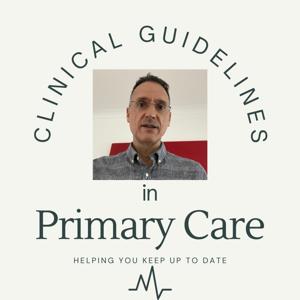

This podcast makes reference to guidelines produced by the "National Institute for Health and Care Excellence" in the UK, also referred to as "NICE". Please note that the content on this channel reflects my professional interpretation/summary of the guidance and that I am in no way affiliated with, employed by or funded/sponsored by NICE.
My name is Fernando Florido and I am a General Practitioner in the United Kingdom. In this video I will go through new and updated guidelines published in October 2023 by the National Institute for Health and Care Excellence (NICE), focusing on those that are relevant to Primary Care only.
I am not giving medical advice; this video is intended for health care professionals, it is only my interpretation of the guidelines and you must use your clinical judgement.
There is a YouTube version of this and other videos that you can access here:
https://youtube.com/@practicalgp?si=ecJGF5QCuMLQ6hrk
The Full NICE News bulleting for October 2023 can be found here:
· https://www.nice.org.uk/guidance/published?from=2023-10-01&to=2023-10-31&ndt=Guidance&ndt=Quality+standard
The links to the update guidance covered can be found here:
Rimegepant for treating migraine:
· https://www.nice.org.uk/guidance/ta919
Thyroid disease: assessment and management
· https://www.nice.org.uk/guidance/ng145
Tirzepatide for treating type 2 diabetes
· https://www.nice.org.uk/guidance/ta924
Suspected cancer: recognition and referral
· https://www.nice.org.uk/guidance/ng12
Suspected neurological conditions: recognition and referral
· https://www.nice.org.uk/guidance/ng127
Hearing loss in adults: assessment and management
· https://www.nice.org.uk/guidance/ng98
Daridorexant for treating long-term insomnia
· https://www.nice.org.uk/guidance/ta922
Intro / outro music: Track: Halfway Through — Broke In Summer [Audio Library Release]
Hello and welcome, I am Fernando, a GP in the UK. Today, we are looking at the NICE updates published in October 2023, focusing on what is relevant in Primary Care only. We will be covering: migraines, thyroid function tests, diabetes, suspected cancer and insomnia.
So let’s jump into it.
The first clinical area is an update on a new migraine medication, rimegepant.
And NICE says that Rimegepant is recommended, only if:
· at least 2 triptans have been tried before but were ineffective or
· if triptans cannot be used, and Paracetamol and NSAIDs are not effective.
What is Rimegepant?
Well, gepants are a new class of drugs that have been developed specifically for the treatment of migraines. Rimegepant is a calcitonin gene-related peptide receptor antagonist so it works by blocking this CGRP receptor. And although the mechanism of action is not fully understood, we know that this receptor is involved in the development of migraines. Gepants can be used as an acute treatment and, although rimegepant has a licence for migraine prophylaxis, NICE does not recommend it for this indication.
Unlike triptans, gepants do not cause vasoconstriction so they do not have the same cardiovascular contraindications and cautions as triptans. Rimegepant is an oral lyophilisate that should be placed on the tongue or under the tongue and it will disintegrate in the mouth and can therefore be taken without liquid.
The next update refers to thyroid disease and it says that when ordering thyroid function tests, patients should be routinely asked about biotin use. This is because the MHRA has reported that biotin may cause thyroid test results to be falsely increased or decreased, leading to inappropriate management. Biotin is increasingly found in dietary supplements which are typically taken for hair, skin and nail health so we should always check whether patients are taking such supplements over the counter.
The third area refers to a new diabetic agent, tirzepatide, and, like GLP1 receptor agonists, it is recommended if type 2 diabetes is not controlled:
· on triple therapy with metformin and 2 other drugs, and
· they have a BMI of 35 or more, with obesity related health problems, or
· they have a BMI of less than 35, and:
o insulin therapy would have significant occupational implications, or
o weight loss would benefit other significant complications.
But we will use lower BMI thresholds (usually reduced by 2.5) for people from non-white family backgrounds.
We all know the supply issues that we have had with various GLP1 receptor agonists, so is tirzepatide a new GLP1 drug coming to the rescue? Well, not really. Because Tirzepatide is both a GIP and a GLP-1 receptor agonist, so it is a dual agent. It is a weekly injectable and clinical trials suggest that tirzepatide reduces HbA1c and BMI more than semaglutide. Weight reduction with tirzepatide is more pronounced with higher doses, whereas reductions in HbA1c seem less dose-dependent.
No dose adjustment is required for patients with hepatic and renal impairment including end stage renal disease (ESRD) but experience with these patients is limited so we should exercise caution.
The Mechanism of action of tirzepatide is by increasing Insulin secretion and sensitivity, reducing Glucagon and delaying Gastric emptying
The next clinical area refers to suspected cancer: recognition and referral, and the guidance has been updated to reflect the new NHS standard on faster cancer diagnosis.
So, what this means is that, rather than focusing on these patients being seen within 2 weeks, the aim now is for them to have a diagnosis or have cancer ruled out within 28 days from referral.
This change applies when:
· the referring GP suspects cancer
· there are breast symptoms even where cancer is not initially suspected or when
· there is an abnormal National Cancer Screening result.
So, this update will also appear in a number of other guidelines including, for example:
- Neurological conditions
- Ovarian cancer and
- Urinary incontinence
Next there is also an update saying that we should use a suspected cancer pathway for adults of Chinese or south-east Asian family origin who develop hearing loss and a middle ear effusion not associated with an upper respiratory tract infection.
This is because of the higher incidence of nasopharyngeal carcinoma (NPC) in these populations. Nasopharyngeal carcinoma is rare in most parts of the world, but it’s much more common in East and Southeast Asia, which suggests that genetic and/or environmental factors can contribute substantially to its development.
The final guidance is on Daridorexant for treating long-term insomnia. And NICE says that Daridorexant is recommended for insomnia lasting for 3 nights or more per week for at least 3 months, with affected daytime functioning but only if:
· cognitive behavioural therapy for insomnia (CBTi) is ineffective or
· it is not available or is unsuitable.
What is daridorexant? Well, unlike benzodiazepines and Z-drugs, which work by increasing sedation, daridorexant is a new type of drug, an orexin antagonist, which works in a different way. It inhibits arousal mechanisms. To understand this, we need to know that orexins are neuropeptides produced by the hypothalamus which promote a state of wakefulness. Therefore, daridorexant, by blocking the orexin receptors, reduces wakefulness and helps sleep
And the good news is that, in clinical studies, there has been no evidence of abuse or withdrawal symptoms indicative of physical dependence.
NICE recommends that the length of treatment should be as short as possible and the treatment should be reviewed within 3 months of starting and at regular intervals thereafter.
However, it is worth mentioning that, in October 2023, Daridorexant was still not available on the BNF.
We have come to the end of this episode. Remember that this is not medical advice and it is only my summary and my interpretation of the guidelines. You must always use your clinical judgement.
Thank you for listening and goodbye.
 View all episodes
 By Juan Fernando Florido Santana

4
22 ratings
This podcast makes reference to guidelines produced by the "National Institute for Health and Care Excellence" in the UK, also referred to as "NICE". Please note that the content on this channel reflects my professional interpretation/summary of the guidance and that I am in no way affiliated with, employed by or funded/sponsored by NICE.
My name is Fernando Florido and I am a General Practitioner in the United Kingdom. In this video I will go through new and updated guidelines published in October 2023 by the National Institute for Health and Care Excellence (NICE), focusing on those that are relevant to Primary Care only.
I am not giving medical advice; this video is intended for health care professionals, it is only my interpretation of the guidelines and you must use your clinical judgement.
There is a YouTube version of this and other videos that you can access here:
https://youtube.com/@practicalgp?si=ecJGF5QCuMLQ6hrk
The Full NICE News bulleting for October 2023 can be found here:
· https://www.nice.org.uk/guidance/published?from=2023-10-01&to=2023-10-31&ndt=Guidance&ndt=Quality+standard
The links to the update guidance covered can be found here:
Rimegepant for treating migraine:
· https://www.nice.org.uk/guidance/ta919
Thyroid disease: assessment and management
· https://www.nice.org.uk/guidance/ng145
Tirzepatide for treating type 2 diabetes
· https://www.nice.org.uk/guidance/ta924
Suspected cancer: recognition and referral
· https://www.nice.org.uk/guidance/ng12
Suspected neurological conditions: recognition and referral
· https://www.nice.org.uk/guidance/ng127
Hearing loss in adults: assessment and management
· https://www.nice.org.uk/guidance/ng98
Daridorexant for treating long-term insomnia
· https://www.nice.org.uk/guidance/ta922
Intro / outro music: Track: Halfway Through — Broke In Summer [Audio Library Release]
Hello and welcome, I am Fernando, a GP in the UK. Today, we are looking at the NICE updates published in October 2023, focusing on what is relevant in Primary Care only. We will be covering: migraines, thyroid function tests, diabetes, suspected cancer and insomnia.
So let’s jump into it.
The first clinical area is an update on a new migraine medication, rimegepant.
And NICE says that Rimegepant is recommended, only if:
· at least 2 triptans have been tried before but were ineffective or
· if triptans cannot be used, and Paracetamol and NSAIDs are not effective.
What is Rimegepant?
Well, gepants are a new class of drugs that have been developed specifically for the treatment of migraines. Rimegepant is a calcitonin gene-related peptide receptor antagonist so it works by blocking this CGRP receptor. And although the mechanism of action is not fully understood, we know that this receptor is involved in the development of migraines. Gepants can be used as an acute treatment and, although rimegepant has a licence for migraine prophylaxis, NICE does not recommend it for this indication.
Unlike triptans, gepants do not cause vasoconstriction so they do not have the same cardiovascular contraindications and cautions as triptans. Rimegepant is an oral lyophilisate that should be placed on the tongue or under the tongue and it will disintegrate in the mouth and can therefore be taken without liquid.
The next update refers to thyroid disease and it says that when ordering thyroid function tests, patients should be routinely asked about biotin use. This is because the MHRA has reported that biotin may cause thyroid test results to be falsely increased or decreased, leading to inappropriate management. Biotin is increasingly found in dietary supplements which are typically taken for hair, skin and nail health so we should always check whether patients are taking such supplements over the counter.
The third area refers to a new diabetic agent, tirzepatide, and, like GLP1 receptor agonists, it is recommended if type 2 diabetes is not controlled:
· on triple therapy with metformin and 2 other drugs, and
· they have a BMI of 35 or more, with obesity related health problems, or
· they have a BMI of less than 35, and:
o insulin therapy would have significant occupational implications, or
o weight loss would benefit other significant complications.
But we will use lower BMI thresholds (usually reduced by 2.5) for people from non-white family backgrounds.
We all know the supply issues that we have had with various GLP1 receptor agonists, so is tirzepatide a new GLP1 drug coming to the rescue? Well, not really. Because Tirzepatide is both a GIP and a GLP-1 receptor agonist, so it is a dual agent. It is a weekly injectable and clinical trials suggest that tirzepatide reduces HbA1c and BMI more than semaglutide. Weight reduction with tirzepatide is more pronounced with higher doses, whereas reductions in HbA1c seem less dose-dependent.
No dose adjustment is required for patients with hepatic and renal impairment including end stage renal disease (ESRD) but experience with these patients is limited so we should exercise caution.
The Mechanism of action of tirzepatide is by increasing Insulin secretion and sensitivity, reducing Glucagon and delaying Gastric emptying
The next clinical area refers to suspected cancer: recognition and referral, and the guidance has been updated to reflect the new NHS standard on faster cancer diagnosis.
So, what this means is that, rather than focusing on these patients being seen within 2 weeks, the aim now is for them to have a diagnosis or have cancer ruled out within 28 days from referral.
This change applies when:
· the referring GP suspects cancer
· there are breast symptoms even where cancer is not initially suspected or when
· there is an abnormal National Cancer Screening result.
So, this update will also appear in a number of other guidelines including, for example:
- Neurological conditions
- Ovarian cancer and
- Urinary incontinence
Next there is also an update saying that we should use a suspected cancer pathway for adults of Chinese or south-east Asian family origin who develop hearing loss and a middle ear effusion not associated with an upper respiratory tract infection.
This is because of the higher incidence of nasopharyngeal carcinoma (NPC) in these populations. Nasopharyngeal carcinoma is rare in most parts of the world, but it’s much more common in East and Southeast Asia, which suggests that genetic and/or environmental factors can contribute substantially to its development.
The final guidance is on Daridorexant for treating long-term insomnia. And NICE says that Daridorexant is recommended for insomnia lasting for 3 nights or more per week for at least 3 months, with affected daytime functioning but only if:
· cognitive behavioural therapy for insomnia (CBTi) is ineffective or
· it is not available or is unsuitable.
What is daridorexant? Well, unlike benzodiazepines and Z-drugs, which work by increasing sedation, daridorexant is a new type of drug, an orexin antagonist, which works in a different way. It inhibits arousal mechanisms. To understand this, we need to know that orexins are neuropeptides produced by the hypothalamus which promote a state of wakefulness. Therefore, daridorexant, by blocking the orexin receptors, reduces wakefulness and helps sleep
And the good news is that, in clinical studies, there has been no evidence of abuse or withdrawal symptoms indicative of physical dependence.
NICE recommends that the length of treatment should be as short as possible and the treatment should be reviewed within 3 months of starting and at regular intervals thereafter.
However, it is worth mentioning that, in October 2023, Daridorexant was still not available on the BNF.
We have come to the end of this episode. Remember that this is not medical advice and it is only my summary and my interpretation of the guidelines. You must always use your clinical judgement.
Thank you for listening and goodbye.

703 Listeners
504 Listeners

304 Listeners

25 Listeners

1,152 Listeners

376 Listeners

254 Listeners

7 Listeners

16 Listeners
440 Listeners
377 Listeners

8,440 Listeners

327 Listeners

3,255 Listeners

6 Listeners