
Sign up to save your podcasts
Or

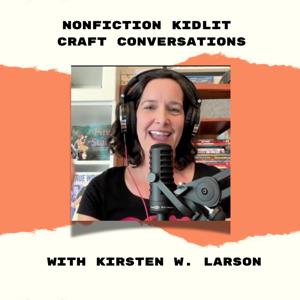


What happens when a nonfiction picture book refuses to stay in its lane?
In this episode of Nonfiction Kidlit Craft Conversations, I talk with Annette Bay Pimentel about her inventive new picture book, How a Bear Became a Book, illustrated by Faith Pray.
Together, we explore:
Annette shares how this book evolved from a traditional nonfiction biography into an innovative, layered exploration of storytelling itself — complete with a talking Winnie-the-Pooh narrator. We also discuss the creative risks involved in blending nonfiction, metafiction, and picture book craft while staying true to young readers.
Whether you’re a children’s author, illustrator, educator, librarian, or nonfiction fan, this conversation is packed with insight into the creative process behind groundbreaking nonfiction picture books.
Chapters:
00:00 Introduction: When Nonfiction Breaks the Rules
Books and creators discussed include:
Subscribe for more conversations about the craft, creativity, and business of nonfiction writing for children.
What can a legendary children’s book editor teach us about writing, research, and trusting young readers?
In this episode of Nonfiction Kidlit Craft Conversations, host Kirsten W. Larson interviews Nancy Hudgins, author of Books Good Enough for You: The Storied Life of Ursula Nordstrom, to uncover the hidden story behind one of the most influential figures in children’s publishing. Ursula Nordstrom helped shape classics like Charlotte’s Web, Goodnight Moon, and Where the Wild Things Are, but her own story has remained largely untold for older readers until now.
Nancy shares how primary source research—including letters, archival documents, and even surprising legal records—revealed new insights into Nordstrom’s life, including details never before published. You’ll hear how these discoveries shaped the book, why middle grade was the perfect format, and what today’s writers can learn from Nordstrom’s fearless approach to storytelling. Whether you’re a children’s writer, educator, librarian, or book lover, this conversation offers powerful insights into:
Plus: behind-the-scenes stories of beloved classics like Goodnight Moon and the creative risks that changed children’s literature forever.
00:00 The Shocking Discovery: Ursula Nordstrom’s Untold Story
01:00 Welcome + About Nancy Hudgins & Her Book
02:00 Why Write About Ursula Nordstrom?
04:00 Why This Story Matters Now (Censorship & Kidlit Today)
06:00 Why Middle Grade? Choosing the Right Audience
09:00 Diving into Primary Sources: Letters, Archives & Surprises
12:30 Research Rabbit Holes & Unexpected Finds
16:00 What to Include (and What to Leave Out)
20:00 What Kids Can Learn from Ursula Nordstrom
25:30 The Story Behind Goodnight Moon
30:30 Research Advice for Nonfiction Writers
What if your next nonfiction project isn’t a picture book—or even prose—but a graphic novel? In this episode of Nonfiction Kidlit Craft Conversations, host Kirsten W. Larson talks with award-winning author Teresa Robeson about how to write nonfiction graphic novels for kids.
Teresa shares practical tips, industry insights, and creative strategies for turning real stories into visual, page-turning nonfiction.
Whether you write picture books, middle grade, or YA nonfiction, this conversation will help you explore a fast-growing format in children’s publishing and give you clear steps to get started. In this episode, you’ll learn:
*Why nonfiction writers should consider graphic novels right now
*Key differences between graphic novels, picture books, and prose nonfiction
*How to structure scenes, panels, and page turns
*What skills transfer from traditional nonfiction writing
*How to write a graphic novel script (no drawing required!)
*What to include in a nonfiction graphic novel proposal
*Tips for research, visual storytelling, and working with illustrators
*Beginner-friendly resources to learn the craft Teresa also shares her favorite graphic nonfiction mentor texts, advice for getting started, and encouragement for writers ready to try something new.
📚 Mentioned in this episode:
Understanding Comics by Scott McCloud
Making Comics by Scott McCloud
The Art of Comic Book Writing by Mark Kneece
Kids Comics Unite (writing community)
00:00 Hook: Why Try Nonfiction Graphic Novels?
00:32 Welcome + Meet Teresa Robeson
01:10 How Teresa Got Started in Graphic Novels
02:05 Why Graphic Novels Are Booming
03:05 What Makes a Story Work Visually
05:30 Key Differences from Picture Books & Prose
08:10 Writing in Panels: Concision & Page Turns
10:05 Research + Skills That Transfer
12:30 Getting Started + Best Learning Resources
15:45 Scripts, Proposals & Publishing Tips
20:05 Practice Tips + Final Advice for Writers
What if the back pages of your nonfiction book could transform a curious reader into a lifelong learner — and make your manuscript more attractive to publishers at the same time? In this episode, host Kirsten W. Larson sits down with award-winning children's nonfiction author Annette Whipple — author of nearly 40 books including Flick: The Truth About Lizards — to explore the craft and strategy behind back matter in nonfiction picture books.
Whether you're a debut author wondering what to put after "The End," or a seasoned writer looking to level up your submissions, this conversation is packed with actionable ideas for making your back matter work harder for readers, educators, AND publishers. 🦎 What You'll Learn:
• What back matter actually is — and why it matters more than most writers think
• How back matter can function as the "rest of the meal" after your main text appetizer
• Why Annette includes STEM activities (like a lizard tongue challenge!) in her books
• How to plan back matter DURING drafting, not as an afterthought • Annette's genius trick: saving cut content in a separate document for potential back matter
• The surprising way Annette's back matter inspired a full-size foldout poster in her hardcover editions
• Common back matter mistakes — and how to avoid them
• How strong back matter makes your book more marketable to editors
• The difference between back matter and a teacher's guide — and why you need both
📚 Books Mentioned:
• Flick: The Truth About Lizards by Annette Whipple
• Who Knew? The Truth About Owls by Annette Whipple
• The Laura Ingalls Wilder Companion by Annette Whipple
• Fire of the Stars by Kirsten W. Larson
• Wood, Wire, Wings by Kirsten W. Larson
⏱ Chapters below ↓
#NonfictionKidLit #WritingForKids #PictureBooks #KidLit #BackMatter #ChildrensBooks #NonfictionWriting #WritingCraft #KidLitCommunity #BookWriting #WritingTips #NonfictionPictureBooks #AnnetteWhipple #KirstenWLarson
0:00 Introduction: What Is Back Matter?
1:11 Meet Annette Whipple, Queen of Back Matter
2:08 The Real Job of Back Matter in Nonfiction Picture Books
3:08 How Annette's Thinking About Back Matter Has Evolved
3:53 Who Is Back Matter Really For? (Kids, Teachers & Parents) 5:21 A Deep Dive into Flick: The Truth About Lizards
6:20 Scaly Superstars: Featuring 12 Lizard Species
7:00 The Terrific Tongue Test: Adding STEM Activities
9:43 Planning Back Matter During Drafting (Not After)
11:07 Annette's Writing Hack: Saving Deleted Content for Back Matter
13:00 Sponsored Message: Reimagine Insiders Community
13:00 Collaborating with Editors on Back Matter Decisions
15:32 How Annette's Back Matter Created a Full-Size Foldout Poster
18:22 Classroom Connections: How Back Matter Extends Lessons 19:44 Thinking Cross-Curricular: STEM, SEL, and More
23:12 Why Strong Back Matter Makes Your Book More Marketable
27:53 Common Back Matter Mistakes (And How to Avoid Them)
29:26 Annette's Checklist: Questions to Evaluate Your Back Matter
31:36 The Big Poster Reveal! Hardcover Foldout Explained
33:20 What's Next for Annette Whipple
34:02 Wrap-Up and Call to Action
How do you write powerful YA nonfiction that brings forgotten women in STEM back into the spotlight?
In this episode, authors Lindsay H. Metcalf (Footeprint) and Debbie Loren Dunn and Janet Fox (The Real Rosalind) explore the craft of writing young adult nonfiction, the research process behind uncovering hidden scientific histories, and how to transform archival discoveries into emotionally compelling narratives.
From the stories of Rosalind Franklin and Eunice Newton Foote to broader conversations about credit, persistence, and passion in science, this discussion dives deep into what it takes to write nonfiction that resonates with teen readers.
Whether you’re an aspiring author, educator, historian, or simply passionate about women in science, this conversation offers practical writing advice, research strategies, and inspiration for telling stories that matter.
Topics covered:
✔️Writing YA biographies
✔️Researching overlooked women scientists
✔️Crafting emotional arcs in nonfiction
✔️Turning anger into purpose-driven storytelling
✔️Balancing historical and scientific accuracy with narrative engagement ✔️Advice for aspiring nonfiction writers If you care about STEM history, women’s contributions to science, and writing meaningful books for young readers, this episode is for you.
Subscribe for more conversations on writing, research, and publishing. 00:00 Welcome & Introduction to Writing YA Nonfiction
04:12 Why Forgotten Women in STEM Matter
09:35 From Anger to Purpose: Discovering Rosalind Franklin’s Story
14:48 Research Deep Dive: Finding the Truth in the Archives
20:10 Crafting Emotional Arcs in Nonfiction
26:42 Writing for Teens Without Oversimplifying
32:05 The Power of Persistence in Science and Storytelling
38:30 Advice for Aspiring YA Nonfiction Writers
44:15 Final Takeaways and Encouragement
Lindsay H. Metcalf's site: https://lindsayhmetcalf.com/books/
Debbie Loren Dunn's site: https://brownanddunn.com/books/
Janet Fox's site: https://janetsfox.com/
Work-for-Hire Author Shares How She Wrote 50+ Kids Books | Writing Career Tips & Publishing Paths
Join award-winning author Aubre Andrus as she reveals how she built a thriving nonfiction writing career through work-for-hire publishing! With 50+ books for Scholastic, National Geographic Kids, American Girl, and more, Aubre shares insider tips on breaking into children's book publishing WITHOUT an agent.
In this episode, you'll discover:
Featured Books: • Chi Chi's Story (Scholastic) • America Celebrates (Quarto) • The Lookup Series (self-published STEM biographies) • Smart Girl's Guide series (American Girl)
Perfect for: Children's book authors, nonfiction writers, freelance writers, aspiring authors, teachers, librarians, and anyone exploring alternative publishing paths.
Connect with Aubre Andrus: Website: AubreAndrus.com
Resources Mentioned: • Writing for the Educational Market by Laura Purdie Salas • Darcy Pattison's "Publish" (self-publishing guide) • SCBWI conferences
[00:00:00] What Is Work-for-Hire? The Writing Prompt Approach
[00:01:00] Real Examples: From Travel Guides to Quiz Books
[00:03:00] Journey from Magazine Editor to 50+ Book Author
[00:06:00] Breaking Down Work-for-Hire vs Traditional Publishing
[00:09:00] Essential Skills for Landing Work-for-Hire Gigs
[00:12:00] Networking Strategies & Getting Your Foot in the Door
[00:15:00] Managing Tight Deadlines & Writing Fast
[00:17:00] Research Strategies for Fast Nonfiction Writing
[00:19:00] Why Self-Publish? The Lookup Series Story
[00:22:00] Self-Publishing for Kids: Costs, Challenges & Kickstarter Tips
[00:25:00] Choosing Your Publishing Path: Agent vs Work-for-Hire vs Self-Publishing
[00:27:00] Writing to Market & What Makes Books Sell
[00:29:00] Upcoming Books & Final Advice for Nonfiction Authors
Join host Kirsten W. Larson for a deep-dive craft conversation with award-winning nonfiction author Deborah Heiligman—known for Vincent and Theo, Charles and Emma, Torpedoed, and her newest YA biography, Loudmouth: Emma Goldman vs. America, A Love Story.
In this episode of Nonfiction Kidlit Craft Conversations, Deborah breaks down her entire narrative nonfiction process:
• How she researches using primarily primary sources
• How to build tension-packed scenes in nonfiction
• Why young adult biography is about telling a story, not being a scholar
• How she finds her mantra for each book
• Why she starts her biographies in the middle
• The surprising challenges of writing Loudmouth
• What she hopes young readers take away from Emma Goldman’s story
Whether you're writing children’s nonfiction, YA biography, narrative nonfiction, or simply love craft discussions with master writers, this episode is rich with insights you won’t want to miss. 📚
Books discussed:
• Loudmouth: Emma Goldman vs America, A Love Story
• Vincent and Theo
• Charles and Emma
• Torpedoed
• She Persisted: Clara Lemlich
🔗 Learn more about Deborah Heiligman:
🔗 Learn more about host Kirsten W. Larson:
00:00 – Welcome to Nonfiction Kidlit Craft Conversations
00:39 – Introducing Loudmouth & Why Emma Goldman
02:04 – From Clara Lemlich to Emma Goldman
03:51 – Who Was Emma Goldman?
05:36 – Writing Biography: Hook, Theme & Mantra
08:55 – Finding the Book’s Shape & Mantra
11:45 – The Messy Process of Finding What a Book Is About
13:29 – Deborah’s Research Process: Primary Sources First
17:10 – When Secondary Sources Matter
19:11 – Avoiding Bias & Forming Your Own Interpretation
23:05 – When Research Turns Into Writing
25:56 – Choosing Where to Start a Nonfiction Story
27:57 – Building Mystery in Nonfiction Structure
30:51 – Crafting Scenes in Narrative Nonfiction
33:14 – When Research Contradicts Itself
37:01 – Balancing Emotion, Fact, & Tension
43:22 – Nonfiction Details: What You Can and Can’t Include
45:45 – YA vs. Adult Nonfiction: What’s the Difference?
49:34 – What She Hopes Readers Take Away
50:16 – The Amazing Scene That Didn’t Make the Book
52:30 – Where to Find Deborah Heiligman
53:40 – Closing Thoughts & How to Support the Podcast
Transcript: https://docs.google.com/document/d/1Q3KYjmcvyBGfeYBuTqY60dE8koU5eae8/edit?usp=sharing&ouid=111347193035867287487&rtpof=true&sd=true
How do you write an authentic story rooted in a real place and culture?
In this episode of Nonfiction Kidlit Craft Conversations, host Kirsten W. Larson talks with Sandhya Acharya, author of Living Bridges: The Hidden World of India’s Woven Trees, illustrated by Avani Dwivedi.
Discover how Sandhya turned her immersive travel research in Meghalaya, India, into a stunning informational fiction picture book about the living root bridges made from ficus trees and tended by the Khasi people.
You’ll learn:
✔️How a spark of inspiration led to years of research and discovery
✔️The role of immersive, on-the-ground research in shaping authentic children’s stories
✔️Ways to respectfully connect with experts and communities to ensure cultural accuracy
✔️How to balance fiction and nonfiction in informational picture books
✔️Tips for capturing sensory details and emotional impressions while in the field
This conversation is a must-listen for children’s book authors, nonfiction writers, and educators seeking to bring rich, authentic details into their stories.
📖 Living Bridges: The Hidden World of India’s Woven Trees is available wherever books are sold. Learn more on Sandhya's website. https://www.sandhyaacharya.com/
🔗 Transcript, summary, and writing resources at Kirstenwlarson.com.
Key moments:
00:00 – Introduction: Living Bridges and Authentic Storytelling
01:00 – Inspiration: A Spark from Bridges and Gratitude
05:00 – Research from Afar: Falling Down the Rabbit Hole
07:00 – From Nonfiction to Informational Fiction
09:00 – Traveling to Meghalaya: Immersive Research in Action
12:00 – Writing with All Five Senses
15:00 – Cultural Authenticity and Community Collaboration
18:00 – The Power of Fictional Elements in True Stories
23:00 – Collaboration with Illustrator Avani Dwivedi
27:00 – What’s Next for Sandhya
🎙️ Episode 16: Writing Across Genres and Age Categories in KidLit
How do successful children’s authors move seamlessly between board books, picture books, early readers, middle grade, and even books for adults—without losing their voice or audience?
Host Kirsten W. Larson sits down with award-winning authors Marzieh Abbas (A Dupatta Is…, Yasmeen Lari: Green Architect, Aarzu All Around) and Valerie Bolling (Let’s Dance!, Ride Roll Run: Time for Fun!, A Flea for Justice, Goal Setting in the Writing Classroom) to discuss how they write “all the things.” You’ll hear how they:
Perfect for children’s authors, teachers, and anyone curious about the creative and business sides of kidlit.
🔗 https://marziehabbas.com/
🔗 https://www.valeriebolling.com/
📚 Learn more: kirstenwlarson.com | writers.kirstenwlarson.com
00:00 Ep. 16 - Writing Across Genres and Age Categories in Kid Lit
00:07 Title: Writing Across Genres and Age Categories in Kid Lit
00:38 Chapter 1: Meet Our Guests
01:55 Chapter 2: Exploring Different Forms of Writing
09:53 Chapter 3: Craft Considerations Across Genres
42:44 Chapter 4: Career Impact of Writing Across Genres
50:39 Chapter 5: Future Writing Goals
In this episode of the Nonfiction Kid Lit Craft Conversations podcast, host Kirsten W. Larson interviews award-winning nonfiction author Melissa Stewart. They discuss Stewart's five kinds of nonfiction classification system, its impact on writers, educators, and publishers, and the importance of expository nonfiction. Stewart shares insights on finding the perfect hook for manuscripts, how nonfiction authors connect emotionally with their topics, and how her research process shapes engaging books for young readers. They also spotlight Stewart's new book "From BAM! to BURP," including her initial inspiration during a school visit.
00:00 Welcome to Nonfiction Kid Lit Craft Conversations
00:17 Introducing Melissa Stewart and Her Work
01:30 Exploring the Five Kinds of Nonfiction
06:25 Impact on Educators, Librarians, and Publishers
08:56 Addressing Misconceptions About Expository Literature
13:39 Emotional Connection in Nonfiction Writing
18:02 The Importance of a Strong Hook
21:05 Finding the Perfect Hook: A Journey
24:44 Staying Organized as a Prolific Author
27:20 The Phases of Research
28:40 Deciding What Stays and What Goes
31:11 Introducing 'From BAM! to Burp!'
31:47 The Hook and Approach for Complex Topics
33:52 Personifying a Carbon Atom
37:23 Trends in Children's Nonfiction
40:58 Upcoming Book: Monarch and Mourning Cloak
46:00 Final Thoughts and Advice for Writers
46:29 Conclusion and Podcast Outro
Find more resources on Melissa's website: https://melissa-stewart.com/
Kirsten's website: https://kirstenwlarson.com/
Support the podcast through our Bookshop: https://bookshop.org/shop/NonfictionKidlitPodcast
From the publisher's feed

37,918 Listeners
6,774 Listeners

43,333 Listeners
38,653 Listeners
338 Listeners
6,690 Listeners

111,821 Listeners
233 Listeners
33 Listeners
316 Listeners
4,833 Listeners

30 Listeners
58 Listeners

17,675 Listeners
10 Listeners