
Sign up to save your podcasts
Or



Based on Podcast App listening data
What happens when unimaginable loss becomes a catalyst for service, advocacy, and community?
In this deeply moving episode of Nonprofit Nation, Julia Campbell sits down with Joseph Samaha, Director of Victim Advocacy and Outreach for VTVCare, an organization rooted in the community of families and survivors brought together following the 2007 Virginia Tech shooting.
Joe’s daughter, Reema, was killed in the tragedy. In the aftermath, Joe and other families found themselves navigating profound grief while also discovering the power of community, people coming together, sharing what they were learning, supporting one another, and creating a path forward when there was no roadmap.
Over time, that community became something much larger.
Joe shares what it means to lead a mission-driven organization when the mission is deeply connected to your own lived experience. He talks about the long-term needs of survivors and families after the public attention surrounding a tragedy fades, the role of community in recovery and resilience, and the challenges of turning individual support into systemic change.
We also explore what nonprofit leadership looks like when the work is deeply personal, how to think about impact when outcomes involve grief, healing, and human connection, and how VTVCare is working to create more sustainable resources for people affected by mass violence. Nonprofit Nation Podcast Prep -…
In this episode, we discuss:
About Joseph Samaha
Joseph Samaha is the Director of Victim Advocacy and Outreach at VTVCare and a lifelong resident of Northern Virginia. Following the Virginia Tech tragedy, Joe and his wife, Mona, established scholarships and funds in memory of their daughter, Reema, and Joe became a tireless advocate for Virginia Tech families and other survivors.
He has served as the first president of VTVFOF and works as a consultant and speaker with the Office for Victims of Crime Training and Technical Assistance Center. He also consults with the Medical University of South Carolina’s National Mass Violence and Victim Resource Center.
Joe has helped advise states and institutions on VTVCare’s investment model for sustaining the cost of assisting victims of mass violence. His advocacy contributed to Virginia and Maine becoming the first states in the nation to establish non-reverting Mass Violence Care Funds for citizens impacted by mass violence.
Learn More
Learn more about VTVCare at vtvcare.org.
If you enjoyed this episode, please subscribe, leave a review, and share it with a nonprofit leader or fundraiser who could benefit from this conversation.
Take my free masterclass: 3 Must-Have Elements of Social Media Content that Converts
If your nonprofit is preparing for year-end fundraising, there’s a Facebook development I want you to know about.
Facebook expert Mari Smith is reporting that some Facebook Pages and professional-mode profiles are encountering a limit of two organic external-link posts per month. Under the restrictions she describes, putting a link in the comments can count, too.
Two links per month.
If you’re promoting a fundraising campaign, a volunteer opportunity, and an event, you can see how quickly that becomes a problem.
Availability varies, so check your own Page for notices before assuming you’re affected. I’ll link to Mari’s article in the show notes.
But this development raises a question every nonprofit should consider:
How much of our fundraising depends on Facebook allowing supporters to reach our website?
Today, we’re going to look at what the data tells us, what paying for more link sharing actually gets you, and three practical steps you can take before year-end.
Mari Smith article
Jon Loomer podcast
Meta's Widely Viewed Content Report: What People See on Facebook
This episode of Nonprofit Nation is brought to you by Porkbun.
Nonprofit friends, your domain name is part of your brand - and a .ORG immediately tells people there’s a mission behind your work.
Porkbun makes it easy to get a .ORG domain with transparent pricing, no aggressive upsells, and free features like SSL certificates, URL forwarding, and email forwarding. Plus, if you need help, you can actually reach a real human 24/7.
Get your .ORG domain from Porkbun at porkbun.com/NonprofitNation26.
And thank you to Porkbun for supporting Nonprofit Nation and the Nonprofit Social Media Summit!
Take my free masterclass: 3 Must-Have Elements of Social Media Content that Converts
What if sustainable nonprofit growth isn't about getting bigger, but about making your organization stronger?
Nonprofits are constantly being told to grow, scale, serve more people, raise more money, and demonstrate greater impact. But what happens when the need for growth moves faster than an organization’s ability to actually sustain it?
In this episode of Nonprofit Nation, Julia Campbell talks with Suzanne Smith, founder and CEO of Social Impact Architects and author of The Nonprofit Flywheel: A Playbook for Sustainable Growth, Smarter Strategy and Lasting Impact, about what it really takes to build a stronger, more resilient nonprofit.
Suzanne introduces the idea of the nonprofit flywheel, a way of thinking about how interconnected parts of an organization can work together to create sustainable momentum. Rather than treating growth as simply getting bigger, Suzanne makes the case for strengthening the systems underneath the work, including mission, strategy, leadership, trust, storytelling, revenue, operations, culture, and governance.
Julia and Suzanne dig into why nonprofits sometimes try to scale programs before building the organizational capacity needed to support them, why a fundraising problem may actually be a problem with mission clarity or trust, and why so many strategic plans lose momentum once the retreat is over.
They also explore the nonprofit sector's leadership pipeline, the importance of investing in organizational infrastructure, and what boards and funders can do to help—or hinder—organizational resilience.
In this episode, we discuss:
About Suzanne Smith
Suzanne Smith, MBA, is the founder and CEO of Social Impact Architects and the author of The Nonprofit Flywheel: A Playbook for Sustainable Growth, Smarter Strategy and Lasting Impact, launching October 1, 2026.
Drawing on 16 years of research, testing, and work with hundreds of nonprofits, Suzanne's book explores six interconnected drivers—impact, brand, revenue, operations, culture, and governance—and how they work together to build stronger and more resilient organizations.
A question to think about:
Is your nonprofit actually growing, or are you simply doing more without building the infrastructure needed to sustain it?
If you enjoyed this episode, subscribe, leave a review, and share it with a nonprofit leader or fundraiser who could benefit from the conversation.
Learn More About Suzanne
Learn more about The Nonprofit Flywheel and sign up for the free digital edition:
www.meetsuzanne.com/nonprofitflywheel
Subscribe to Suzanne's Social TrendSpotter:
https://socialtrendspot.substack.com/
Learn more about Suzanne:
www.meetsuzanne.com
Learn more about Social Impact Architects:
www.socialimpactarchitects.com
Follow Suzanne on social media:
https://linktr.ee/socialimpactarchitects
Take my free masterclass: 3 Must-Have Elements of Social Media Content that Converts
What does it really mean to be community-led?
In the nonprofit sector, “community-led” has become a popular phrase, but what does it actually look like when an organization is willing to transfer real decision-making power to the people closest to the work?
In this episode of Nonprofit Nation, Julia Campbell talks with Carolyn Daly, Executive Director of Nuya’, a nonprofit partnering with Indigenous Maya women in Guatemala to improve health, education, and economic opportunity through community-led solutions. Carolyn has spent the past 13 years working alongside local women leaders as programs have increasingly been designed, led, and sustained by the communities they serve. She is now helping lead a long-term transition of executive leadership to Nuya’s Indigenous Guatemalan leadership team.
Carolyn shares how this experience has challenged her assumptions about leadership, philanthropy, growth, and sustainability and what nonprofit leaders may need to unlearn and let go of in order to make meaningful community ownership possible.
We also dig into a question that many nonprofits and funders wrestle with: Does bigger actually mean better? Carolyn shares what a failed program experiment in Guatemala taught her about the idea of “enough,” and why sustainability and lasting impact may require organizations to rethink their relationship with growth.
In this episode, we discuss:
About Carolyn Daly
Carolyn Daly is the Executive Director of Nuya’, a nonprofit that partners with Indigenous Maya women in Guatemala to improve health, education, and economic opportunity through community-led solutions.
She is currently helping lead a long-term transition of executive leadership to Nuya’s Indigenous Guatemalan leadership team. Over the past 13 years, Carolyn has worked alongside local women leaders to build programs that are increasingly designed, led, and sustained by the communities they serve.
Carolyn writes about philanthropy, nonprofit leadership, and community-led development, exploring questions around growth, sustainability, and how philanthropy can better support local leadership. Before joining Nuya’, she served as a Peace Corps Volunteer in Guatemala.
Short Description
What does it really mean to become community-led? Carolyn Daly of Nuya’ joins Julia to explore transferring power, not just titles, to Indigenous Guatemalan leaders, the challenges philanthropy creates for community-led work, and why nonprofit leaders should question whether growth always equals impact.
Suggested Episode Hook
What if becoming a more effective nonprofit leader means learning to give up control?
Carolyn Daly joins Julia Campbell to talk about what it really takes to transfer power to the communities nonprofits serve and why sometimes the most meaningful measure of success isn't how much an organization grows, but how much ownership it is able to give away.
Take my free masterclass: 3 Must-Have Elements of Social Media Content that Converts
What if your nonprofit doesn't need to post more, it just needs to post better?
Nonprofits are constantly told they need to be more active on social media. Post consistently. Create more Reels. Follow the trends. Keep feeding the algorithm.
But what if doing more isn't actually the answer?
In this episode of Nonprofit Nation, Julia sits down with Reuben Harney, founder of Motus Reach, to challenge the idea that nonprofits need to constantly create content to succeed on social media.
Reuben shares his philosophy of “posting less, but better” and explains why focusing on real people, real stories, and meaningful outcomes can create stronger engagement without adding more work to already-busy nonprofit teams.
Drawing from his work with Family First, a Jersey-based charity, Reuben shares how a more focused and sustainable social media strategy helped increase engagement while reducing the organization's content workload.
We talk about how nonprofits can uncover compelling stories within the work they're already doing, collect testimonials without overwhelming staff, and turn those stories into content that inspires supporters to actually take action.
We also dig into the difference between engagement that simply looks good and engagement that genuinely advances the mission—and why nonprofits should stop posting simply because they feel like they have to.
In this episode, you'll learn:
A Few Key Takeaways
You don't have to be everywhere.
Being constantly active on social media isn't the same thing as having a strategy. For nonprofits with limited time and resources, a smaller number of thoughtful, strategic posts can be more effective than trying to keep up with an endless content schedule.
People connect with people.
Numbers can communicate scale, but individual stories can help supporters understand the human impact behind those numbers. Reuben's approach centers on real people and real stories to help organizations communicate their impact more meaningfully.
The best content doesn't have to create more work.
Nonprofits already have stories happening every day. The challenge is creating simple systems that allow program staff to capture those moments naturally instead of making communications teams constantly chase down content.
Engagement isn't the end goal.
Likes and comments can feel good, but nonprofits ultimately need supporters to take meaningful action. The goal is to connect storytelling to what you want people to do—whether that's donate, volunteer, share, subscribe, or simply pay attention.
About Reuben Harney
Reuben Harney runs Motus Reach, a social media management agency that works exclusively with charities.
His approach focuses on real names, real stories, and posting less but better. Through his work with Family First, a Jersey-based charity, Reuben grew their engagement by 272% in under five months while developing a streamlined content strategy designed to increase engagement and support without creating an unsustainable workload for the nonprofit team.
He works with a small number of charities at a time, helping organizations communicate their impact, build trust, and make it easier for supporters to understand and act on their mission.
Learn more: MotusReach.com
🎧 Enjoyed this episode?
If this conversation gave you a new perspective on nonprofit social media, subscribe to Nonprofit Nation, leave a review, and share this episode with a nonprofit leader or fundraiser who could benefit from it.
Take my free masterclass: 3 Must-Have Elements of Social Media Content that Converts
What if your nonprofit doesn’t actually have a communications problem?
When a nonprofit’s messaging isn’t landing, the instinct is often to rewrite the website, create a new communications plan, post more content, or bring in a communications expert. But sometimes, the real issue goes much deeper.
In this episode of Nonprofit Nation, Julia Campbell talks with Christine Koh, a strategic communications advisor who works with mission-driven leadership teams to repair narrative breakdowns, strengthen leadership communication, and build the infrastructure organizations need to communicate effectively.
Christine shares why communications problems are often symptoms of deeper leadership or organizational challenges, and what happens when everyone inside an organization has a different understanding of its story.
They dig into what “narrative breakdown” actually looks like, how internal misalignment eventually shows up in external communications, and why communications teams can end up being asked to solve problems they don't actually have the authority to fix.
Julia and Christine also explore how nonprofit leaders can create clearer ownership around messaging, avoid “communications by committee,” and build systems that don't depend on one person carrying the entire organizational story in their head.
And, as always, they get practical, talking about what nonprofit leaders should diagnose before investing in another website, brand refresh, communications strategy, or endless stream of content.
If you've ever felt like your nonprofit is communicating a lot but somehow the message still isn't quite landing, this conversation is for you. 🎧
In this episode, we discuss:
About Christine Koh
Christine Koh, PhD, is a strategic communications advisor who works with mission-driven leaders and executive teams to stabilize leadership communication, repair narrative breakdown, and build sustainable communications infrastructure.
Her work draws from years of experience across media brand building, creative direction, and strategic advising for nonprofits. She also brings experience as a podcast host through Edit Your Life, where she explores ideas and translates them into practical insights.
Connect with Christine Koh
Want to learn more from Christine or follow her work?
Christine is also the host of Edit Your Life, an award-winning podcast focused on practical advice for simplifying and decluttering different areas of life.
Don’t forget: If you enjoyed this episode, subscribe to Nonprofit Nation, leave a review, and share this episode with a nonprofit leader or fundraiser who could benefit from the conversation.
Take my free masterclass: 3 Must-Have Elements of Social Media Content that Converts
What if planned giving isn’t just for large nonprofits with massive development teams, sophisticated systems, and years of experience?
In this episode of Nonprofit Nation, Julia Campbell talks with Tony Martignetti, the evangelist for Planned Giving and author of the forthcoming book Planned Giving Accelerated, about why small and mid-size nonprofits should be thinking about legacy giving, and why it doesn’t have to be complicated.
Tony shares a practical, approachable perspective on how nonprofits can recognize potential planned giving donors, start meaningful conversations about legacy giving, and build a program without expensive infrastructure or unnecessary complexity.
Together, Julia and Tony unpack some of the biggest misconceptions around planned giving, including the idea that only wealthy donors or large institutions should pursue it. They also explore why donor loyalty can matter more than the size of an individual gift, how to make conversations about estate plans feel natural, and what nonprofit leaders and boards need to understand about building a culture around legacy giving.
In this episode, you’ll learn:
About Tony Martignetti
Tony Martignetti is the evangelist for Planned Giving and the author of Planned Giving Accelerated, a book designed to help small and mid-size nonprofits launch planned giving programs by making the process easy, accessible, and affordable.
Tony began his career as a front-line planned giving fundraiser in 1997 and launched his consulting practice in 2003. He is also a lawyer with a background in stand-up comedy and improv—an unusual combination that helps him make planned giving approachable rather than intimidating.
Resources & Links
🔗 Tony Martignetti on LinkedIn: https://www.linkedin.com/in/tonymartignetti/
📖 Planned Giving Accelerated: PlannedGivingAccelerated.com
Take my free masterclass: 3 Must-Have Elements of Social Media Content that Converts
What if the next generation of donors wants to give, but they want giving to feel tangible, convenient, and digital at the same time?
As donor expectations continue to evolve, nonprofits have an opportunity to rethink how they engage younger supporters. While online fundraising has made monetary giving easier than ever, physical-item donations and in-kind giving can still be surprisingly difficult to organize, manage, and scale.
On this episode of Nonprofit Nation, Julia Campbell sits down with Logan Vaughan, co-founder and CEO of GiftDrive.org, to talk about the changing landscape of donor engagement and what nonprofits need to understand about the way Gen Z and younger millennials want to give.
Logan shares the story behind GiftDrive, a platform designed specifically to help nonprofits create online wishlists and donation drives for physical goods. Since launching, GiftDrive has supported more than 55 nonprofit organizations and facilitated more than 5,500 item donations valued at over $60,000.
Together, Julia and Logan explore why physical giving resonates with younger donors, where traditional tools like online wishlists fall short, and how technology can make in-kind giving more accessible and effective.
In this episode, you'll learn:
About Logan Vaughan
Logan Vaughan is a senior at the University of Vermont and the co-founder and CEO of GiftDrive.org, a platform that helps nonprofits create wishlists and donation drives to collect physical items from their communities.
Since launching, GiftDrive has supported more than 55 nonprofit organizations across the country, facilitating more than 5,500 item donations valued at over $60,000. Logan is passionate about building the nonprofit technology and infrastructure of the future and believes organizations need tools designed around the ways modern donors want to give.
Resources Mentioned
🎁 GiftDrive: https://giftdrive.org/
Don't forget!
If you enjoyed this episode of Nonprofit Nation, subscribe, leave a review, and share it with a nonprofit leader who could benefit from this conversation! 🎧
Take my free masterclass: 3 Must-Have Elements of Social Media Content that Converts
What should we expect from philanthropy in a time of growing conversations about wealth inequality, tax justice, and economic fairness?
In this episode of Nonprofit Nation, Julia Campbell sits down with Hala Hanna, Executive Director of MIT Solve, to explore how the expectations surrounding philanthropy are changing, and what this means for donors, foundations, corporations, nonprofits, and social innovators.
Today, philanthropy is increasingly being evaluated on more than how much money is given. Donors and institutions are facing greater expectations around impact, accountability, trust, and meaningful community outcomes. Julia and Hala unpack the growing public conversation around concentrated wealth and tax justice and how it is influencing the way philanthropy is viewed.
They also explore the difference between philanthropy that generates visibility and philanthropy that creates lasting social infrastructure. Hala shares insights from her work supporting social innovators around the world and discusses why local credibility, community partnership, and collaboration across sectors are essential for creating sustainable change.
In this episode, you'll learn:
About Hala Hanna
Hala Hanna is the Executive Director of MIT Solve, where she works with social innovators and leaders around the world. Her work offers a unique perspective on how collaboration, innovation, and community-driven approaches can help create sustainable solutions to complex social challenges.
In this conversation, Hala shares thoughtful insights on the changing expectations of philanthropy and why creating meaningful impact requires more than simply giving. She explores what it looks like to build trust, demonstrate accountability, and work alongside communities to create lasting change.
Don't forget!
If you enjoyed this episode of Nonprofit Nation, subscribe to the podcast, leave a review, and share this conversation with a nonprofit leader, fundraiser, or board member who is committed to building a stronger and more sustainable organization.
Let's keep the conversation going!
Take my free masterclass: 3 Must-Have Elements of Social Media Content that Converts
What does it really take to grow a nonprofit without exhausting your team, overwhelming your board, or burning yourself out along the way?
On this week’s episode of Nonprofit Nation, Julia Campbell sits down with nonprofit consultant, fundraising strategist, and leadership expert Sarah Andrews for a conversation about sustainable growth, strong leadership, and building the capacity nonprofits need to thrive.
With more than 20 years of experience in nonprofit management and fundraising, Sarah has helped organizations navigate strategic growth, fundraising campaigns, organizational capacity building, major gifts, grants, sponsorships, and donor engagement. Together, Julia and Sarah explore what separates nonprofits that continue to grow from those that feel stuck, and why building the right foundation before pursuing bigger fundraising goals is so important.
They also dig into some of the fundraising and leadership misconceptions that can hold organizations back, how to know when an organization is truly ready for a major campaign, and practical ways to help nonprofit boards become more confident ambassadors and fundraisers.
And in a conversation that goes beyond traditional nonprofit strategy, Sarah shares how her work as a yoga instructor has shaped her approach to leadership, resilience, mindfulness, and balance, lessons that can be especially valuable for nonprofit professionals navigating today's pressures.
About Sarah Andrews
Sarah Andrews is a nonprofit consultant, fundraising strategist, and leadership expert with more than 20 years of experience in nonprofit management and fundraising. As the Founder & Lead Consultant, she works with organizations on strategic growth planning, organizational capacity building, annual and capital campaigns, engagement and stewardship programs, sponsorships and promotions, grant writing, and major giving programs.
Sarah is passionate about those “aha moments” when things click and turn into action. A native of Manchester, New Hampshire, she enjoys strong coffee, 90s throwbacks, and spending time outdoors with her family and friends. She is a proud mom of two daughters and is married to her husband, Justin. Sarah is also a yoga instructor at Humble Warrior Power Yoga.
Learn more about Sarah and her work at sarahjandrews.com.
In this episode, we discuss:
✔ What sustainable nonprofit growth really looks like
✔ Common leadership mistakes that can limit organizational impact
✔ How to build organizational capacity before pursuing major growth or fundraising initiatives
✔ Fundraising misconceptions that may be holding nonprofits back
✔ How to determine whether your organization is ready for a capital campaign
✔ Warning signs that it may be time to pause before launching a major campaign
✔ Strategies for engaging boards in fundraising and philanthropy
✔ How nonprofits can balance annual giving, major gifts, grants, events, and corporate partnerships
✔ Emerging fundraising trends and where nonprofit leaders should focus their attention
✔ What nonprofit leaders can learn from yoga about resilience, mindfulness, and balance
✔ Practical ways to pursue ambitious goals without burning out your team—or yourself
Don't forget!
If you enjoyed this episode of Nonprofit Nation, subscribe to the podcast, leave a review, and share this conversation with a nonprofit leader, fundraiser, or board member who could use a little inspiration around sustainable growth and leadership.
Because growing your nonprofit shouldn't mean burning out the people who make the mission possible.
Take my free masterclass: 3 Must-Have Elements of Social Media Content that Converts
From the publisher's feed
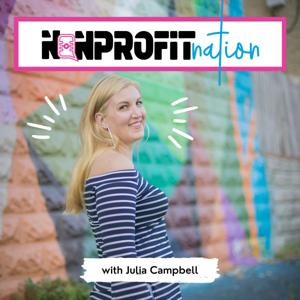
Ready for some real talk about nonprofits? Julia Campbell sits down with industry experts and practitioners to get advice on the best ways to build a thriving movement and a vibrant, passionate…
Nonprofit Nation is hosted by Julia Campbell, digital marketing and fundraising expert, nonprofit consultant, and author of Storytelling in the Digital Age: A Guide for Nonprofits and How to Build and Mobilize a Social Media Community for Your Nonprofit in 90 Days.
Julia helps nonprofits build movements, and in her work she teaches nonprofits how to build community, audience and raise influence on social media channels.
Be sure to click the subscribe button on Apple podcasts or wherever you get your podcasts.
Ranked by our users in the last 21 days

90,949 Listeners

38,001 Listeners

43,320 Listeners
25,764 Listeners
87,051 Listeners

111,852 Listeners
10,263 Listeners
9,063 Listeners
128 Listeners
1,124 Listeners

4,832 Listeners
57,574 Listeners
10,791 Listeners

10,585 Listeners
12,466 Listeners