
Sign up to save your podcasts
Or



Elephant seals collect data where ships rarely can. In this South Pole crossover, Dr. Clive McMahon explains how animal-borne sensors turn deep-diving southern elephant seals into partners in Southern Ocean monitoring. The tags collect temperature, salinity, depth, and ocean productivity data, especially during the Antarctic winter. The episode also explores seal behavior, population decline, Antarctic Bottom Water, climate monitoring, and how hard-to-reach observations improve oceanography and weather forecasting
If you enjoy this episode, you can find more from South Pole, a series dedicated to the science of Antarctica, on Spotify or Apple Podcasts, or all major platforms.
Support our science communication directly by donating to Pine Forest Media or directly on PayPal
Episode Guest: Dr. Clive McMahon
Review the research publication discussed in the episode here
Visit Dr. McMahon’s publications on Google Scholar
Visit the website of the Sydney Institute of Marine Sciences
Episode Transcript and more information on the Pine Forest Media Website
Follow Pine Forest Media on Instagram @pineforestmedia
Hosted, produced, written, and edited by Clark Marchese
Cover art and PFM logo by Laurel Wong.
Theme music by Nela Ruiz
Find some more Pine Forest Media podcasts below
Listen to Oceanography on Spotify or Apple Podcasts
Listen to Plastic Podcast on Spotify or Apple Podcasts
Listen to Something in the Water on Spotify or Apple Podcasts
Hosted on Acast. See acast.com/privacy for more information.
Solar geoengineering is also a question of power. Hassaan Sipra of the Alliance for Just Deliberation on Solar Geoengineering explains the governance and climate justice issues surrounding solar radiation modification. The conversation centers Global South and climate-vulnerable communities, meaningful participation, consent, research transparency, and the absence of robust international rules. It also makes clear that climate intervention cannot replace emissions cuts, adaptation, finance, or loss and damage.
Support our science communication directly by donating to Pine Forest Media or directly on PayPal
Episode Guests: Hassasn Sipra
Learn more about justice and SRM on the DSG website.
Listen to Pine Forest Media’s NEWEST PODCAST GREEN FREQUENCY
Episode Transcript and more information on the Pine Forest Media website
Follow Pine Forest Media on Instagram @pineforestmedia
Hosted, produced, and edited by Clark Marchese
Cover art by Jomiro Eming
Theme music by Nela Ruiz
Find some more Pine Forest Media podcasts below
Listen to Plastic Podcast on Spotify or Apple Podcasts
Listen to South Pole on Spotify or Apple Podcasts
Listen to Something in the Water on Spotify or Apple Podcasts
Hosted on Acast. See acast.com/privacy for more information.
Cleaner ship fuel created a climate experiment. Meteorologist Dr. Michael Diamond explains how shipping emissions influence cloud formation above the ocean and how the IMO sulfur cap changed that signal. Combined with disruptions to major shipping routes, the policy gave researchers a rare natural experiment for studying aerosols, clouds, and climate. The results also inform current questions about marine cloud brightening without turning past pollution into an argument for deployment.
Support our science communication directly by donating to Pine Forest Media or directly on PayPal
Episode Guests: Dr. Michael Diamond
Find Dr. Diamond’s published article on the impacts of the IOM regulation and preprint on the impacts of a changed shipping route.
Review Dr. Diamond’s publications on Google Scholar
Listen to Pine Forest Media’s NEWEST PODCAST GREEN FREQUENCY
Episode Transcript and more information on the Pine Forest Media website
Follow Pine Forest Media on Instagram @pineforestmedia
Hosted, produced, and edited by Clark Marchese
Cover art by Jomiro Eming
Theme music by Nela Ruiz
Find some more Pine Forest Media podcasts below
Listen to Plastic Podcast on Spotify or Apple Podcasts
Listen to South Pole on Spotify or Apple Podcasts
Listen to Something in the Water on Spotify or Apple Podcasts
Hosted on Acast. See acast.com/privacy for more information.
Reflecting sunlight would also change the ocean. Dr. Kelsey Roberts explores stratospheric aerosol injection through ocean and marine ecosystem models. The conversation examines possible changes to sea surface temperature, ocean chemistry, net primary production, fisheries, and food webs under different scenarios. It also explains why modeling is useful at this early stage and why the uneven ecological, economic, and social trade-offs belong inside any discussion of solar radiation modification.
Support our science communication by joining us on Patreon or sending us a gift on PayPal
Episode Guests: Dr. Kelsey Roberts
Find Dr Robert’s publication on the Potential Impacts of Climate Intervention on Marine Ecosystems
Review Dr. Robert’s publications on Google Scholar
Find more resources on geoengineering at GeoMIP
Learn more about Justice and Governance about SRM Technologies at DSG
Listen to COP30: Green Power for more on global climate policy
Episode Transcript and more information on the Pine Forest Media website
Follow Pine Forest Media on Instagram @pineforestmedia
Hosted, produced, and edited by Clark Marchese
Cover art by Jomiro Eming
Theme music by Nela Ruiz
Find some more Pine Forest Media podcasts below
Listen to Plastic Podcast on Spotify or Apple Podcasts
Listen to South Pole on Spotify or Apple Podcasts
Listen to Something in the Water on Spotify or Apple Podcasts
Hosted on Acast. See acast.com/privacy for more information.
Brighter marine clouds could cool parts of the ocean. Climate scientist Dr. Jessica Wan explains marine cloud brightening, a proposed solar geoengineering method that would add sea-salt particles to low marine clouds. Learn how stratocumulus clouds reflect sunlight, what climate models suggest about regional cooling, and why scale, uncertainty, side effects, and governance matter. The episode treats marine cloud brightening as a research question, not a ready-made climate solution.
Support our science communication by joining us on Patreon or sending us a gift on PayPal
Episode Guests: Dr. Jessica Wan
Visit Dr. Wan’s Website
Review Dr. Wan’s publications on Google Scholar
Connect with Dr. Wan on LinkedIn
Find Dr. Wan’s articles on MCB in a warmer world and MCB and El Niño
Learn more about Justice and Governance about SRM Technologies at DSG
Episode Transcript and more information on the Pine Forest Media website
Follow Pine Forest Media on Instagram @pineforestmedia
Hosted, produced, and edited by Clark Marchese
Cover art by Jomiro Eming
Theme music by Nela Ruiz
Find some more Pine Forest Media podcasts below
Listen to Plastic Podcast on Spotify or Apple Podcasts
Listen to South Pole on Spotify or Apple Podcasts
Listen to Something in the Water on Spotify or Apple Podcasts
Hosted on Acast. See acast.com/privacy for more information.
Can the ocean keep carbon out of the atmosphere? Oceanographer Dr. Morgan Raven explains marine carbon dioxide removal and the search for environments that can store organic carbon for long periods. The conversation moves through mangroves, fjords, oxygen-poor waters, and deep-sea brines to examine ocean carbon sequestration. It also makes the uncertainties clear, including measurement, ecological risk, coastal differences, and what must be proven before any method can scale.
Support our science communication by joining us on Patreon or sending us a gift on PayPal
Episode Guests: Dr. Morgan Raven
Review Dr. Raven’s publications on Google Scholar
Check out the work of the NOISE Lab
Listen to COP30: Oceans on the Rise? for more on mCDR
10 New Insights in Climate Science for 2025 by Future Earth
Episode Transcript and more information on the Pine Forest Media website
Follow Pine Forest Media on Instagram @pineforestmedia
Hosted, produced, and edited by Clark Marchese
Cover art by Jomiro Eming
Theme music by Nela Ruiz
Find some more Pine Forest Media podcasts below
Listen to Plastic Podcast on Spotify or Apple Podcasts
Listen to South Pole on Spotify or Apple Podcasts
Listen to Something in the Water on Spotify or Apple Podcasts
Hosted on Acast. See acast.com/privacy for more information.
Ocean conservation can begin with ancestral relationships. Conservation scientist Juan Carlos Cruz explains how the Ancestral Tides initiative supports biocultural conservation with Indigenous and local coastal communities across Latin America. The work brings Indigenous knowledge and marine science together around sea turtle conservation, mangroves, coral reefs, and nesting beaches. The episode centers community leadership, cultural continuity, and long-term coastal conservation rather than presenting one knowledge system as a substitute for another.
Support our science communication by joining us on Patreon or sending us a gift on PayPal
Special thanks to the Monterey Bay Aquarium for sponsoring this episode.
Episode Guests: Juan Carlos Cruz
Visit the Amazon Conservation Team website
Visit the Ancestral Tidesw webpage
Review the Ancestral Tides Annual Report
Episode Transcript and more information on the Pine Forest Media website
Follow Pine Forest Media on Instagram @pineforestmedia
Hosted, produced, and edited by Clark Marchese
Cover art by Jomiro Eming
Theme music by Nela Ruiz
Find some more Pine Forest Media podcasts below
Listen to Plastic Podcast on Spotify or Apple Podcasts
Listen to South Pole on Spotify or Apple Podcasts
Listen to Something in the Water on Spotify or Apple Podcasts
Hosted on Acast. See acast.com/privacy for more information.
Every ocean trench is a world shaped by geology. Professor Alan Jamieson guides a journey into the hadal zone, beginning around 6,000 meters below the surface. Learn how tectonic plates create ocean trenches, why pressure and isolation produce distinct habitats, how life survives at full ocean depth, and what decades of deep ocean exploration have corrected about the popular image of a single empty abyss.
Support our science communication by joining us on Patreon or sending us a gift on PayPal
Special thanks to the Monterey Bay Aquarium for sponsoring this episode.
Episode Guest: Professor Alan Jamieson
Listen to the Deep Sea Podcast!
Browse Professor Jamieson’s publications on Google Scholar
Visit the Hadal Zone Deep Sea Research Center and follow their work on Instagram
Episode Transcript and more information on the Pine Forest Media website
Follow Pine Forest Media on Instagram @pineforestmedia
Hosted, produced, and edited by Clark Marchese
Cover art by Jomiro Eming
Theme music by Nela Ruiz
Find some more Pine Forest Media podcasts below
Listen to Plastic Podcast on Spotify or Apple Podcasts
Listen to South Pole on Spotify or Apple Podcasts
Listen to Something in the Water on Spotify or Apple Podcasts
Hosted on Acast. See acast.com/privacy for more information.
The deep sea is not one dark, featureless place. Deep-sea researcher Dr. Thom Linley maps the ocean below sunlight as a connected world of depth zones with changing pressure, temperature, food, and life. From the bathyal and abyssal zones to hadal trenches, the episode explains how animals adapt, why scientific boundaries are useful but imperfect, and what technology is required for deep ocean exploration.
Support our science communication by joining us on Patreon or sending us a gift on PayPal
Special thanks to the Monterey Bay Aquarium for sponsoring this episode.
Episode Guests: Dr. Thomas Linley
Listen to the Deep Sea Podcast!
Browse Dr. Linley’s publications on Google Scholar
Episode Transcript and more information on the Pine Forest Media website
Follow Pine Forest Media on Instagram @pineforestmedia
Hosted, produced, and edited by Clark Marchese
Cover art by Jomiro Eming
Theme music by Nela Ruiz
Find some more Pine Forest Media podcasts below
Listen to Plastic Podcast on Spotify or Apple Podcasts
Listen to South Pole on Spotify or Apple Podcasts
Listen to Something in the Water on Spotify or Apple Podcasts
Hosted on Acast. See acast.com/privacy for more information.
The ocean is losing oxygen, with effects across food webs. Dr. Sven Pallacks explains ocean deoxygenation, how oxygen enters and moves through seawater, and why oxygen minimum zones develop. The episode connects warming, circulation, dead zones, and marine life, then uses fish ear stones called otoliths to examine past declines in mesopelagic fish. A clear introduction to an invisible change reshaping ocean ecosystems..
Support our science communication by joining us on Patreon or sending us a gift on PayPal
Special thanks to the Monterey Bay Aquarium for sponsoring this episode.
Episode Guests: Dr. Sven Pallacks
Find Dr. Pallacks’ publications on Google Scholar
Read Dr. Pallacks’ article, Ocean deoxygenation linked to ancient mesopelagic fish decline.
Visit the Smithsonian Tropical Research Institute website
Visit the O'DEA Lab here
Episode Transcript and more information on the Pine Forest Media website
Follow Pine Forest Media on Instagram @pineforestmedia
Hosted, produced, and edited by Clark Marchese
Cover art by Jomiro Eming
Theme music by Nela Ruiz
Find some more Pine Forest Media podcasts below
Listen to Plastic Podcast on Spotify or Apple Podcasts
Listen to South Pole on Spotify or Apple Podcasts
Listen to Something in the Water on Spotify or Apple Podcasts
Hosted on Acast. See acast.com/privacy for more information.
From the publisher's feed
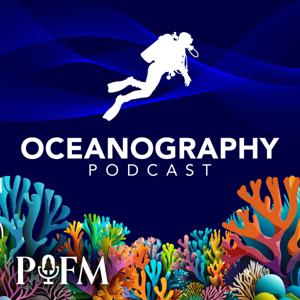
The ocean is never separate from human life. Oceanography is a marine science podcast about what we know, how we know it, and what we choose to do with that knowledge.
Hosted by science…
Each episode makes complex research accessible without flattening it, connecting marine biology and ocean discovery with conservation, technology, justice, power, and global policy. Expect deep-dive interviews, narrative explainers, and field reporting grounded in curiosity, rigor, and the belief that understanding the ocean should help us care for it.
Oceanography is an endorsed activity of the United Nations Decade of Ocean Science for Sustainable Development and is produced by Pine Forest Media
Hosted on Acast. See acast.com/privacy for more information.

90,991 Listeners
5,664 Listeners
12,175 Listeners

87,077 Listeners
1,247 Listeners

969 Listeners

16,364 Listeners
460 Listeners
6,584 Listeners
90 Listeners

15,915 Listeners
2,316 Listeners

10,782 Listeners
9 Listeners
4 Listeners
6 Listeners

1 Listeners
37 Listeners