
Sign up to save your podcasts
Or

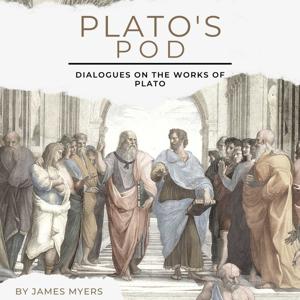

“Think the event” is central to the philosophy of Alain Badiou, a modern Platonist who has been writing and lecturing in philosophy for over five decades. Badiou said, “Philosophy is the seizure of thought of what breaks with the sleep of thought,” because real truth is found by looking for the exceptions and finding the important connections in time that we have overlooked. Badiou’s insight is that you can’t see until your eyes have been opened by an “event,” and to his thinking events happen like shockwaves that shake the scales from your eyes and allow you to see something you missed before because you were so invested in one way of looking at the world.
In discussing selections from Badiou’s writing and lectures from several decades ago, James Myers and Michael Fitzpatrick found many connections between the the polarized politics of today and the philosopher’s work and views on political organization and practices of his time. As opposition is increasingly entrenched, Badiou said the key is to base political actions on a truth such as justice that all factions could reasonably support, making the political challengers commensurable to truth rather than existing only to oppose each others’ ideas.
The three great tasks of philosophy, Badiou says, are “to deal with choice, with distance, and with the exception.” The event is the exception, and philosophy leads us to understand the connections of cause and effect in the exceptions that shape our lives. Thinking the event helps us to distinguish the real from the shadowy projections on the wall of Plato’s allegory of the cave, and by opening our eyes to what really happened we regain our agency for change to make something different happen.
 View all episodes
 By James Myers

4.2
99 ratings
“Think the event” is central to the philosophy of Alain Badiou, a modern Platonist who has been writing and lecturing in philosophy for over five decades. Badiou said, “Philosophy is the seizure of thought of what breaks with the sleep of thought,” because real truth is found by looking for the exceptions and finding the important connections in time that we have overlooked. Badiou’s insight is that you can’t see until your eyes have been opened by an “event,” and to his thinking events happen like shockwaves that shake the scales from your eyes and allow you to see something you missed before because you were so invested in one way of looking at the world.
In discussing selections from Badiou’s writing and lectures from several decades ago, James Myers and Michael Fitzpatrick found many connections between the the polarized politics of today and the philosopher’s work and views on political organization and practices of his time. As opposition is increasingly entrenched, Badiou said the key is to base political actions on a truth such as justice that all factions could reasonably support, making the political challengers commensurable to truth rather than existing only to oppose each others’ ideas.
The three great tasks of philosophy, Badiou says, are “to deal with choice, with distance, and with the exception.” The event is the exception, and philosophy leads us to understand the connections of cause and effect in the exceptions that shape our lives. Thinking the event helps us to distinguish the real from the shadowy projections on the wall of Plato’s allegory of the cave, and by opening our eyes to what really happened we regain our agency for change to make something different happen.
15,248 Listeners
3,420 Listeners
867 Listeners

3,240 Listeners
6,738 Listeners

112,105 Listeners

6,062 Listeners
50,349 Listeners
3,304 Listeners

15,663 Listeners