
Sign up to save your podcasts
Or

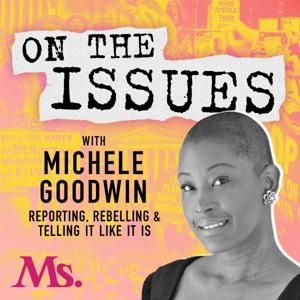


On January 15, 2020, Virginia became the critical 38th state to ratify the Equal Rights Amendment, or ERA—a proposed amendment to the U.S. Constitution that reads: “Equality of rights under the law shall not be denied or abridged by the United States or by any state on account of sex.” Virginia’s ratification raised important questions about the viability of an amendment that had been stymied for decades.
What does the promise of the ERA hold in the continued battle for equality and freedom? What roles have women of color played to secure the ERA? In the wake of Justice Ruth Bader Ginsburg’s death, what is the modern platform for women’s equality?
Helping us to sort out these questions (and more) are very special guests:
Rate and review “On the Issues with Michele Goodwin" to let us know what you think of the show! Let’s show the power of independent feminist media.
Check out this episode’s landing page at MsMagazine.com for a full transcript, links to articles referenced in this episode, further reading and ways to take action.
Support the show
President Trump has appointed and confirmed a near record number of judges to the federal bench in four years. In fact, nearly one-third of all active federal judges on the U.S. appeals courts have been appointed by Trump. On the federal courts of appeal, the president has not appointed one African American and only one Latino judge.
These issues are magnified by Trump’s recent nomination of Judge Amy Coney Barrett to fill the vacancy on the Supreme Court left by the passing of Justice Ruth Bader Ginsburg—a nomination made 38 days before the Election Day, during a time in which some voters across the country are already in the process of voting. The passing of Justice Ginsburg and the promise of confirmation hearing, even during COVID and while the president is under medical surveillance, has now caused an uproar.
How did we get here? And what can we do to bring balance back to the U.S. judicial system?
Helping us to sort out these questions are very special guests:
Rate and review “On the Issues with Michele Goodwin" to let us know what you think of the show! Let’s show the power of independent feminist media.
Check out this episode’s landing page at MsMagazine.com for a full transcript, links to articles referenced in this episode, further reading and ways to take action.
Support the show
On today’s show, we focus on the question: Can the president suspend the elections? The short answer: No. But while the law is clear, President Trump’s efforts to delay the elections, sow distrust in our democratic processes, and wreak havoc on the U.S. electoral process are already well underway.
On July 30, President Trump tweeted mail-in voting will make this year’s elections “the most inaccurate and fraudulent election in history.” (In reality, mail-in voter fraud averages 0.0025 percent.) This, just months after he and others dismissed as ridiculous Democratic presidential nominee Joseph Biden’s warnings in April that Trump might “try to kick back the election somehow” or “come up with some rationale why it can’t be held.”
The president’s tweets and public comments raise serious questions about the integrity of the upcoming elections. For example, what are the ramifications of Trump suggestions that we suspend the election? Will access to mail-in ballots (or lack thereof) impact voter turnout? Can Trump invoke martial law if he loses the election? What are the possible threats to our democracy come November?
Helping us to sort out these questions are special guests:
Rate and review “On the Issues with Michele Goodwin" to let us know what you think of the show! Let’s show the power of independent feminist media.
Check out this episode’s landing page at MsMagazine.com for a full transcript, links to articles referenced in this episode, further reading and ways to take action.
Support the show
On today’s show, we focus on going back to school during the COVID-19 pandemic. The beginning of the 2020 school year is nothing like before. The word “difficult” is an understatement—and it’s difficult for all: for teachers, for students, for parents, (especially mothers) and for our colleges and universities too. Meanwhile, economic strains on families are sky-high as many families face eviction, and affordable child care is out of reach.
Helping us to sort out questions related to schooling during pandemic and how we should think about these issues and more:
Rate and review “On the Issues with Michele Goodwin" to let us know what you think of the show! Let’s show the power of independent feminist media.
Check out this episode’s landing page at MsMagazine.com for a full transcript, links to articles referenced in this episode, further reading and ways to take action.
Support the show
From a frozen asylum system, huge camps on the Mexico border and family separation policies, to the worsening lack of healthcare and the aftereffects of COVID-19, Latinx communities are at a disadvantage both inside and outside U.S. borders. In this episode, we focus on events over the last few years greatly impacting Latinx communities: socially, economically and politically—as Trump administration immigration policies have resulted in child separation,huge camps on the Southern border, stalled immigration and much more.
Meanwhile, those held in detention centers face an added layer of challenges—ranging from lost children, to an increased risk of COVID infections. Are detainees seeking self-deportation to avoid contracting COVID? And what about sexual abuse? Despite numerous lawsuits and thousands of complaints filed against detention facilities staff, this staggering pattern of sexual abuse seems to continue in immigration detention centers.
Guests:
Rate and review “On the Issues with Michele Goodwin" to let us know what you think of the show! Let’s show the power of independent feminist media.
Check out this episode’s landing page at MsMagazine.com for a full transcript, links to articles referenced in this episode, further reading and ways to take action to protect immigrant families.
Support the show
Tune in on September 8, 2020 for an important episode on immigration in the United States.
Support the show
In this episode, in the midst of the centennial anniversary of women's securing the right to vote, we focus on the 19th Amendment. The perpetual struggle for U.S. voting rights has been fraught with conflict, and the fight for women’s suffrage was no exception. Even after the 19th Amendment was passed, women of color were denied the opportunity to vote: Black women were kept from voting through insidious practices like poll taxes and long wait times (some which still exist today); Indigenous women, many of whom inspired the initial Euro-American push for women’s rights and suffrage, were not considered citizens; and Asian women could not naturalize for citizenship. In fact, until the mid-1950s, laws enacted by Congress—including the Page Act—made it very difficult for Asian women who immigrated to the U.S. to become citizens.
Because voting rights are central to our democracy, we devote this episode to the 19th Amendment, its history and the road ahead.
Helping us to understand the power and the promise of the vote and what this means for women’s empowerment are two very special guests:
Support the show
In this episode, we focus on why #WeHaveHerBack. You heard it recently in the wake of Sen. Kamala Harris’s selection as the vice presidential candidate for the Democratic ticket. #WeHaveHerBack is as a powerful challenge to newsrooms to avoid sexism in media representation. Tina Tchen, president and CEO of Time’s Up Now, joins host Dr. Michele Goodwin to talk the importance of having Harris’s back—and other women candidates’ backs, too.
Today’s episode also focuses on women’s political leadership, starting with the urgent need to repeal the Helms Amendment. Dr. Goodwin is joined by two pathbreaking members of Congress—Representatives Jan Schakowsky and Barbara Lee—to discuss why women’s leadership has been central to forging political representation, equality and fighting for reproductive health, rights and justice—at home and abroad. Their leadership helps to put in context why the #WeHaveHerBack campaign is so important, and why women’s leadership matters.
This week, on the issues:
• Representative Barbara Lee represents California’s 13th district, which serves Oakland and the East Bay. She is the highest-ranking Black woman in Congress. She is also a senior member of the Appropriations Committee, serves as co-chair of the majority leader’s Task Force on Poverty and Opportunity, co-chair of the Pro Choice Caucus, and is former chair of the Congressional Black Caucus and Congressional Progressive Caucus.
• Representative Jan Schakowsky represents Illinois's 9th congressional district, which includes Chicago's North Side. She is the House senior chief deputy whip, chair of the Energy and Commerce Consumer Protection and Commerce Subcommittee, and chair of the Congressional Pro-Choice Caucus Providers and Clinics Task Force.
• Tina Tchen is president and CEO of Time’s Up Now. She is the former assistant to President Barack Obama and served as chief of staff to First Lady Michelle Obama. She was also the executive director of the White House Council on Women and Girls.
Support the show
On this episode of On the Issues with Michele Goodwin, we review the 2019-2020 Supreme Court term. Since 1790, of the 113 individuals who have served on the Supreme Court, only four have been women. Similarly, in over 230 years, only three justices have been persons of color—two of whom presently serve on the Court. Under Trump, the vast majority of judges confirmed to the nation’s federal courts are white men. Thus, in over two hundred years, very little has changed in terms of the Court’s composition.
Where do women fit in? How can the Court evolve in recognizing the rights of women and marginalized groups when it doesn't reflect the actual makeup of the U.S.?
On this episode, we review the 2019-2020 Supreme Court term—which has been a roller coaster, leaving many to wonder about the Court’s commitment to equality, inclusion and nondiscrimination—despite decisions that appeared to be wins for vulnerable communities. For example, despite a win in June Medical on abortion rights, the Trump administration has gutted reproductive health policies put in place during the Nixon administration—such as Title X, which provides reproductive healthcare for the poorest Americans. As well, many concerned about racial equality view the Court as slipping in its regard for equal opportunity and the protection of due process for people of color.
Joining Dr. Michele Goodwin as we try to understand these issues are:
Support the show
On this special episode, we focus on toxic masculinity in the U.S., including online misogyny, and how it translates into real-world violence—highlighted most recently in the horrific murder of Daniel Anderl, the son of U.S. District Court Judge Esther Salas, and the shooting of her husband Mark Anderl. The person assumed responsible for those tragedies is Roy Den Hollander, a self-proclaimed “men’s rights” activist—part of a growing movement of men who describe themselves as frustrated by women. Some members of this movement are also known as “incels.”
We also turn to the everyday harassment women experience—even in Congress, like in the case of Rep. Alexandria Ocasio-Cortez (D-N.Y.), who was accosted by Rep. Ted Yoho (R-Fla.). Representative Yoho called her “disgusting,” “a “f***ing bitch,” and at first denied it. Rep. Yoho claimed his “passion” got the better of him and offered what many would describe as a rambling floor speech in which his daughters and wife were centered. However, he did not apologize. For some women, this looked like typical workplace misogyny they endure all the time.
What lessons can be drawn from these incidents and others? Has toxic masculinity gone too far?
Joining me to talk about incels, the ways in which racism intersect with misogyny in the U.S. and on the internet and the antifeminist movement are three special guests.
• Jill Filipovic is a columnist for CNN, a contributor to the New York Times, a lawyer and the author of the forthcoming "OK BOOMER, LET'S TALK: How My Generation Got Left Behind,” as well as "The H-Spot: The Feminist Pursuit of Happiness."
• Saida Grundy, PhD., is an assistant professor of sociology and African American studies at Boston University. Her research explores the intersection of race with masculinity, rape culture and campus sexual assault. Professor Grundy is author of the forthcoming book "Manhood Within the Margins: Promise, Peril and Paradox at the Historically Black College for Men."
• Jackson Katz, Ph.D., is an internationally acclaimed educator, author and scholar-activist on issues of gender, race and violence. Through his books, documentaries, public speaking and articles, Katz has tackled issues of masculinity, racism and violence.
Support the show
From the publisher's feed

6,783 Listeners

36,265 Listeners

8,468 Listeners

4,056 Listeners

3,992 Listeners

3,476 Listeners

87,221 Listeners
9,316 Listeners
4,590 Listeners

5,715 Listeners

1,768 Listeners

16,062 Listeners

10,687 Listeners

6,908 Listeners
1,745 Listeners