Open Windows Podcast

Open Windows Podcast

By openwindowsArtsBooks
Download on the App Store

Open Windows Podcast episodes

  • Jonas Zdanys Open Windows: Poems and Translations
    Today’s program is about the image or presence of God in poetry. That includes, more widely, the incorporation of “the gods,” the divine, the numinous and the transcendent as well. The program is not about what we might refer to as “religious poetry” as such – though, of course, the appearance or evocation of the divine in poetry can be linked to various religious traditions. Rather, it is about how the idea of the divine in poetry – however that sense of divinity is depicted - might, indeed, be a reflection of a deeper human need for “epiphany” and salvation and redemption on a human scale as well as on some more cosmic platform. The program provides a quick historical look at principal literary texts that incorporate that sense of the divine and ends with some poems from my book Cormorants.
    26 min
  • Jonas Zdanys Open Windows: Poems and Translations
    Today’s program is about prose poetry. That is, about a kind of poetry that is both prose and poetry. It is a form that started with the French poet Charles Baudelaire, who in 1862 published the first twenty such poems, and it has developed since then into a widely used and widely accepted poetic and general literary genre. Today’s program talks about what prose poetry is, offers some discussion of how it differs from another very short literary form called ”flash fiction,” and ends with my translations of prose poems by the Lithuanian poet Henrikas Radauskas as well as some of my own prose poems.
    18 min
  • Jonas Zdanys Open Windows: Poems and Translations
    Today’s program marks the publication of my new book, Notebook Sketches, which is being released today (May 15, 2019). The program is about how poets can use various voices when writing and how such varied voices allow poets to write about things they do not know about directly. The command to “write about what you know,” I suggest, should be ignored and poets should write about what they don’t know but can imagine. That is the process through which the literary imagination works at its best, and it allows poets to move beyond the usual overly-personal and repetitive “confessional” voice that dominates contemporary American poetry. The program includes an overview of what lyrical narrative voices can be and then presents poems from Notebook Sketches as examples of different voices and different imaginative poetic perspectives.
    23 min
  • Jonas Zdanys Open Windows: Poems and Translations
    Today’s program is about using myths when writing poems. The program includes an overview of what myth is and then presents poems that use myth as a foundational thematic device. Those poems include my translations of poems about the Greek queen of the underworld, Persephone, by the Lithuanian poet Nijolė Miliauskaitė, and three of my poems: two that use the figure of the Greek mythological figure Icarus, from my book The Kingfisher’s Reign, and one that incorporates a version of the Egyptian sky-god Horus, from Three White Horses.
    20 min
  • Jonas Zdanys Open Windows: Poems and Translations
    Today’s program is about poems written about other works of art. Such poems are part of a long literary tradition called the “ekphrastic tradition” and they provide a different perspective on how we might experience works of art generally. The program includes a brief literary history of the form, including comments about Homer’s The Iliad, Keats’ “Ode on a Grecian Urn,” and Pictures from Brueghel by William Carlos Williams. It also includes my translations of ekphrastic poems by three Lithuanian poets as well as two of my own ekphrastic poems.
    22 min
  • Jonas Zdanys Open Windows: Poems and Translations
    Today’s program is about why so many people hate poetry. We are told, right from the start, that there are mysteries in poems that none of us are smart enough to understand or to figure out without help. Our teachers want us to restate what the poet is saying – to "figure out” the “real meanings.” And they tell us, too often I think, that what we say when we “restate” what the poet is saying, is “wrong”. So we turn away from poetry. That’s not the approach to reading a poem and understanding a poem that I encourage, and this program talks about how we might best read and listen to poems. It includes my translations of poems by the Lithuanian poet Vladas Šlaitas and a few of my own poems. If there is a theme or topic you would like me to explore in these programs, please let me know. My contact information is on my webpage, jonaszdanys.org

    21 min
  • Jonas Zdanys Open Windows: Poems and Translations
    Today’s program is about the idea of epiphany and how lyric poetry presents epiphanic insights and revelations. It focuses on haiku and includes translations of haiku by several Lithuanian poets and some of my own haiku. Today’s poems illustrate a fundamental role of lyric poetry: it defines moments of epiphany, sudden and deeply powerful realizations of significance and meaning, of the thing seen and of the effect felt or understood. The experience presented is typically free of narrative progression but not necessarily free of the concentric circles of the considered moment, that is, of all the horizontal details of such a moment. There is a story to be told in lyric poetry, but it is a story that does not unfold over time but exists in a momentary lightning flash.
    And welcome to listeners not just in the United States but in Lithuania, Norway, Portugal, and now Sweden.
    If there is a theme or topic you would like me to explore in these programs, please let me know. My contact information is on my webpage, jonaszdanys.org
    15 min
  • Jonas Zdanys Open Windows: Poems and Translations
    Today’s program is about writing poems about places. It includes my translations of poems by Lithuanian poets Jonas Mekas and Tautvyda Marcinkevičiūtė, and three short sections of my long poem St. Brigid’s Well. Today’s poems illustrate some of the many roles “place” plays in literary texts and suggest that a sense of “place” allows both the reader and the writer to share the experience framed in the poem more fully. Today’s program was inspired as well by the fact that listeners of this program live in various places, including the United States, Lithuania, Portugal, and Norway.  I’m delighted that Open Windows brings those places closer together.
    If there is a theme or topic you would like me to explore in these programs, please let me know. My contact information is on my webpage, jonaszdanys.org
    19 min
  • Jonas Zdanys Open Windows: Poems and Translations
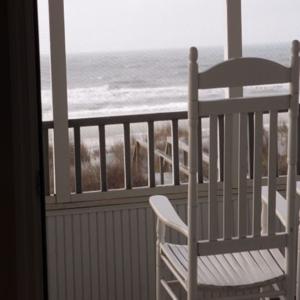
    Today’s program is about flowers.  It includes an excerpt from my translation of Stalemate, a novel by the Lithuanian-Israeli writer Icchokas Meras, as well as three of my own poems. This program was inspired by my visit last week to the Isle of Palms in South Carolina. While sitting quietly in a Carolina Rocker on the back porch of the rented house there, I was wrapped by the most extraordinary fragrance of flowers. So I wanted to consider some of the significances of flowers, presented in these works as part of transcendent experiences with and because of our connections to the natural world.
    19 min
  • Jonas Zdanys Open Windows: Poems and Translations
    Today’s program takes a look at early poems – by the Lithuanian poet Nijole Milauskaite and by me (poems I wrote when I was 16 and 17) – and considers the idea that lyric poets often write about themselves in their early works because they seek to create a sense of themselves for themselves and not only for their readers. Such early writing is not just an impulse to reveal hidden secrets and personal or family histories but to create a foundation for personal as well as future artistic development.
    20 min

About Open Windows Podcast

From the publisher's feed

OPEN WINDOWS Looking in and looking out. A program of poems and translations

