
Sign up to save your podcasts
Or



Based on Podcast App listening data
For years, gamers and the gaming industry have been a testing ground for many of the topics we regularly discuss on Organized Money: digital licenses standing in for true ownership; unending subscriptions; dark patterns; endless consolidation; and more. Now gamers are organizing to fight corporate greed.
Today, David Dayen and Laurel Kilgore speak with Otis East, a founding member of Players Alliance HQ, and Zefrine, a Sims content creator, about the gaming industry, and their work around the $55 billion acquisition of Electronic Arts by Saudi Arabia’s Public Investment Fund and its partners, including a "raid" on EA headquarters As digital distribution gives publishers greater control over the games people buy, East and Zefrine argue that gamers need to organize to defend their rights and ensure that paying for a game still means owning it.
Over the last several weeks, AI regulation fever has swept Congress, with competing ideas coming from various corners of Congress and the AI giants. On the table are solutions ranging from formal bans on superintelligence to a self-regulatory regime similar to banks.
Today, David and Laurel sit down with Rep. Pramila Jayapal (WA-07) to discuss her approach. The National AI Charter Act Framework, which relies on an old but reliable method of regulating AI companies using corporate charters: "“The crux of this bill is simple: if you want to be an AI company in this country, you have to obtain a public charter that has a broad set of terms and conditions to operate and ensure public benefit without the harms.” With Rep. Jayapal, we get into her bill, a history of corporate charters, and what exactly we want from corporate regulations from AI to healthcare.
With Matt on paternity leave, David is joined by co-host Laurel Kilgour to talk college sports!
The Protect College Sports Act is a piece of legislation which seeks to do the opposite of what it says on the tin. Instead of “saving” college sports, it seeks to roll back the recent spate of state and federal rulings that have granted college athletes more rights over their likenesses, easier mobility between teams, and pay from the schools themselves. The bill just passed the Senate easily, but is likely to face more opposition in the House of Representatives.
Today on the show, we’re joined by Organized Money alum Katie Van Dyck of the American Economic Liberties Project, to discuss the Protect College Sports Act, the recent history of pro-athlete rulings, and the ways the bigwigs who control college sports are trying to sell the bill to Congresspeople, and to the public at large.
Matt is out (for happy reasons), so please enjoy this repeat from last year. It's one of our favorite episodes, and we'll be back soon!
Today on the show, Matt and David sit down with Sam Levine and Stephanie Nguyen, formerly of the FTC under Lina Khan, to discuss the dark side of customer loyalty programs like frequent flyer miles, corporate discount cards, and ordering apps from chains like Starbucks and McDonalds. Their new paper, The Loyalty Trap: How Loyalty Programs Hook Us with Deals, Hack our Brains, and Hike Our Prices, exposes the lengths these programs go to to get you into their ecosystem in order to harvest your data, exploit it, and manipulate you to spend more, sometimes with surveillance pricing strategies. Together they discuss why these programs have proliferated, why they are so effective, and why they have been so difficult to regulate.
If you love Organized Money, support us! Go to Organizedmoney.fm to subscribe to our newsletter, or Organizedmoney.fm/donate to throw us a donation. It helps us keep the lights on!
Whether or not you buy into the argument that AI will kill all humanity, it’s inarguable that there’s suddenly a rush to find a regulatory framework for AI in DC with the support of the AI giants themselves. But until recently, Anthropic and OpenAI were full steam ahead—what gives? What if this is actually about something much more mundane? What are they really afraid of?
On today’s episode, we sit down with Organized Money alum David Seligman of Towards Justice, and Colorado State Representative Javier Mabrey to find out. David and Javier have been at the front lines of state-level regulation of AI, which descended into a morass of gubernatorial interference and lobbying muscle, all surrounding one very important, but also very normal issue: legal liability. We get into the history of Colorado’s AI legislation, the move to repeal and replace it, and the way big tech muscled in at the last moment to get what they wanted, which all just boiled down to not wanting to be liable for their potentially destructive products.
Have you noticed the seemingly endless, catastrophic sounding text messages from political candidates? Messages like: “Barack Needs Your Help!”; “Social Security Is Ending!”; or “Help, We’re Losing The Election!”, all ending with a plea to throw in a donation.
These spam messages are part of a sophisticated and profitable arm of political fundraising that has grown substantially over the last decade. It’s gone from grassroots fundraising to what can arguably be called elder fraud—where small numbers of frightened, sometimes mentally unwell Americans give hundreds or thousands in response to these text messages.
Today on the show, Matt and David sit down with Adam Bonica, a political scientist and author of “Hook and Squeeze:
How Democratic consultants, committees, and party leaders built a fundraising spam pipeline that funnels money from a captive pool of elderly donors into their own operations.”, to find out how and why the Democratic Party embraced this style of political marketing, why it feels so entrenched in party politics, and what we can do about it. We’ll also get into the strange story of Adam’s research, which was edited and fact-checked by The New York Times for months, before spiking the story out of fear from political consultants. Read more about the story, and check out Adam’s writing at Data4Democracy.
Michigan's Senate race between Republican Mike Rogers and populist Democrat Abdul El-Sayed is shaping up to be a proxy for the midterm elections as a whole. El-Sayed's message of Money in Your Pocket and Medicare for All has clearly resonated with the season's most energized voters, while his anti-corporate bonafides led him to victory over the more establishment Democrat, Haley Stevens in the primary.
Today on the show, Matt and David sit down with El-Sayed to discuss markets and his anti-monopoly platform, how Medicare for All will create more competition, the uselessness of PBMs, the way big agriculture bullies Michigan's cherry farmers, beef and meatpacking regulation, the AI bubble, and the importance of Democrats actually doing something if and when they retake congress.
One of Trump’s staunchest constituencies, cattle ranchers (and their congressional representatives) are in revolt. You might think rising beef prices might be good for ranchers, but in fact, most ranchers have little say in how much their stock sells at market, and see little return on what consumers pay. It’s because of a complex, but highly concentrated system of ranchers, feeders, packers, and processors which squeeze the little guy—now exacerbated by weak herds, tariff shenanigans, and an unpopular Trump-backed scheme to import mystery beef.
Today on the show, Matt and David are joined by Mike Callicrate, owner of Ranch Foods Direct and rancher advocate to help explain how beef gets from the ranch to plate, the ways the system exploits independent ranchers, and why ranchers have finally had enough of Trump’s beef policy, despite their usually-unwavering loyalty. We also discuss the incentives the big meat producers have to push people away from beef and towards chicken and pork, Mike's incredible class action case against Tyson, and legislative and community solutions for a more equitable food ecosystem.
This week, a solo-David is joined by Dan Jacobs, chef, restaurant owner, and active member of the Independent Restaurant Coalition to discuss a looming threat to neighborhood restaurants: the proposed merger between the food giant Sysco, and the cash-and-carry Restaurant Depot.
Restaurants already operate on thin margins, but this merger threatens to cut off a major source of restaurant bargaining power and a competitive check on the market. As a result, this merger could reverberate through the restaurant industry and local economies, forcing limited menus, thinner margins, and even closures. We also discuss how restaurants are being squeezed by post-pandemic changes in food prices and the labor market, child care needs, and credit card swipe fees. We also get into the value of small restaurants organizing and potential legislative solutions to help keep local dining thriving.
Finally, we end on another edition of Makan' Fun, our now-regular segment on the ongoing drama surrounding the Paramount Warner Bros. merger.
We've discussed the financial aspects of the AI boom and bubble in previous episodes, but today we're trying to demystify the technology itself.
This week we're joined by Gary Marcus, scientist and author of many books about AI and the Marcus On AI Substack. We discuss how chatbots like ChatGPT work, how they've advanced in recent years by harnessing large language models to more traditional symbolic AI systems, and also how the technology still feels stuck in the mud.
We also discuss the economic problems these technologies have to overcome, whether there's really demand for AI compute, get into recent the hype for AI "hacks" and math breakthroughs, and finally get into regulatory solutions, based on Gary's congressional testimony on AI.
From the publisher's feed
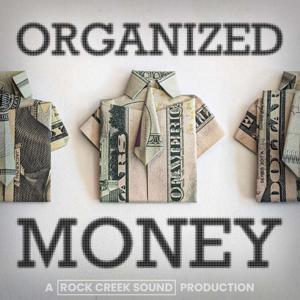
Organized Money is a podcast about how the business world really works, and how corporate consolidation and monopolies are dominating every sector of our economy. The series is hosted by…
If you care about an economy that is free and open, one not controlled by a handful of corporations, Organized Money is for you. New episodes out every week until the end of the year. Organized Money is a Rock Creek Sound production, from executive producers Ari Saperstein and Ellen Weiss, and senior producer Benjamin Frisch.
Ranked by our users in the last 21 days

1,970 Listeners

1,461 Listeners
1,198 Listeners

1,585 Listeners

6,103 Listeners

3,910 Listeners
626 Listeners
1,499 Listeners

2,074 Listeners

576 Listeners

215 Listeners
2,705 Listeners
1,063 Listeners

562 Listeners

366 Listeners