
Sign up to save your podcasts
Or



Based on Podcast App listening data
California is known as a bastion of blue state values, but when you start to look at how the state’s legislative sausage gets made, you start to notice how completely borked America’s most populous regulatory state has become. Today on the show, we have Jamie Court, a consumer advocate and president and chairman of Consumer Watchdog, to break down California’s weirdness and some of his organization's recent work.
First, we discuss how industries like insurance and ridesharing have captured so much of the state legislature, before honing in on how Uber specifically is running laps around its own regulators, with a fresh, bonus slush fund to boot. Then we discuss robotaxis and the role of the California insurance commissioner, currently held by the embattled Ricardo Lara, and how future commissioners might help untangle this morass. Finally, they get into why gas prices are so much higher in California than elsewhere in the United States. And no, gas taxes aren’t the whole story.
While David is out on vacation, Matt is joined by Organized Money alum Alvaro Bedoya as co-host this week. He's a former FTC commissioner and host of the new podcast The Fair Fight with Alvaro & Max.The idea for today's show came to us when Lance Lillibridge, an Iowa farmer and past president of the Iowa Corn Growers Association, wrote on Facebook:
"As a farmer, watching the proposed Paramount-Warner Bros. merger debate sounds awfully familiar. A handful of dominant firms get bigger, independent businesses lose leverage, and the people actually creating the product get squeezed harder and harder. Farmers have lived this story for decades through consolidation in inputs and retail. Now more industries are starting to see the same thing happen to them."
Today on the show, we discuss the surprising commonalities between two different antitrust stories we've been following: the Paramount/Warner Bros. merger, and the decades-long squeeze of farmers in middle America. Representing farmers, we have Lance to expand on his thoughts, and representing filmmakers, we're joined by Kirby Dick, a Peabody-winning documentary filmmaker, to discuss how a concentrated economy affects their economic lives, and how to forge solidarity across industries and outlooks.
Union steamfitter Dan Osborne nearly pulled off a Senate upset in Nebraska two years ago. Now he's back, facing billionaire heir and former governor Pete Ricketts in one of the quietly critical races for Senate control.
David sat down with Osborne in Omaha to talk about what's changed and what hasn't. They cover the real squeeze on family farmers, why anti-monopoly messaging is starting to resonate with everyday voters, Citizens United, and what it actually costs a working person to run for office.
Osborne's pitch is simple: mechanics should be able to beat billionaires.
Spirit Airlines is dead, and everyone is pointing fingers: Was it the war in Iran that killed Spirit? Joe Biden's Justice Department? Antitrust regulation? Jet fuel? Lina Khan!?? Today on the show we demystify Spirit's demise with William J. McGee, Senior Fellow for Aviation and Travel at the American Economic Liberties Project.
William is a long-time consumer advocate in the air travel space and has watched as the deregulation project which began in the 1970s has slowly whittled down competition, forming our current aviation oligopoly. William walks us through all the factors that lead to Spirit's liquidation, from jet fuel, to pricing squeeze from the big 4 airlines, to Trump's proposed bailout and creditors seeking a payout. Despite the popular narratives you might hear on CNBC, Spirit's undoing was multifaceted with history of blame going back 50 years, and many killers working in concert.
Check out the white paper How to Fix Flying: A New Approach to Regulating the Airline Industry, by William McGee and Ganesh Sitaraman
Ashley Keller is a pioneer in getting corporations to pay up. As an attorney and founding partner of the firm Keller Postman, only recently he pioneered an influential mass arbitration strategy, argued a case against Monsanto at the Supreme Court, and is fighting Google on behalf of several states in a major ad tech antitrust case. Keller is also an avowed conservative and originalist. For him, there's no contradiction between fighting for conservative principles and antitrust enforcement.
Today on the show, Matt and David talk to Keller about the conservative case for antitrust, the dangers of corporate power, and his legal worldview. They go into detail on his current work against Google and the programmatic ad market, and his recent appearance at The Supreme Court, and get his take on the Live Nation Ticketmaster case. They also discuss the role of plaintiff's lawyers in the legal ecosystem, and get into some big picture legal questions about antitrust enforcement from an originalist perspective.
Today on the show Matt and David are joined by Linda Michaels, a psychologist and co-founder of the Psychotherapy Action Network, to discuss all the creepy ways technology companies are weaseling themselves into your therapist's office.
From matching services like BetterHelp, to PMC middlemen, and potentially dangerous therapy chatbots, tech companies are seeking to exploit your therapist (and you) by using therapy data for advertising and AI training. They also discuss the business of psychology, and in our One Piece Of Good News segment for the week, the progress that has been made in states like Illinois, which could serve as a model for the nation.
Yet another consequence of the war in Iran is a looming supply shock in plastics. Plastics, which are derived from oil byproducts, are everywhere, but their origins remain somewhat mysterious to the average consumer. Today on the show we demystify the plastics industry with Beth Gardiner, author of the new book Plastic Inc.: The Secret History and Shocking Future of Big Oil's Biggest Bet an expose of the industry that underlies modern consumer culture.
Together with Matt and David, they discuss where plastics come from, how they are made, and how the situation in Iran will affect the supply chain. They also get into the major players, the semi-scam that is recycling, and whether non fossil fuel alternatives are a viable solution in a world that is already up to its knees in plastic.
Matt and David are live from a conference room in Chicago to break down the Live Nation Ticketmaster verdict! Live Nation was just found to be an illegal monopoly in a dramatic jury trial which saw the Trump administration drop out of the case with a surprise settlement. The states picked up the baton from there.
Matt and David cover the decision, the history of Ticketmaster’s tangles with Pearl Jam and the Justice Department, and how the current case played out, and what the decision means for the future of Ticketmaster, and the antitrust movement.
On March 17th, the candidate Daniel Biss defeated 15 other democratic challengers in the primary election for Illinois' 9th Congressional District. It was one of the most closely watched in the country, in which Biss, and other candidates, were up against millions of dollars in ad spending from dark money super pacs like "Elect Chicago Women", and "Chicago Progressive Partnership". These vaguely-named pacs were all fronts for AIPAC, the big-spending Pro-Israel lobbying group which threw money and ads at various candidates, in hopes of electing Laura Fine, who eventually came in third. Biss won by putting AIPAC, and their influence, at the center of his campaign.
Today on the show Matt and David talk with Biss about what it's like to go up against the AIPAC lobbying machine, how these pacs used their vast resources to distort the race in real time, and what the democrats should do if they take back congress in the upcoming midterms.
Ever since the US and Israel began bombing Iran, the Strait Of Hormuz has become the most watched shipping lane in the world economy. The strait itself is just a narrow waterway between the Persian Gulf and the Gulf Of Oman, but much of the world's oil and other crucial material, such as industrial helium, flow through it. Now, after weeks of bombing and retaliation, the strait is gummed up, with hundreds of ships stranded, little traffic, and no end in sight. We're already seeing prices at the pump begin to spike, and the stock market has cooled, but according to our guest, we haven't actually felt any true material shocks, yet.
Today on the show Matt and David talk with Salvatore Mercogliano, former merchant marine, maritime history professor at Campbell University, and host of the popular What's Going on With Shipping? on Youtube. Together they break down what's happening, why the high prices we're seeing at the gas pump are only a precursor to actual shortages, and what to look for as we begin to feel the supply chain pinch.
From the publisher's feed
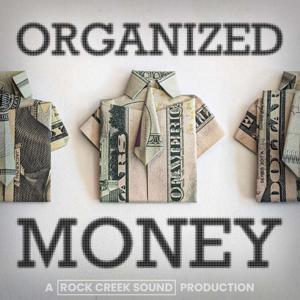
Organized Money is a podcast about how the business world really works, and how corporate consolidation and monopolies are dominating every sector of our economy. The series is hosted by…
If you care about an economy that is free and open, one not controlled by a handful of corporations, Organized Money is for you. New episodes out every week until the end of the year. Organized Money is a Rock Creek Sound production, from executive producers Ari Saperstein and Ellen Weiss, and senior producer Benjamin Frisch.
Ranked by our users in the last 21 days

1,970 Listeners

1,461 Listeners
1,198 Listeners

1,585 Listeners

6,103 Listeners

3,910 Listeners
626 Listeners
1,499 Listeners

2,074 Listeners
576 Listeners

215 Listeners
2,705 Listeners
1,063 Listeners
562 Listeners

366 Listeners