
Sign up to save your podcasts
Or

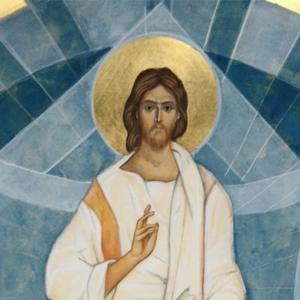


St. Paisios provides guidance on fighting the sins and passions that plague us, and how to win the battle to receive a heavenly crown.A reading from Spiritual Counsels, Vol. V: Passions and Virtues by St. Paisios, p. 21-36📖 Spiritual Counsels, Vol. V: Passions and Virtues by St. Paisioshttps://www.holycross.org/products/passions-and-virtues-elder-paisios?srsltid=AfmBOoosr8olgBCwD0SYQ-GFS_bfXyRVYAsxDAiBGL9MlAUJ1SC3ssyE🎧 The Struggle Against Thoughts - St. Paisios the Athonitehttps://youtu.be/5sN-zHdnjto🎧 On Attention and Distraction - St. Ignatius Brianchaninovhttps://youtu.be/v5ZIEmv8RwQ🎧 Everyone Needs a Spiritual Father - St. Paisios the Athonitehttps://youtu.be/xaSeWRcJPHo🎧 Fighting the Passions - Archbishop Theophan of Poltavahttps://youtu.be/tNYLK80dFvA🎧 Holiness is in the Struggle! - Elder Athanasios Mitilinaioshttps://youtu.be/Qhm2ffdEBsc⛪ FIND an Orthodox parish and monastery near you: https://orthodox-world.org/https://orthodoxyinamerica.org/🎁Support my work here:https://buymeacoffee.com/orthodoxwisdom_______St. Paisios teaches:When there is no danger of becoming conceited and prideful, then God will certainly help. The Good God desires that we be delivered from our passions; but if we have pride or the predisposition to become prideful, then He does not help us to be delivered from our passions, for then we will imagine that we achieved it without His help.
— Geronda, is it better to do away with a passion or a bad habit at once, or little by little? — If you can get rid of it immediately, it is best; otherwise it may leave some... residue. There is no need for delay. When one is crossing a river, particularly in the winter, he tries to do it as quickly as possible; otherwise, he'll freeze from the cold. If he crosses quickly, before being overcome by the cold, he will soon warm up again. You see, even tethered horses that want to get free will snap the rope with a sudden strong pull. Temptation requires a very sharp tug in order to sever the rope.— Geronda, does the remembrance of death help in this inner work? — Yes, it is very helpful. If we bear in mind the remembrance of death with hope in God, we will become aware of the vanity of this world and be helped spiritually. This is why we should keep the criterion (judgment) of God in mind and not forget that we will be judged for the sins we have committed and not repented for. "What am I doing? How can I live with so much negligence?" should be our thoughts. "If I should die right now, how will I be judged? Do I have a contract with death? Death comes both to the young and the old." If I could keep in mind that God may call me soon, then I would not be so inclined to sin.We sometimes try to acquire God's Grace and gifts through some magical means. We delude ourselves by thinking that we can acquire a virtue or even be sanctified without a struggle. However, for God to give, we must sow. How will God give if we do not work? What does the hymn say? "You have cultivated the barren desert?" God will provide abundant rain to soften the soil, but we must also "cultivate" our field. The earth is ready, but we must put our hand to the plough and sow our field; and whatever we sow, we will reap. But if we do not plough, how can we sow? And if we do not sow, what will we harvest? For this reason, we should not only ask what God can do for us, but what we can do for ourselves. The bank of Christ offers great interest rates. But if we make no deposit in His bank, how can we expect to make a withdrawal?_______Orthodox Wisdom is dedicated to sharing the writings and lives of the Saints of the Orthodox Church. Glory to Jesus Christ!
What was the nature of paradise? How should we understand the tree of life and the tree of the knowledge of good and evil? St. John of Damascus explains this and more.
A reading from Chapter 2, Book 11 of the Exact Exposition of the Orthodox Faith 📖 Exact Exposition of the Orthodox Faith by St. John of Damascushttps://stanthonysmonastery.org/products/exact-exposition-of-the-orthodox-faith?srsltid=AfmBOooIh2HMkYAbPmSR-vRxp3-t7gnDMG-wE35u0kLCM3RfpbB0cVyi
🎧 Against Those Who Attack the Divine Images (First Apology) - St. John of Damascushttps://youtu.be/bm2eV_anejw
🎧 The Divine Bait - Sts. Gregory of Nyssa, Maximus the Confessor, & John of Damascus
https://youtu.be/8olZ4qkUrJE🎧 Adam's Lament - St. Silouan the Athonitehttps://youtu.be/n0e2bb0lTa0
⛪ FIND an Orthodox parish and monastery near you: https://orthodox-world.org/https://orthodoxyinamerica.org/
🎁Support my work here:https://buymeacoffee.com/orthodoxwisdom_______St. John teaches:
Since God intended to fashion man after His own image and likeness from the visible and invisible creation to be a sort of king and ruler over the whole earth and the things in it, He prepared a sort of kingdom for him, in which he might dwell and lead a blessed and blissful life. And this divine Paradise prepared in Eden by the hands of God was a treasure house of every joy and pleasure. For "Eden" is interpreted as meaning "delight." It was situated in the east and was higher than all the rest of the earth. It was temperate in climate and bright with the softest and purest of air. It was luxuriant with ever-blooming plants, filled with fragrance, flooded with light, and surpassing all conception of sensible fairness and beauty. In truth, it was a divine place and a worthy habitation for God in His image. And in it no brute beasts dwelt, but only man, the handiwork of God.
The tree of life was either a tree possessing a life-giving force or a tree that was to be eaten of only by such as were worthy of life and not subject to death. Some have imagined Paradise to have been material, while others have imagined it to have been spiritual. However, it seems to me that, just as man was created both physical and noetic, so did this most sacred domain of his have the twofold aspect of being perceptible both to the senses and to the nous. For, while in his body he dwelt in this most sacred and superbly beautiful place, as we have related, spiritually, that is, noetically he resided in a loftier and far more beautiful place. There he had the indwelling God as a dwelling place and wore Him as a glorious garment. He was wrapped about with His grace, and, like some one of the angels, he rejoiced in the enjoyment of that one sweetest fruit which is the theoria of God, and by this he was nourished. Now, this is indeed what is fittingly called the tree of life, for the sweetness of divine theoria communicates a life uninterrupted by death to them that partake of it. It is just this that God meant by "every tree" when He said: "Of every tree of Paradise thou shalt eat." For He is the all, in Whom and by Whom the universe endures._______Orthodox Wisdom is dedicated to sharing the writings and lives of the Saints of the Orthodox Church. Glory to Jesus Christ!
St. Gregory details the nature and characteristics of the Triune God: Father, Son, & Holy Spirit. A reading from Homily 8 (p. 55-58) from Saint Gregory Palamas: The Homilies📖 Saint Gregory Palamas: The Homilieshttps://mountthabor.com/products/saint-gregory-palamas-the-homilies🎧 The Nativity of our Lord Jesus Christ - Homily by St. Gregory Palamashttps://youtu.be/DHG2gakIqdQ🎧 The Filioque: From the Latins Which Were Obedient to Satan - St. Gregory Palamashttps://youtu.be/4FeQoutq16I🎧 Homily on the Eve of Theophany - St. Gregory Palamashttps://youtu.be/Z1whxp_kuV0🎧 The Hesychastic Life of the Young Mother of God - St. Gregory Palamashttps://youtu.be/uYsv8o0yyic⛪ FIND an Orthodox parish and monastery near you: https://orthodox-world.org/https://orthodoxyinamerica.org/🎁Support my work here:https://buymeacoffee.com/orthodoxwisdom_______St. Gregory teaches:Believing in God is different from believing God. To believe God is to regard His promises to us as sure and true, but to believe in Him is to have a right understanding of Him. Both are necessary for us and we must speak correctly in both respects, in such a way that people with correct understanding can be confident that we are faithful before the God to whom our faith is directed and that, being faithful, we shall be justified by Him.The Father is timeless, without beginning and pre-eternal. He is the sole cause and root of the divinity beheld in the Son and the Holy Spirit; not the sole Creator, but the sole Father of the only Son and the sole producer of the one Holy Spirit. He is for ever, He is the Father for ever, and He is the sole Father and the sole producer for ever. His one Son is co-eternal with Him. Like Him, the Son is without beginning in time, but inasmuch as He has the Father as begetter, root, source and origin, He is not without beginning. Before all ages He alone was begotten of Him without a body, without passion of change, and was not divided from Him. Being God from God, He is not one thing as God and another as Son. He is for ever, He is the Son for ever and He is with the Father for ever without confusion. He is the living Word, the true light, the enhypostatic Wisdom, cause and origin of all created things, for by Him all things were made.From the eternal Father who is without beginning the Holy Spirit also proceeds. As timeless He is together with the Father and the Son without beginning, but He is not without beginning, inasmuch as He has the Father as root, origin and cause, from whom He proceeded before all ages, without passion or change. He was not divided from the Father or the Son when He came from the Father and rested in the Son, for He was united with Them without confusion and indivisibly distinct. Being also God from God, He is not one thing as God and another as Comforter, inasmuch as He is the hypostatic existence of the Holy Spirit. He has His existence from the Father and is sent through the Son, as the firstfruits of eternal life and the earnest of the everlasting good things to come. He too is the cause of all created things, for in Him all things were made. He does not differ from the Father and the Son except that He is neither unbegotten nor begotten._______Orthodox Wisdom is dedicated to sharing the writings and lives of the Saints of the Orthodox Church. Glory to Jesus Christ!
St. Seraphim describes peace of soul in Christ and how to preserve this peace. As the saint says, "One must by every means strive to preserve peace of soul and not to be disturbed by offences from others..."This reading comes from: Life and Teaching of St. Seraphim of Sarov📖 Life and Teaching of St. Seraphim of Sarovhttps://churchsupplies.jordanville.org/products/life-and-teaching-of-saint-seraphim-of-sarov?srsltid=AfmBOopmeXl6e0F3AWUW23i0Sy5XOCVLP002Q85QzKN09lymGZj5VLdv🎧 The Acquisition of the Holy Spirit - St. Seraphim of Sarovhttps://youtu.be/i5rTls7uTsM🎧 On Refusal to Judge Our Neighbor - St. Dorotheos of Gazahttps://youtu.be/LiAZHn18uVI🎧 On God's Love For Us & The Grace of Humility - Elder Ephraim of Arizonahttps://youtu.be/SQblbVcDMts FIND an Orthodox parish and monastery near you: https://orthodox-world.org/https://orthodoxyinamerica.org/_______St. Seraphim teaches:Nothing is better than peace in Christ; in it is destroyed every warfare of the spirits of the air and earth: “For we wrestle not against flesh and blood, but against principalities, against powers, against the rulers of the darkness of this world, against spiritual wickedness in bigh places” (Eph. 6:12). It is the mark of a wise soul when a man plunges his mind within himself and has activity in his heart. Then the grace of God overshadows him, and he is in a peaceful state, and by means of this also in a most peaceful state: peaceful, that is, with a good conscience; and most peaceful, for the mind beholds within itself the grace of the Holy Spirit, according to the word of God:“And His place is in peace” (Ps. 75:3).And so we must concentrate all our thoughts, desires, and actions in order to receive the peace of God and to cry out ever with the Church: “O Lord our God, give us peace” (Isa. 26: 12).One must by every means strive to preserve peace of soul and not to be disturbed by offences from others; for this one must in every way strive to restrain anger and by means of attentiveness to keep the mind and heart from improper feelings. And therefore we must bear offences from others with equanimity and accustom ourselves to such a disposition of spirit that these offences seem to concern not us, but others. Such a practice can give quietness to the human heart and make it a dwelling for God Himself.For the preservation of peace of soul one must likewise by every means flee from judgement of others. By not judging and by silence peace of soul is maintained: when a man is in such a state, he receives Divine revelations. In order to free oneself from judging, one must take heed of oneself, not to accept outside thoughts from anyone and to be dead to everything. For the preservation of peace of soul one must more often enter into oneself and ask: where am I? At the same time one must watch that the bodily senses, especially sight, serve for the inner man and do not distract the soul by means of sensuous objects: for they only receive grace-bearing gifts who have interior activity and are vigilant over their souls._______Orthodox Wisdom is dedicated to sharing the writings and lives of the Saints of the Orthodox Church. Glory to Jesus Christ!
St. Silouan the Athonite writes on battling intrusive thoughts and recognizing delusions, emphasizing that we must "fight the enemy with the weapon of humility".
A reading from "Saint Silouan the Athonite" by St. Sophrony the Athonite, p. 440-447📖 Saint Silouan the Athonite by St. Sophrony the Athonitehttps://www.holycross.org/products/saint-silouan-the-athonite📖 Spiritual Counsels, Vol. 3: Spiritual Struggle by St. Paisios the Athonitehttps://www.athoniteusa.com/products/saint-paisios-the-athonite-spiritual-counsels-volume-iii-spiritual-struggle?srsltid=AfmBOorzehHI_pB20A84pZFWkAJxcyimzUiiZ-lhw3E6bX3XloJV4VFo📖 Our Thoughts Determine Our Lives: The Life and Teachings of Elder Thaddeus of Vitovnicahttps://www.sainthermanmonastery.com/product-p/otdol.htm🎧 The Struggle Against Thoughts - St. Paisios the Athonitehttps://youtu.be/5sN-zHdnjto🎧 On Prelest (Spiritual Deception) - Fr. Seraphim Rosehttps://youtu.be/Pt00jwZ37ik🎧 Holiness is in the Struggle! - Elder Athanasios Mitilinaioshttps://youtu.be/Qhm2ffdEBsc🎧 On Attention and Distraction - St. Ignatius Brianchaninovhttps://youtu.be/v5ZIEmv8RwQ🎧 Noetic Sound Waves of the Heart - From the Life of St. Porphyrioshttps://youtu.be/n5dWVVDDvhM🎧 Everyone Needs a Spiritual Father - St. Paisios the Athonitehttps://youtu.be/xaSeWRcJPHo⛪ FIND an Orthodox parish and monastery near you: https://orthodox-world.org/https://orthodoxyinamerica.org/_______St. Silouan teaches:Beware these two thoughts, and fear them. The first suggests "You are a saint;' the other, 'You will not be saved.' Both come from the enemy, and there is no truth in them. Instead, think to yourself, 'I am a great sinner but the Lord is merciful. He loves man with a great love, and will forgive me my sins.' Believe in this way, and, you will see, the Lord will forgive you. But put no faith in feats of your own, however much you may have striven. An ascetic once said to me, 'I shall certainly be pardoned because I prostrate myself so many times a day;' but when death came, he rent his clothes.O how weak I am! I write a little and am already weary, and my body seeks rest. The Lord, too, when He was on earth in the flesh knew human weakness; and He, the Merciful One, grew weary on His way and slept in the boat during the storm; and when the disciples roused Him, He ordered the sea and the wind to be still, and there was a great calm. So, too, with us: great peace reigns in our souls when we call upon the holy name of the Lord. O Lord, grant us to praise Thee until our last breath!The Fathers of the Church say that the soul feels troubled and perplexed at visions proceeding from the enemy. But this applies only to the humble soul, who does not count herself worthy of visions, and feels either bewilderment or fear at the workings of the enemy; whereas the conceited man can experience neither fear nor even bewilderment, because he wants to have visions, and deems himself worthy of them, and so it is easy for the enemy to delude him. That which is of heaven is made known through the Holy Spirit, whereas earthly things are discovered by the mind — but the man who would discover God with his mind, through science and learning, is in a state of beguilement, for God is to be known only through the Holy Spirit. If in your mind you should think to see devils, humble yourself and try not to see them. Hasten to your confessor or the staretz to whom you have committed yourself. Tell him everything, and then the Lord will have mercy on you and you will escape delusion. But if you start thinking that you know more about the spiritual life than your spiritual father, and cease telling him in confession what befalls you, you will surely be beguiled for your pride. Fight the enemy with the weapon of humility.
Edifying excerpts from "The Way of a Pilgrim and The Pilgrim Continues His Way" concerning Jews and Orthodox Christianity. This reading is from the R.M. French translation of "The Way of a Pilgrim and The Pilgrim Continues His Way", p. 112-114, 139-140"Starets" means "Elder" in Russian🎧 Full audiobook:https://youtu.be/wh2Orojo1z0?si=LsyAccwIt7IzK94B⛪ FIND an Orthodox parish and monastery near you: https://orthodox-world.org/https://orthodoxyinamerica.org/_______From his very earliest years he was preparing to be a rabbi and studied hard at all the Jewish chitchat which was meant to disprove Christianity. One day he happened to be going through a Christian cemetery. He saw a human skull, which must have been taken out of some grave that had been recently disturbed. It had both its jaws, and there were some horrible-looking teeth in them. In a fit of temper he began to jeer at this skull; he spat at it, abused it, and spurned it with his foot. Not content with that, he picked it up and stuck it on a post-as they stick up the bones of animals to drive off greedy birds. After amusing himself in this way, he went home. The following night he had scarcely fallen asleep when suddenly an unknown man appeared to him and violently upbraided him, saying, "How dare you insult what is left of my poor bones? I am a Christian—but as for you, you are the enemy of Christ.”I listened to this story with reverence and humility, and I thought to myself, "How good and kind our Lord Jesus Christ is, and how great is His love! In what different ways He draws sinners to Himself. With what wisdom He uses things of little importance to lead on to great things. Who could have expected that the mischievous pranks of a Jew with some dead bones would bring him to the true knowledge of Jesus Christ and be the means of leading him to a devout life?"One day a pilgrim came to see us. He complained bitterly about the Jews and abused them. He had been going about their villages and had to put up with their unfriendliness and cheating. He was so bitter against them that he cursed them, even saying they were not fit to live because of their obstinacy and unbelief. Finally he said that he had such an aversion for them that it was quite beyond his control. "You have no right, friend," said the starets, "to abuse and curse the Jews like this. God made them just as He made us. You should be sorry for them and pray for them, not curse them. Believe me, the disgust you feel for them comes from the fact that you are not grounded in the love of God and have no interior prayer as a security and, therefore, no inward peace._______Orthodox Wisdom is dedicated to sharing the writings and lives of the Saints of the Orthodox Church. Glory to Jesus Christ!
Written in 1968, Met. Philaret examines the spiritual implications of the phenomenon of replacing a man's heart. It's worth noting that nothing here is said about replacement of other organs and therefore the listener should be wary to draw unnecessary conclusions from these words from Met. Philaret. Additionally, Met. Philaret does not address those who wish to be organ donors or who wish to save the life of another, such as their spouse or child. To my knowledge, this is only text addressing heart transplants from someone venerated as a saint. Please leave a comment below if you aware of other texts from saints and elders on heart and organ transplants.📖 An Orthodox View of Heart Transplantations by Met. Philaret of New Yorkhttp://orthodoxinfo.com/praxis/heart_trans.aspx🎧 Will the Heterodox Be Saved? - Met. Philaret of New Yorkhttps://youtu.be/wtI3PsNKpyY🎧 Who are the True Christian Patriots? - Met. Philaret of New Yorkhttps://youtu.be/dg208EJxByk🎧 The Life of Metropolitan Philaret of New Yorkhttps://youtu.be/4rR4jJ_23RY📖 Living According to God’s Will by Met. Philarethttps://churchsupplies.jordanville.org/products/living-according-to-god-s-will📖 Metropolitan Philaret of New York: Zealous Confessor for the Faithhttps://uncutmountainpress.com/products/metropolitan-philaret-of-new-york-zealous-confessor-for-the-faith⛪ FIND an Orthodox parish and monastery near you: https://orthodox-world.org/https://orthodoxyinamerica.org/_______Met. Philaret writes:The heart is the center, the mid-point of man's existence. And not only in the spiritual sense, where heart is the term for the center of one's spiritual person, one's "I"; in physical life, too, the physical heart is the chief organ and central point of the organism, being mysteriously and indissolubly connected with the experiences of one's soul. It is well known to all how a man's purely psychical and nervous experiences joy, anger, fright, etc.,—are reflected immediately in the action of the heart, and conversely how an unhealthy condition of the heart acts oppressively on the psyche and consciousness... Yes, here the bond is indissoluble—and if, instead of the continuation of a man's personal spiritual-bodily life, concentrated in his own heart, there is imposed on him a strange heart and some kind of strange life, until then totally unknown to him—then what is this if not a counterfeit of his departing life; what is this if not the annihilation of his spiritual-bodily life, his individuality, his personal "I"? And how and as whom will such a man present himself at the general resurrection?How far from this is the radiant Christian view of life and death I Imagine a deeply-believing Christian who has labored his whole life on the fulfillment of the Lord's commandments and on the purification of his own heart, and who finally draws near to that Christian end for which he has prayed and for which he has been preparing his whole life; if suddenly one were to say to him: "Don't you want to live a while longer? Here—we will cut out your heart and put in its place a different one, perhaps an ape's—and you will live for a while yet..." What would a believing Christian answer to this but the words of the Gospel—"Get thee behind me, Satan—thou savourest not the things that be of God, but these that be of men" (St. Matt. 16: 23)._______Orthodox Wisdom is dedicated to sharing the writings and lives of the Saints of the Orthodox Church. Glory to Jesus Christ!
Drawing upon St. John Chrysostom, Archbishop Averky examines this teaching from St. Paul and how modernists and ecumenists can and do twist it to their liking.📖 "There Must Be Heresies Among You" (1 Cor 11:19) (Orthodox Life, July-August, 1994)https://orthodoxlifemagazines.blogspot.com/🎧 Archbishop Averky: His Significance for the Ecumenical Orthodox Church - by Fr. Seraphim Rosehttps://youtu.be/04DCg8rZsDg🎧 What is Orthodoxy? - Archbishop Averky of Jordanvillehttps://youtu.be/cOIy6YaV5po🎧 I Have Not Come To Bring Peace, But A Sword - Archbishop Averky of Jordanvillehttps://youtu.be/e3FiL7CCN9M⛪ FIND an Orthodox parish and monastery near you: https://orthodox-world.org/https://orthodoxyinamerica.org/_______Achrbishop Averky writes:See how these people who so blatantly violate one of the most important rules of our Holy Church even dare to call themselves "Orthodox" and try, by way of all kinds of false interpretations of the Word of God, to justify their "dissension" with the age-old teaching of the Universal Church of Christ. And what is especially horrible - they take shelter behind their imaginary "Christian love" for the "dissenters." O how great is the evil of these contemporary evil-doers, how unlawfully do they misappropriate for themselves the patent on "Christian love," and all those who disagree with them they accuse of a lack of "Christian love," and even fanaticism! Saint John Chrysostom (Commentary on the first epistle to the Corinthians): "By the word 'heresies' he [Saint Paull understands here not errors concerning dogmas, but actual (and similar) quarrels. If he were speaking of errors concerning dogmas, however, he would not have given occasion for offense (with the words, for there must be). For Christ said, 'It must needs be that offences come' (Mat. 18:7), but at the same time He did not violate our free will and establish this as a necessity and inevitability for us. He foretold the future which happens from the evil will of mankind, not as a result of His prediction but from the arbritariness of depraved people. Offenses occurred not because He foretold them, but rather He foretold them because they were going to occur. For if offenses occurred out of necessity and not according to the will of those who caused them, then in vain would He have said, Woe to that man by whom the offence cometh. That the Apostle actually called these disturbances and divisions during meals heresies' we see clearly expressed by him in the previous sentence. For he said, I hear that there be divisions among you. He did not stop here however. Desiring to explain what divisions he is referring to, he then says, 'For in eating every one taketh before other his own supper' (11:21). It is evident that he is speaking of these disturbances; but do not be surprised that he calls them divisions (schisms). As I said, he desired to have a greater effect on them by using such an expression. If he had meant dogmatical heresies he would not have spoken to them so briefly."_______Orthodox Wisdom is dedicated to sharing the writings and lives of the Saints of the Orthodox Church. Glory to Jesus Christ!
St. Basil's mediation on the many virtues of bees and how Christians do well to imitate them. "Imitate the character of the bee," writes St. Basil, "because it constructs its honeycomb without injuring anyone or destroying another's fruit."An excerpt from homily eight of the Hexaemeron, a collection of nine homilies on the six days of creation. Note: in St. Basil’s time the queen bee was understood to be a king. They didn’t know the leader was a female until much later. I have kept the original text but when you hear “king” know that St. Basil is referring to the queen bee.📖 Hexaemeron by St. Basil the Greathttps://stanthonysmonastery.org/products/hexaemeron?srsltid=AfmBOopEzZqE0t0Z2M-lYo3Fmq7MeVjMJOG4eihWIa9zNc-wK5A5Pegl🎧 Scandalized? Be Like the Bee - St. Paisios the Athonitehttps://youtu.be/i9nRU9KnYIM🎧 A Lament for Sin - St. Basil the Greathttps://youtu.be/I6erTc_FPKI🎧 On Illness, Doctors, and Healing - St. Basil the Greathttps://youtu.be/WOxigGgPenw⛪ FIND an Orthodox parish and monastery near you: https://orthodox-world.org/https://orthodoxyinamerica.org/_______St. Basil teaches:Imitate the character of the bee, because it constructs its honeycomb without injuring anyone or destroying another's fruit. It gathers the wax openly from the flowers, then, sucking in with its mouth the honey, a dew like moisture sprinkled in the flowers, it injects this into the hollows of the wax. At first, therefore, it is liquid, then in time being matured, it attains its proper consistency and sweetness. The bee itself has won honorable and becoming praise from the Proverb, which calls it wise and industrious. It gathers its food so laboriously ("Whose labors," it is said, "kings and private men set before them for their health."), and devises so wisely its storehouses for the honey (stretching the wax into a thin membrane, it builds numerous cells adjacent to each other) that the great number of the connecting walls of the very tiny cells supports the whole. Each cell fastens upon the other, separated from, and at the same time joined to it by a thin partition. Then these compartments are built upon each other two and three stories. The bee avoids making one unbroken cavity lest the liquid, because of its weight, should break through and escape to the outside. Notice how the discoveries of geometry are merely incidental to the very wise bee. The cells of the honeycombs are all hexagonal and equilateral, not resting upon each other in a straight line, lest the supports, coinciding with the empty cells, might meet with disaster; but, the corners of the hexagons below form a base and support for those resting upon them so that they safely sustain the weights above them and hold the liquid separate in each cell.
The same arguments against icons today are found in this 9th century debate between the Patriarch of Constantinople and the Emperor. As St. Nikephoros said, "But the ‘Logos became flesh [Jn. 1:14].' He was a man seen by men, otherwise we could not reproduce in pictures what is unseen."Text is from the Life of St. Nikephoros of Constantinople found in the The Great Synaxaristes of the Orthodox Church (Lives of Saints)📖 Icons are Idolatry? A Discussion Between St. Nikephoros and the Emperor Leo V the Armenianhttps://www.nepsisblog.com/2025/06/icons-are-idolatry-discussion-between.html🎧 Against Those Who Attack the Divine Images (First Apology) - St. John of Damascushttps://youtu.be/bm2eV_anejw🎧 Never Will I Cease Honoring the Matter Which Wrought My Salvation! - St. John of Damascushttps://youtu.be/Dnp_CZasZgw⛪ FIND an Orthodox parish and monastery near you: https://orthodox-world.org/https://orthodoxyinamerica.org/_______The saint the explained that the Orthodox do not paint God, the transcendent reality, in images. For how can one paint what is not perceived by the eyes? When iconographers depict the Christian martyrs, the latter are not considered gods; but rather, they are deemed the faithful servants of God. Thus, we honor the martyrs for their valor, since they are like the attendants of the King. In our behalf do they represent our requests before Him. Nikephoros then attempted to make this clear to Leo in a manner in which he could understand. As emperor of so great a realm, did not have officials so that he might be among his subjects when absent? Thus, his subjects revere him through his officials. Certainly, Leo does not reproach his subjects for bringing their petitions before his officials. But Leo surely would not tolerate his functionaries to be addressed as emperor. Now Leo agreed with this example. How could he not?_______Orthodox Wisdom is dedicated to sharing the writings and lives of the Saints of the Orthodox Church. Glory to Jesus Christ!
From the publisher's feed
Ranked by our users in the last 21 days
3,421 Listeners

6,758 Listeners

838 Listeners
869 Listeners
569 Listeners

1,328 Listeners

188 Listeners

19 Listeners

59 Listeners
1,487 Listeners

38 Listeners
192 Listeners

15 Listeners

64 Listeners

54 Listeners