
Sign up to save your podcasts
Or



When the rules change on a whim, your budget becomes collateral damage. Michigan Attorney General Dana Nessel sits down with University of Michigan economics professor Dr. Justin Wolfers to unpack why the affordability crisis is also a governance crisis: unpredictability, interventionist decision-making, and pay-to-play incentives that can quietly raise prices while weakening competition.
We dig into concrete Michigan flashpoints that make the stakes real, including the Gordie Howe International Bridge and what it means when major infrastructure and cross-border trade can be threatened for political leverage. We also talk energy policy and the cost of forcing uneconomic choices, plus the strange contradictions of blocking renewable energy like wind while global conflict pushes oil prices higher. Along the way, we connect these choices to business confidence, market stability, and the long-run foundations of growth.
Tariffs and manufacturing are a core thread, especially for automakers and suppliers that live and die by predictable supply chains. We also confront a harder question: what happens to democracy when major corporations feel too intimidated to speak publicly, even when policies hurt their bottom line? Finally, we zoom out to America’s innovation edge, the risk of scientific brain drain, and why welcoming global talent matters for pharmaceuticals, advanced manufacturing, AI, and the next generation of high-quality jobs.
Subscribe, share this with a friend who’s feeling the squeeze, and leave a review if you want more conversations like this. What’s the clearest sign you’ve seen that policy chaos is showing up in your everyday costs?
A single hyperscale data center asking for 1.4 gigawatts can redraw the map of a state’s energy system—and your monthly bill. We unpack the real-world stakes of the AI buildout with a candid look at how utilities, regulators, and mega-customers strike deals that shape reliability, affordability, and community well-being for decades.
We walk through the mechanics of large-load growth: queue gaming that secures scarce capacity, special contracts that move behind redactions, and rate structures that can quietly shift costs from hyperscale users to households. You’ll hear why standardized large-load tariffs and hard collateral requirements matter, how transparency lets consumer advocates test utility claims, and what goes wrong when evidence is sealed. We also dig into utility incentives to build capital-intensive projects, the risk of “gold plating,” and the uncomfortable truth that regulated returns can persist even when performance lags.
The conversation turns to long-term risk. With 15 to 20-year deals on the table, rapid shifts in AI workloads, chips, and cooling could strand assets and leave communities paying for empty capacity. We outline practical guardrails: public dockets with accessible data, performance-based obligations, clawbacks on incentives, demand flexibility from data centers, and community benefits that outlast hype cycles. Along the way, we spotlight the role of state commissions versus attorneys general, why revolving doors and political money complicate decisions, and how to align tax incentives with real local gain.
If you care about fair rates, grid reliability, climate resilience, and the promises of AI, this is your roadmap to smarter policy. Subscribe, share with a friend who follows energy or tech policy, and leave a review with the guardrail you think should come first.
Rapid policy swings aren’t just political noise—they have real consequences. When funding changes overnight, clinics stall, families worry, and trust erodes. This episode looks at how state attorneys general step in to challenge unlawful actions, stabilize services, and protect the people caught in the middle.
Oregon Attorney General Dan Rayfield joins us to talk through managing early crises while also tackling the unglamorous but critical work of modernizing systems, supporting frontline staff, and defending consumers. He also explains the multistate challenge to federal tariffs and how questions of authority translate directly to everyday costs.
Former DC Attorney General Karl Racine reflects on the first travel ban, the evolution of the AG role in a more polarized era, and major accountability fights—including the emoluments lawsuit. We discuss prosecutorial ethics, officer-involved shooting investigations, and how new legal doctrines are reshaping the limits of accountability.
If you care about the rule of law, reliable public services, and institutions people can trust, this conversation offers clear-eyed insight and practical perspective. Subscribe, share, and let us know the reform you want to see next.
Power protects itself—until someone pulls the thread. We sit down with New Jersey Attorney General Matt Platkin to unpack how public corruption actually works, why it inflates your bills and weakens your services, and what it takes to hold powerful people to the same laws as everyone else. From the misuse of tax credits to officials running private ventures from public offices, we break down real cases, hard lessons, and the reforms that followed.
We talk candidly about the pressure that comes with prosecuting the well connected: claims of “weaponization,” media megaphones used against prosecutors who can’t respond, and the Supreme Court decisions that narrowed federal corruption tools. That’s where state attorneys general step up. Platkin explains the history behind New Jersey’s strong anti-corruption statutes, while Nessel shares Michigan’s recent overhaul of opaque earmarks—forcing sponsors to testify and face specific votes. These aren’t abstract fixes; they’re working guardrails that deter the next scheme.
The conversation turns to the hidden “corruption tax”: dark money washing through politics, utility influence that distorts rates and reliability, and FOIA gaps that breed suspicion. We explore practical solutions with broad public support: banning stock trading for officials with enforcement power, tough financial disclosures, cooling-off periods to slow the revolving door from elected official to lobbyist, robust public financing to elevate small donors, and a sustained push to overturn Citizens United. If the system looks rigged, trust dies; if the rules are clear and enforced, trust returns dollar by dollar.
If you care about honest government, pocketbook fairness, and the health of democracy, this one matters. Listen, share with a friend, and tell us the first anti-corruption reform you want to see in your state. And if you believe this work should continue, subscribe, leave a review, and help more people find the show.
A district spoke, and power stalled. When voters in Arizona’s 7th chose Adelita Grijalva, the oath never came—leaving more than 800,000 people without a voice for 50 days. We take you inside the legal fight to end the delay, the constitutional questions it raised, and the very real ways a shutdown and a locked office can silence a community that did everything right at the ballot box.
Adelita shares the ground truth: pro forma sessions that swore in others but not her, long security lines without the member’s pin, no email or phones, and a stack of constituent cases with nowhere to go. From veterans benefits and immigration emergencies to Social Security help, the gears of government froze for an entire district. We talk through why that matters far beyond Arizona—because if a Speaker can pause representation, every voter is one procedural tactic away from losing their seat at the table.
We also dig into the bipartisan outrage, from conservative legal voices to longtime progressives, and why a simple, automatic swearing-in rule could prevent abuse regardless of which party holds the gavel. Then we connect the dots to the Epstein files and a discharge petition designed to force transparency, centering survivors’ rights over partisanship. Adelita explains the push for full disclosure, accountability for anyone implicated, and how Congress can reclaim its role while honoring separation of powers.
If you care about fair representation, clean process, and real services reaching real people, this story matters. Hit play, learn what changed, and see what comes next. If the conversation resonates, subscribe, share with a friend, and leave a review so more listeners can find it.
A quiet revolution is happening in state courtrooms and attorney general offices across the country, and in this episode of Pantsuit and Lawsuits our guest co-host New Jersey Attorney General Matt Platkin pulls back the curtain on how it works. We talk about how New Jersey moved from participant to leader in multistate litigation, protected food benefits for millions, and delivered three straight years of record-low gun violence—roughly 750 fewer people shot compared with the year before he took office. The focus isn’t speeches about “the rule of law.” It’s families who feel safer, kids who get dinner, and residents whose rights still mean something when those in power become reckless.
We walk through the mechanics that keep complex cases moving through leadership transitions, why some of the most consequential fights against federal overreach happen at the state level, and how bipartisan coalitions can still form around tech accountability and consumer harms. Then we zoom out: reported abuses at the border, no-warrant intrusions, and a chilling effect on pro bono representation. Platkin reframes the Bill of Rights as a living shield—First, Fourth, Fifth, and Sixth Amendment protections that apply on real streets, to real people, right now.
We don’t dodge the Supreme Court. From Bruen to Dobbs to presidential immunity, we parse what these decisions mean for public safety, reproductive rights, and equal accountability. Yet the advice isn’t despair—it’s strategy. Lower courts remain vital. Records matter. Clear narratives win. Long-term fixes, from campaign finance reform to constitutional amendments, deserve a real push if we want a democracy that can stand up to concentrated power and money.
Power concentrates in silence, and lately the silence is spreading. We unpack a sweeping pressure campaign against the First Amendment—on campuses, in briefing rooms, on city streets, and across shrinking newsrooms—with an unflinching look at how intimidation, lawsuits, and funding threats are changing the way America speaks and learns.
From protest crackdowns to new restrictive policies at the Pentagon, we trace how best practices are abandoned and dissent turned into a risk calculation. We talk about national outlets that can lawyer up, local stations that can’t, and why even a single settlement can send a chilling message across the entire industry. Veteran reporter Mary Jo Pitzl joins us to explain how newsroom economics, algorithmic incentives, and headline gamesmanship can reshape coverage, nudging editors toward safe choices and audiences toward confusion. Her decades of experience on the beat have made one thing clear: when institutions accept control over who asks questions and what gets printed, the public will never get the answers they deserve.
We also follow the pressure beyond media. Universities juggle academic freedom against the threat of defunding, law firms face retaliation for their clients, and nonprofits fear hosting events that could draw political ire. These choices create a quiet chill—self-censorship that never makes headlines but erodes civic life all the same. We share concrete steps to push back: collective action among schools and firms to spread the legal risk, smarter support for local journalism and public broadcasting, and a recommitment to rigorous reporting over viral bait.
Free speech isn’t self-executing; it survives because people use it. If this conversation resonates, subscribe, share the show with a friend, and leave a review so more listeners can find it. Then tell us: where are you seeing the chill, and how should we fight it together?
A hard truth sets the tone: gun violence is now the leading cause of death for kids and teens in America. As parents, we share the fear that comes with lockdown texts and campus alerts; as attorneys general, we break down how states can act when the window opens and how those wins ripple upward. From there, we dig into what actually works—red flag laws, safe storage, and other common sense reforms—and why politics still manages to stall simple, popular solutions.
We’re joined by Emma Brown, executive director at Giffords, who brings clear evidence and a coalition mindset. She explains how ERPOs give law enforcement a narrow, court-supervised tool to temporarily separate dangerous individuals from firearms, and why departments that once opposed ERPOs now rely on them. We look at the data linking safe storage to fewer youth deaths and the real-world impact of free gun locks distributed by police and pediatricians. We also confront the rise of ghost guns and conversion devices—unserialized parts and forced-reset triggers that undercut tracing, evade basic safeguards, and raise the risk for officers and communities.
The conversation is frank about the political headwinds: organized lobbying and industry immunity that keep Congress trailing behind public opinion—even when over 90% of the country supports universal background checks. Yet there’s a roadmap. State progress builds the case for federal action, especially when tragic events focus the nation’s attention and coalitions are ready with proven models. The takeaway is practical and urgent: educate the public about ERPOs, normalize safe storage, back law enforcement on ghost guns, and make the most of every opportunity to pass reforms that protect kids without infringing responsible ownership.
If this conversation resonates, follow the show, share it with someone who cares about safer communities, and leave a review to help more people find it. Your voice helps turn common sense into common practice.
Power without guardrails doesn’t just bend the law—it breaks trust. We sit down with former U.S. Attorney Barb McQuade to unpack how federal-state partnerships actually solve complex crimes, and why those partnerships falter when DOJ norms are sidelined by politics and performative “toughness.” From FBI and DEA collaborations that cross borders to the grand jury and charging protocols that keep prosecutions rooted in facts, we walk through the machinery that keeps justice fair—and what happens when leaders try to manipulate our systems to their own advantage.
Barb takes us inside the culture of DOJ: why morale matters, how selective investigations and “name and shame” tactics corrode legitimacy, and what it costs when dockets are flooded with low-complexity immigration cases at the expense of public corruption, cartel, and violent crime work. We get specific on Arizona’s fentanyl pipeline, agent redeployments that weaken strategic cases, and the difference between optics and outcomes. We also examine leadership under pressure, from subpoenas targeting gender-affirming care to universities and hospitals that “obey in advance,” and why institutions must balance legal risk with their own organizational values.
We don’t stop at problems. Together, we outline a path to repair: codify core DOJ norms into durable regulations, restore a real firewall between the White House and federal investigations, reinvest in prevention and complex cases, and demand a Congress that reasserts oversight regardless of party. The through line is simple and urgent—democracy relies on rules, habits, and courage.
The dismantling of America's public health infrastructure is happening at breakneck speed, with potentially catastrophic consequences for generations to come. When top CDC scientists walk out in protest, we should all pay attention. That's exactly what we explore in this urgent conversation with Will Humble, Executive Director for the Arizona Public Health Association, who brings decades of public health leadership experience to help us understand what's at stake.
What happens when anti-vaccine ideology drives national health policy? The answer is chilling. Humble breaks down how the gutting of the Advisory Committee for Immunization Practices could lead to essential childhood vaccines being dropped from recommended schedules. Since these recommendations determine what's covered by both the Vaccines for Children program (serving over 50% of American children) and private insurance, the result would be widespread vaccine inaccessibility. At $200 per COVID vaccine and similar costs for other immunizations, many families simply couldn't afford to protect their children.
Beyond vaccines, the administration's proposed 40% cut to the National Institutes of Health threatens to collapse the research pipeline that delivers medical breakthroughs. As Humble explains, NIH-funded research on mRNA technology enabled rapid COVID vaccine development and now holds tremendous promise for cancer treatment. Cutting this funding doesn't just delay progress—it drives researchers overseas and creates a scientific brain drain that could take decades to rebuild.
The assault extends to medical education itself, with new loan limits making it financially impossible for many students to become doctors, especially in critically needed primary care fields. Combined with inadequate support for residency programs, these policies will worsen physician shortages, particularly in rural areas where healthcare access is already precarious.
The stakes couldn't be higher. Listen now to understand the full scope of this public health crisis and what we can do to fight back before it's too late. Share this episode with anyone who cares about protecting our nation's health and scientific leadership.
From the publisher's feed
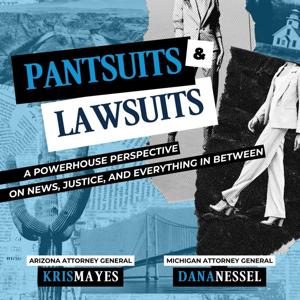
Pantsuits and Lawsuits is a no-holds-barred podcast featuring Michigan Attorney General Dana Nessel and Arizona Attorney General Kris Mayes as they break down the biggest legal and political…

90,967 Listeners
25,757 Listeners

36,250 Listeners

87,047 Listeners

111,852 Listeners

56,426 Listeners
196 Listeners
12,502 Listeners

17,795 Listeners

18,060 Listeners

6,170 Listeners