
Sign up to save your podcasts
Or



The emerging role of Artificial Intelligence (AI) in shaping political discourse is a potential game changer. It has the capacity to fabricate fake interviews and manipulate images, all of which could mislead voters and disrupt the democratic process. But could it affect the results of our elections?
We talk to Chris Morris, the head of factchecking organisation Full Fact, about the threats posed by these technologies, the potential scale of misinformation in politics, and the measures politicians and political parties need to take to counteract them.
With public trust in political figures at a low ebb we discuss how AI-generated misinformation could further erode confidence in electoral integrity and democratic values and the responsibility on political parties to therefore use AI ethically.
Chris Morris stresses the importance of preparing in advance for scenarios where AI could influence election outcomes, including at the individual constituency level. He suggests looking to models like that used in Canada for handling major information incidents to ensure clarity and trust in how election-related misinformation is addressed. Full Fact has called for similar proactive measures to be discussed and implemented in the UK
We also delve into the recent parliamentary rule changes that extend to all MPs a right that was previously reserved for Ministers – the right to rectify any inaccurate statements in Hansard, the official record of parliamentary proceedings. But should MPs face sanctions, perhaps even a criminal offence for lying in Parliament, if they refuse to correct inaccuracies?
Full Fact frequently draws attention to inaccurate claims made by MP, but not all MPs are willing to correct the record. So, what reason do these MPs give for their unwillingness to retract inaccurate statements?
And with the general election potentially just weeks away, we discuss how Full Fact is gearing up organisationally for the campaign and its role in combating misinformation. We discuss the importance of media literacy, and whether the focus of factcheckers should be on ‘pre-bunking’ misinformation – putting accurate information out in the public sphere first – rather than on ‘de-bunking’ false claims once they are made and the falsehoods have spread.
🎓 Learn more using our resources for the issues mentioned in this episode.
📜 Read the transcript.
❓ Send us your questions about Parliament:
✅ Subscribe to our newsletter.
📱 Follow us across social media @HansardSociety
£ - Support the Hansard Society and this podcast by making a donation today.
Parliament Matters is a Hansard Society production supported by the Joseph Rowntree Charitable Trust.
Producer: Gareth Jones
Hosted on Acast. See acast.com/privacy for more information.
The Rwanda Bill has made it over the parliamentary finishing line but not without some last-minute drama. We talk to the SNP’s Alison Thewliss MP about what went on in a small room behind the Speaker’s Chair away from the cameras!
And what on earth is going on in the minds of MPs, after another in a succession of sleaze scandals hits Westminster. This time it’s Mark Menzies MP who has resigned from the Conservative Party and won’t stand again at the general election. He’s facing accusations of fraud and misconduct after telephoning an elderly constituency member claiming he’d been locked up by “bad people” who were demanding money. Are MPs – or specifically male MPs – simply big risk-takers or is there something else at work?
Meanwhile, the exodus from Westminster continues to grow: the number of MPs standing down at the next election has now passed the 100-mark. The data reveals some interesting developments that will affect the parties and select committees in the next Parliament.
And farewell to Frank Field – the backbenchers’ backbencher - and one of the most extraordinary parliamentarians of the last 40 years. We reflect on his lifetime in politics, particularly his outstanding work as a select committee chair, and Mark remembers a tricky visit to Field’s Birkenhead constituency while reporting for the BBC.
🎓 Learn more using our resources for the issues mentioned in this episode.
📜 Read the transcript.
❓ Send us your questions about Parliament:
✅ Subscribe to our newsletter.
📱 Follow us across social media @HansardSociety
£ - Support the Hansard Society and this podcast by making a donation today.
Parliament Matters is a Hansard Society production supported by the Joseph Rowntree Charitable Trust.
Producer: Gareth Jones
Hosted on Acast. See acast.com/privacy for more information.
Rishi Sunak offered his MPs a free vote on his flagship Tobacco and Vapes Bill and dozens concluded they could not support it. As well as exploring the politics of the Bill, Ruth and Mark discuss the concept of a free vote and how they have been deployed in previous parliamentary sessions.
They denounced them at the time, but should Labour Ministers now use the sweeping powers Conservative Ministers have given themselves in this Parliament – for example, in the Retained EU Law (Revocation and Reform) Act 2023 - to push through a Labour Government’s agenda in the next? Former adviser to the last Labour Government, John McTernan, has suggested
And we talk to former Foreign Secretary, Lord David Owen who during House of Lords questions this week asked his successor, Lord Cameron, about the prospects for closer co-operation with the French Government over nuclear weapons strategy. It turns out there was a diplomatic initiative behind the question, involving a former French Foreign Secretary. We ask Lord Owen how he thinks Lord Cameron is doing in his old job, and whether he thinks it’s possible to do the job from the House of Lords not the Commons.
Make a donation today to support the Hansard Society. We don't have a wealthy founder or an endowment. That's why donations are so important – they help to support our work AND our independence.
Parliament Matters is a Hansard Society production supported by the Joseph Rowntree Charitable Trust
Producer: Gareth Jones
Hosted on Acast. See acast.com/privacy for more information.
This week we are joined by former House of Commons Clerk, Paul Evans, to discuss William Wragg’s fall from grace following a ‘honeytrap sting’. What does it tell us about the vulnerabilities public officials face in the digital age, and the complex interplay between personal conduct and public service?
Numerous press reports suggest the Government may support another cross-party attempt to refer the conduct of the Speaker, Sir Lindsay Hoyle MP and the Labour Leader, Sir Keir Starmer MP, to the Privileges Committee over claims of improper coercion before the Opposition Day debate on Gaza last month. Could the Speaker survive an investigation into his conduct and how would the process work?
Fresh evidence has come to light suggesting Paula Vennells, former Chief Executive of the Post Office, may have knowingly misled MPs when she appeared before Select Committees looking into events at the company. Liam Byrne MP, Chair of the Business and Trade Select Committee, says he’s exploring all the options available to investigate and if necessary sanction her. But what are the options available?
Northern Ireland has experienced a political earthquake with the news that DUP leader Jeffrey Donaldson MP has been charged with historical sexual offences. But what does the news mean for Westminster where the debate about how to manage such situations – balancing the rights of the accused with the safety of the parliamentary community – remains unresolved.
And we ask 'where have all the All Party Parliamentary Groups gone'? New research by MySociety shows that in the last month there has been a 39% reduction in the number of APPGs following changes in the registration rules designed to enhance transparency and accountability. Have the APPGs really stopped working or have they, as investigative journalist Peter Geoghegan suggests, just been rebadged as informal parliamentary liaison groups?
Make a donation today to support the Hansard Society. We don't have a wealthy founder or an endowment. That's why donations are so important – they help to support our work AND our independence.
Parliament Matters is a Hansard Society production supported by the Joseph Rowntree Charitable Trust
Producer: Richard Townsend
Hosted on Acast. See acast.com/privacy for more information.
Wayne David's groundbreaking Private Member's Bill aimed at thwarting Strategic Litigation Against Public Participation (SLAPPs) may be the most significant Private Member’s Bill to emerge from this final year of the current Parliament. But is there enough time to get this measure into law before the general election?
We talk to Wayne David about the genesis of this crucial legislation, from exposing the abuse of legal systems by affluent individuals to building bipartisan support in Parliament. From government whips’ suggestions to committee negotiations, Wayne sheds light on the intricate parliamentary journey behind this legislative change.
We delve into the intricacies of SLAPP tactics and the threat they pose to freedom of speech and our democratic values. We discuss how the Bill would empower judges to tackle abusive litigation, protecting individuals – from journalists to tenants - from financial ruin in the face of baseless legal threats.
But challenges await the Bill at Committee stage and the looming spectre of a general election may yet disrupt its progress. Despite this Wayne David remains optimistic about the Bill’s prospects given the cross-party alliance behind the Bill and the support of both frontbenches in the House of Commons.
Make a donation today to support the Hansard Society. We don't have a wealthy founder or an endowment. That's why donations are so important – they help to support our work AND our independence.
Parliament Matters is a Hansard Society production supported by the Joseph Rowntree Charitable Trust
Producer: Richard Townsend
Hosted on Acast. See acast.com/privacy for more information.
The Lords have dug in their heels and inflicted seven defeats on the Government over the Rwanda Bill this week. The Government claims the Bill is emergency legislation but it will not go back to the House of Commons until after the Easter recess. We discuss why, and what will happen next.
Senior Conservative backbencher William Wragg MP tells us why he has lost confidence in the Commons Speaker Sir Lindsay Hoyle MP, and why he has therefore resigned from the Speaker’s Committee on the Electoral Commission. As Chair of the Public Administration and Constitutional Affairs Select Committee, he also discusses the Committee’s work scrutinising the centre of government and tells us what advice he would give to new MPs at the start of the next Parliament.
And we explore why a spanner has been thrown into the local election works in the West Midlands after the Home Office failed to keep track of its statutory obligations under the Government’s new Levelling Up and Regeneration Act. Consequently, a judge this week quashed a decision by the Home Secretary to transfer the functions of the Police and Crime Commissioner for the West Midlands to the Mayor. With the local elections just weeks away it’s thrown the electoral process into some chaos: will a vote for a Police and Crime Commissioner be back on the ballot on 2 May?
It’s a cautionary tale of legislative confusion, flawed Whitehall communications, and the problems that can arise when public consultation is so rushed it is deemed insincere and when the Government insists on pushing through its agenda without heeding genuine concerns raised by Parliament.
Support the Hansard Society by making a donation. We don't have a wealthy founder or an endowment. That's why donations are so important – they help to support our work AND our independence: hansardsociety.org.uk/donate
Parliament Matters is a Hansard Society production supported by the Joseph Rowntree Charitable Trust
Producer: Richard Townsend
Hosted on Acast. See acast.com/privacy for more information.
Why did the Speaker fail to call Diane Abbott during Prime Minister’s Questions? The image of Britain’s first black female MP being talked about at the Despatch Box while not being allowed to say anything herself, once again left the House of Commons looking out of touch.
Do Henry VIII powers threaten parliamentary democracy? Former MP and law professor, David Howarth, warns that Ministers are dodging scrutiny by MPs because they have powers to make significant changes to the law without proper oversight by Parliament.
And the loneliness of the one-person party. George Galloway, winner of the Rochdale by-election, and Lee Anderson, the new Reform Party recruit from the Conservatives, sat together on the backbenches this week. But how do MPs who are their party's only parliamentarian operate at Westminster?
Support the Hansard Society by making a donation. We don't have a wealthy founder or an endowment. That's why donations are so important – they help to support our work AND our independence: hansardsociety.org.uk/donate
Parliament Matters is a Hansard Society production supported by the Joseph Rowntree Charitable Trust
Producer: Richard Townsend
Hosted on Acast. See acast.com/privacy for more information.
It’s Budget week and the Chancellor has announced his plans for taxation and provided a fresh economic forecast. But how does Parliament get to grips – indeed does it get to grips - with the nation’s finances? We talk to Baroness Morgan of Cotes, a Conservative Peer who has been both a Treasury Minister and a scrutineer on the Treasury Committee. Henry Midgley of Durham University – who has worked at both the House of Commons and the National Audit Office – also joins us to discuss how MPs could improve scrutiny of taxation and public spending.
There have been more dreadful polls for the Conservatives, some of them projecting a catastrophic result for the party. So, what would the House of Commons look like if the Conservatives got just 20% of the vote at the next general election? Mark and Ruth have some fun speculating on the implications of a lopsided House of Commons in which the opposition parties muster barely 100 seats between them.
Paul Scully MP has joined the band of senior Conservative MPs planning to leave at the election. He directed some choice words about the future of his party towards his colleagues and reflected on the brutality of politics and the toll it takes on politicians and their families.
The Government lost 10 votes on amendments to the Rwanda Bill at Report Stage in the House of Lords this week. What does the scale of the votes tell us about the future of this Bill? And why are Labour’s tactics on the Bill now in the spotlight?
Support the Hansard Society by making a donation. We don't have a wealthy founder or an endowment. That's why donations are so important – they help to support our work AND our independence: hansardsociety.org.uk/donate
Parliament Matters is a Hansard Society production supported by the Joseph Rowntree Charitable Trust
Producer: Richard Townsend
Hosted on Acast. See acast.com/privacy for more information.
In this revealing conversation with Alicia Kearns MP, Chair of the House of Commons Foreign Affairs Committee, we explore the critical role of parliamentary scrutiny in shaping foreign policy and addressing global challenges.
We discover how recent Committee hearings have garnered global attention and influenced diplomatic discourse in overseas capitals and on the streets, particularly when critical information, such as the bombing of Medical Aid for Palestine, has been revealed.
Alicia reflects on the Committee’s priorities and ongoing inquiries, and the need to respond dynamically to pressing global issues such as Ukraine, Russia, the Balkans, China and Taiwan.
She sheds light on how the Committee can help change the tone of diplomatic engagement and how it plays a critical information disclosure role. And she updates us on her discussions with the Foreign Secretary, Lord Cameron, regarding the frequency of his appearances before the Committee.
We explore her role as the Chair of the Committee including her regular interactions with ambassadors, the challenges faced during sensitive inquiries, and why the Foreign Office would rather she and fellow members of the Committee did not travel anywhere!
Support the Hansard Society by making a donation. We don't have a wealthy founder or an endowment. That's why donations are so important – they help to support our work AND our independence: hansardsociety.org.uk/donate
Parliament Matters is a Hansard Society production supported by the Joseph Rowntree Charitable Trust
Producer: Richard Townsend
Hosted on Acast. See acast.com/privacy for more information.
There was no let up for Mr Speaker as the fall-out continues from last week’s Commons chaos over the Opposition Day debate on Gaza. But is his position now safe? And why has the government pulled a vote on a scheme to exclude MPs accused of sexual harassment or assault from Parliament?
Liz Truss MP was interviewed at the Conservative Political Action Conference in America by a man convicted of contempt of Congress for refusing to comply with a subpoena from the Select Committee investigating the January 6th 2021 insurrection in Washington. What is a British parliamentarian – and former Prime Minister – doing consorting with people associated with the overthrow of the American legislature?
It is widely recognised that the range and scale of threats facing MPs has escalated in recent years. But what can be done to stop abuse and intimidation in our politics? We talk to Baroness Bertin and Lord Coaker, the co-chairs of the cross-party Jo Cox Civility Commission, about their call to action.
Support the Hansard Society by making a donation. We don't have a wealthy founder or an endowment. That's why donations are so important – they help to support our work AND our independence: hansardsociety.org.uk/donate
Parliament Matters is a Hansard Society production supported by the Joseph Rowntree Charitable Trust
Clips from the House of Commons via parliamentlive.tv
Producer: Richard Townsend
Hosted on Acast. See acast.com/privacy for more information.
From the publisher's feed
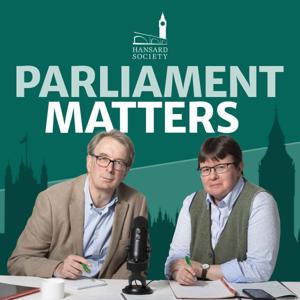
Join two of the UK's leading parliamentary experts, Mark D'Arcy and Ruth Fox, as they guide you through the often mysterious ways our politicians do business and explore the running controversies…
Mark D'Arcy was the BBC's parliamentary correspondent for two decades. Ruth Fox is the Director of the parliamentary think-tank the Hansard Society.
Parliament Matters is a Hansard Society production supported by the Joseph Rowntree Charitable Trust • Founding producer Luke Boga Mitchell; episode producer Richard Townsend.
Hosted on Acast. See acast.com/privacy for more information.
149 Listeners
130 Listeners

171 Listeners

108 Listeners
106 Listeners

662 Listeners
46 Listeners
18 Listeners
34 Listeners

3,033 Listeners
101 Listeners
23 Listeners

147 Listeners

36 Listeners

17 Listeners