
Sign up to save your podcasts
Or

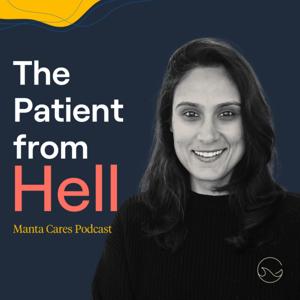


In this episode we delve into the world of healthcare decision making. Dr. Simmons and Dr. Sepucha, who collaborated on a study funded by the Patient Centered Outcomes Research Institute, discuss the importance of shared decision-making and its impact on patient care. Collaboration between patients and their care teams empowers patients to actively participate in their treatment plans, factoring their values and goals. Samira also shares her personal decision making struggle during her breast cancer treatment.
Visit the Manta Cares website & sign up for the access list for our digital platform coming soon!
Key Highlights:
Why making a decision about treatment should be a collaboration between the patient and their care team.
How decision aids and coaching can help patients feel prepared to more actively participate in decision making.
How to ensure that a patient’s expert opinion is integrated into treatment plans.
About our guests:
Dr. Karen Sepucha is the director of the Health Decision Sciences Center in the Division of General Internal Medicine at Massachusetts General Hospital (MGH) and an associate professor in Medicine at Harvard Medical School. Her research is focused on helping patients and families become meaningfully involved in significant medical decisions. Dr. Sepucha oversees efforts to promote shared decision making in primary and specialty care at MGH and across MassGeneral Brigham Health Care.
Dr. Leigh Simmons is the Medical Director of the MGH Health Decision Sciences Center where she studies the use of decision aids to help patients and clinicians in the shared decision making process. Dr. Simmons develops and conducts training of physicians and staff in communication skills focused on improving decision making with patients. Her clinical practice is with the Internal Medicine Associates at Massachusetts General Hospital. In addition to her clinical and research interests, Dr. Simmons is a medical student educator and directs the internal medicine clerkship for Harvard Medical School students at Massachusetts General Hospital.
Key Moments:
10 minutes: On the power of shared decision-making. “We really see this shared decision making, it's a process, right? And ideally it's a process that really fosters good communication and also sort of built on the foundation recognizing the expertise that different parties bring to the table.”
25 minutes: On the value of decision aids in elevating conversations. “While we would never make the case that it's going to save time to use a decision aid, the goal is that it would be fairly time neutral if introduced properly, if it's done as pre-work for a visit, getting this to patients at the right time, when they're facing a decision and getting them to watch it and review it.”
41 minutes: On the importance of the patient perspective. “Care usually only gets better if we invite the people who are living with the condition every day to contribute the thoughts they have been having about their disease.”
This episode was supported by the Patient Centered Outcomes Research Institute (PCORI) and features 2 studies (Study 1 & Study 2) by Dr. Sepucha & Dr. Simmons.
Disclaimer: This podcast is for general informational purposes only and does not constitute the practice of medicine, nursing or other professional health care services, including the giving of medical advice, and no doctor/patient relationship is formed. The use of information on this podcast or materials linked from this podcast is at the user's own risk. The content of this podcast is not intended to be a substitute for professional medical advice, diagnosis, or treatment. Users should not disregard, or delay in obtaining, medical advice for any medical condition they may have, and should seek the assistance of their health care professionals for any such conditions.
Dr. Karen Wernli, Senior Scientific Investigator at Kaiser Permanente Washington Health Research Institute, delves into the intersection of epidemiology and personalized medicine, exploring the challenges of balancing population-level research with individualized healthcare needs. She discusses survivorship in breast cancer with a comparison of mammograms vs. MRIs for surveillance imaging. Dr. Wernli talks about some of the challenges patients face throughout the breast cancer diagnosis and treatment process, emphasizing the importance of including the patient voice in research to capture those lived experiences.
Manta Maps are coming! Step-by-step subway maps that guide you through the entire cancer experience. Learn more here!
Key Highlights:
The study of population health (epidemiology) versus individual health.
Comparing Mammograms and MRIs for breast cancer surveillance.
Examining the need for a more patient-centered approach to healthcare.
About our guest:
Karen Wernli, PhD, is a Senior Scientific Investigator at Kaiser Permanente Washington Health Research Institute and Professor in the Department of Health System Science at Kaiser Permanente Bernard J. Tyson School of Medicine. She is a cancer epidemiologist and health services researcher whose work focuses on incorporating patient-centered outcomes to improve health care along the cancer care continuum, from prevention to survivorship. Her work spans several types of cancer (including breast and lung), and explores the impact of cancer in special populations (adolescents and young adults with cancer). Her research strives to answer critical questions at the confluence of patients’ needs and clinical priorities.
Key Moments:
18 minutes: On the importance of reporting data for subgroups even if it is a small number. “If you only had 5 people in a subgroup, doing complex math about relationships is impossible. But at least I can describe what's going on. At least you could see what's the distribution of the exposure, the outcome of something I'm studying? So that we start to understand what's going on in this population when we don't have any other data."
52 minutes: Looking at surveillance using Mammogram vs. MRI. “Our study found that using breast MRI resulted in twice as many biopsies. What that means is if you did it on a population level, there would be thousands, like tens of thousands of additional women having a breast biopsy. And that if you waited another six months, the mammogram likely would have caught the cancer and maybe would not have changed the course of what was actually happening.”
This episode was supported by the Patient Centered Outcomes Research Institute (PCORI) and features this PCORI study by Karen Wernli, PhD.
The perspective shared is solely the responsibility of Dr. Wernli and does not necessarily represent the official views of the Patient Centered Outcomes Research Institute or Kaiser Permanente.
Limitations: Please note the investigators suggest that the multivariate analysis could not adjust for all population characteristics in this observational study. This means that the interpretation of the results from the study is complex. Since we are a podcast that does not provide medical advice, please discuss with your clinician which imaging is recommended for you.
Disclaimer: This podcast is for general informational purposes only and does not constitute the practice of medicine, nursing or other professional health care services, including the giving of medical advice, and no doctor/patient relationship is formed. The use of information on this podcast or materials linked from this podcast is at the user's own risk. The content of this podcast is not intended to be a substitute for professional medical advice, diagnosis, or treatment. Users should not disregard, or delay in obtaining, medical advice for any medical condition they may have, and should seek the assistance of their health care professionals.
Molly MacDonald was diagnosed with breast cancer 18 years ago, 3 years into her marriage with her husband Tom Pettit and founded Pink Fund out of her experience. This year Tom was diagnosed with tonsil cancer, and Molly has become the caregiver. This episode takes a look at the couple’s role reversal, how family relationships shift after a cancer diagnosis and the wake-up call you receive when you are facing your own mortality or that of your loved one. Molly and Tom are equal parts insightful and hilarious in sharing their experience as both patients and caregivers, and how Molly has shifted from the “Patient from Hell” to the “Caregiver from Hell.”
Key Highlights:
How family dynamics and perspectives change after a cancer diagnosis.
As a caregiver, recognizing that patients need to make the ultimate decision about their treatment and goals.
The ripple effect that our choices have in creating a future we never expected.
About our guests:
Molly MacDonald is co-founder and CEO of Pink Fund, a nonprofit that provides three to six months of financial support for women and families in active breast cancer treatment. Pink Fund was born 17 years ago out of MacDonald’s own experience as a mother of 5 struggling to make ends meet during her breast cancer diagnosis. Prior to founding Pink Fund, MacDonald had an extensive career in journalism, public relations, marketing, and sales. She is a frequent columnist and contributing writer for health journals publications.
Tom Pettit is a professional piano technician by trade, with 40 years of experience on the concert stage providing and tuning pianos for renowned performing artists. He spent 25 years with The Detroit Symphony Orchestra. His fine auditory skills have made him in high demand for some of the world’s most acclaimed pianists. He is co-founder of Pink Fund and serves in the role of Comptroller working with Pink Fund’s accountant, auditors, and lawyer.
Key Moments:
25 minutes: On keeping the patient at the center of decisions as a caregiver. “I know it’s hard for the caregiver, but I think the patient needs to be in charge. When I had my breast cancer and was told I had two options, a full mastectomy and no radiation or a lumpectomy and radiation. And I asked my surgeon, ‘If it were you, what would you do?’ And she said, ‘The thing is, it’s not me. And I can’t be responsible for your choice.’ So it is not me, and I really cannot thrust something on Tom because I don’t want to be responsible for the outcome of his decision.”
45 minutes: On how Molly’s choice for cancer treatment created a movement. “Sometimes I wonder, even though the biopsy came back that it was showing cancer, even though it was Stage 0 and hadn’t formed a tumor. Sometimes I wonder if I’d elected to do nothing, if nothing would have happened. But if nothing would have happened, and I’d elected that, then there would be no Pink Fund. Because we wouldn’t have gone through this experience together where we experienced financial toxicity, and where I met other working women who were going to stop treatment and go back to work because their treatment was going to outlast their FMLA, and they couldn’t afford to lose their jobs.”
Visit the Manta Cares website
Disclaimer: This podcast is for general informational purposes only and does not constitute the practice of medicine, nursing or other professional health care services, including the giving of medical advice, and no doctor/patient relationship is formed. The use of information on this podcast or materials linked from this podcast is at the user's own risk. The content of this podcast is not intended to be a substitute for professional medical advice, diagnosis, or treatment. Users should not disregard, or delay in obtaining, medical advice for any medical condition they may have, and should seek the assistance of their health care professionals for any such conditions.
In this episode, we talk with Dr. Glyn Elwyn and Danielle Schubbe about the ethical imperative of including patients in the decision-making process. They discuss how patient goals inform treatment decisions and the challenge of making choices for a “future self” with the lived experiences and preferences of today. Glyn and Danielle talk about this process for early stage breast cancer and some of the tools they’ve created to help both clinicians and patients navigate shared decision-making, including the three-talk model.
Key Highlights:
The art of combining clinical guidelines and patient preference to make the best treatment decision.
The role of patient goals in making decisions and realizing that decisions are being made for a “future self” using “current self” experiences.
Exploring the three-talk model of decision making: team talk, option talk and decision talk.
About our guests:
Glyn Elwyn BA MD MSc PhD FRCGP is a clinician, researcher, and innovator. He is a tenured professor at The Dartmouth Institute for Health Policy and Clinical Practice, USA, and at the Scientific Institute for Quality of Healthcare, Radboud University Nijmegen Medical Center, Netherlands. He has Visiting Professor positions at University College London, UK, and at the University of Lausanne in Switzerland. After reading the humanities he qualified in medicine, completed a Masters in Education, and obtained his doctorate at Radboud University, Nijmegen, Netherlands, with Professor Richard Grol. Glyn Elwyn studies coproduction, shared decision making, and the application of machine learning to digital recordings of clinical encounters.
Danielle Schubbe joined the Coproduction Laboratory in September 2017. She is an external PhD student of Health Services Research at Radboudumc in Nijmegen, Netherlands. She has worked on multiple PCORI-funded studies about shared decision making and the implementation of shared decision making in diverse clinical contexts.
Key Moments:
19 minutes: On integrating patient preference with clinical guidelines. “I think most discerning clinicians understand how to work within guidelines, and I think most expert clinicians would say I bring in patient preference as well as know what the rules are saying or what the guidelines are saying.”
31 minutes: On the challenge of making a decision for your future self. “Your decision today about that future is gonna be misinformed because you've never experienced that future yourself.... We cannot predict you in three years’ time. How will you feel? We can only ask you to do your best to predict how you feel in the future… and you will be wrong.”
49 minutes: Using the three-talk method of decision making. “Then there's the option talk. That's when you present if there is more than one option for the patient to consider for their treatment. That's when you go over all the nitty gritty of the pros and cons of the two surgical treatment options, in our case for early stage breast cancer, in a way that is hopefully not really overwhelming for the patient.”
This episode was supported by the Patient Centered Outcomes Research Institute (PCORI) and features these PCORI studies by Dr. Glyn Elwyn & Danielle Schubbe - Study 1 and Study 2.
Visit the Manta Cares website
Disclaimer: This podcast is for general informational purposes only and does not constitute the practice of medicine, nursing or other professional health care services, including the giving of medical advice, and no doctor/patient relationship is formed. The use of information on this podcast or materials linked from this podcast is at the user's own risk. The content of this podcast is not intended to be a substitute for professional medical advice, diagnosis, or treatment. Users should not disregard, or delay in obtaining, medical advice for any medical condition they may have, and should seek the assistance of their health care professionals for any such conditions.
Dr. David Penson, Chair of the Department of Urology at Vanderbilt University, discusses his comparative effectiveness research in prostate cancer. In the second of our two-part prostate cancer series, we delve deeper into the world of prostate cancer treatment decision-making. Dr. Penson discusses the emotional and informational hurdles that patients face, as well as the importance of patient education, understanding patient preferences, and the ongoing battle against overtreatment in prostate cancer.
Key Highlights:
Importance of informed decision making and arming patients with accurate and reliable information.
Understanding the concept of patient preferences in treatment decision making.
Overcoming decision biases and how the emotion of a cancer diagnosis can outweigh a rational decision-making process.
About our guest:
David F. Penson, MD, MPH is the Hamilton and Howd Chair in Urologic Oncology, Director of the Center for Surgical Quality and Outcomes Research and Professor and Chair, Department of Urology at Vanderbilt University. He currently maintains a clinical practice in urologic oncology at the Vanderbilt-Ingram Cancer Center. While his general research focus is clinical epidemiology and health services research across all urologic disease, his specific interests include the comparative effectiveness of treatment options in localized prostate cancer and the impact of the disease and its treatment on patients’ quality of life.
Key Moments:
4 minutes: On the clinical shift to active surveillance. “We have this situation where we were over diagnosing. Half the men who were detected by PSA screening at the turn of the century were overdiagnosed, depending on how you defined overdiagnosis. And they were all getting treated. So you had this terrible problem where we were just kind of treating everybody. I think what we've learned is that, in fact, not everyone with prostate cancer needs to be treated. That PSA picks up a lot of clinically indolent prostate cancer.”
24 minutes: On determining a patient’s priorities: “The cancer control and cure piece is not quite as clear [with radiation] because you're not pulling the cancer out. So you don't have the psychological benefit of knowing what you're dealing with. And it's very hard to do surgery after radiation. So it becomes this set of options, a set of what's important to you, right? So patients may not walk in the door saying, ‘I have a preference set.’ But as you start talking to them, their preference set becomes relatively clear. And when I talk to them, I say, ‘Listen, I can tell you what I would do,’ because a lot of times they say, ‘Doc, what would you do?’ But the problem is, I can't take Dave out of Dr. Penson, right? So I have my own set of preferences.”
36 minutes: On emotional vs. rational decision making. “But I think it's very hard to sort of turn down the emotional volume because the word ‘cancer’, any human hears that, and it scares you. Right? That goes back to what we were saying before about maybe we shouldn't be calling Gleason 6 cancer, cancer. Because there's a charge that goes with that word that freaks people out.”
This episode was supported by the Patient Centered Outcomes Research Institute (PCORI) and features this PCORI study by Dr. Penson.
Visit the Manta Cares website
Disclaimer: This podcast is for general informational purposes only and does not constitute the practice of medicine, nursing or other professional health care services, including the giving of medical advice, and no doctor/patient relationship is formed. The use of information on this podcast or materials linked from this podcast is at the user's own risk. The content of this podcast is not intended to be a substitute for professional medical advice, diagnosis, or treatment. Users should not disregard, or delay in obtaining, medical advice for any medical condition they may have, and should seek the assistance of their health care professionals for any such conditions.
Wills Levy was only five years old when he donated bone marrow to his one year old brother, Andrew. On this episode, Wills and his mom Esther talk about Andrew’s cancer experience and the impact on their family, how Wills’ cells gave the family extra time with Andrew to create memories, and how Andrew continues to guide the way they live, even after his death in 2016. This beautiful conversation highlights the power of a mother’s intuition, and a brother’s mission to squeeze every opportunity out of life knowing that time is never guaranteed.
Note to listeners: This podcast was recorded the day before the devastating wildfires in Lahaina where the Levys reside and therefore does not reference the grief and trauma experienced by Wills’ classmates and the entire Maui community. Our hearts are with the Levys and their Maui family.
Manta Maps are coming! Step-by-step subway maps that guide you through the entire cancer experience. Learn more here!
Key Highlights:
The power of the time Wills’ bone marrow donation gave the family to create memories with Andrew.
How Esther’s maternal intuition ended the arduous path to a cancer diagnosis for Andrew.
Andrew’s legacy of joy in guiding the family to live without regrets and take advantage of every opportunity presented to them.
About our guests:
Esther Levy is a mom of four children between the ages of 6 and 14 years old – three on earth and one who resides in her heart. In 2014 her life turned upside down when her third child Andrew was diagnosed with AMKL (Leukemia) at the age of 14 months. She left her career in pediatric nutrition and as a wellness coach to be by Andrew’s side and to care for her family. She is passionate about her family, fitness, and nutrition. Esther and her husband helped start a music therapy program for hospitalized children at Lucile Packard Children’s Hospital Stanford, and she is in the process of writing a book. She recently launched an online community entitled, “The Lost Sibling Project” to help empower bereaved siblings to process their grief. She earned a bachelor of arts degree in Human Biology from Stanford and a MSc with distinction in Public Health and Nutrition from the University of Westminster in London. She currently lives with her family in Maui.
Wills Levy is a freshman at Seabury Hall in Maui where he serves as the freshmen class president and spends every extra minute outside school playing soccer, traveling (to play soccer), and cooking/eating spicy food. For the last 4+ years he's served on the junior board of the Children's Cancer Therapy Development Institute - a cause he has passionately supported since he donated his bone marrow to his brother Andrew. His younger sisters awarded him the "world's best big brother" trophy. His parents agree.
Key Moments:
8 minutes: Wills on extra time with Andrew after donating his bone marrow. “Some of the most important and meaningful moments of my life with Andrew happened during that time. So it felt very good to do the bone marrow transplant and start that period of time.”
Visit the Manta Cares website
Disclaimer: This podcast is for general informational purposes only and does not constitute the practice of medicine, nursing or other professional health care services, including the giving of medical advice, and no doctor/patient relationship is formed. The content of this podcast is not intended to be a substitute for professional medical advice, diagnosis, or treatment & is at the user's own risk.
Dr. David Penson, Chair of the Department of Urology at Vanderbilt University, discusses his comparative effectiveness research in prostate cancer. He talks about the evolution of Prostate Cancer awareness in the US, and historic screening and side effect issues that have made it a stigmatized topic for many men. Dr. Penson describes the nuances of PSA testing and how higher diagnosis rates of Prostate Cancer has led to overtreatment in the past, and the current shift to focus on active surveillance is helping to better balance the treatment paradigm for men with Prostate Cancer.
Key Highlights:
What is comparative effectiveness research and why does it matter to cancer patients?
The evolution of the stigma associated with Prostate Cancer.
How to think about the nuances of PSA screening tests.
About our guest:
David F. Penson, MD, MPH is the Hamilton and Howd Chair in Urologic Oncology, Director of the Center for Surgical Quality and Outcomes Research and Professor and Chair, Department of Urology at Vanderbilt University. He currently maintains a clinical practice in urologic oncology at the Vanderbilt-Ingram Cancer Center. While his general research focus is clinical epidemiology and health services research across all urologic disease, his specific interests include the comparative effectiveness of treatment options in localized prostate cancer and the impact of the disease and its treatment on patients’ quality of life.
Key Moments:
6 minutes: What is CER and why does it matter? “Comparative effectiveness research has been around forever. People have different names for it, but it's comparing the effectiveness of various interventions for a condition. I've been focused in prostate cancer, so a lot of what I'm focused on is comparing the effectiveness of surgery and radiation and, for that matter, active surveillance in outcomes in prostate cancer.”
21 minutes: How cultural differences impact stigma. “In the US, prostate cancer is much more common in Black men. And the way they respond to the diagnosis may be different than other cultural groups. Hispanic men have another way of looking at it, white men, etc. So you do have this cultural element to it too, because sexuality and body image is often tied to cultural norms.”
31 minutes: The nuances of PSA screening. “The American Urological Association just came out with new recommendations around screening and does say, discuss screening, but doesn't say everyone should be screened. They've sort of started talking about getting a PSA test in your mid-40s, because there's pretty good literature that a baseline PSA test will establish your pretest probability of clinically significant prostate cancer in your lifetime. But the other thing that they mentioned is they basically say we should probably not be doing annual screening with PSA testing, probably every other year. Because less may be more here.”
This episode was supported by the Patient Centered Outcomes Research Institute (PCORI) and features this PCORI study by Dr. Penson.
Visit the Manta Cares website
Disclaimer: This podcast is for general informational purposes only and does not constitute the practice of medicine, nursing or other professional health care services, including the giving of medical advice, and no doctor/patient relationship is formed. The use of information on this podcast or materials linked from this podcast is at the user's own risk. The content of this podcast is not intended to be a substitute for professional medical advice, diagnosis, or treatment. Users should not disregard, or delay in obtaining, medical advice for any medical condition they may have, and should seek the assistance of their health care professionals for any such conditions.
The latest episode of "The Patient from Hell" features a conversation with David Moriah, a “Stage IV” cancer patient and outdoor enthusiast, who talks about living a life of adventure. David shares about his early days as an Outward Bound instructor, his contributions to the Cornell University Outdoor Education Program and the life lessons he has learned from “sleeping in the mud and swatting mosquitoes.” He talks about how mindset and faith have helped him through his cancer experience, which he refers to as “fighting the blue meanies.”
Manta Maps are coming! Step-by-step subway maps that guide you through the entire cancer experience. Learn more here!
Key Highlights:
How outdoor adventures have shaped David’s view on leadership and life.
Recognizing the value of all roles in a group and how the sum of the parts contributes to the success of the whole.
The power that comes from an insecure future in fueling an adventurous spirit.
About our guest:
David Moriah has lived 72 abundantly blessed years and is fiercely determined to extend the streak in the face of a “stage 4, incurable” diagnosis. He is a husband of 48 years, a father of two and a grandfather of two and a half. That’s more important than what he’s done for a living. As for that, he spent his 20s as a wilderness instructor for Outward Bound and is the founding director of Cornell University’s outdoor education program. He hosts a blog at CaringBridge, “Adventures in ChemoLand”, and he is a passionate advocate for staying fit while undergoing treatment, and looking out for “God Winks”, those moments of joy and reassurance that we are not alone in this sometimes scary and foreboding journey.
Key Moments:
5 minutes: On the leadership lesson he learned on his outdoor adventure. “I knew that what I needed to do was hop from rock to rock to get across the river. And so I proceeded to dance across the rocks, attempting to impress my charges with how athletic I was. And immediately, my team started falling off the rocks into the stream, left and right. I was standing on the other shore watching this and it's a leadership lesson that I never forgot. My job is not to look good and impress people. What I need to do is equip and empower my people to be able to do it themselves.”
29 minutes: On the idea of competition vs. team work. “There is an element in advanced mountaineering when you're in the Himalayas and you're climbing Everest or K2 where not everybody summits. Not everybody summits, but you want everybody to succeed. The success of the expedition goes across the entire team. But if you think of it as everyone succeeds rather than everyone summits, the idea is not that we come back and somebody won and everybody else lost, but that everybody achieved to the best of their ability."
Visit the Manta Cares website
Disclaimer: This podcast is for general informational purposes only and does not constitute the practice of medicine, nursing or other professional health care services, including the giving of medical advice, and no doctor/patient relationship is formed. The use of information on this podcast or materials linked from this podcast is at the user's own risk. The content of this podcast is not intended to be a substitute for professional medical advice, diagnosis, or treatment. Users should not disregard, or delay in obtaining, medical advice for any medical condition they may have, and should seek the assistance of their health care professionals for any such conditions.
Samira’s mom, Monika Daswani, joins the podcast to discuss her experience navigating Samira's cancer diagnosis and treatment as her caregiver. Monika, a trained chef by profession, shares her perspective on caring for her daughter during her cancer treatment including the challenges of maintaining nutrition during treatment, adapting meals to symptoms, and the importance of a strong support network. Monika emphasizes the role of faith, spirituality, and intent in both caregiving and healing. She also discusses her work leading the Helping Hands Foundation, which supports cancer patients in India.
Visit the Manta Cares website & sign up for the access list for our digital platform coming soon!
Key Highlights:
The role of family caregivers during cancer treatment
How faith, intent and spirituality guided Monika’s caregiving
Navigating nutrition during cancer treatments
About our guest:
Monika Daswani is the CEO and a member of Helping Hands's Board of Directors. With her leadership, Helping Hands pivoted from a general non-profit to embrace the mission to spread awareness about cancer diagnosis, early detection, and support other patients and caregivers. She was the primary caregiver to her daughter, who was diagnosed with cancer. A self-taught chef, Monika Daswani has dedicated her life to the gourmet food catering industry. She is the Founder and CEO of Kitchen Stories, a food catering company that has provided Kolkata, and numerous cities in India, access to global cuisine for over 2 decades.
Key Moments:
7 minutes: It takes a village - “The whole family wanted to be there with and for Samira. We are a small family of five, and each of us contributed in our own way for her. I was looking after Samira's food. My husband, who is very good at doing research, was helping me with handling symptoms with the correct food and home remedies. Raghav was Samira's emotional support. My other son Rohin, because he also lives in San Francisco, knew the healthcare system and could negotiate and set up appointments and get reports.”
10 minutes: On how faith has played a part in her caregiving journey - “I essentially work on faith. And I have enough faith, as I tell my family, for my entire family. Because I know I'm not alone, and I know the universe is there for me, and I think the universe is actually there for everyone. It's just up to us to realize him and absorb that energy from him. And as a caregiver, I think that is what I did because there is only so much that you can do as a human being. There is so much more that you require to be able to successfully survive this journey because at every point, it's trying to bring you down.”
12 minutes: On nutrition during cancer treatments - “Feeding her during chemo was all about focusing on how much nutrition and energy can be absorbed from what you are taking in because a body needs it all. The body is battling all those poisons that are going in. All the good cells, bad cells, everything is getting killed. We need the body to fight back. Because I come from India, when we cook, we believe that it's your thoughts and it's your vibrations that get transmitted in the food that you cook. It's your intent. And that's what I would focus on.”
Visit the Manta Cares website
Disclaimer: This podcast is for general informational purposes only and does not constitute the practice of medicine, nursing or other professional health care services, including the giving of medical advice, and no doctor/patient relationship is formed. The use of information on this podcast or materials linked from this podcast is at the user's own risk. The content of this podcast is not intended to be a substitute for professional medical advice, diagnosis, or treatment. Users should not disregard, or delay in obtaining, medical advice for any medical condition they may have, and should seek the assistance of their health care professionals for any such conditions.
Our guest this week is a scientist, an author and a father living with cancer, Jeff Stewart, who talks about the uncertainty of time. He delves into the complexities of calculating risk, understanding the abundance of sometimes ambiguous data and partnering with your oncologist or health care provider to help navigate uncertainty. Jeff addresses misinformation and biases in the US healthcare system, emphasizing the importance of evidence-based resources and treatments. Jeff also discusses some of the insights presented in his book, “Living: Inspiration from a Father with Cancer”.
Manta Maps are coming! Step-by-step subway maps that guide you through the entire cancer experience. Learn more here!
Key Highlights:
The balance of living life as if you have might have months to live or you might have many years to live.
The power and limitations of data and how systemic biases influence the way people interpret information.
Life insights from Jeff’s book, “Living: Inspiration from a Father with Cancer”.
About our guest:
Jeff Stewart is a managing director at Syneos Health, scientist, inventor, award-winning playwright, and father of seven. He was a Jeopardy! College Champion and runner-up in the Tournament of Champions. Jeff lives in Cary, North Carolina.
Key Moments:
4 minutes: On living with uncertainty - “If my cancer gets to be metastatic, for the very particular kind I have, the average life expectancy is between five and six months, if it progresses. On the other hand, roughly speaking, there's a 50% chance that I am already cured. That what they have done with a combination of chemo, radiation, and surgery has already cured me. So I can be sitting here right now with a completely normal lifespan in front of me. I used to think of my life maybe in 5-10 year chunks, where I might change a job or think about how I might invest a certain amount of time for that future. And that's gone now. Now my investment has to work both for the next five months and has to work for the next 50 years, which is just a strange place to be.”
38 minutes: On the difference between biases in regulated healthcare versus unregulated alternative treatments - “So I mean, it makes sense to all of us to say that pharma companies are biased. They are. They're my clients, they are. This is just how it is. They're there to make money and cure patients. It's not just pure altruism out there. The [alternative medicine companies] are also there to make money, but don't have somebody threatening to arrest them if they lie about things. They don't have somebody checking their work. It's just a completely different ball game. It is the difference between being cold because it's winter and cold because you are in outer space.”
47 minutes: On why Jeff wrote his book - “At the time when I decided to start writing, it was when I'd already had surgery and it was then at that point possible. They thought I had metastatic disease. And so that was the point where they thought I had five months left. So in that case, I wanted to get these tips that make life in general, not just life with cancer, into the hands of my kids, in case I'm not there to help make life easier.”
Visit the Manta Cares website
Jeff’s NPR article
Disclaimer: This podcast is for general informational purposes only and does not constitute the practice of medicine, nursing or other professional health care services, including the giving of medical advice, and no doctor/patient relationship is formed. The use of information on this podcast or materials linked from this podcast is at the user's own risk. The content of this podcast is not intended to be a substitute for professional medical advice, diagnosis, or treatment. Users should not disregard, or delay in obtaining, medical advice for any medical condition they may have, and should seek the assistance of their health care professionals for any such conditions.
From the publisher's feed

90,991 Listeners

4,351 Listeners

2,506 Listeners
9,620 Listeners

111,868 Listeners
0 Listeners