
Sign up to save your podcasts
Or

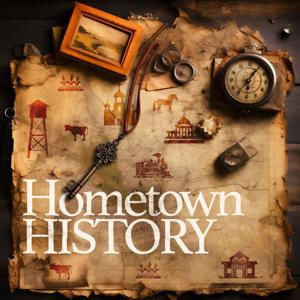

Paul Revere's midnight ride is legendary, but his real weapon wasn't a horse—it was his silversmith's tools. Through powerful engravings and propaganda, Revere turned British atrocities into rallying cries that united the colonies.
Born in 1735 in Boston, Revere apprenticed under his French immigrant father as a silversmith. When the Stamp Act ignited colonial resistance in 1765, Revere joined the Sons of Liberty and discovered his true calling: creating visual propaganda that spread revolutionary fervor across America. His craftsmanship became a tool of rebellion.
His famous engraving of the Boston Massacre became one of history's most powerful pieces of political art, depicting British soldiers as ruthless aggressors firing on unarmed colonists. From 1773 to 1775, Revere rode between Boston, New York, and Philadelphia, spreading news and coordinating resistance. His April 1775 midnight ride warned colonists of British troop movements, sparking the battles of Lexington and Concord that launched the American Revolution. After the war, Revere became an industrial pioneer, opening North America's first copper-rolling mill in 1801.
Subscribe to Hometown History for forgotten American history stories every week. New episodes release Tuesdays. Every hometown has a story—what's yours?
In This Episode:
Key Figures:
Timeline:
Historical Context: Paul Revere's story illustrates how the American Revolution was fought not just with muskets, but with art, propaganda, and strategic communication. His engravings—particularly the Boston Massacre image—spread throughout the colonies, shaping public opinion against British rule. While Longfellow's 1860 poem romanticized certain details of the midnight ride, the core truth remains: Revere's warning on April 18, 1775, allowed colonial militias to prepare for the battles that launched America's fight for independence.
After the war, Revere demonstrated the same innovative spirit in industry, pioneering mass production techniques and opening the first copper-rolling mill in North America. His copper sheets were used in shipbuilding, including the USS Constitution, proving that revolutionary spirit could transform peacetime industry as effectively as it had fueled wartime resistance.
Why This Story Matters: Paul Revere's legacy extends beyond a single midnight ride. He represents the revolutionary power of art and communication, showing how visual propaganda could unite disparate colonies against a common enemy. His post-war industrial innovations laid groundwork for American manufacturing independence. Most importantly, his story reminds us that revolutions are built by craftsmen, artists, and ordinary citizens who choose to act when their communities need them most.
 View all episodes
 By Shane Waters

4.5
138138 ratings
Paul Revere's midnight ride is legendary, but his real weapon wasn't a horse—it was his silversmith's tools. Through powerful engravings and propaganda, Revere turned British atrocities into rallying cries that united the colonies.
Born in 1735 in Boston, Revere apprenticed under his French immigrant father as a silversmith. When the Stamp Act ignited colonial resistance in 1765, Revere joined the Sons of Liberty and discovered his true calling: creating visual propaganda that spread revolutionary fervor across America. His craftsmanship became a tool of rebellion.
His famous engraving of the Boston Massacre became one of history's most powerful pieces of political art, depicting British soldiers as ruthless aggressors firing on unarmed colonists. From 1773 to 1775, Revere rode between Boston, New York, and Philadelphia, spreading news and coordinating resistance. His April 1775 midnight ride warned colonists of British troop movements, sparking the battles of Lexington and Concord that launched the American Revolution. After the war, Revere became an industrial pioneer, opening North America's first copper-rolling mill in 1801.
Subscribe to Hometown History for forgotten American history stories every week. New episodes release Tuesdays. Every hometown has a story—what's yours?
In This Episode:
Key Figures:
Timeline:
Historical Context: Paul Revere's story illustrates how the American Revolution was fought not just with muskets, but with art, propaganda, and strategic communication. His engravings—particularly the Boston Massacre image—spread throughout the colonies, shaping public opinion against British rule. While Longfellow's 1860 poem romanticized certain details of the midnight ride, the core truth remains: Revere's warning on April 18, 1775, allowed colonial militias to prepare for the battles that launched America's fight for independence.
After the war, Revere demonstrated the same innovative spirit in industry, pioneering mass production techniques and opening the first copper-rolling mill in North America. His copper sheets were used in shipbuilding, including the USS Constitution, proving that revolutionary spirit could transform peacetime industry as effectively as it had fueled wartime resistance.
Why This Story Matters: Paul Revere's legacy extends beyond a single midnight ride. He represents the revolutionary power of art and communication, showing how visual propaganda could unite disparate colonies against a common enemy. His post-war industrial innovations laid groundwork for American manufacturing independence. Most importantly, his story reminds us that revolutions are built by craftsmen, artists, and ordinary citizens who choose to act when their communities need them most.
17,325 Listeners
2,790 Listeners
10,972 Listeners

958 Listeners

2,825 Listeners
2,863 Listeners
1,016 Listeners
1,926 Listeners

19,133 Listeners

47,718 Listeners

375 Listeners

17,948 Listeners

8,022 Listeners
3,982 Listeners
10,359 Listeners

75 Listeners
61 Listeners

136 Listeners

378 Listeners
896 Listeners
8 Listeners
3 Listeners

11 Listeners

336 Listeners