
Sign up to save your podcasts
Or

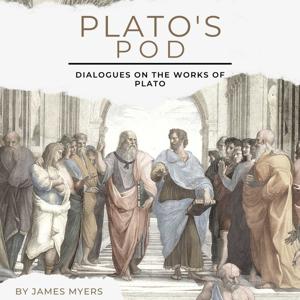

In this introduction to Plato's Cratylus and season 3 of the podcast, James Myers reviews the highlights of the first two seasons and the relevance of Plato's Theory of Forms. What are the Forms? The question plays a central role in the origin and meaning of the words that we apply to things, which is the subject of the Cratylus and a matter of particular importance to today's technological world. As "objects of thought", things are the basis of human perception. With recent powerful advances in machine language technology, do we have the knowledge to distinguish between our own words and the words of the machines that are learning to simulate us? In the group discussion on the Cratylus that will follow in the next episode, we will explore the Forms of things, the evolving perception of things from past to present, and the future relationship of technology to the objects of our thoughts.
 View all episodes
 By James Myers

4.2
99 ratings
In this introduction to Plato's Cratylus and season 3 of the podcast, James Myers reviews the highlights of the first two seasons and the relevance of Plato's Theory of Forms. What are the Forms? The question plays a central role in the origin and meaning of the words that we apply to things, which is the subject of the Cratylus and a matter of particular importance to today's technological world. As "objects of thought", things are the basis of human perception. With recent powerful advances in machine language technology, do we have the knowledge to distinguish between our own words and the words of the machines that are learning to simulate us? In the group discussion on the Cratylus that will follow in the next episode, we will explore the Forms of things, the evolving perception of things from past to present, and the future relationship of technology to the objects of our thoughts.

15,223 Listeners

3,424 Listeners
862 Listeners

3,242 Listeners

6,758 Listeners

112,611 Listeners

6,075 Listeners

50,255 Listeners
3,277 Listeners

14,799 Listeners