
Sign up to save your podcasts
Or

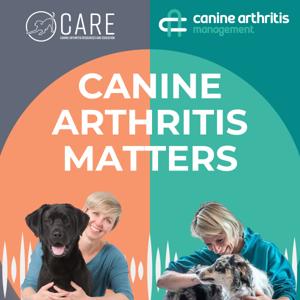

In this episode, Hannah and Dr Chelsea Dawson talk about a question many owners quietly struggle with: “When is what I’m doing enough?” They explore multimodal management for canine arthritis, why it can feel overwhelming to see so many possible treatments and therapies, and how this can trigger guilt, shame or a sense of failure when you cannot do everything. Chelsea and Hannah focus on aligning your multimodal plan with your dog’s needs, your resources and your life, so that you can feel confident and kinder to yourself while still giving your dog good, evidence-based care.
Guest Bio
Dr Chelsea Dawson has a long history in animal welfare. Before becoming a vet, she worked in several roles with the OSPCA, including as an animal control officer, then trained as a veterinary nurse. She later moved to the UK to study at the University of Glasgow Veterinary School and, after graduation, practised in Lancashire, where she obtained an ESVPS certificate in Chronic Pain Management and Western Veterinary Acupuncture. She went on to run a dedicated pain clinic and developed a strong interest in holistic, integrated care. Today she works as an integrative veterinarian and veterinary herbalist, providing referral services for pain management and herbal medicine, and teaching on acupuncture and herbal medicine courses.
Key Takehomes
1. Multimodal management is ideal, but you do not have to do “everything” for it to be effective.
2. Feelings of guilt and “not doing enough” are common and valid, but they are not a good measure of how well your dog is cared for.
3. A realistic plan that you can sustain emotionally, financially and time-wise will help your dog more than an unsustainable “perfect” plan.
4. It is fine to prioritise: choose the mix of interventions that makes the biggest difference to your dog’s comfort and quality of life.
5. Looking after your own wellbeing and mindset is part of good pain management, because a supported, informed owner can advocate better for their dog.
Relevant Links
CAM downloads – pain charts, guides and printable tools (including chronic pain indicator chart, good day / bad day diary, video guidance):
https://caninearthritis.co.uk/how-cam-can-help/downloads/
CAM Education – online learning platform:
https://www.cameducation.co.uk/
True North Veterinary Wellness – Chelsea’s clinic (integrated pain management, acupuncture, herbal medicine):
https://truenorthveterinary.ca/about-2/
Veterinary Herbal Training / Longview CPD profile – integrated medicine, acupuncture and herbal teaching:
https://longviewcpd.co.uk/meet-the-team/
Become a CAM member: https://caninearthritis.co.uk/get-involved/become-a-cam-member/
Learn more about CAM:
Facebook: https://www.facebook.com/CAMarthritis
Instagram: https://www.instagram.com/canine_arthritis
Youtube: https://www.youtube.com/c/CanineArthritisManagement
LinkedIn: https://www.linkedin.com/company/canine-arthritis-management-ltd
Have questions send them to: [email protected]
Stay tuned to learn how early detection can make a significant difference in managing OA in younger dogs.
 View all episodes
 By Dr. Hannah Capon
5
44 ratings
In this episode, Hannah and Dr Chelsea Dawson talk about a question many owners quietly struggle with: “When is what I’m doing enough?” They explore multimodal management for canine arthritis, why it can feel overwhelming to see so many possible treatments and therapies, and how this can trigger guilt, shame or a sense of failure when you cannot do everything. Chelsea and Hannah focus on aligning your multimodal plan with your dog’s needs, your resources and your life, so that you can feel confident and kinder to yourself while still giving your dog good, evidence-based care.
Guest Bio
Dr Chelsea Dawson has a long history in animal welfare. Before becoming a vet, she worked in several roles with the OSPCA, including as an animal control officer, then trained as a veterinary nurse. She later moved to the UK to study at the University of Glasgow Veterinary School and, after graduation, practised in Lancashire, where she obtained an ESVPS certificate in Chronic Pain Management and Western Veterinary Acupuncture. She went on to run a dedicated pain clinic and developed a strong interest in holistic, integrated care. Today she works as an integrative veterinarian and veterinary herbalist, providing referral services for pain management and herbal medicine, and teaching on acupuncture and herbal medicine courses.
Key Takehomes
1. Multimodal management is ideal, but you do not have to do “everything” for it to be effective.
2. Feelings of guilt and “not doing enough” are common and valid, but they are not a good measure of how well your dog is cared for.
3. A realistic plan that you can sustain emotionally, financially and time-wise will help your dog more than an unsustainable “perfect” plan.
4. It is fine to prioritise: choose the mix of interventions that makes the biggest difference to your dog’s comfort and quality of life.
5. Looking after your own wellbeing and mindset is part of good pain management, because a supported, informed owner can advocate better for their dog.
Relevant Links
CAM downloads – pain charts, guides and printable tools (including chronic pain indicator chart, good day / bad day diary, video guidance):
https://caninearthritis.co.uk/how-cam-can-help/downloads/
CAM Education – online learning platform:
https://www.cameducation.co.uk/
True North Veterinary Wellness – Chelsea’s clinic (integrated pain management, acupuncture, herbal medicine):
https://truenorthveterinary.ca/about-2/
Veterinary Herbal Training / Longview CPD profile – integrated medicine, acupuncture and herbal teaching:
https://longviewcpd.co.uk/meet-the-team/
Become a CAM member: https://caninearthritis.co.uk/get-involved/become-a-cam-member/
Learn more about CAM:
Facebook: https://www.facebook.com/CAMarthritis
Instagram: https://www.instagram.com/canine_arthritis
Youtube: https://www.youtube.com/c/CanineArthritisManagement
LinkedIn: https://www.linkedin.com/company/canine-arthritis-management-ltd
Have questions send them to: [email protected]
Stay tuned to learn how early detection can make a significant difference in managing OA in younger dogs.

71 Listeners
316 Listeners

8,575 Listeners
27 Listeners
227 Listeners

29,142 Listeners

3,105 Listeners

2,072 Listeners

1,026 Listeners
103 Listeners
8 Listeners
7 Listeners
0 Listeners

1,737 Listeners

99 Listeners