
Sign up to save your podcasts
Or


The video version of this podcast can be found here:
https://youtu.be/z9JZKy592xE
The link to the video on COPD diagnosis can be found here:
https://youtu.be/o_q8TTra3Ys
The link to the video on stable COPD management can be found here:
https://youtu.be/VZMKD0bY1G8
This episode makes reference to guidelines produced by the "National Institute for Health and Care Excellence" in the UK, also referred to as "NICE". Please note that the content on this channel reflects my professional interpretation/summary of the guidance and that I am in no way affiliated with, employed by or funded/sponsored by NICE.
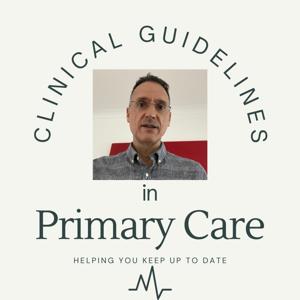
My name is Fernando Florido and I am a General Practitioner in the United Kingdom. In this episode, I go through the section on exacerbations in the NICE guideline [NG115] on COPD in adults, and also the NICE guideline [NG114] on antimicrobial prescribing on COPD acute exacerbations, always focusing on what is relevant in Primary Care only.
I am not giving medical advice; this video is intended for health care professionals; it is only my summary and my interpretation of the guidelines and you must use your clinical judgement.
There is a podcast version of this and other videos that you can access here:
Primary Care guidelines podcast:
· Apple podcast: https://podcasts.apple.com/gb/podcast/primary-care-guidelines/id1608821148
· Spotify: https://open.spotify.com/show/2kmGZkt1ssZ9Ei8n8mMaE0?si=9d30d1993449494e
· Amazon Music: https://music.amazon.co.uk/podcasts/0edb5fd8-affb-4c5a-9a6d-6962c1b7f0a1/primary-care-guidelines?ref=dm_sh_NnjF2h4UuQxyX0X3Lb3WQtR5P
· Google Podcast: https://www.google.com/podcasts?feed=aHR0cHM6Ly9mZWVkcy5yZWRjaXJjbGUuY29tLzI1ODdhZDc4LTc3MzAtNDhmNi04OTRlLWYxZjQxNzhlMzdjMw%3D%3D
· Redcircle: https://redcircle.com/shows/2587ad78-7730-48f6-894e-f1f4178e37c3
There is a YouTube version of this and other videos that you can access here:
● The Practical GP YouTube Channel:
https://youtube.com/@practicalgp?si=ecJGF5QCuMLQ6hrk
The resources consulted can be found here:
Chronic obstructive pulmonary disease in over 16s: diagnosis and management- NICE guideline [NG115] can be found here:
● https://www.nice.org.uk/guidance/NG115
The visual summary for the treatment of COPD can be found here:
● https://www.nice.org.uk/guidance/ng115/resources/visual-summary-treatment-algorithm-pdf-6604261741
Chronic obstructive pulmonary disease (acute exacerbation): antimicrobial prescribing - NICE guideline [NG114] can be found here:
● https://www.nice.org.uk/guidance/ng114
The Medicines and Healthcare products Regulatory Agency advice for restrictions and precautions for using fluoroquinolone antibiotics can be found here:
● https://www.gov.uk/drug-safety-update/fluoroquinolone-antibiotics-new-restrictions-and-precautions-for-use-due-to-very-rare-reports-of-disabling-and-potentially-long-lasting-or-irreversible-side-effects
Intro / outro music: Track: Halfway Through — Broke In Summer [Audio Library Release]
● Music provided by Audio Library Plus
● Watch: https://youtu.be/aBGk6aJM3IU
● Free Download / Stream: https://alplus.io/halfway-through
Transcript
If you are listening to this podcast on YouTube, for a better experience, switch to the video version. The link is in the top right corner of the video and in the episode description.
Hello and welcome, I’m Fernando, a GP in the UK. Today we are going to do an up-to-date review of the section on exacerbations in the NICE guideline on COPD in adults, and also the NICE guideline on antimicrobial prescribing for acute exacerbations of COPD, always focusing on what is relevant in Primary Care only. If you wish to know about COPD diagnosis and stable COPD management, please see the corresponding episodes on this channel. The links are in the episode description.
Right, so let’s jump into it.
The first thing to do in General Practice is to determine whether there is a need for hospital treatment or whether the patient can be treated at home. NICE has produced a table including the factors to consider when deciding whether to treat the patient in hospital or in the community. The majority of these factors are straightforward and logical, basically sending to hospital those patients who are more symptomatic, unable to cope at home, frail etc, so I will not labour those points because you can use your clinical judgement when assessing the patient’s symptoms.
Full list for PowerPoint slide:
· Able to cope at home
· Breathlessness
· General condition
· Level of activity
· Level of consciousness or confusion
· On long-term oxygen therapy
· Social circumstances
· Rate of onset
· Significant comorbidity (particularly cardiac disease and insulin-dependent diabetes)
· CXR abnormality
In terms of examination findings, we will also use our clinical judgement and we will consider sending patients to hospital if they have:
· Cyanosis
· Worsening peripheral oedema or an
· SaO2 < 90%
The diagnosis of an exacerbation is made clinically and does not depend on the results of investigations. However, investigations may sometimes be useful in ensuring appropriate treatment is given. More investigations are recommended for people treated in hospital (who tend to have more severe exacerbations) than for people in the community
For people who have their exacerbation managed in primary care:
· sputum culture is not routinely recommended but
· pulse oximetry is of value if there are clinical features of a severe exacerbation.
Increased breathlessness is a common feature of exacerbations, which is usually managed by taking increased doses of short-acting bronchodilators.
Both nebulisers and hand-held inhalers can be used during exacerbations depending on clinical factors. For those admitted to hospital switching them to hand-held inhalers as soon as their condition has stabilised is recommended, because this may allow them to be discharged from hospital earlier.
In the absence of significant contraindications, we will consider oral steroids in the community for exacerbations with a significant increase in breathlessness. We will offer 30 mg oral prednisolone daily for 5 days, referring to the BNF for guidance as to how to stop it. We will think about osteoporosis prophylaxis for people who need frequent courses of oral corticosteroids.
For guidance on using antibiotics to treat COPD exacerbations, we will look at its own separate guideline, that is, the NICE guideline on antimicrobial prescribing for acute exacerbations of COPD or NG114.
We will start by saying that a range of factors (including viral infections and smoking) can trigger an exacerbation and that many exacerbations are not caused by bacterial infections so they will not respond to antibiotics
However, some people at risk of exacerbations may have antibiotics to keep at home as part of their exacerbation action plan
Before giving antibiotics, we will take into account:
· the severity of symptoms and whether they may need to go into hospital
· previous exacerbation and hospital admission history, and the risk of developing complications
· previous sputum culture results and
· the risk of resistance with repeated courses of antibiotics.
If an antibiotic is given, we will advise that symptoms may not be fully resolved when the antibiotic course has been completed
Regardless of whether we give antibiotics or not, we will advise patients to seek further medical advice if symptoms worsen, do not start to improve within an agreed period of time or the patient becomes unwell. In these cases, we will consider:
· other possible diagnoses, such as pneumonia, cardiorespiratory failure or sepsis and we will also consider
· antibiotic resistance, and we will send a sputum culture if symptoms have not improved following a course of antibiotics.
We will refer for specialist advice and consideration of intravenous antibiotics if:
· symptoms are not improving with repeated courses of oral antibiotics or
· there are bacteria that are resistant to oral antibiotics or
· the patient cannot take oral medicines
When prescribing an antibiotic for an acute exacerbation of COPD, we will follow the following recommendations:
The first-line oral antibiotics are:
· Amoxicillin: 500 mg three times a day for 5 days (or an increased dose in severe infections)
· Doxycycline: 200 mg on first day, then 100 mg once a day for 5‑day course in total (or an increased dose of 200mg daily in severe infections) or
· Clarithromycin: 500 mg twice a day for 5 days
We will consider Second-line oral antibiotics if there is no improvement in symptoms on first choice taken for at least 2 to 3 days; guided by susceptibilities when available. In that case we will:
· Use and alternative first line antibiotic
An alternative choice oral antibiotics for patients at higher risk of treatment failure would be:
· Co‑amoxiclav: 500/125 mg three times a day for 5 days
· Co‑trimoxazole: 960 mg twice a day for 5 days
· Levofloxacin: 500 mg once a day for 5 days (but we will offer this with specialist advice if co‑amoxiclav or co‑trimoxazole cannot be used and after considering safety issues
Further general treatment considerations are as follows:
We will check the BNF for appropriate use and dosing in specific populations, for example, in hepatic impairment, and renal impairment.
If a person is having antibiotic prophylaxis, acute treatment should be with an antibiotic from a different class.
People who may be at a higher risk of treatment failure include people who have had repeated courses of antibiotics, a previous or current sputum culture showing resistant bacteria, or people at higher risk of developing complications.
Co‑trimoxazole should only be considered for use in acute exacerbations of COPD when there is bacteriological evidence of sensitivity
We will also follow the MHRA advice for restrictions and precautions for using fluoroquinolone antibiotics due to very rare reports of disabling and potentially long-lasting or irreversible side effects affecting musculoskeletal and nervous systems. Warnings include: stopping treatment at first signs of a serious adverse reaction (such as tendonitis), prescribing with special caution in people over 60 years and avoiding coadministration with a corticosteroid.
And finally, we will consider physiotherapy using positive expiratory pressure devices for selected people with exacerbations of COPD, to help with clearing sputum.
We have come to the end of this episode. Remember that this is not medical advice and it is only my summary and my interpretation of the guidelines. You must always use your clinical judgement.
Thank you for listening and goodbye.
 View all episodes
 By Juan Fernando Florido Santana

4
22 ratings
The video version of this podcast can be found here:
https://youtu.be/z9JZKy592xE
The link to the video on COPD diagnosis can be found here:
https://youtu.be/o_q8TTra3Ys
The link to the video on stable COPD management can be found here:
https://youtu.be/VZMKD0bY1G8
This episode makes reference to guidelines produced by the "National Institute for Health and Care Excellence" in the UK, also referred to as "NICE". Please note that the content on this channel reflects my professional interpretation/summary of the guidance and that I am in no way affiliated with, employed by or funded/sponsored by NICE.
My name is Fernando Florido and I am a General Practitioner in the United Kingdom. In this episode, I go through the section on exacerbations in the NICE guideline [NG115] on COPD in adults, and also the NICE guideline [NG114] on antimicrobial prescribing on COPD acute exacerbations, always focusing on what is relevant in Primary Care only.
I am not giving medical advice; this video is intended for health care professionals; it is only my summary and my interpretation of the guidelines and you must use your clinical judgement.
There is a podcast version of this and other videos that you can access here:
Primary Care guidelines podcast:
· Apple podcast: https://podcasts.apple.com/gb/podcast/primary-care-guidelines/id1608821148
· Spotify: https://open.spotify.com/show/2kmGZkt1ssZ9Ei8n8mMaE0?si=9d30d1993449494e
· Amazon Music: https://music.amazon.co.uk/podcasts/0edb5fd8-affb-4c5a-9a6d-6962c1b7f0a1/primary-care-guidelines?ref=dm_sh_NnjF2h4UuQxyX0X3Lb3WQtR5P
· Google Podcast: https://www.google.com/podcasts?feed=aHR0cHM6Ly9mZWVkcy5yZWRjaXJjbGUuY29tLzI1ODdhZDc4LTc3MzAtNDhmNi04OTRlLWYxZjQxNzhlMzdjMw%3D%3D
· Redcircle: https://redcircle.com/shows/2587ad78-7730-48f6-894e-f1f4178e37c3
There is a YouTube version of this and other videos that you can access here:
● The Practical GP YouTube Channel:
https://youtube.com/@practicalgp?si=ecJGF5QCuMLQ6hrk
The resources consulted can be found here:
Chronic obstructive pulmonary disease in over 16s: diagnosis and management- NICE guideline [NG115] can be found here:
● https://www.nice.org.uk/guidance/NG115
The visual summary for the treatment of COPD can be found here:
● https://www.nice.org.uk/guidance/ng115/resources/visual-summary-treatment-algorithm-pdf-6604261741
Chronic obstructive pulmonary disease (acute exacerbation): antimicrobial prescribing - NICE guideline [NG114] can be found here:
● https://www.nice.org.uk/guidance/ng114
The Medicines and Healthcare products Regulatory Agency advice for restrictions and precautions for using fluoroquinolone antibiotics can be found here:
● https://www.gov.uk/drug-safety-update/fluoroquinolone-antibiotics-new-restrictions-and-precautions-for-use-due-to-very-rare-reports-of-disabling-and-potentially-long-lasting-or-irreversible-side-effects
Intro / outro music: Track: Halfway Through — Broke In Summer [Audio Library Release]
● Music provided by Audio Library Plus
● Watch: https://youtu.be/aBGk6aJM3IU
● Free Download / Stream: https://alplus.io/halfway-through
Transcript
If you are listening to this podcast on YouTube, for a better experience, switch to the video version. The link is in the top right corner of the video and in the episode description.
Hello and welcome, I’m Fernando, a GP in the UK. Today we are going to do an up-to-date review of the section on exacerbations in the NICE guideline on COPD in adults, and also the NICE guideline on antimicrobial prescribing for acute exacerbations of COPD, always focusing on what is relevant in Primary Care only. If you wish to know about COPD diagnosis and stable COPD management, please see the corresponding episodes on this channel. The links are in the episode description.
Right, so let’s jump into it.
The first thing to do in General Practice is to determine whether there is a need for hospital treatment or whether the patient can be treated at home. NICE has produced a table including the factors to consider when deciding whether to treat the patient in hospital or in the community. The majority of these factors are straightforward and logical, basically sending to hospital those patients who are more symptomatic, unable to cope at home, frail etc, so I will not labour those points because you can use your clinical judgement when assessing the patient’s symptoms.
Full list for PowerPoint slide:
· Able to cope at home
· Breathlessness
· General condition
· Level of activity
· Level of consciousness or confusion
· On long-term oxygen therapy
· Social circumstances
· Rate of onset
· Significant comorbidity (particularly cardiac disease and insulin-dependent diabetes)
· CXR abnormality
In terms of examination findings, we will also use our clinical judgement and we will consider sending patients to hospital if they have:
· Cyanosis
· Worsening peripheral oedema or an
· SaO2 < 90%
The diagnosis of an exacerbation is made clinically and does not depend on the results of investigations. However, investigations may sometimes be useful in ensuring appropriate treatment is given. More investigations are recommended for people treated in hospital (who tend to have more severe exacerbations) than for people in the community
For people who have their exacerbation managed in primary care:
· sputum culture is not routinely recommended but
· pulse oximetry is of value if there are clinical features of a severe exacerbation.
Increased breathlessness is a common feature of exacerbations, which is usually managed by taking increased doses of short-acting bronchodilators.
Both nebulisers and hand-held inhalers can be used during exacerbations depending on clinical factors. For those admitted to hospital switching them to hand-held inhalers as soon as their condition has stabilised is recommended, because this may allow them to be discharged from hospital earlier.
In the absence of significant contraindications, we will consider oral steroids in the community for exacerbations with a significant increase in breathlessness. We will offer 30 mg oral prednisolone daily for 5 days, referring to the BNF for guidance as to how to stop it. We will think about osteoporosis prophylaxis for people who need frequent courses of oral corticosteroids.
For guidance on using antibiotics to treat COPD exacerbations, we will look at its own separate guideline, that is, the NICE guideline on antimicrobial prescribing for acute exacerbations of COPD or NG114.
We will start by saying that a range of factors (including viral infections and smoking) can trigger an exacerbation and that many exacerbations are not caused by bacterial infections so they will not respond to antibiotics
However, some people at risk of exacerbations may have antibiotics to keep at home as part of their exacerbation action plan
Before giving antibiotics, we will take into account:
· the severity of symptoms and whether they may need to go into hospital
· previous exacerbation and hospital admission history, and the risk of developing complications
· previous sputum culture results and
· the risk of resistance with repeated courses of antibiotics.
If an antibiotic is given, we will advise that symptoms may not be fully resolved when the antibiotic course has been completed
Regardless of whether we give antibiotics or not, we will advise patients to seek further medical advice if symptoms worsen, do not start to improve within an agreed period of time or the patient becomes unwell. In these cases, we will consider:
· other possible diagnoses, such as pneumonia, cardiorespiratory failure or sepsis and we will also consider
· antibiotic resistance, and we will send a sputum culture if symptoms have not improved following a course of antibiotics.
We will refer for specialist advice and consideration of intravenous antibiotics if:
· symptoms are not improving with repeated courses of oral antibiotics or
· there are bacteria that are resistant to oral antibiotics or
· the patient cannot take oral medicines
When prescribing an antibiotic for an acute exacerbation of COPD, we will follow the following recommendations:
The first-line oral antibiotics are:
· Amoxicillin: 500 mg three times a day for 5 days (or an increased dose in severe infections)
· Doxycycline: 200 mg on first day, then 100 mg once a day for 5‑day course in total (or an increased dose of 200mg daily in severe infections) or
· Clarithromycin: 500 mg twice a day for 5 days
We will consider Second-line oral antibiotics if there is no improvement in symptoms on first choice taken for at least 2 to 3 days; guided by susceptibilities when available. In that case we will:
· Use and alternative first line antibiotic
An alternative choice oral antibiotics for patients at higher risk of treatment failure would be:
· Co‑amoxiclav: 500/125 mg three times a day for 5 days
· Co‑trimoxazole: 960 mg twice a day for 5 days
· Levofloxacin: 500 mg once a day for 5 days (but we will offer this with specialist advice if co‑amoxiclav or co‑trimoxazole cannot be used and after considering safety issues
Further general treatment considerations are as follows:
We will check the BNF for appropriate use and dosing in specific populations, for example, in hepatic impairment, and renal impairment.
If a person is having antibiotic prophylaxis, acute treatment should be with an antibiotic from a different class.
People who may be at a higher risk of treatment failure include people who have had repeated courses of antibiotics, a previous or current sputum culture showing resistant bacteria, or people at higher risk of developing complications.
Co‑trimoxazole should only be considered for use in acute exacerbations of COPD when there is bacteriological evidence of sensitivity
We will also follow the MHRA advice for restrictions and precautions for using fluoroquinolone antibiotics due to very rare reports of disabling and potentially long-lasting or irreversible side effects affecting musculoskeletal and nervous systems. Warnings include: stopping treatment at first signs of a serious adverse reaction (such as tendonitis), prescribing with special caution in people over 60 years and avoiding coadministration with a corticosteroid.
And finally, we will consider physiotherapy using positive expiratory pressure devices for selected people with exacerbations of COPD, to help with clearing sputum.
We have come to the end of this episode. Remember that this is not medical advice and it is only my summary and my interpretation of the guidelines. You must always use your clinical judgement.
Thank you for listening and goodbye.

703 Listeners
504 Listeners

304 Listeners

25 Listeners

1,152 Listeners
376 Listeners

254 Listeners
7 Listeners

16 Listeners

440 Listeners
377 Listeners

8,440 Listeners

327 Listeners

3,255 Listeners
6 Listeners