
Sign up to save your podcasts
Or

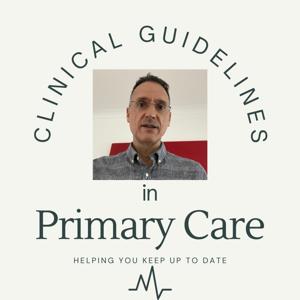

The video version of this podcast can be found here:
· https://youtu.be/V93jdGfnLIk
This video refers to guidelines produced by a number of organisations (details below). Please note that the content on this channel reflects my professional interpretation/summary of the guidance and that I am in no way affiliated with, employed by or funded/sponsored by any of them.
My name is Fernando Florido and I am a General Practitioner in the United Kingdom. In this episode I cover what to do if eosinophilia is found, always focusing on what is relevant in Primary Care only. The information is based on Haematological guidance by Camden CCG, Manchester Foundation Trust and King’s Health Partners.
I am not giving medical advice; this video is intended for health care professionals, it is only my summary and my interpretation of the guidelines and you must use your clinical judgement.
Disclaimer:
The Video Content on this channel is for educational purposes and not intended to be a substitute for professional medical advice, diagnosis, or treatment. Always seek the advice of your physician or other qualified health provider with any questions you may have regarding a medical condition. Never disregard professional medical advice or delay in seeking it because of something you have read or seen on this YouTube channel. The statements made throughout this video are not to be used or relied on to diagnose, treat, cure or prevent health conditions.
In addition, transmission of this Content is not intended to create, and receipt by you does not constitute, a physician-patient relationship with Dr Fernando Florido, his employees, agents, independent contractors, or anyone acting on behalf of Dr Fernando Florido.
Intro / outro music: Track: Halfway Through — Broke In Summer [Audio Library Release]
There is a podcast version of this and other videos that you can access here:
Primary Care guidelines podcast:
· Redcircle: https://redcircle.com/shows/primary-care-guidelines
· Spotify: https://open.spotify.com/show/5BmqS0Ol16oQ7Kr1WYzupK
· Apple podcasts: https://podcasts.apple.com/gb/podcast/primary-care-guidelines/id1608821148
There is a YouTube version of this and other videos that you can access here:
https://youtube.com/@practicalgp?si=ecJGF5QCuMLQ6hrk
My summary of the guidance consulted can be found here:
· https://1drv.ms/b/s!AiVFJ_Uoigq0mQ4ZjYGRH1wkGBdc?e=Zuxx84
The resources consulted can be found here:
· Camden CCG guidance: 1456246258-2f3891e610beaa6533f2c0ad7866e776.pdf(Review) - Adobe cloud storage
· Manchester Adult anaemia guide: https://acrobat.adobe.com/id/urn:aaid:sc:EU:f96fe528-0a47-457c-b29a-a7efb87221e0
· Manchester Haematology GP guide: https://mft.nhs.uk/app/uploads/2021/02/MFT-Haematology-GP-Pathway-Guide-v4-11.2.21.pdf
· King’s Health Partners: https://www.kingshealthpartners.org/assets/000/002/294/KCH_-_king_s_health_partners_-_quick_guide_to_haematology_original.pdf
Transcript
If you are listening to this podcast on YouTube, for a better experience, switch to the video version. The link is in the top right corner of the video and in the episode description.
Hello and welcome, I’m Fernando, a GP in the UK. Today we are going to cover what to do when we encounter eosinophilia on a full blood count, always focusing on what is relevant in Primary Care only.
I have based this episode on Haematological guidance by Camden CCG, Manchester Foundation Trust and King’s Health Partners. The links to them are in the episode description.
Right, let’s jump into it.
Eosinophilia refers to an increased number of eosinophils in the blood. Although thresholds may vary slightly between laboratories, eosinophilia is generally defined as an eosinophil count greater than 0.5 × 10⁹ per litre. Eosinophils are white blood cells involved in allergic responses, parasitic infections, and various inflammatory processes, so an elevated count can indicate a wide range of underlying conditions.
Let’s have a look at some of the possible causes of eosinophilia. They include:
• Asthma: particularly allergic asthma, which commonly has high eosinophil levels because of their role in airway inflammation and hypersensitivity reactions.
• Then we have Skin disease such as eczema, atopic dermatitis, urticaria, and psoriasis: because these conditions involve allergic or immune-mediated inflammation, which often stimulates eosinophils.
• Infections, especially those due to parasites, as well as fungal infections, tuberculosis and malaria. Parasitic infections are a very typical cause, but some fungal and bacterial infections can also trigger eosinophilia through chronic inflammation.
• Another possible cause is Drugs, including penicillin, allopurinol, amitriptyline, and carbamazepine, although virtually any medication can be a possible trigger.
Drug-induced eosinophilia often occurs as part of a hypersensitivity reaction.
• Then we have Connective tissue diseases such as rheumatoid arthritis given that autoimmune and vasculitic conditions can increase eosinophils due to chronic inflammation.
• We also have Solid malignancies, for example breast, renal, stomach, and lung cancer. This is because certain cancers release cytokines that stimulate eosinophil production. In some cases eosinophilia may be a paraneoplastic manifestation.
• Then, Myeloproliferative disorders including leukaemia and lymphoma. Here eosinophilia can happen either because eosinophils are part of the malignant clone or due to cytokine-driven overproduction.
• another cause, Respiratory diseases such as bronchiectasis and cystic fibrosis, again caused by the ongoing inflammatory response.
• Then, Endocrine conditions such as Addison’s disease. This is because cortisol suppresses eosinophils and in Addison’s, the low cortisol will result in a high eosinophil count.
• and finally we have Post-splenectomy. This is because the spleen normally helps regulate and remove eosinophils from circulation, so splenectomy will result in an increased eosinophil count.
If the eosinophil count is greater than 2.5 × 10⁹/L, we will look for signs of organ damage. This is because very high eosinophil levels can lead to direct tissue injury. Activated eosinophils release toxic inflammatory mediators, and cytokines that can cause inflammation and fibrosis in virtually any organ. The heart, lungs, skin, gastrointestinal tract, and nervous system are particularly vulnerable. Damage can progress rapidly and we should consider urgent admission if there are red flags
Red flags include:
• Severe symptoms secondary to organ involvement, such as
• difficulty breathing,
• chest pain,
• abdominal pain, or
• neurological symptoms.
• as well as other complications, including tissue damage, venous thromboembolism, or evidence of end-organ injury such as acute kidney injury or heart failure.
Even in the absence of red flags, criteria for urgent referral to haematology are:
• A leucoerythroblastic blood film, which suggests bone marrow infiltration, haematological malignancy or severe bone marrow stress.
• And absolute eosinophil count greater than 5 × 10⁹/L, as this level significantly increases the risk of hypereosinophilic syndromes and progressive organ damage.
If the urgent criteria are not met and the patient is clinically well, we will check the travel and drug history and assess for any evidence of atopy, such as asthma, eczema, or allergic rhinitis. We will then repeat the blood test within one to two weeks to confirm whether the eosinophilia is persistent and to look for possible underlying causes.
Initial investigations will include:
• As already mentioned, a repeat full blood count, to confirm that the eosinophilia is persistent and to check for other abnormalities which may suggest a bone marrow disorder.
• A blood film, which can reveal abnormal cell morphology, blast cells, or features suggesting reactive versus clonal eosinophilia.
• Inflammatory markers such as ESR and CRP, which help identify underlying infection, inflammation, or autoimmune disease.
• Immunoglobulin E, as a high IgE is common in allergic disease, parasitic infections, and some hypereosinophilic syndromes.
• An autoimmune profile, since eosinophilia can occur in connective tissue diseases and vasculitis.
• Renal and liver function tests, because organ dysfunction can be both a cause and a consequence of eosinophilia.
• A bone profile, as a high calcium may suggest granulomatous disease such as sarcoidosis or certain malignancies. This is because granulomatous conditions and some cancers increase the production of active vitamin D or stimulate bone breakdown, both of which increase calcium levels.
• We will also check for LDH, which can be high in haematological malignancies and in high cell turnover.
• Vitamin B12 and folate, since a raised B12 can be a clue to myeloproliferative disease, while a deficiency can contribute to abnormal blood counts.
• A chest X-ray, particularly if tuberculosis, pulmonary eosinophilia, or sarcoidosis are suspected.
• Stool culture and microscopy for ova, cysts, and parasites, as parasitic infections are a common and important cause of eosinophilia worldwide.
• Serological antibodies for threadworm or other nematode infections, especially if there are suggestive symptoms.
• and finally, Serological antibodies for schistosomiasis, depending on travel history and ideally after discussion with microbiology, as the timing can influence accuracy. Schistosomiasis is a parasitic infection acquired through contact with freshwater in endemic regions in Africa, the Middle East, South America, and parts of Asia, which emphasises why travel history is so important.
If the cause is found, we will treat it accordingly. However, we will refer to haematology routinely if the eosinophilia remains unexplained and it is greater than 1.5 × 10⁹/L for three months or longer, or if it is rising without an obvious cause. These patterns raise concern for hypereosinophilic syndromes or underlying haematological disease.
So that is it, a review of the assessment and management of eosinophilia.
We have come to the end of this episode. Remember that this is not medical advice but only my summary and my interpretation of the guidelines. You must always use your clinical judgement.
Thank you for listening and goodbye.
 View all episodes
 By Juan Fernando Florido Santana

4
22 ratings
The video version of this podcast can be found here:
· https://youtu.be/V93jdGfnLIk
This video refers to guidelines produced by a number of organisations (details below). Please note that the content on this channel reflects my professional interpretation/summary of the guidance and that I am in no way affiliated with, employed by or funded/sponsored by any of them.
My name is Fernando Florido and I am a General Practitioner in the United Kingdom. In this episode I cover what to do if eosinophilia is found, always focusing on what is relevant in Primary Care only. The information is based on Haematological guidance by Camden CCG, Manchester Foundation Trust and King’s Health Partners.
I am not giving medical advice; this video is intended for health care professionals, it is only my summary and my interpretation of the guidelines and you must use your clinical judgement.
Disclaimer:
The Video Content on this channel is for educational purposes and not intended to be a substitute for professional medical advice, diagnosis, or treatment. Always seek the advice of your physician or other qualified health provider with any questions you may have regarding a medical condition. Never disregard professional medical advice or delay in seeking it because of something you have read or seen on this YouTube channel. The statements made throughout this video are not to be used or relied on to diagnose, treat, cure or prevent health conditions.
In addition, transmission of this Content is not intended to create, and receipt by you does not constitute, a physician-patient relationship with Dr Fernando Florido, his employees, agents, independent contractors, or anyone acting on behalf of Dr Fernando Florido.
Intro / outro music: Track: Halfway Through — Broke In Summer [Audio Library Release]
There is a podcast version of this and other videos that you can access here:
Primary Care guidelines podcast:
· Redcircle: https://redcircle.com/shows/primary-care-guidelines
· Spotify: https://open.spotify.com/show/5BmqS0Ol16oQ7Kr1WYzupK
· Apple podcasts: https://podcasts.apple.com/gb/podcast/primary-care-guidelines/id1608821148
There is a YouTube version of this and other videos that you can access here:
https://youtube.com/@practicalgp?si=ecJGF5QCuMLQ6hrk
My summary of the guidance consulted can be found here:
· https://1drv.ms/b/s!AiVFJ_Uoigq0mQ4ZjYGRH1wkGBdc?e=Zuxx84
The resources consulted can be found here:
· Camden CCG guidance: 1456246258-2f3891e610beaa6533f2c0ad7866e776.pdf(Review) - Adobe cloud storage
· Manchester Adult anaemia guide: https://acrobat.adobe.com/id/urn:aaid:sc:EU:f96fe528-0a47-457c-b29a-a7efb87221e0
· Manchester Haematology GP guide: https://mft.nhs.uk/app/uploads/2021/02/MFT-Haematology-GP-Pathway-Guide-v4-11.2.21.pdf
· King’s Health Partners: https://www.kingshealthpartners.org/assets/000/002/294/KCH_-_king_s_health_partners_-_quick_guide_to_haematology_original.pdf
Transcript
If you are listening to this podcast on YouTube, for a better experience, switch to the video version. The link is in the top right corner of the video and in the episode description.
Hello and welcome, I’m Fernando, a GP in the UK. Today we are going to cover what to do when we encounter eosinophilia on a full blood count, always focusing on what is relevant in Primary Care only.
I have based this episode on Haematological guidance by Camden CCG, Manchester Foundation Trust and King’s Health Partners. The links to them are in the episode description.
Right, let’s jump into it.
Eosinophilia refers to an increased number of eosinophils in the blood. Although thresholds may vary slightly between laboratories, eosinophilia is generally defined as an eosinophil count greater than 0.5 × 10⁹ per litre. Eosinophils are white blood cells involved in allergic responses, parasitic infections, and various inflammatory processes, so an elevated count can indicate a wide range of underlying conditions.
Let’s have a look at some of the possible causes of eosinophilia. They include:
• Asthma: particularly allergic asthma, which commonly has high eosinophil levels because of their role in airway inflammation and hypersensitivity reactions.
• Then we have Skin disease such as eczema, atopic dermatitis, urticaria, and psoriasis: because these conditions involve allergic or immune-mediated inflammation, which often stimulates eosinophils.
• Infections, especially those due to parasites, as well as fungal infections, tuberculosis and malaria. Parasitic infections are a very typical cause, but some fungal and bacterial infections can also trigger eosinophilia through chronic inflammation.
• Another possible cause is Drugs, including penicillin, allopurinol, amitriptyline, and carbamazepine, although virtually any medication can be a possible trigger.
Drug-induced eosinophilia often occurs as part of a hypersensitivity reaction.
• Then we have Connective tissue diseases such as rheumatoid arthritis given that autoimmune and vasculitic conditions can increase eosinophils due to chronic inflammation.
• We also have Solid malignancies, for example breast, renal, stomach, and lung cancer. This is because certain cancers release cytokines that stimulate eosinophil production. In some cases eosinophilia may be a paraneoplastic manifestation.
• Then, Myeloproliferative disorders including leukaemia and lymphoma. Here eosinophilia can happen either because eosinophils are part of the malignant clone or due to cytokine-driven overproduction.
• another cause, Respiratory diseases such as bronchiectasis and cystic fibrosis, again caused by the ongoing inflammatory response.
• Then, Endocrine conditions such as Addison’s disease. This is because cortisol suppresses eosinophils and in Addison’s, the low cortisol will result in a high eosinophil count.
• and finally we have Post-splenectomy. This is because the spleen normally helps regulate and remove eosinophils from circulation, so splenectomy will result in an increased eosinophil count.
If the eosinophil count is greater than 2.5 × 10⁹/L, we will look for signs of organ damage. This is because very high eosinophil levels can lead to direct tissue injury. Activated eosinophils release toxic inflammatory mediators, and cytokines that can cause inflammation and fibrosis in virtually any organ. The heart, lungs, skin, gastrointestinal tract, and nervous system are particularly vulnerable. Damage can progress rapidly and we should consider urgent admission if there are red flags
Red flags include:
• Severe symptoms secondary to organ involvement, such as
• difficulty breathing,
• chest pain,
• abdominal pain, or
• neurological symptoms.
• as well as other complications, including tissue damage, venous thromboembolism, or evidence of end-organ injury such as acute kidney injury or heart failure.
Even in the absence of red flags, criteria for urgent referral to haematology are:
• A leucoerythroblastic blood film, which suggests bone marrow infiltration, haematological malignancy or severe bone marrow stress.
• And absolute eosinophil count greater than 5 × 10⁹/L, as this level significantly increases the risk of hypereosinophilic syndromes and progressive organ damage.
If the urgent criteria are not met and the patient is clinically well, we will check the travel and drug history and assess for any evidence of atopy, such as asthma, eczema, or allergic rhinitis. We will then repeat the blood test within one to two weeks to confirm whether the eosinophilia is persistent and to look for possible underlying causes.
Initial investigations will include:
• As already mentioned, a repeat full blood count, to confirm that the eosinophilia is persistent and to check for other abnormalities which may suggest a bone marrow disorder.
• A blood film, which can reveal abnormal cell morphology, blast cells, or features suggesting reactive versus clonal eosinophilia.
• Inflammatory markers such as ESR and CRP, which help identify underlying infection, inflammation, or autoimmune disease.
• Immunoglobulin E, as a high IgE is common in allergic disease, parasitic infections, and some hypereosinophilic syndromes.
• An autoimmune profile, since eosinophilia can occur in connective tissue diseases and vasculitis.
• Renal and liver function tests, because organ dysfunction can be both a cause and a consequence of eosinophilia.
• A bone profile, as a high calcium may suggest granulomatous disease such as sarcoidosis or certain malignancies. This is because granulomatous conditions and some cancers increase the production of active vitamin D or stimulate bone breakdown, both of which increase calcium levels.
• We will also check for LDH, which can be high in haematological malignancies and in high cell turnover.
• Vitamin B12 and folate, since a raised B12 can be a clue to myeloproliferative disease, while a deficiency can contribute to abnormal blood counts.
• A chest X-ray, particularly if tuberculosis, pulmonary eosinophilia, or sarcoidosis are suspected.
• Stool culture and microscopy for ova, cysts, and parasites, as parasitic infections are a common and important cause of eosinophilia worldwide.
• Serological antibodies for threadworm or other nematode infections, especially if there are suggestive symptoms.
• and finally, Serological antibodies for schistosomiasis, depending on travel history and ideally after discussion with microbiology, as the timing can influence accuracy. Schistosomiasis is a parasitic infection acquired through contact with freshwater in endemic regions in Africa, the Middle East, South America, and parts of Asia, which emphasises why travel history is so important.
If the cause is found, we will treat it accordingly. However, we will refer to haematology routinely if the eosinophilia remains unexplained and it is greater than 1.5 × 10⁹/L for three months or longer, or if it is rising without an obvious cause. These patterns raise concern for hypereosinophilic syndromes or underlying haematological disease.
So that is it, a review of the assessment and management of eosinophilia.
We have come to the end of this episode. Remember that this is not medical advice but only my summary and my interpretation of the guidelines. You must always use your clinical judgement.
Thank you for listening and goodbye.

703 Listeners
504 Listeners
304 Listeners

25 Listeners

1,152 Listeners
376 Listeners

254 Listeners
7 Listeners

16 Listeners

440 Listeners
377 Listeners

8,440 Listeners

327 Listeners

3,255 Listeners

6 Listeners