
Sign up to save your podcasts
Or


The video version of this podcast can be found here:
https://youtu.be/W0LL-1BwV3w?si=OT-GNCXaHoA7dcbs
This podcast makes reference to guidelines produced by the "National Institute for Health and Care Excellence" in the UK, also referred to as "NICE". Please note that the content on this channel reflects my professional interpretation/summary of the guidance and that I am in no way affiliated with, employed by or funded/sponsored by NICE.
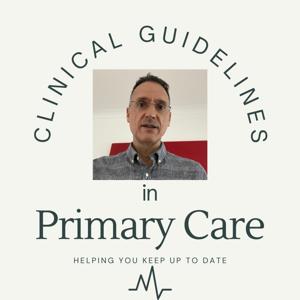
My name is Fernando Florido and I am a General Practitioner in the United Kingdom. In this video I will go through a National Patient Safety Alert released on 3.1.2024 by the Department of Health and NHS England on the shortage of GLP1 receptor agonists, touching on sections of the NICE guideline on type 2 diabetes as well as relevant pharmaceutical information, always focusing on what is relevant in Primary Care only.
I am not giving medical advice; this video is intended for health care professionals; it is only my summary and my interpretation of the guidelines and you must use your clinical judgement.
There is a podcast version of this and other videos that you can access here:
Primary Care guidelines podcast:
· Redcircle: https://redcircle.com/shows/primary-care-guidelines
· Spotify: https://open.spotify.com/show/5BmqS0Ol16oQ7Kr1WYzupK
· Apple podcasts: https://podcasts.apple.com/gb/podcast/primary-care-guidelines/id1608821148
There is a YouTube version of this and other videos that you can access here:
https://youtube.com/@practicalgp?si=ecJGF5QCuMLQ6hrk
The PDF document related to the safety alert on GLP- RA shortage can be found here:
· https://www.cas.mhra.gov.uk/ViewandAcknowledgment/ViewAttachment.aspx?Attachment_id=104161
The safety alert on GLP- RA shortage can be found here:
· https://www.cas.mhra.gov.uk/ViewandAcknowledgment/ViewAlert.aspx?AlertID=103245
The Central Alerting System Homepage can be found here:
· https://www.cas.mhra.gov.uk/Home.aspx
Intro / outro music: Track: Halfway Through — Broke In Summer [Audio Library Release]
Transcript
If you are listening to this podcast on YouTube, for a better experience, switch to the video version. The link is in the top right corner of the video and in the episode description.
Hello and welcome, I am Fernando, a GP in the UK. In this episode I will go through a National Patient Safety Alert released on 3.1.2023 by the Department of Health and NHS England on the shortage of GLP1 receptor agonists, touching on sections of the NICE guideline on type 2 diabetes as well as relevant pharmaceutical information, always focusing on what is relevant in Primary Care only.
If you want to access the safety alert website or the associated PDF document, the link is in the episode description.
Right, let’s jump into it.
You are probably aware that the supply of GLP-1 receptor agonists continues to be limited, with supplies not expected to return to normal until at least the end of 2024. The supply issues have been caused by an increase in demand for these products for licensed and off-label indications.
The situation at the moment is that exenatide as Byetta® will be discontinued in March 2024. In addition, liraglutide as Victoza® continues to be out of stock and further stock is not expected until end of 2024. The supply of other agents such as injectable semaglutide as Ozempic® and Dulaglutide as Trulicity® may be unreliable and the shortages may cause significant issues.
So, what is the solution?
Well, oral semaglutide has come to the rescue. Semaglutide as Rybelsus® tablets are now available in sufficient quantities to support initiation of GLP-1 RA for type 2 diabetes in line with NICE guidance.
So let’s remind ourselves of what NICE recommends for type 2 diabetes.
NICE says that if triple therapy with metformin and 2 other oral drugs is not effective, not tolerated or contraindicated, we can consider triple therapy by switching one drug for a GLP‑1 receptor agonist if:
· The BMI is 35 or higher and there are psychological or medical problems associated with obesity. We will adjust the BMI to 32.5 for people from Black, Asian and other minority ethnic groups or
· For lower BMIs if:
o insulin would have occupational implications or
o weight loss would benefit other significant comorbidities.
NICE also says that we should only continue GLP‑1 receptor agonists if there is a reduction in HbA1c of at least 1.0% or 11 mmol/mol and weight loss of at least 3% of the initial body weight in 6 months.
And NICE also states that starting GLP1 RAs in combination with insulin should only happen following specialist advice and with ongoing support from a consultant-led service.
So, what do we need to do until supply issues have resolved?
1. First, we must only prescribe GLP-1 RAs for licensed indications.
2. Second, we will prescribe Rybelsus® tablets for new initiations
3. Third, we should identify patients prescribed Byetta® and Victoza® and switch to Rybelsus® tablets, counselling patients accordingly and referring to structured education and weight management programmes where available
4. Fourth, we will discuss stopping GLP1-RA if patients have not achieved a beneficial metabolic response as per the NICE guideline, that is, again, a reduction in HbA1c of at least 1% or 11 mmol/mol and weight loss of at least 3% of initial body weight in 6 months.
5. And finally, we should not double up a lower dose preparation or switch between strengths solely based on availability.
So, if oral semaglutide is going to be prescribed a lot more, let’s familiarise ourselves with it and let’s have a look at the summary of product characteristics.
How do we initiate oral semaglutide or Rybelsus tablets?
The starting dose of oral semaglutide is 3 mg once daily for one month. After one month, the dose should be increased to a maintenance dose of 7 mg once daily. After at least one month on 7 mg, if necessary, the dose can be increased to a maintenance dose of 14 mg once daily to further improve glycaemic control.
The maximum recommended dose of oral semaglutide is 14 mg once daily but this should be achieved by prescribing one 14mg tablet, not two 7mg tablets.
What about if the patient is already on subcutaneous semaglutide? Well, switching between oral and subcutaneous semaglutide cannot be easily predicted because of the high pharmacokinetic variability of oral semaglutide. However, we can say that oral semaglutide 14 mg once daily is comparable to s.c. semaglutide 0.5 mg once weekly. An oral dose equivalent to 1.0 mg of s.c. semaglutide has not been established.
How should it be taken? It should be taken on an empty stomach, swallowed whole with a sip of water (up to a maximum of half a glass of water equivalent to 120 ml). Splitting, crushing or chewing the tablets may decrease the absorption.
Patients should wait at least 30 minutes before eating, drinking or taking other drugs. Waiting less than 30 minutes also decreases the absorption.
When oral semaglutide is used in combination with metformin, an SGLT2i or pioglitazone, the current dose of those drugs can be continued.
However, when used in combination with a sulfonylurea or with insulin, a reduction in the dose of sulfonylurea or insulin may be considered to reduce the risk of hypoglycaemia. Blood glucose self-monitoring is necessary for this reduction but otherwise, self-monitoring of blood glucose is not needed to adjust the dose of semaglutide.
No dose adjustment is required for patients with hepatic or renal impairment but semaglutide is not recommended in patients with end-stage renal disease.
When should we use it with caution?
Semaglutide should not be used in patients with bariatric surgery, severe congestive heart failure, type 1 diabetes mellitus or for the treatment of DKA. Diabetic ketoacidosis has been reported in insulin-dependent patients who had a rapid dose reduction of insulin following the start of oral semaglutide.
The use of GLP-1 receptor agonists may be associated with gastrointestinal adverse reactions that can cause dehydration, which in rare cases can lead to a deterioration of renal function. Nausea, diarrhoea, and vomiting tend to be mild to moderate in severity and of short duration normally during the first months on treatment.
Patients should be informed of the risk of acute pancreatitis and if it is suspected, semaglutide should be discontinued and, if confirmed, it should not be restarted. Caution should be exercised in patients with a history of pancreatitis.
In patients with diabetic retinopathy treated with insulin and s.c. semaglutide, an increased risk of developing diabetic retinopathy complications has been observed, and this risk cannot be excluded for oral semaglutide.
Because of a drug interaction, patient on levothyroxine should have their thyroid function tests monitored closely.
So, we have an oral medication that is simple to take and has few interactions. Why has it not been more widely recommended instead of the seemingly more problematic injections?
And the answer is because of its pharmacokinetic properties.
Oral semaglutide has a variable absorption and a low bioavailability, approximately 1% following oral administration. As we have mentioned, the absorption of semaglutide is decreased if taken with food or large volumes of water and a longer post-dose fasting period results in higher absorption.
The variability in absorption between patients is also high and if the treatment response is lower than expected, we need to be aware that it may be due to a low absorption and that 2-4% of patients will not have any exposure to it after oral administration.
On the other hand, with an elimination half-life of approximately 1 week, semaglutide will be present in the circulation for about 5 weeks after the last dose. The primary excretion routes are via the urine and faeces.
We have come to the end of this episode. Remember that this is not medical advice and it is only my summary and my interpretation of the guidelines. You must always use your clinical judgement.
Thank you for listening and goodbye.
 View all episodes
 By Juan Fernando Florido Santana

4
22 ratings
The video version of this podcast can be found here:
https://youtu.be/W0LL-1BwV3w?si=OT-GNCXaHoA7dcbs
This podcast makes reference to guidelines produced by the "National Institute for Health and Care Excellence" in the UK, also referred to as "NICE". Please note that the content on this channel reflects my professional interpretation/summary of the guidance and that I am in no way affiliated with, employed by or funded/sponsored by NICE.
My name is Fernando Florido and I am a General Practitioner in the United Kingdom. In this video I will go through a National Patient Safety Alert released on 3.1.2024 by the Department of Health and NHS England on the shortage of GLP1 receptor agonists, touching on sections of the NICE guideline on type 2 diabetes as well as relevant pharmaceutical information, always focusing on what is relevant in Primary Care only.
I am not giving medical advice; this video is intended for health care professionals; it is only my summary and my interpretation of the guidelines and you must use your clinical judgement.
There is a podcast version of this and other videos that you can access here:
Primary Care guidelines podcast:
· Redcircle: https://redcircle.com/shows/primary-care-guidelines
· Spotify: https://open.spotify.com/show/5BmqS0Ol16oQ7Kr1WYzupK
· Apple podcasts: https://podcasts.apple.com/gb/podcast/primary-care-guidelines/id1608821148
There is a YouTube version of this and other videos that you can access here:
https://youtube.com/@practicalgp?si=ecJGF5QCuMLQ6hrk
The PDF document related to the safety alert on GLP- RA shortage can be found here:
· https://www.cas.mhra.gov.uk/ViewandAcknowledgment/ViewAttachment.aspx?Attachment_id=104161
The safety alert on GLP- RA shortage can be found here:
· https://www.cas.mhra.gov.uk/ViewandAcknowledgment/ViewAlert.aspx?AlertID=103245
The Central Alerting System Homepage can be found here:
· https://www.cas.mhra.gov.uk/Home.aspx
Intro / outro music: Track: Halfway Through — Broke In Summer [Audio Library Release]
Transcript
If you are listening to this podcast on YouTube, for a better experience, switch to the video version. The link is in the top right corner of the video and in the episode description.
Hello and welcome, I am Fernando, a GP in the UK. In this episode I will go through a National Patient Safety Alert released on 3.1.2023 by the Department of Health and NHS England on the shortage of GLP1 receptor agonists, touching on sections of the NICE guideline on type 2 diabetes as well as relevant pharmaceutical information, always focusing on what is relevant in Primary Care only.
If you want to access the safety alert website or the associated PDF document, the link is in the episode description.
Right, let’s jump into it.
You are probably aware that the supply of GLP-1 receptor agonists continues to be limited, with supplies not expected to return to normal until at least the end of 2024. The supply issues have been caused by an increase in demand for these products for licensed and off-label indications.
The situation at the moment is that exenatide as Byetta® will be discontinued in March 2024. In addition, liraglutide as Victoza® continues to be out of stock and further stock is not expected until end of 2024. The supply of other agents such as injectable semaglutide as Ozempic® and Dulaglutide as Trulicity® may be unreliable and the shortages may cause significant issues.
So, what is the solution?
Well, oral semaglutide has come to the rescue. Semaglutide as Rybelsus® tablets are now available in sufficient quantities to support initiation of GLP-1 RA for type 2 diabetes in line with NICE guidance.
So let’s remind ourselves of what NICE recommends for type 2 diabetes.
NICE says that if triple therapy with metformin and 2 other oral drugs is not effective, not tolerated or contraindicated, we can consider triple therapy by switching one drug for a GLP‑1 receptor agonist if:
· The BMI is 35 or higher and there are psychological or medical problems associated with obesity. We will adjust the BMI to 32.5 for people from Black, Asian and other minority ethnic groups or
· For lower BMIs if:
o insulin would have occupational implications or
o weight loss would benefit other significant comorbidities.
NICE also says that we should only continue GLP‑1 receptor agonists if there is a reduction in HbA1c of at least 1.0% or 11 mmol/mol and weight loss of at least 3% of the initial body weight in 6 months.
And NICE also states that starting GLP1 RAs in combination with insulin should only happen following specialist advice and with ongoing support from a consultant-led service.
So, what do we need to do until supply issues have resolved?
1. First, we must only prescribe GLP-1 RAs for licensed indications.
2. Second, we will prescribe Rybelsus® tablets for new initiations
3. Third, we should identify patients prescribed Byetta® and Victoza® and switch to Rybelsus® tablets, counselling patients accordingly and referring to structured education and weight management programmes where available
4. Fourth, we will discuss stopping GLP1-RA if patients have not achieved a beneficial metabolic response as per the NICE guideline, that is, again, a reduction in HbA1c of at least 1% or 11 mmol/mol and weight loss of at least 3% of initial body weight in 6 months.
5. And finally, we should not double up a lower dose preparation or switch between strengths solely based on availability.
So, if oral semaglutide is going to be prescribed a lot more, let’s familiarise ourselves with it and let’s have a look at the summary of product characteristics.
How do we initiate oral semaglutide or Rybelsus tablets?
The starting dose of oral semaglutide is 3 mg once daily for one month. After one month, the dose should be increased to a maintenance dose of 7 mg once daily. After at least one month on 7 mg, if necessary, the dose can be increased to a maintenance dose of 14 mg once daily to further improve glycaemic control.
The maximum recommended dose of oral semaglutide is 14 mg once daily but this should be achieved by prescribing one 14mg tablet, not two 7mg tablets.
What about if the patient is already on subcutaneous semaglutide? Well, switching between oral and subcutaneous semaglutide cannot be easily predicted because of the high pharmacokinetic variability of oral semaglutide. However, we can say that oral semaglutide 14 mg once daily is comparable to s.c. semaglutide 0.5 mg once weekly. An oral dose equivalent to 1.0 mg of s.c. semaglutide has not been established.
How should it be taken? It should be taken on an empty stomach, swallowed whole with a sip of water (up to a maximum of half a glass of water equivalent to 120 ml). Splitting, crushing or chewing the tablets may decrease the absorption.
Patients should wait at least 30 minutes before eating, drinking or taking other drugs. Waiting less than 30 minutes also decreases the absorption.
When oral semaglutide is used in combination with metformin, an SGLT2i or pioglitazone, the current dose of those drugs can be continued.
However, when used in combination with a sulfonylurea or with insulin, a reduction in the dose of sulfonylurea or insulin may be considered to reduce the risk of hypoglycaemia. Blood glucose self-monitoring is necessary for this reduction but otherwise, self-monitoring of blood glucose is not needed to adjust the dose of semaglutide.
No dose adjustment is required for patients with hepatic or renal impairment but semaglutide is not recommended in patients with end-stage renal disease.
When should we use it with caution?
Semaglutide should not be used in patients with bariatric surgery, severe congestive heart failure, type 1 diabetes mellitus or for the treatment of DKA. Diabetic ketoacidosis has been reported in insulin-dependent patients who had a rapid dose reduction of insulin following the start of oral semaglutide.
The use of GLP-1 receptor agonists may be associated with gastrointestinal adverse reactions that can cause dehydration, which in rare cases can lead to a deterioration of renal function. Nausea, diarrhoea, and vomiting tend to be mild to moderate in severity and of short duration normally during the first months on treatment.
Patients should be informed of the risk of acute pancreatitis and if it is suspected, semaglutide should be discontinued and, if confirmed, it should not be restarted. Caution should be exercised in patients with a history of pancreatitis.
In patients with diabetic retinopathy treated with insulin and s.c. semaglutide, an increased risk of developing diabetic retinopathy complications has been observed, and this risk cannot be excluded for oral semaglutide.
Because of a drug interaction, patient on levothyroxine should have their thyroid function tests monitored closely.
So, we have an oral medication that is simple to take and has few interactions. Why has it not been more widely recommended instead of the seemingly more problematic injections?
And the answer is because of its pharmacokinetic properties.
Oral semaglutide has a variable absorption and a low bioavailability, approximately 1% following oral administration. As we have mentioned, the absorption of semaglutide is decreased if taken with food or large volumes of water and a longer post-dose fasting period results in higher absorption.
The variability in absorption between patients is also high and if the treatment response is lower than expected, we need to be aware that it may be due to a low absorption and that 2-4% of patients will not have any exposure to it after oral administration.
On the other hand, with an elimination half-life of approximately 1 week, semaglutide will be present in the circulation for about 5 weeks after the last dose. The primary excretion routes are via the urine and faeces.
We have come to the end of this episode. Remember that this is not medical advice and it is only my summary and my interpretation of the guidelines. You must always use your clinical judgement.
Thank you for listening and goodbye.

701 Listeners
504 Listeners
298 Listeners

26 Listeners
1,150 Listeners
367 Listeners

251 Listeners
8 Listeners

21 Listeners
437 Listeners
375 Listeners

8,447 Listeners

325 Listeners

3,858 Listeners
6 Listeners