
Sign up to save your podcasts
Or


The video version of this podcast can be found here:
· https://youtu.be/35Yog27dOoA
This episode makes reference to guidelines produced by the "National Institute for Health and Care Excellence" in the UK, also referred to as "NICE". The content on this channel reflects my professional interpretation/summary of the guidance and I am in no way affiliated with, employed by or funded/sponsored by NICE.
NICE stands for "National Institute for Health and Care Excellence" and is an independent organization within the UK healthcare system that produces evidence-based guidelines and recommendations to help healthcare professionals deliver the best possible care to patients, particularly within the NHS (National Health Service) by assessing new health technologies and treatments and determining their cost-effectiveness; essentially guiding best practices for patient care across the country.
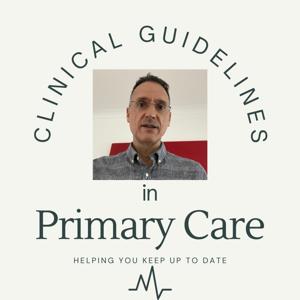
My name is Fernando Florido and I am a General Practitioner in the United Kingdom. In this episode I go through new and updated recommendations published in April 2026 by the National Institute for Health and Care Excellence (NICE), focusing on those that are relevant to Primary Care only.
I am not giving medical advice; this video is intended for health care professionals, it is only my summary and my interpretation of the guidelines and you must use your clinical judgement.
Disclaimer:
The Video Content on this channel is for educational purposes and not intended to be a substitute for professional medical advice, diagnosis, or treatment. Always seek the advice of your physician or other qualified health provider with any questions you may have regarding a medical condition. Never disregard professional medical advice or delay in seeking it because of something you have read or seen on this YouTube channel. The statements made throughout this video are not to be used or relied on to diagnose, treat, cure or prevent health conditions.
In addition, transmission of this Content is not intended to create, and receipt by you does not constitute, a physician-patient relationship with Dr Fernando Florido, his employees, agents, independent contractors, or anyone acting on behalf of Dr Fernando Florido.
Intro / outro music: Track: Halfway Through — Broke In Summer [Audio Library Release]
There is a podcast version of this and other videos that you can access here:
Primary Care guidelines podcast:
· Redcircle: https://redcircle.com/shows/primary-care-guidelines
· Spotify: https://open.spotify.com/show/5BmqS0Ol16oQ7Kr1WYzupK
· Apple podcasts: https://podcasts.apple.com/gb/podcast/primary-care-guidelines/id1608821148
There is a YouTube version of this and other videos that you can access here:
https://youtube.com/@practicalgp?si=ecJGF5QCuMLQ6hrk
The Full NICE News bulletin for April 2026 can be found here:
· https://www.nice.org.uk/guidance/published?from=2026-04-01&to=2026-04-30&ndt=Guidance&ndt=Quality+standard
The updated guideline on acne vulgaris: management [NG198] can be found here:
· https://www.nice.org.uk/guidance/ng198
The updated guideline on suspected cancer: recognition and referral can be found here:
· https://www.nice.org.uk/guidance/ng12/
The updated guideline on Menopause: identification and management
[NG23] can be found here:
· https://www.nice.org.uk/guidance/ng23
The recommendations by the British Menopause Society on the management of unscheduled bleeding on hormone replacement therapy (HRT) can be found here:
· https://thebms.org.uk/publications/bms-guidelines/management-of-unscheduled-bleeding-on-hormone-replacement-therapy-hrt/
The updated quality standard on ovarian cancer [QS18] can be found here:
· https://www.nice.org.uk/guidance/qs18
The updated guideline on Ovarian cancer: recognition and initial management [CG122] can be found here:
· https://www.nice.org.uk/guidance/cg122
Transcript
If you are listening to this podcast on YouTube, for a better experience, switch to the video version. The link is in the episode description.
Hello and welcome! I’m Fernando, a GP in the UK. In today’s episode, we’ll look at the NICE updates published in April 2026, focusing on what is relevant in Primary Care only.
This month, we have a lot to cover and the areas are wide ranging: acne, the menopause and cancer, in particular endometrial and ovarian cancer and weight loss as a symptom of concern.
Right, let’s jump into it.
And let’s start with acne. The update does not change how we manage it. It’s still structured, stepwise, and based on severity.
We should explain that there is no strong evidence for specific diets for acne.
For mild to moderate acne, we should give a 12 week course of a first line option, which for most patients includes a fixed combination topical such as adapalene with benzoyl peroxide, or alternatives such as tretinoin with clindamycin, or benzoyl peroxide with clindamycin.
For moderate to severe acne, we should combine the first line topical treatment with an oral antibiotic such as lymecycline or doxycycline.
Topical or oral antibiotics should not be used as monotherapy, and courses for more than 6 months should be in exceptional circumstances. We should review at 3‑monthly intervals and stop the antibiotic as soon as possible. Additionally, we should not use a combination of a topical antibiotic and an oral antibiotic.
If there is a poor response, we should consider switching options, and referral.
Hormonal treatment like combined oral contraception, can be considered in women if first-line treatment is not effective. For people with polycystic ovary syndrome we can consider adding co-cyprindiol also known as dianette, or an alternative combined oral contraceptive pill.
Now, the update itself relates to isotretinoin safety. Although it is initiated in secondary care, we should still be aware of the issues.
There is no longer a requirement for two independent prescribers to approve its use in people under 18. Instead, updated MHRA safety measures must be followed.
There is strengthened emphasis on mental health, requiring assessment and monitoring of mental health problems. Patients should be advised about the potential for psychiatric adverse effects of isotretinoin, including low mood, depression, and suicidal thoughts, and told to seek medical advice if these occur.
In addition, as isotretinoin is teratogenic, patients must follow the MHRA pregnancy prevention programme, which includes effective contraception and formal acknowledgement of risk before treatment begins.
Let’s now move to the update on menopause management. The main change here is about unscheduled vaginal bleeding in people taking systemic HRT.
NICE now says that people should be told that vaginal bleeding is a common side effect during the first 6 months of taking systemic HRT, or within 3 months of changing the dose or preparation. They should also be told to seek medical help promptly if they have unscheduled vaginal bleeding beyond those timeframes.
NICE has added that there is limited evidence for unscheduled bleeding while on HRT, and signposts the British Menopause Society guidance. The link is in the episode description. Let’s see what they recommend.
We should first assess the patient fully, including, amongst other things, assessing the bleeding pattern, adherence, examination, BMI, and individual risk factors for endometrial cancer.
Major risk factors include a BMI of 40 or more and some hereditary conditions. Minor risk factors include a BMI between 30 and 39, diabetes, and polycystic ovarian syndrome.
In people at low risk, if bleeding occurs within 6 months of starting HRT, or persists within 3 months of changing it, we will adjust the progestogen or HRT preparation, for 6 months in total, before arranging further investigations.
If unscheduled bleeding continues in low-risk women, after six months of adjustments, we could request an urgent transvaginal ultrasound. We should also do this if bleeding first occurs more than 6 months after starting HRT, or more than 3 months after changing treatment, and also if bleeding is heavy, prolonged, or if there are 2 minor risk factors.
An urgent suspected cancer referral is recommended if there is 1 major risk factor or 3 minor risk factors for endometrial cancer, regardless of the bleeding pattern or timing.
In terms of reducing bleeding, we should check adherence, prescribe adequate progestogen and consider a levonorgestrel intrauterine system. We should also consider vaginal oestrogens if the examination suggests atrophic changes.
And now let’s move on to the area of cancer.
The first updated area is endometrial cancer.
Previously, NICE recommended suspected cancer referral with unexplained postmenopausal bleeding, particularly if they were aged 55 or over.
The updated wording is more specific. NICE now recommends a cancer referral if they have unexplained postmenopausal bleeding that cannot be attributed to HRT, again, particularly if they are aged 55 or over, although we should consider it for younger patients too.
So this update links the suspected cancer guideline with the menopause guidance and makes it clearer that bleeding on HRT needs context, rather than automatically leading to a cancer referral.
Next is ovarian cancer.
Examples of ovarian cancer symptoms are, for example, abdominal distension or pain, loss of appetite, and unexplained urinary symptoms, amongst many others.
Previously, NICE used a single CA125 threshold of 35 IU per ml or greater to trigger ultrasound. Now, the updated guidance is more age specific. For people aged 39 or under with symptoms, we should not use CA125 in isolation and consider an urgent direct access ultrasound scan. This is because CA125 is not an accurate indicator of ovarian cancer risk in this age group.
For people aged 40 or over, we should still check CA125, but there are now age specific thresholds for urgent ultrasound. These are 35 IU per ml or greater from 40 to 49, 31 from 50 to 59, 24 from 60 to 69, 25 from 70 to 79, and 31 from 80 onwards.
The third updated area is unexplained weight loss.
Previously, NICE recommended urgent investigation or suspected cancer pathway referral for people with unexplained weight loss without an age threshold.
The new recommendation is narrower and now applies to people aged 60 and over. Unexplained weight loss is defined as more than 5 percent weight loss within 6 months, which can be a symptom of several cancers.
In this situation we will assess further to clarify which cancer is most likely, and then offer urgent investigations, a suspected cancer pathway referral, or a non specific symptoms pathway referral.
So that is it, a review of the NICE updates relevant to primary care.
We have come to the end of this episode. Remember that this is not medical advice but only my summary and my interpretation of the guidelines. You must always use your clinical judgement.
Thank you for listening and goodbye.
 View all episodes
 By Juan Fernando Florido Santana

4
22 ratings
The video version of this podcast can be found here:
· https://youtu.be/35Yog27dOoA
This episode makes reference to guidelines produced by the "National Institute for Health and Care Excellence" in the UK, also referred to as "NICE". The content on this channel reflects my professional interpretation/summary of the guidance and I am in no way affiliated with, employed by or funded/sponsored by NICE.
NICE stands for "National Institute for Health and Care Excellence" and is an independent organization within the UK healthcare system that produces evidence-based guidelines and recommendations to help healthcare professionals deliver the best possible care to patients, particularly within the NHS (National Health Service) by assessing new health technologies and treatments and determining their cost-effectiveness; essentially guiding best practices for patient care across the country.
My name is Fernando Florido and I am a General Practitioner in the United Kingdom. In this episode I go through new and updated recommendations published in April 2026 by the National Institute for Health and Care Excellence (NICE), focusing on those that are relevant to Primary Care only.
I am not giving medical advice; this video is intended for health care professionals, it is only my summary and my interpretation of the guidelines and you must use your clinical judgement.
Disclaimer:
The Video Content on this channel is for educational purposes and not intended to be a substitute for professional medical advice, diagnosis, or treatment. Always seek the advice of your physician or other qualified health provider with any questions you may have regarding a medical condition. Never disregard professional medical advice or delay in seeking it because of something you have read or seen on this YouTube channel. The statements made throughout this video are not to be used or relied on to diagnose, treat, cure or prevent health conditions.
In addition, transmission of this Content is not intended to create, and receipt by you does not constitute, a physician-patient relationship with Dr Fernando Florido, his employees, agents, independent contractors, or anyone acting on behalf of Dr Fernando Florido.
Intro / outro music: Track: Halfway Through — Broke In Summer [Audio Library Release]
There is a podcast version of this and other videos that you can access here:
Primary Care guidelines podcast:
· Redcircle: https://redcircle.com/shows/primary-care-guidelines
· Spotify: https://open.spotify.com/show/5BmqS0Ol16oQ7Kr1WYzupK
· Apple podcasts: https://podcasts.apple.com/gb/podcast/primary-care-guidelines/id1608821148
There is a YouTube version of this and other videos that you can access here:
https://youtube.com/@practicalgp?si=ecJGF5QCuMLQ6hrk
The Full NICE News bulletin for April 2026 can be found here:
· https://www.nice.org.uk/guidance/published?from=2026-04-01&to=2026-04-30&ndt=Guidance&ndt=Quality+standard
The updated guideline on acne vulgaris: management [NG198] can be found here:
· https://www.nice.org.uk/guidance/ng198
The updated guideline on suspected cancer: recognition and referral can be found here:
· https://www.nice.org.uk/guidance/ng12/
The updated guideline on Menopause: identification and management
[NG23] can be found here:
· https://www.nice.org.uk/guidance/ng23
The recommendations by the British Menopause Society on the management of unscheduled bleeding on hormone replacement therapy (HRT) can be found here:
· https://thebms.org.uk/publications/bms-guidelines/management-of-unscheduled-bleeding-on-hormone-replacement-therapy-hrt/
The updated quality standard on ovarian cancer [QS18] can be found here:
· https://www.nice.org.uk/guidance/qs18
The updated guideline on Ovarian cancer: recognition and initial management [CG122] can be found here:
· https://www.nice.org.uk/guidance/cg122
Transcript
If you are listening to this podcast on YouTube, for a better experience, switch to the video version. The link is in the episode description.
Hello and welcome! I’m Fernando, a GP in the UK. In today’s episode, we’ll look at the NICE updates published in April 2026, focusing on what is relevant in Primary Care only.
This month, we have a lot to cover and the areas are wide ranging: acne, the menopause and cancer, in particular endometrial and ovarian cancer and weight loss as a symptom of concern.
Right, let’s jump into it.
And let’s start with acne. The update does not change how we manage it. It’s still structured, stepwise, and based on severity.
We should explain that there is no strong evidence for specific diets for acne.
For mild to moderate acne, we should give a 12 week course of a first line option, which for most patients includes a fixed combination topical such as adapalene with benzoyl peroxide, or alternatives such as tretinoin with clindamycin, or benzoyl peroxide with clindamycin.
For moderate to severe acne, we should combine the first line topical treatment with an oral antibiotic such as lymecycline or doxycycline.
Topical or oral antibiotics should not be used as monotherapy, and courses for more than 6 months should be in exceptional circumstances. We should review at 3‑monthly intervals and stop the antibiotic as soon as possible. Additionally, we should not use a combination of a topical antibiotic and an oral antibiotic.
If there is a poor response, we should consider switching options, and referral.
Hormonal treatment like combined oral contraception, can be considered in women if first-line treatment is not effective. For people with polycystic ovary syndrome we can consider adding co-cyprindiol also known as dianette, or an alternative combined oral contraceptive pill.
Now, the update itself relates to isotretinoin safety. Although it is initiated in secondary care, we should still be aware of the issues.
There is no longer a requirement for two independent prescribers to approve its use in people under 18. Instead, updated MHRA safety measures must be followed.
There is strengthened emphasis on mental health, requiring assessment and monitoring of mental health problems. Patients should be advised about the potential for psychiatric adverse effects of isotretinoin, including low mood, depression, and suicidal thoughts, and told to seek medical advice if these occur.
In addition, as isotretinoin is teratogenic, patients must follow the MHRA pregnancy prevention programme, which includes effective contraception and formal acknowledgement of risk before treatment begins.
Let’s now move to the update on menopause management. The main change here is about unscheduled vaginal bleeding in people taking systemic HRT.
NICE now says that people should be told that vaginal bleeding is a common side effect during the first 6 months of taking systemic HRT, or within 3 months of changing the dose or preparation. They should also be told to seek medical help promptly if they have unscheduled vaginal bleeding beyond those timeframes.
NICE has added that there is limited evidence for unscheduled bleeding while on HRT, and signposts the British Menopause Society guidance. The link is in the episode description. Let’s see what they recommend.
We should first assess the patient fully, including, amongst other things, assessing the bleeding pattern, adherence, examination, BMI, and individual risk factors for endometrial cancer.
Major risk factors include a BMI of 40 or more and some hereditary conditions. Minor risk factors include a BMI between 30 and 39, diabetes, and polycystic ovarian syndrome.
In people at low risk, if bleeding occurs within 6 months of starting HRT, or persists within 3 months of changing it, we will adjust the progestogen or HRT preparation, for 6 months in total, before arranging further investigations.
If unscheduled bleeding continues in low-risk women, after six months of adjustments, we could request an urgent transvaginal ultrasound. We should also do this if bleeding first occurs more than 6 months after starting HRT, or more than 3 months after changing treatment, and also if bleeding is heavy, prolonged, or if there are 2 minor risk factors.
An urgent suspected cancer referral is recommended if there is 1 major risk factor or 3 minor risk factors for endometrial cancer, regardless of the bleeding pattern or timing.
In terms of reducing bleeding, we should check adherence, prescribe adequate progestogen and consider a levonorgestrel intrauterine system. We should also consider vaginal oestrogens if the examination suggests atrophic changes.
And now let’s move on to the area of cancer.
The first updated area is endometrial cancer.
Previously, NICE recommended suspected cancer referral with unexplained postmenopausal bleeding, particularly if they were aged 55 or over.
The updated wording is more specific. NICE now recommends a cancer referral if they have unexplained postmenopausal bleeding that cannot be attributed to HRT, again, particularly if they are aged 55 or over, although we should consider it for younger patients too.
So this update links the suspected cancer guideline with the menopause guidance and makes it clearer that bleeding on HRT needs context, rather than automatically leading to a cancer referral.
Next is ovarian cancer.
Examples of ovarian cancer symptoms are, for example, abdominal distension or pain, loss of appetite, and unexplained urinary symptoms, amongst many others.
Previously, NICE used a single CA125 threshold of 35 IU per ml or greater to trigger ultrasound. Now, the updated guidance is more age specific. For people aged 39 or under with symptoms, we should not use CA125 in isolation and consider an urgent direct access ultrasound scan. This is because CA125 is not an accurate indicator of ovarian cancer risk in this age group.
For people aged 40 or over, we should still check CA125, but there are now age specific thresholds for urgent ultrasound. These are 35 IU per ml or greater from 40 to 49, 31 from 50 to 59, 24 from 60 to 69, 25 from 70 to 79, and 31 from 80 onwards.
The third updated area is unexplained weight loss.
Previously, NICE recommended urgent investigation or suspected cancer pathway referral for people with unexplained weight loss without an age threshold.
The new recommendation is narrower and now applies to people aged 60 and over. Unexplained weight loss is defined as more than 5 percent weight loss within 6 months, which can be a symptom of several cancers.
In this situation we will assess further to clarify which cancer is most likely, and then offer urgent investigations, a suspected cancer pathway referral, or a non specific symptoms pathway referral.
So that is it, a review of the NICE updates relevant to primary care.
We have come to the end of this episode. Remember that this is not medical advice but only my summary and my interpretation of the guidelines. You must always use your clinical judgement.
Thank you for listening and goodbye.

705 Listeners

506 Listeners
299 Listeners

26 Listeners

1,152 Listeners

373 Listeners

253 Listeners

6 Listeners

19 Listeners

439 Listeners
373 Listeners

8,439 Listeners

327 Listeners

3,336 Listeners

6 Listeners