
Sign up to save your podcasts
Or

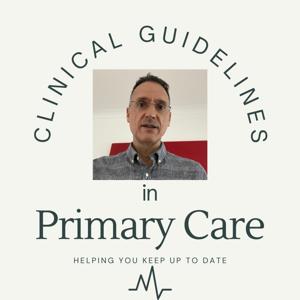

The video version of this podcast can be found here:
· https://youtu.be/p6YSowcUuEo
This episode makes reference to guidelines produced by the "National Institute for Health and Care Excellence" in the UK, also referred to as "NICE". The content on this channel reflects my professional interpretation/summary of the guidance and I am in no way affiliated with, employed by or funded/sponsored by NICE.
NICE stands for "National Institute for Health and Care Excellence" and is an independent organization within the UK healthcare system that produces evidence-based guidelines and recommendations to help healthcare professionals deliver the best possible care to patients, particularly within the NHS (National Health Service) by assessing new health technologies and treatments and determining their cost-effectiveness; essentially guiding best practices for patient care across the country.
My name is Fernando Florido and I am a General Practitioner in the United Kingdom. In this episode I go through new and updated recommendations published in December 2025 by the National Institute for Health and Care Excellence (NICE), focusing on those that are relevant to Primary Care only.
I am not giving medical advice; this video is intended for health care professionals, it is only my summary and my interpretation of the guidelines and you must use your clinical judgement.
Disclaimer:
The Video Content on this channel is for educational purposes and not intended to be a substitute for professional medical advice, diagnosis, or treatment. Always seek the advice of your physician or other qualified health provider with any questions you may have regarding a medical condition. Never disregard professional medical advice or delay in seeking it because of something you have read or seen on this YouTube channel. The statements made throughout this video are not to be used or relied on to diagnose, treat, cure or prevent health conditions.
In addition, transmission of this Content is not intended to create, and receipt by you does not constitute, a physician-patient relationship with Dr Fernando Florido, his employees, agents, independent contractors, or anyone acting on behalf of Dr Fernando Florido.
Intro / outro music: Track: Halfway Through — Broke In Summer [Audio Library Release]
There is a podcast version of this and other videos that you can access here:
Primary Care guidelines podcast:
· Redcircle: https://redcircle.com/shows/primary-care-guidelines
· Spotify: https://open.spotify.com/show/5BmqS0Ol16oQ7Kr1WYzupK
· Apple podcasts: https://podcasts.apple.com/gb/podcast/primary-care-guidelines/id1608821148
There is a YouTube version of this and other videos that you can access here:
https://youtube.com/@practicalgp?si=ecJGF5QCuMLQ6hrk
The Full NICE News bulletin for December 2025 can be found here:
· https://www.nice.org.uk/guidance/published?from=2025-12-01&to=2025-12-31&ndt=Guidance&ndt=Quality+standard
The updated guideline on Child maltreatment: when to suspect maltreatment in under 18s [CG89] can be found here:
· https://www.nice.org.uk/guidance/ng253
Transcript
If you are listening to this podcast on YouTube, for a better experience, switch to the video version. The link is in the top right corner of the video and in the episode description.
Hello and welcome! I’m Fernando, a GP in the UK. In today’s episode, we’ll look at the NICE updates published in December 2025, focusing on what is relevant in Primary Care only.
And this time we have just one updated guideline that is relevant to us in General Practice: the guideline on when to suspect maltreatment in children.
Right, let’s jump into it.
In December 2025, NICE updated the guideline Child maltreatment: when to suspect maltreatment in under 18s. The core change in this update is the addition of a definition of the term “independently mobile.”
Before this update, the NICE guideline used the term “independently mobile” in several key recommendations, but did not define what that term meant. We were expected to interpret it based on our own judgement. This led to variation in practice, particularly when assessing injuries such as bruises, lacerations, and abrasions. Different clinicians could reasonably reach different conclusions about whether a child met this threshold, even when looking at the same clinical picture.
The term was sometimes difficult to interpret as to whether it meant rolling, crawling, bottom-shuffling, cruising, or walking, given that there was no shared or agreed definition in the guideline.
The definition has been developed using a formal consensus process and “independently mobile” is now clearly defined as a child who can move around independently without support, rather than relying on being placed or carried.
Therefore, a child should be considered independently mobile if they can do any of the following:
Children under 12 weeks typically lack the muscle strength, coordination and neurological maturity needed for independent mobility. However, age alone should not be used to determine whether a child is independently mobile.
This definition has now been added in three areas, specifically in recommendations on:
• bruising and petechiae,
• lacerations, abrasions and scars,
• and burn or scald injuries.
Compared with the previous version, the key difference is clarity, not threshold. The level of concern for injuries has not been raised or lowered. Instead, we now have a shared understanding of which children fall into the higher-risk group when assessing unexplained or concerning injuries.
Otherwise no other major changes were made to recommendations on child abuse and neglect.
Right, this is the end of the update itself.
And, as we have a brief episode today, let’s now look at a brief summary of this guideline. And the first thing to say is that the aim of the guideline is to help us recognise features that should raise concern and prompt further safeguarding action. We are not expected to confirm abuse, but to recognise the risks and act appropriately.
Let’s now briefly review some examples of when to suspect or consider maltreatment. These are situations that may need urgent safeguarding action or discussion with local safeguarding leads.
We should suspect maltreatment when there are injuries with no explanation, or an explanation that does not fit, especially:
– bruising, cuts, abrasions, burns or scalds in a child who is not independently mobile,
– bruises with clear shapes, such as hands, grips, or ligatures,
– burns or scalds with clear patterns or signs of forced immersion,
– multiple injuries or injuries of different ages,
– injuries that are symmetrical or in unusual locations,
– and injuries that are in areas normally covered by clothing.
We should also suspect maltreatment with serious injuries without adequate trauma, including:
– fractures, especially multiple fractures or rib fractures in infants,
– fractures of different ages,
– intracranial injury without a major accidental cause,
– retinal haemorrhages or unexplained eye injuries,
– and spinal, abdominal, or chest injuries that are unexplained, even if there are no external signs.
Additionally, we should suspect sexual abuse when there are clear indicators, including:
– genital, anal, or perianal injury without an accidental explanation,
– and pregnancy in a child under 13 years, which is a strong indicator of maltreatment.
Pregnancy in 13- to 15-year-olds should prompt assessment for sexual abuse.
We should suspect neglect when there are strong indicators, such as:
– repeated failure to provide basic care, food, warmth, or safety,
– and failure to seek medical help that puts the child at risk.
We should also consider possible neglect, if there is, for example:
– poor hygiene or inappropriate clothing,
– an unsafe home environment,
– missed immunisations or health reviews,
– and severe or ongoing infestations,
And we should be concerned if parents or carers:
– fail to give essential medication,
– repeatedly miss important appointments,
– or do not seek medical help when appropriate.
Also, Poor school attendance without a clear reason and repeated or unusual healthcare attendances, especially across multiple services, should also raise concern.
Additionally, we should consider fabricated or induced illness when:
– reported symptoms do not match clinical findings,
– and when symptoms only occur in the presence of carers, and investigations are repeatedly normal.
We should consider maltreatment when there are behavioural or emotional concerns, such as:
– sudden changes in behaviour,
– extreme fear, withdrawal, or aggression,
– self-harm or eating problems without a clear cause,
– sexualised behaviour that is not age appropriate,
– repeated self-harm, and ongoing wetting or soiling not explained by a medical condition.
We should also consider maltreatment when there are concerning parent–child interactions, including:
– hostility, rejection, or lack of emotional warmth,
– unrealistic expectations of the child,
– and refusal to allow the child to speak alone when appropriate.
Running away from home or living away from caregivers without agreement should also raise concern.
And to end, the key messages for us are that we should follow safeguarding procedures and seek advice early. A pattern over time is often more important than a single event and we should trust our professional judgement and discuss concerns if we are unsure.
Remember that this is not an exhaustive list, but a summary of some relevant cases to be aware of.
So that is it, a review of the NICE updates relevant to primary care.
We have come to the end of this episode. Remember that this is not medical advice but only my summary and my interpretation of the guidelines. You must always use your clinical judgement.
Thank you for listening and goodbye.
 View all episodes
 By Juan Fernando Florido Santana

4
22 ratings
The video version of this podcast can be found here:
· https://youtu.be/p6YSowcUuEo
This episode makes reference to guidelines produced by the "National Institute for Health and Care Excellence" in the UK, also referred to as "NICE". The content on this channel reflects my professional interpretation/summary of the guidance and I am in no way affiliated with, employed by or funded/sponsored by NICE.
NICE stands for "National Institute for Health and Care Excellence" and is an independent organization within the UK healthcare system that produces evidence-based guidelines and recommendations to help healthcare professionals deliver the best possible care to patients, particularly within the NHS (National Health Service) by assessing new health technologies and treatments and determining their cost-effectiveness; essentially guiding best practices for patient care across the country.
My name is Fernando Florido and I am a General Practitioner in the United Kingdom. In this episode I go through new and updated recommendations published in December 2025 by the National Institute for Health and Care Excellence (NICE), focusing on those that are relevant to Primary Care only.
I am not giving medical advice; this video is intended for health care professionals, it is only my summary and my interpretation of the guidelines and you must use your clinical judgement.
Disclaimer:
The Video Content on this channel is for educational purposes and not intended to be a substitute for professional medical advice, diagnosis, or treatment. Always seek the advice of your physician or other qualified health provider with any questions you may have regarding a medical condition. Never disregard professional medical advice or delay in seeking it because of something you have read or seen on this YouTube channel. The statements made throughout this video are not to be used or relied on to diagnose, treat, cure or prevent health conditions.
In addition, transmission of this Content is not intended to create, and receipt by you does not constitute, a physician-patient relationship with Dr Fernando Florido, his employees, agents, independent contractors, or anyone acting on behalf of Dr Fernando Florido.
Intro / outro music: Track: Halfway Through — Broke In Summer [Audio Library Release]
There is a podcast version of this and other videos that you can access here:
Primary Care guidelines podcast:
· Redcircle: https://redcircle.com/shows/primary-care-guidelines
· Spotify: https://open.spotify.com/show/5BmqS0Ol16oQ7Kr1WYzupK
· Apple podcasts: https://podcasts.apple.com/gb/podcast/primary-care-guidelines/id1608821148
There is a YouTube version of this and other videos that you can access here:
https://youtube.com/@practicalgp?si=ecJGF5QCuMLQ6hrk
The Full NICE News bulletin for December 2025 can be found here:
· https://www.nice.org.uk/guidance/published?from=2025-12-01&to=2025-12-31&ndt=Guidance&ndt=Quality+standard
The updated guideline on Child maltreatment: when to suspect maltreatment in under 18s [CG89] can be found here:
· https://www.nice.org.uk/guidance/ng253
Transcript
If you are listening to this podcast on YouTube, for a better experience, switch to the video version. The link is in the top right corner of the video and in the episode description.
Hello and welcome! I’m Fernando, a GP in the UK. In today’s episode, we’ll look at the NICE updates published in December 2025, focusing on what is relevant in Primary Care only.
And this time we have just one updated guideline that is relevant to us in General Practice: the guideline on when to suspect maltreatment in children.
Right, let’s jump into it.
In December 2025, NICE updated the guideline Child maltreatment: when to suspect maltreatment in under 18s. The core change in this update is the addition of a definition of the term “independently mobile.”
Before this update, the NICE guideline used the term “independently mobile” in several key recommendations, but did not define what that term meant. We were expected to interpret it based on our own judgement. This led to variation in practice, particularly when assessing injuries such as bruises, lacerations, and abrasions. Different clinicians could reasonably reach different conclusions about whether a child met this threshold, even when looking at the same clinical picture.
The term was sometimes difficult to interpret as to whether it meant rolling, crawling, bottom-shuffling, cruising, or walking, given that there was no shared or agreed definition in the guideline.
The definition has been developed using a formal consensus process and “independently mobile” is now clearly defined as a child who can move around independently without support, rather than relying on being placed or carried.
Therefore, a child should be considered independently mobile if they can do any of the following:
Children under 12 weeks typically lack the muscle strength, coordination and neurological maturity needed for independent mobility. However, age alone should not be used to determine whether a child is independently mobile.
This definition has now been added in three areas, specifically in recommendations on:
• bruising and petechiae,
• lacerations, abrasions and scars,
• and burn or scald injuries.
Compared with the previous version, the key difference is clarity, not threshold. The level of concern for injuries has not been raised or lowered. Instead, we now have a shared understanding of which children fall into the higher-risk group when assessing unexplained or concerning injuries.
Otherwise no other major changes were made to recommendations on child abuse and neglect.
Right, this is the end of the update itself.
And, as we have a brief episode today, let’s now look at a brief summary of this guideline. And the first thing to say is that the aim of the guideline is to help us recognise features that should raise concern and prompt further safeguarding action. We are not expected to confirm abuse, but to recognise the risks and act appropriately.
Let’s now briefly review some examples of when to suspect or consider maltreatment. These are situations that may need urgent safeguarding action or discussion with local safeguarding leads.
We should suspect maltreatment when there are injuries with no explanation, or an explanation that does not fit, especially:
– bruising, cuts, abrasions, burns or scalds in a child who is not independently mobile,
– bruises with clear shapes, such as hands, grips, or ligatures,
– burns or scalds with clear patterns or signs of forced immersion,
– multiple injuries or injuries of different ages,
– injuries that are symmetrical or in unusual locations,
– and injuries that are in areas normally covered by clothing.
We should also suspect maltreatment with serious injuries without adequate trauma, including:
– fractures, especially multiple fractures or rib fractures in infants,
– fractures of different ages,
– intracranial injury without a major accidental cause,
– retinal haemorrhages or unexplained eye injuries,
– and spinal, abdominal, or chest injuries that are unexplained, even if there are no external signs.
Additionally, we should suspect sexual abuse when there are clear indicators, including:
– genital, anal, or perianal injury without an accidental explanation,
– and pregnancy in a child under 13 years, which is a strong indicator of maltreatment.
Pregnancy in 13- to 15-year-olds should prompt assessment for sexual abuse.
We should suspect neglect when there are strong indicators, such as:
– repeated failure to provide basic care, food, warmth, or safety,
– and failure to seek medical help that puts the child at risk.
We should also consider possible neglect, if there is, for example:
– poor hygiene or inappropriate clothing,
– an unsafe home environment,
– missed immunisations or health reviews,
– and severe or ongoing infestations,
And we should be concerned if parents or carers:
– fail to give essential medication,
– repeatedly miss important appointments,
– or do not seek medical help when appropriate.
Also, Poor school attendance without a clear reason and repeated or unusual healthcare attendances, especially across multiple services, should also raise concern.
Additionally, we should consider fabricated or induced illness when:
– reported symptoms do not match clinical findings,
– and when symptoms only occur in the presence of carers, and investigations are repeatedly normal.
We should consider maltreatment when there are behavioural or emotional concerns, such as:
– sudden changes in behaviour,
– extreme fear, withdrawal, or aggression,
– self-harm or eating problems without a clear cause,
– sexualised behaviour that is not age appropriate,
– repeated self-harm, and ongoing wetting or soiling not explained by a medical condition.
We should also consider maltreatment when there are concerning parent–child interactions, including:
– hostility, rejection, or lack of emotional warmth,
– unrealistic expectations of the child,
– and refusal to allow the child to speak alone when appropriate.
Running away from home or living away from caregivers without agreement should also raise concern.
And to end, the key messages for us are that we should follow safeguarding procedures and seek advice early. A pattern over time is often more important than a single event and we should trust our professional judgement and discuss concerns if we are unsure.
Remember that this is not an exhaustive list, but a summary of some relevant cases to be aware of.
So that is it, a review of the NICE updates relevant to primary care.
We have come to the end of this episode. Remember that this is not medical advice but only my summary and my interpretation of the guidelines. You must always use your clinical judgement.
Thank you for listening and goodbye.

703 Listeners
504 Listeners
304 Listeners

25 Listeners

1,152 Listeners
376 Listeners

254 Listeners
7 Listeners

16 Listeners

440 Listeners
377 Listeners

8,440 Listeners

327 Listeners
3,255 Listeners

6 Listeners