
Sign up to save your podcasts
Or

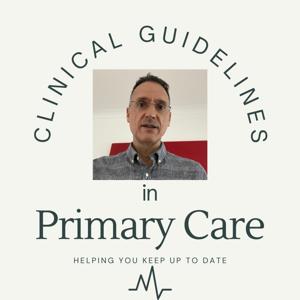

The video version of this podcast can be found here:
· https://youtu.be/us-qmMn8gsk
This episode makes reference to guidelines produced by the "National Institute for Health and Care Excellence" in the UK, also referred to as "NICE". The content on this channel reflects my professional interpretation/summary of the guidance and I am in no way affiliated with, employed by or funded/sponsored by NICE.
NICE stands for "National Institute for Health and Care Excellence" and is an independent organization within the UK healthcare system that produces evidence-based guidelines and recommendations to help healthcare professionals deliver the best possible care to patients, particularly within the NHS (National Health Service) by assessing new health technologies and treatments and determining their cost-effectiveness; essentially guiding best practices for patient care across the country.
My name is Fernando Florido and I am a General Practitioner in the United Kingdom. In this episode I go through new and updated recommendations published in January 2026 by the National Institute for Health and Care Excellence (NICE), focusing on those that are relevant to Primary Care only.
I am not giving medical advice; this video is intended for health care professionals, it is only my summary and my interpretation of the guidelines and you must use your clinical judgement.
Disclaimer:
The Video Content on this channel is for educational purposes and not intended to be a substitute for professional medical advice, diagnosis, or treatment. Always seek the advice of your physician or other qualified health provider with any questions you may have regarding a medical condition. Never disregard professional medical advice or delay in seeking it because of something you have read or seen on this YouTube channel. The statements made throughout this video are not to be used or relied on to diagnose, treat, cure or prevent health conditions.
In addition, transmission of this Content is not intended to create, and receipt by you does not constitute, a physician-patient relationship with Dr Fernando Florido, his employees, agents, independent contractors, or anyone acting on behalf of Dr Fernando Florido.
Intro / outro music: Track: Halfway Through — Broke In Summer [Audio Library Release]
There is a podcast version of this and other videos that you can access here:
Primary Care guidelines podcast:
· Redcircle: https://redcircle.com/shows/primary-care-guidelines
· Spotify: https://open.spotify.com/show/5BmqS0Ol16oQ7Kr1WYzupK
· Apple podcasts: https://podcasts.apple.com/gb/podcast/primary-care-guidelines/id1608821148
There is a YouTube version of this and other videos that you can access here:
https://youtube.com/@practicalgp?si=ecJGF5QCuMLQ6hrk
The Full NICE News bulletin for January 2026 can be found here:
· https://www.nice.org.uk/guidance/published?from=2026-01-01&to=2026-01-31&ndt=Guidance&ndt=Quality+standard
The updated guideline on Suspected cancer: recognition and referral [NG12] can be found here:
· https://www.nice.org.uk/guidance/ng12
The updated guideline on Overweight and obesity management [NG246] can be found here:
· https://www.nice.org.uk/guidance/ng246
Transcript
If you are listening to this podcast on YouTube, for a better experience, switch to the video version. The link is in the top right corner of the video and in the episode description.
Hello and welcome! I’m Fernando, a GP in the UK. In today’s episode, we’ll look at the NICE updates published in January 2026, focusing on what is relevant in Primary Care only.
And this time we have two updated guidelines relevant to us in General Practice: the guidelines on Suspected cancer and on Overweight and obesity management. The changes are minimal so today we have a very short episode.
Right, let’s jump into it.
And let’s start with the guideline on obesity and overweight management.
The update is narrow and specific and clarifies that height-to-weight ratios should only be used to classify the degree of central adiposity in children and young people aged 5 years and over.
Before this amendment, the guideline included height-to-weight ratios for children, but it did not explicitly state that these ratios should not be used in under 5s.
This is because height-to-weight ratios in younger children, may not be validated or appropriate. In fact, in children under 5 years:
· Body proportions change very rapidly as part of normal growth and development
· There is wide normal variation in body shape and fat distribution and
· Height to weight ratios do not accurately reflect central adiposity in this age group and therefore using these ratios risks overestimating or underestimating adiposity
However, in children aged 5 years and over:
· Body proportions become more stable
· Patterns of central fat distribution are more consistent
· And the available evidence supports height to weight ratios in this age group as they are more likely to reflect true central adiposity
No other recommendations, were changed. Everything else remains as it was in the previous published guideline.
Now let’s move to the guideline on suspected cancer.
In January 2026 the update information for the NICE guideline on suspected cancer states that NICE has removed an incorrect recommendation related to blood tests for suspected myeloma. However, when you look at the guideline as it stands, things appear a little confusing, so it is worth looking at this in more detail.
Originally, the guideline listed a broad panel of blood tests for suspected myeloma in primary care. This included serum protein electrophoresis and serum free light chain testing, alongside a full blood count, calcium, and plasma viscosity or ESR. Bence Jones urine testing was suggested as an alternative if serum free light chain testing was not available. These tests were recommended for people with features such as persistent bone pain or an unexplained fracture.
Subsequently, NICE amended the wording of this section to place greater emphasis on serum protein electrophoresis and serum free light chain testing as the key initial investigations.
So the obvious question is this. Has NICE really now removed the recommendation to offer blood tests for suspected myeloma altogether? At face value this looks like guidance that is moving backwards and forwards.
The confusion is increased by the fact that if you look at the recommendations organised by site of cancer, under haematological cancers, the guideline still clearly lists blood tests for suspected myeloma.
So what is actually happening here?
In theory, the update information reflects the official and authoritative change to the guideline. It may be that parts of the published recommendations text have not yet been fully revised or synchronised on the NICE website.
However, I have also reviewed other sections of the NICE website, including committee discussions and rationale documents, and I have not been able to find any explanation for this change. That also raises the possibility that the update statement itself may be an error.
In practical terms, my view is that we should probably continue to request blood tests for suspected myeloma until the guideline text has been fully updated and this discrepancy is clarified. That is, we should request a full blood count, calcium, plasma viscosity or ESR, paraprotein, using serum protein electrophoresis and serum free light chains. If serum free light chain testing is not available, we can use a Bence–Jones test to check for free light chains contained in urine.
I have raised a query directly with NICE, and we should have further clarification soon. For now, this is very much a case of watching this space.
So that is it, a review of the NICE updates relevant to primary care.
We have come to the end of this episode. Remember that this is not medical advice but only my summary and my interpretation of the guidelines. You must always use your clinical judgement.
Thank you for listening and goodbye.
 View all episodes
 By Juan Fernando Florido Santana

4
22 ratings
The video version of this podcast can be found here:
· https://youtu.be/us-qmMn8gsk
This episode makes reference to guidelines produced by the "National Institute for Health and Care Excellence" in the UK, also referred to as "NICE". The content on this channel reflects my professional interpretation/summary of the guidance and I am in no way affiliated with, employed by or funded/sponsored by NICE.
NICE stands for "National Institute for Health and Care Excellence" and is an independent organization within the UK healthcare system that produces evidence-based guidelines and recommendations to help healthcare professionals deliver the best possible care to patients, particularly within the NHS (National Health Service) by assessing new health technologies and treatments and determining their cost-effectiveness; essentially guiding best practices for patient care across the country.
My name is Fernando Florido and I am a General Practitioner in the United Kingdom. In this episode I go through new and updated recommendations published in January 2026 by the National Institute for Health and Care Excellence (NICE), focusing on those that are relevant to Primary Care only.
I am not giving medical advice; this video is intended for health care professionals, it is only my summary and my interpretation of the guidelines and you must use your clinical judgement.
Disclaimer:
The Video Content on this channel is for educational purposes and not intended to be a substitute for professional medical advice, diagnosis, or treatment. Always seek the advice of your physician or other qualified health provider with any questions you may have regarding a medical condition. Never disregard professional medical advice or delay in seeking it because of something you have read or seen on this YouTube channel. The statements made throughout this video are not to be used or relied on to diagnose, treat, cure or prevent health conditions.
In addition, transmission of this Content is not intended to create, and receipt by you does not constitute, a physician-patient relationship with Dr Fernando Florido, his employees, agents, independent contractors, or anyone acting on behalf of Dr Fernando Florido.
Intro / outro music: Track: Halfway Through — Broke In Summer [Audio Library Release]
There is a podcast version of this and other videos that you can access here:
Primary Care guidelines podcast:
· Redcircle: https://redcircle.com/shows/primary-care-guidelines
· Spotify: https://open.spotify.com/show/5BmqS0Ol16oQ7Kr1WYzupK
· Apple podcasts: https://podcasts.apple.com/gb/podcast/primary-care-guidelines/id1608821148
There is a YouTube version of this and other videos that you can access here:
https://youtube.com/@practicalgp?si=ecJGF5QCuMLQ6hrk
The Full NICE News bulletin for January 2026 can be found here:
· https://www.nice.org.uk/guidance/published?from=2026-01-01&to=2026-01-31&ndt=Guidance&ndt=Quality+standard
The updated guideline on Suspected cancer: recognition and referral [NG12] can be found here:
· https://www.nice.org.uk/guidance/ng12
The updated guideline on Overweight and obesity management [NG246] can be found here:
· https://www.nice.org.uk/guidance/ng246
Transcript
If you are listening to this podcast on YouTube, for a better experience, switch to the video version. The link is in the top right corner of the video and in the episode description.
Hello and welcome! I’m Fernando, a GP in the UK. In today’s episode, we’ll look at the NICE updates published in January 2026, focusing on what is relevant in Primary Care only.
And this time we have two updated guidelines relevant to us in General Practice: the guidelines on Suspected cancer and on Overweight and obesity management. The changes are minimal so today we have a very short episode.
Right, let’s jump into it.
And let’s start with the guideline on obesity and overweight management.
The update is narrow and specific and clarifies that height-to-weight ratios should only be used to classify the degree of central adiposity in children and young people aged 5 years and over.
Before this amendment, the guideline included height-to-weight ratios for children, but it did not explicitly state that these ratios should not be used in under 5s.
This is because height-to-weight ratios in younger children, may not be validated or appropriate. In fact, in children under 5 years:
· Body proportions change very rapidly as part of normal growth and development
· There is wide normal variation in body shape and fat distribution and
· Height to weight ratios do not accurately reflect central adiposity in this age group and therefore using these ratios risks overestimating or underestimating adiposity
However, in children aged 5 years and over:
· Body proportions become more stable
· Patterns of central fat distribution are more consistent
· And the available evidence supports height to weight ratios in this age group as they are more likely to reflect true central adiposity
No other recommendations, were changed. Everything else remains as it was in the previous published guideline.
Now let’s move to the guideline on suspected cancer.
In January 2026 the update information for the NICE guideline on suspected cancer states that NICE has removed an incorrect recommendation related to blood tests for suspected myeloma. However, when you look at the guideline as it stands, things appear a little confusing, so it is worth looking at this in more detail.
Originally, the guideline listed a broad panel of blood tests for suspected myeloma in primary care. This included serum protein electrophoresis and serum free light chain testing, alongside a full blood count, calcium, and plasma viscosity or ESR. Bence Jones urine testing was suggested as an alternative if serum free light chain testing was not available. These tests were recommended for people with features such as persistent bone pain or an unexplained fracture.
Subsequently, NICE amended the wording of this section to place greater emphasis on serum protein electrophoresis and serum free light chain testing as the key initial investigations.
So the obvious question is this. Has NICE really now removed the recommendation to offer blood tests for suspected myeloma altogether? At face value this looks like guidance that is moving backwards and forwards.
The confusion is increased by the fact that if you look at the recommendations organised by site of cancer, under haematological cancers, the guideline still clearly lists blood tests for suspected myeloma.
So what is actually happening here?
In theory, the update information reflects the official and authoritative change to the guideline. It may be that parts of the published recommendations text have not yet been fully revised or synchronised on the NICE website.
However, I have also reviewed other sections of the NICE website, including committee discussions and rationale documents, and I have not been able to find any explanation for this change. That also raises the possibility that the update statement itself may be an error.
In practical terms, my view is that we should probably continue to request blood tests for suspected myeloma until the guideline text has been fully updated and this discrepancy is clarified. That is, we should request a full blood count, calcium, plasma viscosity or ESR, paraprotein, using serum protein electrophoresis and serum free light chains. If serum free light chain testing is not available, we can use a Bence–Jones test to check for free light chains contained in urine.
I have raised a query directly with NICE, and we should have further clarification soon. For now, this is very much a case of watching this space.
So that is it, a review of the NICE updates relevant to primary care.
We have come to the end of this episode. Remember that this is not medical advice but only my summary and my interpretation of the guidelines. You must always use your clinical judgement.
Thank you for listening and goodbye.

701 Listeners
505 Listeners
304 Listeners
25 Listeners
1,154 Listeners
376 Listeners

253 Listeners
7 Listeners

16 Listeners

440 Listeners
377 Listeners

8,440 Listeners

327 Listeners

3,255 Listeners

7 Listeners