
Sign up to save your podcasts
Or

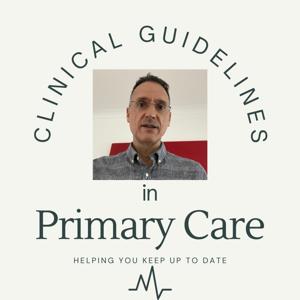

The video version of this podcast can be found here:
· https://youtu.be/hx1KVBpBbB4
This episode makes reference to guidelines produced by the "National Institute for Health and Care Excellence" in the UK, also referred to as "NICE". The content on this channel reflects my professional interpretation/summary of the guidance and I am in no way affiliated with, employed by or funded/sponsored by NICE.
NICE stands for "National Institute for Health and Care Excellence" and is an independent organization within the UK healthcare system that produces evidence-based guidelines and recommendations to help healthcare professionals deliver the best possible care to patients, particularly within the NHS (National Health Service) by assessing new health technologies and treatments and determining their cost-effectiveness; essentially guiding best practices for patient care across the country.
My name is Fernando Florido and I am a General Practitioner in the United Kingdom. In this episode I go through new and updated recommendations published in May 2026 by the National Institute for Health and Care Excellence (NICE), focusing on those that are relevant to Primary Care only.
I am not giving medical advice; this video is intended for health care professionals, it is only my summary and my interpretation of the guidelines and you must use your clinical judgement.
Disclaimer:
The Video Content on this channel is for educational purposes and not intended to be a substitute for professional medical advice, diagnosis, or treatment. Always seek the advice of your physician or other qualified health provider with any questions you may have regarding a medical condition. Never disregard professional medical advice or delay in seeking it because of something you have read or seen on this YouTube channel. The statements made throughout this video are not to be used or relied on to diagnose, treat, cure or prevent health conditions.
In addition, transmission of this Content is not intended to create, and receipt by you does not constitute, a physician-patient relationship with Dr Fernando Florido, his employees, agents, independent contractors, or anyone acting on behalf of Dr Fernando Florido.
Intro / outro music: Track: Halfway Through — Broke In Summer [Audio Library Release]
There is a podcast version of this and other videos that you can access here:
Primary Care guidelines podcast:
· Redcircle: https://redcircle.com/shows/primary-care-guidelines
· Spotify: https://open.spotify.com/show/5BmqS0Ol16oQ7Kr1WYzupK
· Apple podcasts: https://podcasts.apple.com/gb/podcast/primary-care-guidelines/id1608821148
There is a YouTube version of this and other videos that you can access here:
https://youtube.com/@practicalgp?si=ecJGF5QCuMLQ6hrk
The Full NICE News bulletin for May 2026 can be found here:
· https://www.nice.org.uk/guidance/published?from=2026-05-01&to=2026-05-31&ndt=Guidance&ndt=Quality+standard
The new Technology appraisal guidance [TA1152] Semaglutide for reducing the risk of major adverse cardiovascular events in people with cardiovascular disease and overweight or obesity can be found here:
· https://www.nice.org.uk/guidance/ta1152
Transcript
If you are listening to this podcast on YouTube, for a better experience, switch to the video version. The link is in the episode description.
Hello and welcome! I’m Fernando, a GP in the UK. In today’s episode, we’ll look at the NICE updates published in May 2026, focusing on what is relevant in Primary Care only.
This month, we only have one technology appraisal that is relevant to primary care, which is semaglutide for reducing the risk of major adverse cardiovascular events in people with cardiovascular disease and overweight or obesity.
Right, let’s jump into it.
This particular technology appraisal recommends semaglutide for reducing the risk of major adverse cardiovascular events in adults with established cardiovascular disease and overweight or obesity.
The difference is that this is not a general obesity recommendation.
This is about secondary prevention in people who already have established cardiovascular disease and a BMI of at least 27.
NICE defines established cardiovascular disease in this guidance as having at least one of the following: a previous MI, previous ischaemic or haemorrhagic stroke, or symptomatic peripheral arterial disease.
For peripheral arterial disease, NICE specifies intermittent claudication with an ankle brachial index below 0.85 at rest, or previous peripheral arterial revascularisation, or amputation because of atherosclerotic disease.
The recommendation is that semaglutide, up to a maintenance dose of 2.4 mg once weekly, can be used alongside standard routine management in order to reduce the risk of a major adverse cardiovascular event.
In this guidance, a major adverse cardiovascular event means cardiovascular death, non-fatal MI, or non-fatal stroke.
The guidance does not specify which setting semaglutide should be used in and it does not say that it needs to be provided in Primary Care but it does say that, once recommended by NICE, it must be funded in the NHS in England within 90 days of final publication.
NHS England has said semaglutide is expected to become available to eligible people over the next few years, but there is not yet a single national primary care prescribing pathway.
Some local formularies still restrict semaglutide in primary care, although many of these restrictions relate to weight management services rather than this new cardiovascular indication, so we will have to watch the space.
In the rationale, NICE states that lifestyle changes and standard medicines are used to reduce cardiovascular risk. These measures include diet, exercise, reducing alcohol, stopping smoking, and managing weight.
Medicines may include antihypertensives, lipid lowering drugs, antiplatelets, and anticoagulants.
Semaglutide is positioned as another option alongside standard care for secondary prevention given that trial evidence shows that it reduces the risk of a first major adverse cardiovascular event compared with placebo.
We know that people from South Asian, Chinese, other Asian, Middle Eastern, Black African, or African Caribbean ethnic backgrounds may have a higher cardiovascular risk at lower BMI thresholds.
However, NICE did not recommend semaglutide below a BMI of 27 because of licensing reasons and because evidence in that lower BMI group is not available.
In summary, for us primary care, the main message is that semaglutide is a cardiovascular secondary prevention option for people with established cardiovascular disease and a BMI of at least 27.
And semaglutide should be used alongside standard cardiovascular prevention, not instead of it. So, we should still give lifestyle advice and optimise blood pressure and lipids and prescribe antiplatelet or anticoagulant treatment where appropriate.
So that is it, a review of the NICE updates relevant to primary care.
We have come to the end of this episode. Remember that this is not medical advice but only my summary and my interpretation of the guidelines. You must always use your clinical judgement.
Thank you for listening and goodbye.
 View all episodes
 By Juan Fernando Florido Santana

4
22 ratings
The video version of this podcast can be found here:
· https://youtu.be/hx1KVBpBbB4
This episode makes reference to guidelines produced by the "National Institute for Health and Care Excellence" in the UK, also referred to as "NICE". The content on this channel reflects my professional interpretation/summary of the guidance and I am in no way affiliated with, employed by or funded/sponsored by NICE.
NICE stands for "National Institute for Health and Care Excellence" and is an independent organization within the UK healthcare system that produces evidence-based guidelines and recommendations to help healthcare professionals deliver the best possible care to patients, particularly within the NHS (National Health Service) by assessing new health technologies and treatments and determining their cost-effectiveness; essentially guiding best practices for patient care across the country.
My name is Fernando Florido and I am a General Practitioner in the United Kingdom. In this episode I go through new and updated recommendations published in May 2026 by the National Institute for Health and Care Excellence (NICE), focusing on those that are relevant to Primary Care only.
I am not giving medical advice; this video is intended for health care professionals, it is only my summary and my interpretation of the guidelines and you must use your clinical judgement.
Disclaimer:
The Video Content on this channel is for educational purposes and not intended to be a substitute for professional medical advice, diagnosis, or treatment. Always seek the advice of your physician or other qualified health provider with any questions you may have regarding a medical condition. Never disregard professional medical advice or delay in seeking it because of something you have read or seen on this YouTube channel. The statements made throughout this video are not to be used or relied on to diagnose, treat, cure or prevent health conditions.
In addition, transmission of this Content is not intended to create, and receipt by you does not constitute, a physician-patient relationship with Dr Fernando Florido, his employees, agents, independent contractors, or anyone acting on behalf of Dr Fernando Florido.
Intro / outro music: Track: Halfway Through — Broke In Summer [Audio Library Release]
There is a podcast version of this and other videos that you can access here:
Primary Care guidelines podcast:
· Redcircle: https://redcircle.com/shows/primary-care-guidelines
· Spotify: https://open.spotify.com/show/5BmqS0Ol16oQ7Kr1WYzupK
· Apple podcasts: https://podcasts.apple.com/gb/podcast/primary-care-guidelines/id1608821148
There is a YouTube version of this and other videos that you can access here:
https://youtube.com/@practicalgp?si=ecJGF5QCuMLQ6hrk
The Full NICE News bulletin for May 2026 can be found here:
· https://www.nice.org.uk/guidance/published?from=2026-05-01&to=2026-05-31&ndt=Guidance&ndt=Quality+standard
The new Technology appraisal guidance [TA1152] Semaglutide for reducing the risk of major adverse cardiovascular events in people with cardiovascular disease and overweight or obesity can be found here:
· https://www.nice.org.uk/guidance/ta1152
Transcript
If you are listening to this podcast on YouTube, for a better experience, switch to the video version. The link is in the episode description.
Hello and welcome! I’m Fernando, a GP in the UK. In today’s episode, we’ll look at the NICE updates published in May 2026, focusing on what is relevant in Primary Care only.
This month, we only have one technology appraisal that is relevant to primary care, which is semaglutide for reducing the risk of major adverse cardiovascular events in people with cardiovascular disease and overweight or obesity.
Right, let’s jump into it.
This particular technology appraisal recommends semaglutide for reducing the risk of major adverse cardiovascular events in adults with established cardiovascular disease and overweight or obesity.
The difference is that this is not a general obesity recommendation.
This is about secondary prevention in people who already have established cardiovascular disease and a BMI of at least 27.
NICE defines established cardiovascular disease in this guidance as having at least one of the following: a previous MI, previous ischaemic or haemorrhagic stroke, or symptomatic peripheral arterial disease.
For peripheral arterial disease, NICE specifies intermittent claudication with an ankle brachial index below 0.85 at rest, or previous peripheral arterial revascularisation, or amputation because of atherosclerotic disease.
The recommendation is that semaglutide, up to a maintenance dose of 2.4 mg once weekly, can be used alongside standard routine management in order to reduce the risk of a major adverse cardiovascular event.
In this guidance, a major adverse cardiovascular event means cardiovascular death, non-fatal MI, or non-fatal stroke.
The guidance does not specify which setting semaglutide should be used in and it does not say that it needs to be provided in Primary Care but it does say that, once recommended by NICE, it must be funded in the NHS in England within 90 days of final publication.
NHS England has said semaglutide is expected to become available to eligible people over the next few years, but there is not yet a single national primary care prescribing pathway.
Some local formularies still restrict semaglutide in primary care, although many of these restrictions relate to weight management services rather than this new cardiovascular indication, so we will have to watch the space.
In the rationale, NICE states that lifestyle changes and standard medicines are used to reduce cardiovascular risk. These measures include diet, exercise, reducing alcohol, stopping smoking, and managing weight.
Medicines may include antihypertensives, lipid lowering drugs, antiplatelets, and anticoagulants.
Semaglutide is positioned as another option alongside standard care for secondary prevention given that trial evidence shows that it reduces the risk of a first major adverse cardiovascular event compared with placebo.
We know that people from South Asian, Chinese, other Asian, Middle Eastern, Black African, or African Caribbean ethnic backgrounds may have a higher cardiovascular risk at lower BMI thresholds.
However, NICE did not recommend semaglutide below a BMI of 27 because of licensing reasons and because evidence in that lower BMI group is not available.
In summary, for us primary care, the main message is that semaglutide is a cardiovascular secondary prevention option for people with established cardiovascular disease and a BMI of at least 27.
And semaglutide should be used alongside standard cardiovascular prevention, not instead of it. So, we should still give lifestyle advice and optimise blood pressure and lipids and prescribe antiplatelet or anticoagulant treatment where appropriate.
So that is it, a review of the NICE updates relevant to primary care.
We have come to the end of this episode. Remember that this is not medical advice but only my summary and my interpretation of the guidelines. You must always use your clinical judgement.
Thank you for listening and goodbye.

705 Listeners
506 Listeners

299 Listeners

26 Listeners

1,152 Listeners
373 Listeners

253 Listeners

6 Listeners

19 Listeners

439 Listeners

373 Listeners

8,439 Listeners

327 Listeners

3,336 Listeners

6 Listeners