
Sign up to save your podcasts
Or

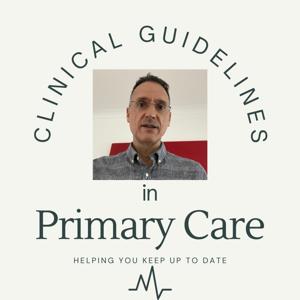

The video version of this podcast can be found here:
· https://youtu.be/dZpq3W-lkSQ
This episode makes reference to guidelines produced by the "National Institute for Health and Care Excellence" in the UK, also referred to as "NICE". The content on this channel reflects my professional interpretation/summary of the guidance and I am in no way affiliated with, employed by or funded/sponsored by NICE.
NICE stands for "National Institute for Health and Care Excellence" and is an independent organization within the UK healthcare system that produces evidence-based guidelines and recommendations to help healthcare professionals deliver the best possible care to patients, particularly within the NHS (National Health Service) by assessing new health technologies and treatments and determining their cost-effectiveness; essentially guiding best practices for patient care across the country.
My name is Fernando Florido and I am a General Practitioner in the United Kingdom. In this episode I go through new and updated recommendations published in November 2025 by the National Institute for Health and Care Excellence (NICE), focusing on those that are relevant to Primary Care only.
I am not giving medical advice; this video is intended for health care professionals, it is only my summary and my interpretation of the guidelines and you must use your clinical judgement.
Disclaimer:
The Video Content on this channel is for educational purposes and not intended to be a substitute for professional medical advice, diagnosis, or treatment. Always seek the advice of your physician or other qualified health provider with any questions you may have regarding a medical condition. Never disregard professional medical advice or delay in seeking it because of something you have read or seen on this YouTube channel. The statements made throughout this video are not to be used or relied on to diagnose, treat, cure or prevent health conditions.
In addition, transmission of this Content is not intended to create, and receipt by you does not constitute, a physician-patient relationship with Dr Fernando Florido, his employees, agents, independent contractors, or anyone acting on behalf of Dr Fernando Florido.
Intro / outro music: Track: Halfway Through — Broke In Summer [Audio Library Release]
There is a podcast version of this and other videos that you can access here:
Primary Care guidelines podcast:
· Redcircle: https://redcircle.com/shows/primary-care-guidelines
· Spotify: https://open.spotify.com/show/5BmqS0Ol16oQ7Kr1WYzupK
· Apple podcasts: https://podcasts.apple.com/gb/podcast/primary-care-guidelines/id1608821148
There is a YouTube version of this and other videos that you can access here:
https://youtube.com/@practicalgp?si=ecJGF5QCuMLQ6hrk
The Full NICE News bulletin for November 2025 can be found here:
· https://www.nice.org.uk/guidance/published?from=2025-11-01&to=2025-11-30&ndt=Guidance&ndt=Quality+standard
The new guideline on suspected sepsis in people aged 16 or over can be found here:
· https://www.nice.org.uk/guidance/ng253
The new guideline on suspected sepsis in under 16s can be found here:
· https://www.nice.org.uk/guidance/ng254
The new guideline on suspected sepsis in pregnant or recently pregnant people can be found here:
· https://www.nice.org.uk/guidance/ng255
The visual summary for suspected sepsis: evaluation and management, all ages, settings and population groups can be found here:
· https://www.nice.org.uk/guidance/ng253/resources/suspected-sepsis-managing-and-evaluating-risk-all-settings-pdf-15494830813
Transcript
If you are listening to this podcast on YouTube, for a better experience, switch to the video version. The link is in the top right corner of the video and in the episode description.
Hello and welcome! I’m Fernando, a GP in the UK. In today’s episode, we’ll look at the NICE updates published in November 2025, focusing on what is relevant in Primary Care only.
And this time we have three brand-new guidelines on a single topic: Sepsis. There are three separate guidelines because each one focuses on a different group: people aged 16 and over, children and young people under 16, and those who are pregnant or recently pregnant.
Right, let’s jump into it.
And we will start by saying that we will focus on the recommendations for people over 16 but I’ll also point out what’s different for the under-16 group and for pregnant people.
If infection is suspected, the first question to ask ourselves is: Could this be sepsis? And then assess for a potential source, for risk factors, and for any signs of clinical concern in circulation, breathing, or behaviour, ideally using a structured system.
The main 6 observations that we should assess are: temperature, heart rate, respiratory rate, blood pressure, level of consciousness and oxygen saturation. However, we need to remember that some groups of people with sepsis may not develop a raised temperature and that, in terms of oximetry, poor peripheral circulation due to shock can make peripheral oxygen saturation difficult to measure. Additionally, we need to be aware that some pulse oximeters can underestimate or overestimate readings, especially if the level is borderline and that overestimation has been reported in people with dark skin.
Additionally, we should examine for:
We should always keep in mind groups who are more vulnerable: people over 75, those with frailty or co-morbidities, learning disabilities, immunosuppression, indwelling lines or catheters, recent surgery or invasive procedures, and those with adverse social or economic factors that may delay presentation.
In hospital or ambulances, the National Early Warning Score 2, or NEWS2, is recommended. NEWS2 measures the same six values, temperature, heart rate, respiratory rate, blood pressure, level of consciousness and oxygen saturation. and then assigns points based on how abnormal they are. I will not go through every score and its clinical implications but there is NEWS2 calculator app reproduced from the Royal College of Physicians that I would really recommend downloading.
However, in primary care we can consider NEWS2 or any other structured observation tool. The guideline gives us a set of criteria to assess the risk of severe illness. There are high risk and moderate risk criteria. The high-risk criteria for people over 16 are as follows:
· A new altered mental state
· A respiratory rate of 25 breaths per minute or more
· New need for oxygen to maintain saturation more than 92% (or more than 88% in chronic hypercapnic respiratory failure)
· A Systolic BP of 90 mmHg or less or more than 40mmHg below normal
· A heart rate of more than 130 beats per minute
· Not passed urine in previous 18 hours, or for catheterised patients, passed less than 0.5 ml/kg of urine per hour
· Mottled or ashen appearance
· Cyanosis and
· A non-blanching petechial or purpuric rash
These are the high-risk criteria only. For simplicity, I will not go through all the moderate risk criteria, but they are similar to the high-risk ones but with values slightly less abnormal.
Once sepsis is suspected, for primary care, the key point is to arrange rapid referral or admission to hospital. In remote or rural areas where transfer exceeds one hour, the guideline states that systems should exist so GPs can give the first dose of antibiotics when high-risk criteria are met.
For borderline or uncertain cases, we should provide clear safety-netting, and ensure patients and carers understand warning symptoms and when to seek help.
Let’s quickly touch on sepsis in children.
Risk stratification for children is a lot more complex and is based on age bands — under 5, 5 to 11, and 12 to 15 — each with its own physiological thresholds. Because of the complexity, I will not go through all the high-risk criteria here, but we need to remember that severity is judged not just on vital signs, but on age-appropriate risk criteria combined with history, examination and clinical judgement.
Adult early-warning scores such as NEWS2 should not be applied to children.
If a child meets any high-risk criterion, they require urgent admission to hospital.
For lower-risk children, we must still decide between safe management in the community with safety-netting or urgent admission if concerns arise. For this, communication must be tailored to the child and their carers, with clear explanations as to what to do if the situation does not improve.
Let’s now move to people who are pregnant, or within six weeks postpartum. They fall under a separate guideline because pregnancy changes physiology and the pattern of infection.
For pregnant or recently pregnant people, NEWS2 is not appropriate either. Instead, we should use a pregnancy-specific risk table with high-risk, moderate-to-high-risk, and low-risk criteria.
These criteria include the usual physiological markers but they use pregnancy-specific thresholds and they also emphasise obstetric sources of infection, such as endometritis, wound infections, urinary infection, retained products, and mastitis.
Again, I will not go through all the criteria here but NICE has produced a visual summary of the risk criteria for all groups. The link to it is in the episode description.
Going back to the assessment of suspected sepsis for people that are pregnant or recently pregnant, if any high-risk criterion is present, emergency admission will be required.
For us in primary care, the key points are that pregnancy or up to six weeks postpartum automatically places the patient in a higher-risk group, we must use pregnancy-specific criteria rather than adult scores, the threshold for calling an ambulance and pre-alerting services is lower, and finally, we should always think of obstetric sources of infection alongside the usual ones.
So that is it, a review of the NICE updates relevant to primary care.
We have come to the end of this episode. Remember that this is not medical advice but only my summary and my interpretation of the guidelines. You must always use your clinical judgement.
Thank you for listening and goodbye.
 View all episodes
 By Juan Fernando Florido Santana

4
22 ratings
The video version of this podcast can be found here:
· https://youtu.be/dZpq3W-lkSQ
This episode makes reference to guidelines produced by the "National Institute for Health and Care Excellence" in the UK, also referred to as "NICE". The content on this channel reflects my professional interpretation/summary of the guidance and I am in no way affiliated with, employed by or funded/sponsored by NICE.
NICE stands for "National Institute for Health and Care Excellence" and is an independent organization within the UK healthcare system that produces evidence-based guidelines and recommendations to help healthcare professionals deliver the best possible care to patients, particularly within the NHS (National Health Service) by assessing new health technologies and treatments and determining their cost-effectiveness; essentially guiding best practices for patient care across the country.
My name is Fernando Florido and I am a General Practitioner in the United Kingdom. In this episode I go through new and updated recommendations published in November 2025 by the National Institute for Health and Care Excellence (NICE), focusing on those that are relevant to Primary Care only.
I am not giving medical advice; this video is intended for health care professionals, it is only my summary and my interpretation of the guidelines and you must use your clinical judgement.
Disclaimer:
The Video Content on this channel is for educational purposes and not intended to be a substitute for professional medical advice, diagnosis, or treatment. Always seek the advice of your physician or other qualified health provider with any questions you may have regarding a medical condition. Never disregard professional medical advice or delay in seeking it because of something you have read or seen on this YouTube channel. The statements made throughout this video are not to be used or relied on to diagnose, treat, cure or prevent health conditions.
In addition, transmission of this Content is not intended to create, and receipt by you does not constitute, a physician-patient relationship with Dr Fernando Florido, his employees, agents, independent contractors, or anyone acting on behalf of Dr Fernando Florido.
Intro / outro music: Track: Halfway Through — Broke In Summer [Audio Library Release]
There is a podcast version of this and other videos that you can access here:
Primary Care guidelines podcast:
· Redcircle: https://redcircle.com/shows/primary-care-guidelines
· Spotify: https://open.spotify.com/show/5BmqS0Ol16oQ7Kr1WYzupK
· Apple podcasts: https://podcasts.apple.com/gb/podcast/primary-care-guidelines/id1608821148
There is a YouTube version of this and other videos that you can access here:
https://youtube.com/@practicalgp?si=ecJGF5QCuMLQ6hrk
The Full NICE News bulletin for November 2025 can be found here:
· https://www.nice.org.uk/guidance/published?from=2025-11-01&to=2025-11-30&ndt=Guidance&ndt=Quality+standard
The new guideline on suspected sepsis in people aged 16 or over can be found here:
· https://www.nice.org.uk/guidance/ng253
The new guideline on suspected sepsis in under 16s can be found here:
· https://www.nice.org.uk/guidance/ng254
The new guideline on suspected sepsis in pregnant or recently pregnant people can be found here:
· https://www.nice.org.uk/guidance/ng255
The visual summary for suspected sepsis: evaluation and management, all ages, settings and population groups can be found here:
· https://www.nice.org.uk/guidance/ng253/resources/suspected-sepsis-managing-and-evaluating-risk-all-settings-pdf-15494830813
Transcript
If you are listening to this podcast on YouTube, for a better experience, switch to the video version. The link is in the top right corner of the video and in the episode description.
Hello and welcome! I’m Fernando, a GP in the UK. In today’s episode, we’ll look at the NICE updates published in November 2025, focusing on what is relevant in Primary Care only.
And this time we have three brand-new guidelines on a single topic: Sepsis. There are three separate guidelines because each one focuses on a different group: people aged 16 and over, children and young people under 16, and those who are pregnant or recently pregnant.
Right, let’s jump into it.
And we will start by saying that we will focus on the recommendations for people over 16 but I’ll also point out what’s different for the under-16 group and for pregnant people.
If infection is suspected, the first question to ask ourselves is: Could this be sepsis? And then assess for a potential source, for risk factors, and for any signs of clinical concern in circulation, breathing, or behaviour, ideally using a structured system.
The main 6 observations that we should assess are: temperature, heart rate, respiratory rate, blood pressure, level of consciousness and oxygen saturation. However, we need to remember that some groups of people with sepsis may not develop a raised temperature and that, in terms of oximetry, poor peripheral circulation due to shock can make peripheral oxygen saturation difficult to measure. Additionally, we need to be aware that some pulse oximeters can underestimate or overestimate readings, especially if the level is borderline and that overestimation has been reported in people with dark skin.
Additionally, we should examine for:
We should always keep in mind groups who are more vulnerable: people over 75, those with frailty or co-morbidities, learning disabilities, immunosuppression, indwelling lines or catheters, recent surgery or invasive procedures, and those with adverse social or economic factors that may delay presentation.
In hospital or ambulances, the National Early Warning Score 2, or NEWS2, is recommended. NEWS2 measures the same six values, temperature, heart rate, respiratory rate, blood pressure, level of consciousness and oxygen saturation. and then assigns points based on how abnormal they are. I will not go through every score and its clinical implications but there is NEWS2 calculator app reproduced from the Royal College of Physicians that I would really recommend downloading.
However, in primary care we can consider NEWS2 or any other structured observation tool. The guideline gives us a set of criteria to assess the risk of severe illness. There are high risk and moderate risk criteria. The high-risk criteria for people over 16 are as follows:
· A new altered mental state
· A respiratory rate of 25 breaths per minute or more
· New need for oxygen to maintain saturation more than 92% (or more than 88% in chronic hypercapnic respiratory failure)
· A Systolic BP of 90 mmHg or less or more than 40mmHg below normal
· A heart rate of more than 130 beats per minute
· Not passed urine in previous 18 hours, or for catheterised patients, passed less than 0.5 ml/kg of urine per hour
· Mottled or ashen appearance
· Cyanosis and
· A non-blanching petechial or purpuric rash
These are the high-risk criteria only. For simplicity, I will not go through all the moderate risk criteria, but they are similar to the high-risk ones but with values slightly less abnormal.
Once sepsis is suspected, for primary care, the key point is to arrange rapid referral or admission to hospital. In remote or rural areas where transfer exceeds one hour, the guideline states that systems should exist so GPs can give the first dose of antibiotics when high-risk criteria are met.
For borderline or uncertain cases, we should provide clear safety-netting, and ensure patients and carers understand warning symptoms and when to seek help.
Let’s quickly touch on sepsis in children.
Risk stratification for children is a lot more complex and is based on age bands — under 5, 5 to 11, and 12 to 15 — each with its own physiological thresholds. Because of the complexity, I will not go through all the high-risk criteria here, but we need to remember that severity is judged not just on vital signs, but on age-appropriate risk criteria combined with history, examination and clinical judgement.
Adult early-warning scores such as NEWS2 should not be applied to children.
If a child meets any high-risk criterion, they require urgent admission to hospital.
For lower-risk children, we must still decide between safe management in the community with safety-netting or urgent admission if concerns arise. For this, communication must be tailored to the child and their carers, with clear explanations as to what to do if the situation does not improve.
Let’s now move to people who are pregnant, or within six weeks postpartum. They fall under a separate guideline because pregnancy changes physiology and the pattern of infection.
For pregnant or recently pregnant people, NEWS2 is not appropriate either. Instead, we should use a pregnancy-specific risk table with high-risk, moderate-to-high-risk, and low-risk criteria.
These criteria include the usual physiological markers but they use pregnancy-specific thresholds and they also emphasise obstetric sources of infection, such as endometritis, wound infections, urinary infection, retained products, and mastitis.
Again, I will not go through all the criteria here but NICE has produced a visual summary of the risk criteria for all groups. The link to it is in the episode description.
Going back to the assessment of suspected sepsis for people that are pregnant or recently pregnant, if any high-risk criterion is present, emergency admission will be required.
For us in primary care, the key points are that pregnancy or up to six weeks postpartum automatically places the patient in a higher-risk group, we must use pregnancy-specific criteria rather than adult scores, the threshold for calling an ambulance and pre-alerting services is lower, and finally, we should always think of obstetric sources of infection alongside the usual ones.
So that is it, a review of the NICE updates relevant to primary care.
We have come to the end of this episode. Remember that this is not medical advice but only my summary and my interpretation of the guidelines. You must always use your clinical judgement.
Thank you for listening and goodbye.

703 Listeners
504 Listeners
304 Listeners

25 Listeners

1,151 Listeners
376 Listeners

254 Listeners
7 Listeners

16 Listeners
440 Listeners
377 Listeners

8,439 Listeners

327 Listeners

3,292 Listeners

6 Listeners