
Sign up to save your podcasts
Or

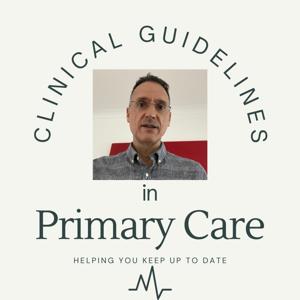

The video version of this podcast can be found here:
· https://youtu.be/JP5EvxGd8g4
This channel may make reference to guidelines produced by the "National Institute for Health and Care Excellence" in the UK, also referred to as "NICE". The content on this channel reflects my professional interpretation/summary of the guidance and I am in no way affiliated with, employed by or funded/sponsored by NICE.
My name is Fernando Florido (also known as Juan Fernando Florido Santana), a GP in the UK. In this episode, I will go through the new NICE guideline on acute asthma, NG244, focusing on what is relevant in Primary Care only. Given how extensive the guidance is, in this episode I will just focus on lessons from asthma deaths and near-fatal asthma as well as reviewing the concept of difficult asthma.
In the last four episodes I covered the initial assessment and treatment in both adults and children.
Just like the NICE guideline on the management of chronic asthma, which was updated in November 2024, the NICE guideline on acute asthma is also a collaborative initiative developed by NICE, the British Thoracic Society (BTS), and the Scottish Intercollegiate Guidelines Network (SIGN). It replaces previous guidance, and you can find a link to it in the episode description.
I am not giving medical advice; this video is intended for health care professionals, it is only my summary and my interpretation of the guidelines and you must use your clinical judgement.
Intro / outro music: Track: Halfway Through — Broke In Summer [Audio Library Release]
There is a podcast version of this and other videos that you can access here:
Primary Care guidelines podcast:
· Redcircle: https://redcircle.com/shows/primary-care-guidelines
· Spotify: https://open.spotify.com/show/5BmqS0Ol16oQ7Kr1WYzupK
· Apple podcasts: https://podcasts.apple.com/gb/podcast/primary-care-guidelines/id1608821148
There is a YouTube version of this and other videos that you can access here:
https://youtube.com/@practicalgp?si=ecJGF5QCuMLQ6hrk
The link to the new NICE guideline on acute asthma can be found here:
· https://www.nice.org.uk/guidance/ng244/chapter/Managing-acute-asthma
Based on recommendations on managing acute asthma in the BTS/SIGN British guideline on the management of asthma:
· https://rightdecisions.scot.nhs.uk/bts-nice-and-sign-asthma-pathway/managing-acute-asthma/
Disclaimer:
The Video Content on this channel is for educational purposes and not intended to be a substitute for professional medical advice, diagnosis, or treatment. Always seek the advice of your physician or other qualified health provider with any questions you may have regarding a medical condition. Never disregard professional medical advice or delay in seeking it because of something you have read or seen on this YouTube channel. The statements made throughout this video are not to be used or relied on to diagnose, treat, cure or prevent health conditions.
In addition, transmission of this Content is not intended to create, and receipt by you does not constitute, a physician-patient relationship with Dr Fernando Florido, his employees, agents, independent contractors, or anyone acting on behalf of Dr Fernando Florido.
Transcript
If you are listening to this podcast on YouTube, for a better experience, switch to the video version. The link is in the top right corner of the video and in the episode description.
Hello and welcome, I am Fernando, a GP in the UK. Today, we will go through the new NICE guideline on acute asthma, or NG244, focusing on what is relevant in Primary Care only. Just like in chronic asthma, the NICE guideline on acute asthma is a joint effort by NICE, BTS and SIGN and a link to it is in the episode description.
In this episode I will just focus on lessons from asthma deaths and the concept of difficult asthma.
In the last four episodes I covered the initial assessment and treatment in both adults and children and, if you have not already, I recommend that you check them out.
Right, let’s jump into it.
Confidential inquiries into over 200 asthma deaths in the UK have identified that most asthma deaths occurred before the patient reached hospital and that there are three main contributing factors: the disease itself, medical management, and patient behaviour or psychosocial issues..
And let’s start by looking at Disease Factors:
Although, In a minority the fatal attack occurred suddenly in a patient with mild or moderately severe asthma, the majority of patients who died from asthma had chronically severe disease.
In terms of Medical Management:
Many deaths were linked to inadequate treatment with inhaled corticosteroids (ICS) or oral steroids, as well as poor monitoring of asthma severity. Follow-up care was often insufficient, and some patients should have been referred to specialists sooner. The use of written management plans was notably underutilised.
A key finding from the National Review of Asthma Deaths report, published in 2014 by the Royal College of Physicians, highlighted the link between heavy or increasing use of short-acting beta agonists (or SABAs) and asthma deaths. Prescribing more than 12 SABA inhalers per year should prompt a thorough review of the patient’s management.
Asthma deaths have also been reported after inappropriate prescriptions of beta blockers and non-steroidal anti-inflammatory drugs, so All asthma patients should be asked about any previous reactions to these medications.
Sedation should be avoided during acute asthma attacks unless it is necessary for anaesthetic or intensive care procedures.
The National Review of Asthma Deaths report also revealed an increased risk of death within one month of hospital discharge following an acute attack, underscoring the need for close follow-up in primary care.
Let’s now look at Adverse Psychosocial and Behavioural Factors:
And These factors are important because they were present in most patients who died of asthma. Key risk factors include poor adherence to treatment, failure to attend appointments, and psychiatric conditions. So we, as Healthcare professionals, must recognise that patients with severe asthma combined with psychosocial vulnerabilities are at greater risk of death.
So, who are these patients? Patients at Risk of Near-Fatal or Fatal Asthma are usually those who have severe asthma along with one or more of the following:
AND additionally, adverse Psychosocial and behavioural factors, including:
Patients admitted with a severe asthma attack should be followed by a respiratory specialist for at least a year post-admission.
For patients who have experienced near-fatal asthma, it’s advisable to involve a close relative when discussing future management plans and They should remain under specialist supervision indefinitely.
Let’s now touch on the concept of Difficult Asthma:
Difficult asthma refers to cases where asthma-like symptoms and attacks persist despite high-dose asthma therapy. There is no universally agreed definition, but it typically applies to patients with ongoing symptoms or frequent attacks despite maximum treatment.
In this context, difficult asthma is defined by:
· persistent symptoms and/or frequent asthma attacks despite the following treatments:
o in adults:
§ the use of high-dose ICS plus one other agent such as a LABA or LTRA or
§ The use of medium-dose ICS plus two other asthma agents such as a LABA and LTRA or any other appropriate additional therapy
o However, in children this concept applies to those on:
§ medium-dose ICS plus one other agent such as a LABA or LTRA; or
§ low-dose ICS plus two other asthma agents such as a LABA and LTRA or any other appropriate additional therapy or
Patients with difficult asthma require a thorough evaluation, including:
This should be done by a multidisciplinary asthma service with expertise in managing complex cases.
The Factors Contributing to Difficult Asthma are:
And what is this induced sputum eosinophil count?
Although this isn’t done routinely in primary care, let’s quickly explain what it involves.
Before starting, we will check spirometry or peak flow to get a baseline.
Then, in order to prevent bronchospasms, we will give the patient a short-acting β2-agonist (like salbutamol) before starting the test.
Then, For Sputum Induction, the patient inhales a mist of hypertonic saline (usually 3% to 5%) using a nebuliser. If their FEV₁ drops by 20% or more, we will stop the procedure immediately.
After Sputum Collection, the lab will provide the percentage of eosinophils seen. A result of >3% suggests eosinophilic inflammation, which can help guide asthma treatment decisions, such as oral steroids.
So that is it, a review of lessons from asthma deaths and the concept of difficult asthma.
We have come to the end of this episode. Remember that this is not medical advice but only my summary and my interpretation of the guidelines. You must always use your clinical judgement.
Thank you for listening and goodbye.
 View all episodes
 By Juan Fernando Florido Santana

4
22 ratings
The video version of this podcast can be found here:
· https://youtu.be/JP5EvxGd8g4
This channel may make reference to guidelines produced by the "National Institute for Health and Care Excellence" in the UK, also referred to as "NICE". The content on this channel reflects my professional interpretation/summary of the guidance and I am in no way affiliated with, employed by or funded/sponsored by NICE.
My name is Fernando Florido (also known as Juan Fernando Florido Santana), a GP in the UK. In this episode, I will go through the new NICE guideline on acute asthma, NG244, focusing on what is relevant in Primary Care only. Given how extensive the guidance is, in this episode I will just focus on lessons from asthma deaths and near-fatal asthma as well as reviewing the concept of difficult asthma.
In the last four episodes I covered the initial assessment and treatment in both adults and children.
Just like the NICE guideline on the management of chronic asthma, which was updated in November 2024, the NICE guideline on acute asthma is also a collaborative initiative developed by NICE, the British Thoracic Society (BTS), and the Scottish Intercollegiate Guidelines Network (SIGN). It replaces previous guidance, and you can find a link to it in the episode description.
I am not giving medical advice; this video is intended for health care professionals, it is only my summary and my interpretation of the guidelines and you must use your clinical judgement.
Intro / outro music: Track: Halfway Through — Broke In Summer [Audio Library Release]
There is a podcast version of this and other videos that you can access here:
Primary Care guidelines podcast:
· Redcircle: https://redcircle.com/shows/primary-care-guidelines
· Spotify: https://open.spotify.com/show/5BmqS0Ol16oQ7Kr1WYzupK
· Apple podcasts: https://podcasts.apple.com/gb/podcast/primary-care-guidelines/id1608821148
There is a YouTube version of this and other videos that you can access here:
https://youtube.com/@practicalgp?si=ecJGF5QCuMLQ6hrk
The link to the new NICE guideline on acute asthma can be found here:
· https://www.nice.org.uk/guidance/ng244/chapter/Managing-acute-asthma
Based on recommendations on managing acute asthma in the BTS/SIGN British guideline on the management of asthma:
· https://rightdecisions.scot.nhs.uk/bts-nice-and-sign-asthma-pathway/managing-acute-asthma/
Disclaimer:
The Video Content on this channel is for educational purposes and not intended to be a substitute for professional medical advice, diagnosis, or treatment. Always seek the advice of your physician or other qualified health provider with any questions you may have regarding a medical condition. Never disregard professional medical advice or delay in seeking it because of something you have read or seen on this YouTube channel. The statements made throughout this video are not to be used or relied on to diagnose, treat, cure or prevent health conditions.
In addition, transmission of this Content is not intended to create, and receipt by you does not constitute, a physician-patient relationship with Dr Fernando Florido, his employees, agents, independent contractors, or anyone acting on behalf of Dr Fernando Florido.
Transcript
If you are listening to this podcast on YouTube, for a better experience, switch to the video version. The link is in the top right corner of the video and in the episode description.
Hello and welcome, I am Fernando, a GP in the UK. Today, we will go through the new NICE guideline on acute asthma, or NG244, focusing on what is relevant in Primary Care only. Just like in chronic asthma, the NICE guideline on acute asthma is a joint effort by NICE, BTS and SIGN and a link to it is in the episode description.
In this episode I will just focus on lessons from asthma deaths and the concept of difficult asthma.
In the last four episodes I covered the initial assessment and treatment in both adults and children and, if you have not already, I recommend that you check them out.
Right, let’s jump into it.
Confidential inquiries into over 200 asthma deaths in the UK have identified that most asthma deaths occurred before the patient reached hospital and that there are three main contributing factors: the disease itself, medical management, and patient behaviour or psychosocial issues..
And let’s start by looking at Disease Factors:
Although, In a minority the fatal attack occurred suddenly in a patient with mild or moderately severe asthma, the majority of patients who died from asthma had chronically severe disease.
In terms of Medical Management:
Many deaths were linked to inadequate treatment with inhaled corticosteroids (ICS) or oral steroids, as well as poor monitoring of asthma severity. Follow-up care was often insufficient, and some patients should have been referred to specialists sooner. The use of written management plans was notably underutilised.
A key finding from the National Review of Asthma Deaths report, published in 2014 by the Royal College of Physicians, highlighted the link between heavy or increasing use of short-acting beta agonists (or SABAs) and asthma deaths. Prescribing more than 12 SABA inhalers per year should prompt a thorough review of the patient’s management.
Asthma deaths have also been reported after inappropriate prescriptions of beta blockers and non-steroidal anti-inflammatory drugs, so All asthma patients should be asked about any previous reactions to these medications.
Sedation should be avoided during acute asthma attacks unless it is necessary for anaesthetic or intensive care procedures.
The National Review of Asthma Deaths report also revealed an increased risk of death within one month of hospital discharge following an acute attack, underscoring the need for close follow-up in primary care.
Let’s now look at Adverse Psychosocial and Behavioural Factors:
And These factors are important because they were present in most patients who died of asthma. Key risk factors include poor adherence to treatment, failure to attend appointments, and psychiatric conditions. So we, as Healthcare professionals, must recognise that patients with severe asthma combined with psychosocial vulnerabilities are at greater risk of death.
So, who are these patients? Patients at Risk of Near-Fatal or Fatal Asthma are usually those who have severe asthma along with one or more of the following:
AND additionally, adverse Psychosocial and behavioural factors, including:
Patients admitted with a severe asthma attack should be followed by a respiratory specialist for at least a year post-admission.
For patients who have experienced near-fatal asthma, it’s advisable to involve a close relative when discussing future management plans and They should remain under specialist supervision indefinitely.
Let’s now touch on the concept of Difficult Asthma:
Difficult asthma refers to cases where asthma-like symptoms and attacks persist despite high-dose asthma therapy. There is no universally agreed definition, but it typically applies to patients with ongoing symptoms or frequent attacks despite maximum treatment.
In this context, difficult asthma is defined by:
· persistent symptoms and/or frequent asthma attacks despite the following treatments:
o in adults:
§ the use of high-dose ICS plus one other agent such as a LABA or LTRA or
§ The use of medium-dose ICS plus two other asthma agents such as a LABA and LTRA or any other appropriate additional therapy
o However, in children this concept applies to those on:
§ medium-dose ICS plus one other agent such as a LABA or LTRA; or
§ low-dose ICS plus two other asthma agents such as a LABA and LTRA or any other appropriate additional therapy or
Patients with difficult asthma require a thorough evaluation, including:
This should be done by a multidisciplinary asthma service with expertise in managing complex cases.
The Factors Contributing to Difficult Asthma are:
And what is this induced sputum eosinophil count?
Although this isn’t done routinely in primary care, let’s quickly explain what it involves.
Before starting, we will check spirometry or peak flow to get a baseline.
Then, in order to prevent bronchospasms, we will give the patient a short-acting β2-agonist (like salbutamol) before starting the test.
Then, For Sputum Induction, the patient inhales a mist of hypertonic saline (usually 3% to 5%) using a nebuliser. If their FEV₁ drops by 20% or more, we will stop the procedure immediately.
After Sputum Collection, the lab will provide the percentage of eosinophils seen. A result of >3% suggests eosinophilic inflammation, which can help guide asthma treatment decisions, such as oral steroids.
So that is it, a review of lessons from asthma deaths and the concept of difficult asthma.
We have come to the end of this episode. Remember that this is not medical advice but only my summary and my interpretation of the guidelines. You must always use your clinical judgement.
Thank you for listening and goodbye.

705 Listeners
506 Listeners
299 Listeners

26 Listeners

1,152 Listeners
373 Listeners

253 Listeners
6 Listeners

19 Listeners
439 Listeners
373 Listeners

8,439 Listeners

327 Listeners

3,336 Listeners

6 Listeners