
Sign up to save your podcasts
Or

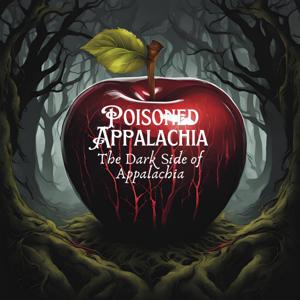


He was born in a small West Virginia town. Decades later, he became one of Florida's most feared serial killers. But one 17-year-old girl would help bring his killing spree to an end. This is the story of Bobby Joe Long and the incredible survival of Lisa McVey. 🎙️
For years, Fred Zain was one of West Virginia’s most trusted forensic experts. Prosecutors relied on his findings, juries believed his testimony, and men were sent to prison based in part on the science he presented in court.
Then DNA testing began telling a very different story.
In this episode of Poisoned Appalachia, we uncover the Fred Zain scandal—questionable lab results, ignored warnings, wrongful convictions, and an investigation that cast doubt on scores of criminal cases in West Virginia and beyond. We also look at the innocent men who lost years of their lives before the evidence against them finally began to unravel.
How many lives can one trusted expert destroy before someone finally checks his work?
Fairies in Appalachia?
Absolutely—but forget the tiny wings, glitter, and happily-ever-afters.
Long before the modern fairy tale, the Fair Folk of European folklore were mysterious, unpredictable, and sometimes dangerous beings that demanded respect. And when Scots-Irish, German, and other European settlers crossed the Atlantic, they brought those old beliefs with them into the Appalachian Mountains.
In this episode of Poisoned Appalachia, we trace those stories from the forests and mountains of the Old World into the hollers of Appalachia. We’ll explore the Fae of Scottish and Irish tradition, supernatural beings found in German folklore, and how generations of immigration helped transform these ancient beliefs into something distinctly Appalachian.
Because our ancestors didn’t cross the ocean empty-handed.
Their stories came with them.
And some of those stories found a very comfortable home in the mountains.
Sometimes, the darkest stories in Appalachia aren’t legends. They’re history.
Five days before Halloween in 1948, a strange yellow fog settled over the Pennsylvania mill town of Donora and nearby Webster. At first, life continued beneath the haze. There was a Halloween parade. A Friday night football game. The mills kept running.
Then people started struggling to breathe.
As the fog thickened, doctors and firefighters fought through streets where visibility had nearly disappeared. And soon, people began to die.
In this episode of Poisoned Appalachia, we travel to Pennsylvania’s Monongahela River Valley to uncover the story of the Donora Death Fog—what caused it, what the people trapped beneath it endured, and how one deadly October weekend helped change America’s understanding of industrial pollution.
Because in Appalachia, industry has always come with a price.
And in Donora, the price was the very air people breathed.
Land Between the Lakes
Deep between the rivers of Kentucky and Tennessee lies a place where history, tragedy, and legend have become tangled together. In this episode, we explore the communities lost beneath the waters of Land Between the Lakes, the unsolved murders of Carla Atkins and Vickie Stout, and the chilling legend of the Beast of LBL. From haunted cemeteries and strange encounters to stories of something lurking in the woods, we explore the history and darker folklore of a place where the line between truth and legend can be difficult to see.
What happens when a government decides who is “fit” to have a family—and who isn’t? This is one of the darkest chapters in Virginia and Appalachian history, and the connection to Shenandoah National Park is complicated, disturbing, and often overlooked.
Have you ever heard the knock?
The one that comes late at night…
When a child stands on your porch asking to be let inside.
Their voice sounds normal.
Their face looks innocent.
Until you notice their eyes.
Completely black.
No whites.
No pupils.
Just darkness.
Are they demons?
Aliens pretending to be human?
Or could they be something far older…
Forgotten ghost children whose stories have survived for centuries under different names?
In this week’s episode of Poisoned Appalachia, we’re digging into the terrifying legend of the Black-Eyed Children, the folklore that may have inspired them, and why one simple rule appears again and again across cultures:
Never invite them inside.
Because sometimes…
The scariest monsters don’t break down your door.
They wait for you to open it.
Nashville is known for bright lights, country music, and Southern charm.
But beneath the neon signs and crowded streets, another story was unfolding.
A story of murder.
Missing people.
Cold cases.
And victims whose names were slowly fading from the headlines.
Then there was Detective Sergeant Patrick Postiglione.
Some called it a photographic memory.
Others believed he simply had an extraordinary ability to remember what everyone else had forgotten.
The clues.
The details.
The victims.
And the families still waiting for answers.
Alongside Nashville’s legendary Murder Squad, Pat reopened cases that had been cold for years—sometimes decades. Using new forensic technology, old evidence, and relentless determination, they followed killers across state lines and uncovered connections hidden deep inside Nashville’s darkest history.
Between 2005 and his retirement in 2013, Pat and the Murder Squad helped solve 55 open and unsolved murders.
Fifty-five cases.
Fifty-five victims.
Fifty-five families who were finally given answers.
This is the story of the detectives who traveled back through time…
The investigators who refused to let the dead be forgotten…
And the man who never stopped remembering.
Coming soon on Poisoned Appalachia…
“Pat Postiglione and Nashville’s Murder Squad: The Detectives Who Refused to Forget.”
Because a case may grow cold…
But the truth is still waiting.
What happens when two men leave everything behind to build their dream in the Appalachian Mountains… only for that dream to end in bloodshed?
This week on Poisoned Appalachia, we’re climbing the lonely ridges of northwest Georgia to uncover the haunting story of Corpsewood Manor.
It was a hand-built castle hidden deep in the woods. A place without electricity… without neighbors… and surrounded by rumors of Satanism, occult symbols, and secret gatherings.
To some, Charles Scudder and Joseph Odom were kind, welcoming men who simply wanted to live life on their own terms.
To others…
They were “the devil worshippers on the mountain.”
In December 1982, greed, fear, and prejudice climbed Dead Horse Road… and what happened next would become one of Appalachia’s most infamous murder cases.
But were the rumors ever true?
Or did they help write the ending before the first shot was ever fired?
Join me as we separate fact from folklore and uncover the real story behind the legend of Corpsewood Manor.
Because sometimes…
The most terrifying thing in Appalachia…
…isn’t the monster people imagine.
It’s the one that’s all too human.
Appalachia has always lived with the mountains.
The mountains gave people coal.
They gave them work.
They gave them a place to call home.
But sometimes… the mountains gave something back.
On the morning of February 26, 1972, after days of relentless rain, a coal waste dam high above Buffalo Creek in Logan County, West Virginia, collapsed.
What followed wasn’t a flood.
It was a wall of black water, coal sludge, and debris racing through seventeen communities at nearly impossible speed.
In just minutes…
Entire towns disappeared.
More than one hundred people were killed.
Thousands lost everything they owned.
But perhaps the most haunting part of this story…
Many people knew the dam was in danger.
Warnings had been written.
Inspections had uncovered serious problems.
Residents had begged for someone to listen.
No one evacuated the valley.
This isn’t just the story of a natural disaster.
It’s a story of ignored warnings…
Corporate negligence…
Political controversy…
And the survivors who spent decades demanding that the world never forget what happened at Buffalo Creek.
Join me on Poisoned Appalachia as we travel back to one of the darkest days in Appalachian history—a tragedy that forever changed West Virginia and became one of the deadliest industrial disasters in American history.
From the publisher's feed
51,263 Listeners
5,226 Listeners

223 Listeners
28,093 Listeners
2,648 Listeners
6,171 Listeners
369,462 Listeners
99,718 Listeners
46,909 Listeners
477 Listeners
145 Listeners
5,628 Listeners
29,158 Listeners
4,194 Listeners
315 Listeners