
Sign up to save your podcasts
Or

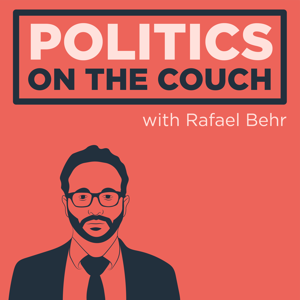


This week Rafael Behr and Helen Lewis discuss social media's corrosive effect on politics and public discourse, and how we can all respond.
Helen Lewis is a staff writer at the Atlantic, was deputy editor at the New Statesman, presents BBC Radio 4's Westminster Hour, and is a regular panellist on BBC Radio 4's News Quiz. She's written a book about the history of feminism, is ambivalent towards Twitter but likes the Sopranos and embroidery.
Helen's new book - (https://www.theguardian.com/books/2020/feb/16/difficult-women-history-of-feminism-11-fights-helen-lewis-review)
Helen's newsletter - http://helenlewis.substack.com
Helen's writing in the Atlantic https://www.theatlantic.com/author/helen-lewis
Helen's lecture on the failure's of political journalism - https://reutersinstitute.politics.ox.ac.uk/video/helen-lewis-failures-political-journalism
This podcast is hosted by ZenCast.fm
Hosted on Acast. See acast.com/privacy for more information.
This week, Rafael Behr talks to Bobby Duffy from The Policy Institute at King's College London about trust in the government during the Coronavirus pandemic and how our identities and cognitive biases affect who we trust in politics.
Topics discussed in order
1-4
Fall-out from Dominic Cummings;Public health messaging during lock-down;Stats coronavirus tests it says it’s been carrying out;Bobby Duffy conversation starts
5-10
King's College new report;support for the government coming out of the lock-down;How identities influence how we view the government's response to the pandemic;Growth of tribal identities;Conflict extension theory;Potential for a culture war like the US?
10.30
Connections between leave/remain tribes and trust in how govt. is dealing with Coronavirus;National pride;Confirmation bias How do political identity and self-preservation interact?
14
How good are we at assessing risk?Emotional innumeracy
17.40
Good that we overestimate risk in such scenarios?System 1 v System 2 thinkingDo politicians exploit our ‘faulty thinking’?
21
Do we understand reality more or less than the 1940s?
22
Deliberative democracy;What is it?Is it underused?
24
Eire using DD before their 2018 abortion referendum;Is context important?
29
Has trust in politicians declined recently?Is it rational not to trust politicians?
31
Do we suffer from rosy retrospection?Does identity come before people’s politics?
36
Progressives, facts and trust;Moral outlook and who we trustHow Trump communicates trust via a distorted view of reality.
40
How will we look back at our unity at the start of the lock-down?room for optimism?optimism/uncertainty about how we come out of Coronavirus;generational conflict?
48
In conclusion
49
End
Hosted on Acast. See acast.com/privacy for more information.
In this bonus edition Rafael Behr takes a break from his lock-down holiday to ask - what is 'political cut-through' and why Dominic Cummings appears to have cut so deep into the national conversation? In the midst of a pandemic, has a political mover renowned for capturing the mood of nation misjudged it this time?
NB This episode was recorded on the morning of 26 May before any post-conference opinion polls.
Hosted on Acast. See acast.com/privacy for more information.
This week Rafael Behr talks to The Lord John Alderdice about his incredible life as a politician, psychiatrist and psychotherapist.
They discuss how his formative years living in Northern Ireland influenced his decision to train as a psychiatrist and then psychotherapist; how this then informed his whole approach to politics and his political philosophy; and how it also helped him as a key negotiator in the Good Friday Agreement talks. He also gives some advice to any intolerant liberal progressives out there!
If you're interested in reading more about him and his work - this link will prove helpful.
https://lordalderdice.com/publications
Hosted on Acast. See acast.com/privacy for more information.
This week our host Rafael Behr is in conversation with Dr Leor Zmigrod about how cognitive science can help us understand how political identities are formed, and how people's ideological affiliations might affect how they respond to a national crisis.
If you want to delve further into the topic
Reader-friendly essays
Zmigrod, L. (2019). The partisan brain: cognitive study suggests people on the left and right are more similar than they think.
https://theconversation.com/the-partisan-brain-cognitive-study-suggests-people-on-the-left-and-right-are-more-similar-than-they-think-123578
Zmigrod, L. (2018). Brexit: how cognitive psychology helps us make sense of the vote.
https://theconversation.com/brexit-how-cognitive-psychology-helps-us-make-sense-of-the-vote-95031
Relevant academic papers
Zmigrod, L. (2020). The Role of Cognitive Rigidity in Political Ideologies: Theory, Evidence, and Future Directions. Current Opinion in Behavioral Sciences, 34, 34-39.
See paper here.https://doi.org/10.1016/j.cobeha.2019.10.016
Zmigrod, L., Ebert, T., Götz, F. M., & Rentfrow, J. (2020). The Psychological and Socio-political Consequences of Infectious Diseases. Retrieved from psyarxiv.com/84qcm
Tybur, J. M., Inbar, Y., Aarøe, L., Barclay, P., Barlow, F. K., De Barra, M., ... & Consedine, N. S. (2016). Parasite stress and pathogen avoidance relate to distinct dimensions of political ideology across 30 nations. Proceedings of the National Academy of Sciences, 113(44), 12408-12413 https://doi.org/10.1073/pnas.1607398113
Murray, D. R., Schaller, M., & Suedfeld, P. (2013). Pathogens and politics: Further evidence that parasite prevalence predicts authoritarianism. PloS One, 8(5). https://doi.org/10.1371/journal.pone.0062275
Kim, H. S., Sherman, D. K., & Updegraff, J. A. (2016). Fear of Ebola: The influence of collectivism on xenophobic threat responses. Psychological Science, 27(7), 935-944. https://doi.org/10.1177/0956797616642596
Hosted on Acast. See acast.com/privacy for more information.
From the publisher's feed
The political psychology podcast where Rafael Behr examines how our minds respond to politics and how politicians mess with our minds.
In each episode an expert from the world of…
Hosted on Acast. See acast.com/privacy for more information.
153 Listeners

257 Listeners
123 Listeners
19 Listeners
58 Listeners
187 Listeners

46 Listeners

21 Listeners
101 Listeners
781 Listeners

18 Listeners
117 Listeners

37 Listeners
43 Listeners

23 Listeners