
Sign up to save your podcasts
Or



It's late, you're tired, and the next level starts anyway. JM and Valerie unpack why "just one more round" feels impossible to resist for the player, the quiet puzzle-app fan, and the family member watching from the sidelines.
Valerie explains what a stressed, overstimulated brain is really looking for, and JM turns it into a simple shutdown routine. Then take the free 60-second quiz, "Find Your Off-Ramp", to get a personalized break plan built around your own patterns.
IN THIS EPISODE YOU'LL LEARN:
LINKS AND RESOURCES WITH THIS EPISODE:
Thanks so much for joining us today. Want to subscribe to Post-Trauma Secrets and Decluttering? Have some feedback you'd like to share? Connect with us on iTunes and leave us a review!
iTunes not your thing? Find us on Spotify or Stitcher
Support the show
You know that voice at 5 AM telling you that stopping means falling behind? JM and Valerie sit down to name it directly — and to explain why pushing through it isn't discipline, it's a nervous system that never got the signal to power down.
Valerie breaks down what's actually happening when sustained effort runs with no real recovery, and JM turns it into a simple, repeatable protocol you can start today. Text the keyword REST and we'll send you the full Structured Rest Protocol straight to your phone — the exact three moves discussed in this episode, ready to use.
IN THIS EPISODE YOU'LL LEARN:
LINKS AND RESOURCES WITH THIS EPISODE:
Want the Structured Rest Protocol from this episode? Text the keyword REST to 209-270-5556 to get it sent straight to your phone.
Thanks so much for joining us today. Want to subscribe to Post-Trauma Secrets and Decluttering? Have some feedback you'd like to share? Connect with us on iTunes and leave us a review!
iTunes not your thing? Find us on Spotify or Stitcher
Support the show
Ever caught yourself standing in front of the fridge at 9pm, not even hungry, reaching anyway? JM and Valerie unpack why that moment has nothing to do with willpower — and everything to do with a nervous system looking for the fastest exit from stress.
Valerie breaks down how the Clutter Vicious Cycle isn't just a decluttering concept — it's the same amygdala-to-cortisol-to-executive-function loop showing up in the pantry instead of the closet. JM delivers the fix: Triangle Breathing, a 90-second reset that restores choice before the reach. And if someone came to mind while you were listening — someone who does exactly this — that's your sign to share this episode with them right now, before the moment passes.
IN THIS EPISODE YOU'LL LEARN:
LINKS AND RESOURCES WITH THIS EPISODE:
"Put That Stuff Down" and its sequel (book) - A recommended read exploring the complex relationship between trauma, PTSD, and clutter. It offers personal stories, psychological insights, and practical advice. Click here to learn more: https://up.dowellht.com/bestseller-clutter-freedom
Join the thousands of people using the post-trauma secrets and decluttering by starting here: https://dowellht.com/freeyourself
Thanks so much for joining us today. Want to subscribe to Post-Trauma Secrets and Decluttering? Have some feedback you'd like to share? Connect with us on iTunes and leave us a review!
iTunes not your thing? Find us on Spotify or iHeart
Support the show
You sit down to finally deal with the room, the desk, the inbox — and your brain just won't give you a starting point. JM and Valerie name the real pattern behind that freeze, and why it has nothing to do with laziness or willpower.
Valerie breaks down why sound reaches the amygdala faster than almost any other input, and JM flips the common assumption that music is a reward for after you've calmed down — it's actually the ignition switch. Together they hand you one simple, repeatable tool, then point you to a deeper walkthrough of this exact habit in action: watch it here — https://youtu.be/D-30wiKmkcY
IN THIS EPISODE YOU'LL LEARN:
LINKS AND RESOURCES WITH THIS EPISODE:
"Put That Stuff Down" and its sequel (book) - A recommended read exploring the complex relationship between trauma, PTSD, and clutter. It offers personal stories, psychological insights, and practical advice. Click here to learn more: https://up.dowellht.com/bestseller-clutter-freedom
Join the thousands of people using the post-trauma secrets and decluttering by starting here: https://dowellht.com/freeyourself
Thanks so much for joining us today. Want to subscribe to Post-Trauma Secrets and Decluttering? Have some feedback you'd like to share? Connect with us on iTunes and leave us a review!
iTunes not your thing? Find us on Spotify or iHeart
Support the show
You cleared the desk. You sat down. You opened the laptop — and forty minutes later, nothing has started, and the only sentence in your head is what is wrong with me? JM and Valerie open this episode inside that exact moment, and JM draws the distinction that changes everything: you didn't fail to finish the task, you failed to initiate it, and those are two completely different systems.
Valerie walks the Clutter Vicious Cycle down to the level where it actually explains your morning — how chronic stress overstimulates the amygdala, why your frontal lobe is the first thing your body spends to fund an emergency that isn't happening, and why your desk is a threat-assessment surface rather than a discipline surface. JM turns it into the Cafeteria Tray and a five-step sequence you can run tomorrow. Click the link and you'll be taken straight to a video where Valerie breaks down exactly what's happening in your brain when you freeze in front of your own clutter — so the next time you sit down at that same desk, you're not trying to remember it from audio. You'll actually understand it.
IN THIS EPISODE YOU'LL LEARN:
LINKS AND RESOURCES WITH THIS EPISODE:
Thanks so much for joining us today. Want to subscribe to Post-Trauma Secrets and Decluttering? Have some feedback you'd like to share? Connect with us on iTunes and leave us a review!
iTunes not your thing? Find us on Spotify or iHeart
Support the show
In this episode, JM and Valerie discuss why multitasking feels impossible to escape, even though most of us were trained to believe it made us more valuable. Learn why constant task-switching drains a brain that's already carrying stress, and how unfinished tasks quietly compete for your attention long after you've moved on.
Discover the shift from "one task" to "one completed task," how to work with your nervous system instead of against it, and how practicing sequential productivity turns small, finished wins into lasting momentum. This episode offers a simple, practical tool for parents and busy minds alike who want to feel present again instead of scattered.
IN THIS EPISODE YOU'LL LEARN:
LINKS AND RESOURCES WITH THIS EPISODE:
"Put That Stuff Down" and its sequel (book) - A recommended read exploring the complex relationship between trauma, PTSD, and clutter. It offers personal stories, psychological insights, and practical advice. Click here to learn more: https://up.dowellht.com/bestseller-clutter-freedom
Join the thousands of people using the post-trauma secrets and decluttering by starting here: https://dowellht.com/freeyourself
Thanks so much for joining us today. Want to subscribe to Post-Trauma Secrets and Decluttering? Have some feedback you'd like to share? Connect with us on iTunes and leave us a review!
iTunes not your thing? Find us on Spotify or iHeart
Support the show
If you've ever tried to turn decluttering into a "fun family activity" — the playlist, the timer, the prize for whoever tosses the most — and watched it fall apart within minutes, this episode is for you. JM and Valerie unpack why forced fun almost always backfires in a family setting, walking through the real dynamic playing out in so many homes: one person ready to let go, another silently furious, a teenager who disappears upstairs, a spouse who goes quiet in the doorway. Together they name what's actually happening — not a lack of teamwork, but a room full of nervous systems that were never invited to feel safe in the first place.
From there, Valerie breaks down the neuroscience of why joy can't be layered onto a threat response, and JM introduces Stewardship as the operating principle that turns family members from reluctant helpers into a team with shared ownership. They walk through a real, anonymized case of a marriage that quietly fractured under shared clutter — and how a small, blame-free shared system rebuilt it. To get the exact family-adapted framework discussed in this episode — the team charter, the tray-sized zones, and the co-regulation reset that makes it work — DM the keyword family and it'll be sent straight to you.
IN THIS EPISODE YOU'LL LEARN:
LINKS AND RESOURCES WITH THIS EPISODE:
"Put That Stuff Down" and its sequel (book) - A recommended read exploring the complex relationship between trauma, PTSD, and clutter. It offers personal stories, psychological insights, and practical advice. Click here to learn more: https://up.dowellht.com/bestseller-clutter-freedom
Join the thousands of people using the post-trauma secrets and decluttering by starting here: https://dowellht.com/freeyourself
Want the family team charter from today's episode? Head to dowellht.com, open the chat, and DM us the keyword family — we'll send it straight to you.
Thanks so much for joining us today. Want to subscribe to Post-Trauma Secrets and Decluttering? Have some feedback you'd like to share? Connect with us on iTunes and leave us a review!
iTunes not your thing? Find us on Spotify or iHeart
Support the show
In this episode, Valerie discusses the importance of building a strong support network while parenting with PTSD. Learn how family, friends, and respite care can provide practical help during difficult moments and why asking for support is a vital part of recovery.
Discover strategies for balancing self-care with parenting responsibilities, creating a reliable support system, and finding motivation to heal. This episode offers encouragement and practical guidance for parents who want to care for themselves while showing up fully for their children.
IN THIS EPISODE YOU’LL LEARN:
LINKS AND RESOURCES WITH THIS EPISODE:
"Put That Stuff Down" and its sequel (book) - A recommended read exploring the complex relationship between trauma, PTSD, and clutter. It offers personal stories, psychological insights, and practical advice. Click here to learn more: https://up.dowellht.com/bestseller-clutter-freedom
Join the thousands of people using the post-trauma secrets and decluttering by starting here: https://dowellht.com/freeyourself
Thanks so much for joining us today. Want to subscribe to Post-Trauma Secrets and Decluttering? Have some feedback you'd like to share? Connect with us on iTunes and leave us a review!
iTunes not your thing? Find us on Spotify or iHeart
Support the show
Support the show
In this episode, Valerie explores the challenges of parenting while living with PTSD and shares an encouraging message for parents navigating trauma recovery.
Discover how PTSD can make the unpredictability of parenting more difficult, why self-care matters during recovery, and how caring for a child can bring purpose, connection, and growth. This episode offers hope, reassurance, and practical perspective for parents who want to support their children while managing their own healing journey.
IN THIS EPISODE YOU’LL LEARN:
* Understand the challenges of parenting while living with PTSD
* Learn how trauma triggers can impact family life and daily parenting
* Discover the importance of self-care and emotional resilience for parents
* Gain encouragement and practical insights for raising children during PTSD recovery
LINKS AND RESOURCES WITH THIS EPISODE:
"Put That Stuff Down" and its sequel (book) - A recommended read exploring the complex relationship between trauma, PTSD, and clutter. It offers personal stories, psychological insights, and practical advice. Click here to learn more: https://up.dowellht.com/bestseller-clutter-freedom
Join the thousands of people using the post-trauma secrets and decluttering by starting here: https://dowellht.com/freeyourself
Thanks so much for joining us today. Want to subscribe to Post-Trauma Secrets and Decluttering? Have some feedback you'd like to share? Connect with us on iTunes and leave us a review!
iTunes not your thing? Find us on Spotify or iHeart
Support the show
In this episode, JM explores how to effectively manage anger when someone close to you is struggling with their own emotional outbursts. Learn practical strategies for emotional regulation, supporting loved ones through difficult moments, and creating positive habits that help break cycles of anger.
Discover how self-awareness, music therapy, and habit formation can help reduce emotional reactivity, strengthen relationships, and support trauma recovery. This conversation offers compassionate guidance for anyone navigating anger management, PTSD recovery, and healthier emotional coping skills.
IN THIS EPISODE YOU’LL LEARN:
LINKS AND RESOURCES WITH THIS EPISODE:
"Put That Stuff Down" and its sequel (book) - A recommended read exploring the complex relationship between trauma, PTSD, and clutter. It offers personal stories, psychological insights, and practical advice. Click here to learn more: https://up.dowellht.com/bestseller-clutter-freedom
Join the thousands of people using the post-trauma secrets and decluttering by starting here: https://dowellht.com/freeyourself
Thanks so much for joining us today. Want to subscribe to Post-Trauma Secrets and Decluttering? Have some feedback you'd like to share? Connect with us on iTunes and leave us a review!
iTunes not your thing? Find us on Spotify or iHeart
Support the show
From the publisher's feed
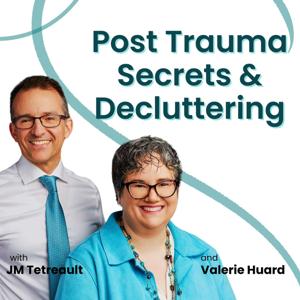
Hosted by wellness and decluttering experts Valerie Huard and JM Tetreault, the Post Trauma Secrets and Decluttering Podcast brings you on a journey from trauma to Joie de vivre! Like going on a…

26,180 Listeners

10,204 Listeners

2,477 Listeners

87,157 Listeners

111,841 Listeners
6,218 Listeners

19,071 Listeners