
Sign up to save your podcasts
Or

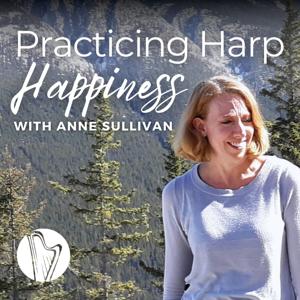


Happy Bastille Day! This isn't a French themed podcast episode, and we won't be breaking the bars on any prisons today. However, while the French national motto of liberté, égalité, fraternité is sounding across the globe, we should give some thought to the unequal treatment we give our hands. I mean the difference in the demands we place on our right and left hands.
Probably you've thought about the very different roles that our hands play musically. Most often, the right hand plays a melody and the left hand plays an accompaniment. But think about it in a practical, action-related way for a moment. If our right hand specializes in melodies, then it likely is accustomed to connected, legato playing, along with some chords and arpeggios.
Our left hand, though, because it serves to support the melody, is more used to jumping between low bass notes and chords above them, or playing a series of octaves, or playing continuous arpeggiated accompaniments. That is a very different skill set from the one your right hand has. Just try playing a left hand accompaniment with your right hand or a right hand melody with your left hand, and you will find it a little uncomfortable. Try playing hands together with that role reversal, and it may feel extremely awkward. If you've ever had to try to balance a left hand melody line with a right hand accompaniment, keeping the right hand softer than the left, you know how deeply ingrained those right hand/left hand roles are.
Of course, most of the time, each hand plays the kind of playing it does best. But what about those occasions when the roles are reversed? How do you prepare for them, so they don't stop you in your tracks? That's part of what I will help you with today. Even more importantly, I'll give you a plan for developing more independence between your hands, and that sounds like a fitting topic for Bastille Day.
Links to things I think you might be interested in that were mentioned in the podcast episode:
Join the Christmas in July Week 3 workshop.
Are you keeping up with the Summertime Challenge? Join here.
Harpmastery.com
Get involved in the show! Send your questions and suggestions for future podcast episodes to me at [email protected]
Looking for a transcript for this episode? Did you know that if you subscribe to this podcast on Apple Podcasts you will have access to their transcripts of each episode?
LINKS NOT WORKING FOR YOU? FInd all the show resources here: https://www.harpmastery.com/blog/Episode-217
This week I started my yearly ritual of going through my drawers of music and pulling out new pieces to play. Actually they aren't all new; some are old friends that I haven't played in years. Others are pieces that have been sitting around waiting for me to get to them. Others are favorites that I seem to pull out every summer and play for a while.
It's a summer thing for me. Perhaps because my playing schedule is a little lighter, I don't feel as pressured or as driven. Also, though, I just want to play music, music that fits my vacation mindset.
So this week as I was looking through the stacks, I thought maybe I could give you some ideas of pieces that might fit your summertime mood. Or if it's not summer weather for you right now, maybe these pieces will add some sunshine to your harp playing.
Some of these are classics from the harp repertoire or classic transcriptions for harp. Others are newer compositions you may not know. I've thrown in a couple popular music selections, just because. And I've themed them in a very summer-ish way: music about water, the sky, the garden and daydreams. It's a little fanciful, but that's really the whole idea. I'll play some bits and pieces of some of them for you, too.
And if you feel inspired to check out any of these for yourself, I've put all the selections I am mentioning today in a handy list for you, which you can download right in the show notes. You'll be able to find these at the usual harp music retailers, like Harp Column Music, Atlanta Harp Center, Vanderbilt Music Company, Harp.com and more. If you have trouble finding one of them, just post a message in the Harp Mastery® Hub, and we'll help you find it!
Links to things I think you might be interested in that were mentioned in the podcast episode:
Get involved in the show! Send your questions and suggestions for future podcast episodes to me at [email protected]
Looking for a transcript for this episode? Did you know that if you subscribe to this podcast on Apple Podcasts you will have access to their transcripts of each episode?
LINKS NOT WORKING FOR YOU? FInd all the show resources here: https://www.harpmastery.com/blog/Episode-216
There's a third kind of shortcut, though, that I want us to think about today. It's the kind of shortcut that comes with experience. I remember when I was learning to sew and following all the directions very carefully so that I wouldn't mess up. I even learned which pattern companies had the clearest directions, and which seemed to presume that I knew more than I did, so there were steps missing. Those missing steps weren't shortcuts, per se; they were just knowledge that a more experienced sewer would have.
One day, I watched a professional seamstress start to cut out a dress. She was making a concert dress for me, and I was excited to watch her start on it while I could watch. What turned out to be an even bigger thrill was to see that instead of painstakingly pinning the pattern onto the cloth, the way I learned in Home Ec class, she just laid a few weights on the pattern to hold it lightly in place and cut around it. What a shortcut and a timesaver! And why had I never thought of that?
Of course, I had never thought of that because I didn't have the experience and the confidence that comes with that experience to see that as a possibility. I was still following the directions, step by step. That step-by-step method was an important part of my learning, because it showed me what was necessary to get the best result. It wasn't necessary to pin every pattern piece in place. It was necessary to lay out the pieces on the cloth correctly and to cut them carefully; the pins were a helpful tool, when you needed it, but not strictly necessary.
Harp playing has those kinds of shortcuts too. There are practice and learning strategies that are important at some stages of our harp journey that we can rethink and adapt as we gain more mastery. If we cling to our old learning habits too long, we end up slowing our progress and growth.
So today, I want to help you learn about harp shortcuts, not specific shortcuts, although I'll mention a few, but how to look for and discover the shortcuts that could make a difference for you right now. This is about using your experience and your knowledge from all the harp playing you've done to help you learn faster, practice more effectively and play more confidently. It's about making it easier, and who wouldn't want that?
Links to things I think you might be interested in that were mentioned in the podcast episode:
Get involved in the show! Send your questions and suggestions for future podcast episodes to me at [email protected]
Looking for a transcript for this episode? Did you know that if you subscribe to this podcast on Apple Podcasts you will have access to their transcripts of each episode?
LINKS NOT WORKING FOR YOU? FInd all the show resources here: https://www.harpmastery.com/blog/Episode-215
It's summer time here and time for a little R and R, rest and relaxation, maybe even time away. You might be feeling like you need some time away from whatever stress you've been experiencing. I hope it isn't your harp playing that's been causing the stress, but even playing and practicing the harp can cause frustration and burnout. If you're feeling like you need a break from your harp playing, I'm here to help and to make sure you take that break in a way that will bring you more confidence and more joy in your harp playing again.
Actually, at the time you are listening to this, I am on vacation with my husband. We are in Bermuda, which is one of our favorite places to vacation. We went there for our honeymoon and loved it so much that we planned to go back every five years. We've missed a couple of those five year milestones; COVID was one of the reasons, of course. But this year, we're going back and I can't wait.
Often people will ask me if I take a harp when I'm on vacation, and I rarely do. If it's an extended trip, or I have a special project or performance coming up, then I will take one, but I firmly believe that no matter how much we love the harp, it's beneficial to take some time off. Like the old Coca-Cola slogan, "it's the pause that refreshes." It's good for us physically to relieve our fingers of the stress of practice. It's even better for our perspective. It forces us to pick up our heads, let go of the busyness of practice, and reconnect with the harp and with music. Aside from having to coax slightly sluggish fingers back to work after we get back, there are no negatives to taking a break.
I realize we have podcast listeners all over the world, and if you're living in the southern hemisphere, you're starting a winter season, not a summer one. But you don't have to wait for summer to try out this framework. It can help keep you balanced all winter long!
Links to things I think you might be interested in that were mentioned in the podcast episode:
Get involved in the show! Send your questions and suggestions for future podcast episodes to me at [email protected]
Looking for a transcript for this episode? Did you know that if you subscribe to this podcast on Apple Podcasts you will have access to their transcripts of each episode?
LINKS NOT WORKING FOR YOU? FInd all the show resources here: https://www.harpmastery.com/blog/Episode-214
Have you ever made something and it turned out ok, but somehow it just didn't look right? Maybe you thought those two paint colors would go together, but now you're not sure. Or maybe the furniture arrangement in the living room looked great on paper but it sort of doesn't work now that you see everything in place.
I think we've all had those moments. I had one not long ago with a photo I was doing. It wasn't quite right, but since I had to get it done, all I could do was to shrug and sign off on it, whether it was right or not. But if a piece of music we're working on doesn't sound right, we want to fix it, not forget it.
I'm sure you know what I mean. You've been working hard on a piece. You muster up your courage to do a recording of it and after a lot of takes, you come up with one that you think is pretty good, without noticeable mistakes or hesitations. Then you listen to it, and something's not right. Is it too slow? Are you not making the dynamics clear? How come it doesn't sound the way it sounds in your head?
This is truly a challenging point, because it can be difficult to know the precise things you need to do to make the music sound the way you want. Assuming that the notes and the rhythms are correct and that you're playing reasonably expressively, what else is there? That's the question we're going to answer today. I'm going to identify three things that are essential to make any piece of music sound "right." These three are the same whether you are playing a classical piece or a folk piece or a hymn or a pop tune. When each of these is in place, your piece will sound like you want it to.
And the bonus is that you have choices. Every one of us harpists makes these choices, but you may not realize the power behind them. These choices are what makes one harpist's interpretation of a piece sound different from another harpist's, even though they both may be beautiful performances. My friend, you have the power to make your music sound right to you; all you need to do is exercise your freedom to choose.
Links to things I think you might be interested in that were mentioned in the podcast episode:
Get involved in the show! Send your questions and suggestions for future podcast episodes to me at [email protected]
Looking for a transcript for this episode? Did you know that if you subscribe to this podcast on Apple Podcasts you will have access to their transcripts of each episode?
LINKS NOT WORKING FOR YOU? FInd all the show resources here: https://www.harpmastery.com/blog/Episode-213
Since you're here with me today, I know you are the kind of harpist who knows that technique matters. You take your warm-up seriously. You have exercises and etudes that you play regularly, maybe even religiously. You subscribe to the motto, "If your fingers can't play it, you can't play it." But there may be times when you, even as dedicated to your technique work as you are, need a new direction, some more motivation, inspiration and know-how to move your technique to the next level.
Here's the thing we don't want to think about. We have our favorite exercises and they fit perfectly into our practice routine. We know how they go, so we don't have to struggle with notes, and we can focus on our fingers. Unfortunately, if we are that comfortable with them, they probably have lost some of their value for us.
Now I'm not going to tell you that you have to abandon the exercises or drills you love. I'm just like you; I have my favorites, and I am not about to give them up. But I am going to suggest - very strongly - that you need to switch them up with some that will provide you with a little more challenge. When I started doing this in my own practice, I found that it sharpened my technique, not just because my fingers were learning new patterns, but also, precisely because I had to pay attention to the notes for a change, I was even more focused on what I was doing. No chance to go on autopilot, even for a minute.
So today, I am going to share information about three exercise books you might not know, but that I think you should. Why? Because your technique work should be about leveling up, and if you're doing the same-old same-old, you definitely aren't leveling up.
I've also included links to each of the books, so you can find them easily, but you can purchase them from any retailer you like. I don't get a commission from these links; they are purely for your convenience.
Links to things I think you might be interested in that were mentioned in the podcast episode:
Get involved in the show! Send your questions and suggestions for future podcast episodes to me at [email protected]
Looking for a transcript for this episode? Did you know that if you subscribe to this podcast on Apple Podcasts you will have access to their transcripts of each episode?
LINKS NOT WORKING FOR YOU? FInd all the show resources here: https://www.harpmastery.com/blog/Episode-212
Every time I talk about putting more fun into your practice, I hear feedback like, "I enjoy my practice," or "I really like doing the challenging work," or "My favorite part of practice is my exercises and etudes." All of those harpists are enjoying their practice, and that's terrific. But that's not what I mean.
Much of what we do in our practice can accidentally disconnect us from the music we want to make. We identify and correct mistakes. We drill our technique. We repeat passages over and over again. That's all part of practice, and it is part of what enables us to play well. But there's so much more that we could be doing in our practice, so much more that is truly aligned with why we are playing the harp.
Here's an example that may help you understand what I mean. A young person wants to be a doctor because she likes helping people. She goes to medical school where part of her training involves working when she's physically exhausted. Part of her training also helps her learn the ability to detach from her patients, so she can view their cases objectively and clinically, and so that she doesn't burn out emotionally. Is it any wonder that some doctors lack an empathetic bedside manner? Those doctors may be gifted physicians, but they also may be in danger of losing the connection to their patients.
That's a broadbrush kind of example, and I certainly have had doctors who were both gifted and compassionate. But I hope you see my point as it applies to our harp playing. If all we do in our practice is critique, correct and repeat, we put ourselves at risk of losing the connection to what brought us to the harp in the first place. We risk losing our joy.
Today, I would like to help you put more fun playing into your practice. I'll share a few of my favorite ways to help recapture the rapture and put more creativity and yes, fun, into every day you play the harp. Remember it's not about right or wrong - it's about the music.
Links to things I think you might be interested in that were mentioned in the podcast episode:
Get involved in the show! Send your questions and suggestions for future podcast episodes to me at [email protected]
Looking for a transcript for this episode? Did you know that if you subscribe to this podcast on Apple Podcasts you will have access to their transcripts of each episode?
LINKS NOT WORKING FOR YOU? FInd all the show resources here: https://www.harpmastery.com/blog/Episode-211
Four friends went to an orchestra concert. Afterward, they went out for dessert and compared notes on the concert, talking about what they heard. Here is what they said:
One person heard the person in the row behind crackling a cough drop wrapper.One person, a flutist, heard that the clarinet wasn't in tune with the flute.One person, a harpist, heard that the orchestra drowned out the harp solo.One person heard that the piano soloist was humming to himself while he played.
Oddly enough, when the review of the concert appeared in the newspaper the next day, it seemed the critic had gone to a completely different concert. The critic described the pianist as being an impassioned player with a fiery technique, the orchestra as presenting a colorful, well-balanced and nuanced interpretation. There was no mention of out of tune clarinets, or inaudible harps or even noisy cough drop wrappers.
Yes, this is a fictional scenario, although I've been part of very similar discussions. I wanted to relate this to you today, though, to highlight the way we channel our listening. We pay attention to the things that distract us, like noises or mistakes. That's not in itself a bad thing; it's part of being observant. Often, however, our listening stops there.
Think about how you listen to yourself. You pick out the flaws, the things that you wanted to do better. How often do you take time to identify what you have done well? Would you even be able to identify what you are doing well?
Today, we are going to talk about listening for growth, not for comparison or fault-finding. I'll help you discover how to listen with open ears and an open mind so that the next time you listen to that amazing harpist play the piece you're struggling to learn, you can find the precise elements in that performance that will help you make your own playing sound the way you want it to. And we'll talk about how to listen to yourself so you don't end up in the depths of despair. It's all about what you listen for.
Links to things I think you might be interested in that were mentioned in the podcast episode:
Get involved in the show! Send your questions and suggestions for future podcast episodes to me at [email protected]
Looking for a transcript for this episode? Did you know that if you subscribe to this podcast on Apple Podcasts you will have access to their transcripts of each episode?
LINKS NOT WORKING FOR YOU? FInd all the show resources here: https://www.harpmastery.com/blog/Episode-210
Today I want to talk with you about hard work. I don't mean how to buckle down and do the hard work. We all know that playing the harp is hard, and we spend a lot of time working out practice techniques, strategies and routines to help us play the music we want in spite of the difficulties.
No, what I want to talk about today is how to get out of the "just buckle down and do it" mindset. The truth is that when it comes to playing the harp or even music in general, sometimes trying harder is counter-productive. For instance, the harder we try to get that harmonic to ring, the more it just thuds. The harder we try to play faster, the more our fingers become tense and so they don't have the flexibility and agility required for speed. The more we drill those recalcitrant two measures, the moe they refuse to flow.
But if hard work isn't the answer, what is?
Let me be clear. Hard work, or at least work, is necessary. But the way we approach a difficulty in our harp playing shouldn't be - cannot be - the same way we solve other kinds of problems. The solution to these difficulties usually lies in the music itself, which is something we most often ignore as we try to do what seems impossible.
The approach I want to explore with you today is about looking at challenges, difficulties or frustrations through a musical lens. You truly don't need to hammer away at that thing that isn't working. You can use more creative and much less stressful ways to solve it, with the added benefit of keeping the musical and expressive goals front of mind. I have three very specific suggestions for you, ones that are simple to implement and which will give you surprisingly quick results. It's time to stop beating your head against the wall, don't you think?
Links to things I think you might be interested in that were mentioned in the podcast episode:
Get involved in the show! Send your questions and suggestions for future podcast episodes to me at [email protected]
Looking for a transcript for this episode? Did you know that if you subscribe to this podcast on Apple Podcasts you will have access to their transcripts of each episode?
LINKS NOT WORKING FOR YOU? FInd all the show resources here: https://www.harpmastery.com/blog/Episode-209
Is studying music theory really useful? Yep. You heard right. I really said that, and I'm a total theory nerd.
I'm not going to leave you in suspense. Of course, knowing music theory is useful and helpful and part of being a good musician. But only - and this is a big "only" - if you know how it's useful.
Did you ever take a class in school and the whole time you were sitting in class you were thinking, "I'm never going to use this stuff"? Of course, you did. I remember sitting in my calculus class in high school - which, incidentally, I really enjoyed - knowing that I was going to music school and very unlikely to ever use any of this kind of higher mathematics again. Maybe your useless class was a math course, or it could have been just about any other subject. Sometimes we discovered later that we were wrong; for instance, a little understanding of chemistry is helpful if you're trying to work out ingredient substitutions in a recipe. At the time, though, the information falls into the category of "good to know, but I'll never need it."
I taught classes like that when I was teaching at Curtis. The theory and ear training classes I taught were certainly full of information that would be necessary for a professional musician, but that didn't mean that any of it seemed relevant to students who just wanted to practice. You may sympathize with that feeling, if you've taken theory courses with the idea that these courses would help your harp playing significantly. Please understand - I know with every fiber of my being that music theory makes you a better musician and can absolutely be of benefit to your playing. But unfortunately, I have found that most of the time, harpists take theory courses and are left wondering what use they can make of all this hard-won knowledge. These courses don't come with a hands-on way to apply this knowledge at the harp, a way to make it really useful. That's what I will share with you today, some common sense ways to make theory practical.
Links to things I think you might be interested in that were mentioned in the podcast episode:
Get involved in the show! Send your questions and suggestions for future podcast episodes to me at [email protected]
Looking for a transcript for this episode? Did you know that if you subscribe to this podcast on Apple Podcasts you will have access to their transcripts of each episode?
LINKS NOT WORKING FOR YOU? FInd all the show resources here: https://www.harpmastery.com/blog/Episode-208
From the publisher's feed

7,926 Listeners
156 Listeners

8,471 Listeners
2 Listeners