
Sign up to save your podcasts
Or


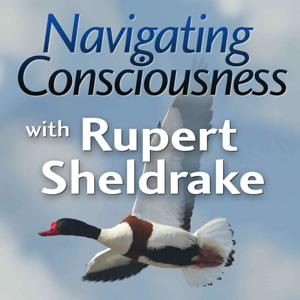
The accusation of pseudo-science is often made against those involved in the New Age, and sometimes rightly so. But as Rupert Sheldrake and Mark Vernon discuss in the latest episode of the Sheldrake-Vernon Dialogues, there is a lot more to the sneering and ridicule than meets the eye. They explore how science itself might morph into pseudo-science, which is perhaps a reason that scientists can be so nervous of novel ideas. They look at the origins of science's authority in the modern world, and the power of an impression of scientific rigour, whether or not justified. They discuss various disciplines in particular, from physics and biology, to economics, psychology and astrology. We need to be able to discern what merits the label “scientific” and what does not, especially in a time of pandemic, ecological and political fear.
 View all episodes
 By Rupert Sheldrake and Mark Vernon

4.8
9191 ratings
The accusation of pseudo-science is often made against those involved in the New Age, and sometimes rightly so. But as Rupert Sheldrake and Mark Vernon discuss in the latest episode of the Sheldrake-Vernon Dialogues, there is a lot more to the sneering and ridicule than meets the eye. They explore how science itself might morph into pseudo-science, which is perhaps a reason that scientists can be so nervous of novel ideas. They look at the origins of science's authority in the modern world, and the power of an impression of scientific rigour, whether or not justified. They discuss various disciplines in particular, from physics and biology, to economics, psychology and astrology. We need to be able to discern what merits the label “scientific” and what does not, especially in a time of pandemic, ecological and political fear.
205 Listeners
639 Listeners
1,289 Listeners
341 Listeners
1,028 Listeners
593 Listeners
510 Listeners

1,665 Listeners
273 Listeners
354 Listeners
1,050 Listeners
238 Listeners
244 Listeners
813 Listeners
70 Listeners