
Sign up to save your podcasts
Or

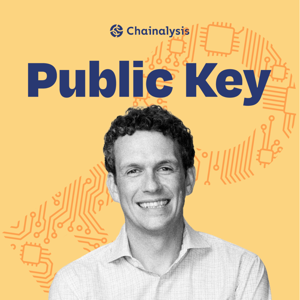


Many in the world of DeFi have heard about and rely on oracles like Chainlink and Pyth Network for their trusted data feeds, but there is a new protocol that has enshrined oracles directly into it’s EVM Layer 1 Blockchain.
2 | Hugo’s journey from hedge funds, skipping AI and ML to get into crypto
5 | Why Flare decided to build a L1 platform with enshrined oracles
8 | Examining why data in the crypto landscape is fundamentally broken
12 | What are enshrined oracles and why are they important?
17 | Introducing LayerZero and the solution to cross-chain interoperability issues
20 | Flare use cases with decentralized exchanges and DeFi projects
24 | Exploring huge oracle failures and lack of data providers in the industry
29 | The emergence of regulation, KYC and AML in a decentralized crypto ecosystem
32 | Flare announced new Flare Data Connector solution
Check out more resources provided by Chainalysis that perfectly complement this episode of the Public Key.
This website may contain links to third-party sites that are not under the control of Chainalysis, Inc. or its affiliates (collectively “Chainalysis”). Access to such information does not imply association with, endorsement of, approval of, or recommendation by Chainalysis of the site or its operators, and Chainalysis is not responsible for the products, services, or other content hosted therein.
Our podcasts are for informational purposes only, and are not intended to provide legal, tax, financial, or investment advice. Listeners should consult their own advisors before making these types of decisions. Chainalysis has no responsibility or liability for any decision made or any other acts or omissions in connection with your use of this material.
Chainalysis does not guarantee or warrant the accuracy, completeness, timeliness, suitability or validity of the information in any particular podcast and will not be responsible for any claim attributable to errors, omissions, or other inaccuracies of any part of such material.
Unless stated otherwise, reference to any specific product or entity does not constitute an endorsement or recommendation by Chainalysis. The views expressed by guests are their own and their appearance on the program does not imply an endorsement of them or any entity they represent. Views and opinions expressed by Chainalysis employees are those of the employees and do not necessarily reflect the views of the company.
The Travel Rule has recently seen regulatory implementations in various jurisdictions, but are VASPs complying?
In this episode, Ian Andrews (CMO, Chainalysis) gets that answer and many more from Alice Nawfal, who co-founded and is acting COO of one of the leading Travel Rule solutions, Notabene.
The conversation also focuses on self-hosted wallets and counterparty risk assessments in the crypto space, while offering insights into how the interoperability challenges for travel rule solutions can be solved.
2 | Alice’s journey from getting a MBA, going through YC and ending up in decentralized identity
4 | How to solve the identification problem using a trustless decentralized approach
8 | How does Notabene approach decentralized ID and what is the Travel Rule
12 | Has Travel Rule adoption improved over the last 2 years?
16 | The major impact on the Travel Rule on crypto transactions
22 | Facilitating real-time counterparty risk checks for secure transactions
28 | Proof of ownership for self-hosted wallets to solve for EU Transfer Rule requirements
33 | Solving interoperability challenges in the Travel Rule industry
Check out more resources provided by Chainalysis that perfectly complement this episode of the Public Key.
This website may contain links to third-party sites that are not under the control of Chainalysis, Inc. or its affiliates (collectively “Chainalysis”). Access to such information does not imply association with, endorsement of, approval of, or recommendation by Chainalysis of the site or its operators, and Chainalysis is not responsible for the products, services, or other content hosted therein.
Our podcasts are for informational purposes only, and are not intended to provide legal, tax, financial, or investment advice. Listeners should consult their own advisors before making these types of decisions. Chainalysis has no responsibility or liability for any decision made or any other acts or omissions in connection with your use of this material.
Chainalysis does not guarantee or warrant the accuracy, completeness, timeliness, suitability or validity of the information in any particular podcast and will not be responsible for any claim attributable to errors, omissions, or other inaccuracies of any part of such material.
Unless stated otherwise, reference to any specific product or entity does not constitute an endorsement or recommendation by Chainalysis. The views expressed by guests are their own and their appearance on the program does not imply an endorsement of them or any entity they represent. Views and opinions expressed by Chainalysis employees are those of the employees and do not necessarily reflect the views of the company.
“The sophistication in the criminal world at hiding their fingerprints across the digital footprint is incredibly sophisticated now as well." - John Randles
2 |Introduction to Siren and their mission to improve the law enforcement analyst experience
6 | The challenges with modern day police investigations with emergence of social and crypto
13 | The story of building a tech company in Galway, Ireland and attracting VC funding
18 | The challenges law enforcement faces in processing a vast amount of data
22 | How Siren is using AI to assist in explaining knowledge graphs to law enforcement
26 | Understanding policing intelligence from strategic to tactical
29 | The evolution of criminal activity over the last 10 years
33 | The future of Siren and evolution of AI and data
Check out more resources provided by Chainalysis that perfectly complement this episode of the Public Key.
This website may contain links to third-party sites that are not under the control of Chainalysis, Inc. or its affiliates (collectively “Chainalysis”). Access to such information does not imply association with, endorsement of, approval of, or recommendation by Chainalysis of the site or its operators, and Chainalysis is not responsible for the products, services, or other content hosted therein.
Our podcasts are for informational purposes only, and are not intended to provide legal, tax, financial, or investment advice. Listeners should consult their own advisors before making these types of decisions. Chainalysis has no responsibility or liability for any decision made or any other acts or omissions in connection with your use of this material.
Chainalysis does not guarantee or warrant the accuracy, completeness, timeliness, suitability or validity of the information in any particular podcast and will not be responsible for any claim attributable to errors, omissions, or other inaccuracies of any part of such material.
Unless stated otherwise, reference to any specific product or entity does not constitute an endorsement or recommendation by Chainalysis. The views expressed by guests are their own and their appearance on the program does not imply an endorsement of them or any entity they represent. Views and opinions expressed by Chainalysis employees are those of the employees and do not necessarily reflect the views of the company.
Imagine if you could combine the speed of a cheetah with the size of an elephant. Well in this episode, that's exactly what Eclipse Labs and their CEO, Vijay Chetty are trying to do.
2 | Vijay’s journey from Wall Street to Crypto CEO of Eclipse Labs
6 | What it's like working with key industry players like Ripple, dYdXand Uniswap
12 | Introduction to Eclipse Labs and higher throughput and TPS on Solana Virtual Machine L2
17 | What are the use cases that need lighting Transaction Per Second (TPS) speeds
23 | How do developers transition from Solana to Eclipse's Layer 2 on Ethereum
27 | If Eclipse is successful, where does that leave Solana?
30 | Balancing decentralization and regulation in the blockchain ecosystem
33 | Strategies and tips for fundraising as “crypto winter” starts to thaw out
Check out more resources provided by Chainalysis that perfectly complement this episode of the Public Key.
This website may contain links to third-party sites that are not under the control of Chainalysis, Inc. or its affiliates (collectively “Chainalysis”). Access to such information does not imply association with, endorsement of, approval of, or recommendation by Chainalysis of the site or its operators, and Chainalysis is not responsible for the products, services, or other content hosted therein.
Our podcasts are for informational purposes only, and are not intended to provide legal, tax, financial, or investment advice. Listeners should consult their own advisors before making these types of decisions. Chainalysis has no responsibility or liability for any decision made or any other acts or omissions in connection with your use of this material.
Chainalysis does not guarantee or warrant the accuracy, completeness, timeliness, suitability or validity of the information in any particular podcast and will not be responsible for any claim attributable to errors, omissions, or other inaccuracies of any part of such material.
Unless stated otherwise, reference to any specific product or entity does not constitute an endorsement or recommendation by Chainalysis. The views expressed by guests are their own and their appearance on the program does not imply an endorsement of them or any entity they represent. Views and opinions expressed by Chainalysis employees are those of the employees and do not necessarily reflect the views of the company.
Ever wonder what goes into taking down the world’s biggest ransomware group. Well in this episode Ian Andrews (CMO, Chainalysis) speaks to Phil Larratt (Director of Investigations, Chainalysis) and William Lyne (Head of Cyber Intelligence, National Crime Agency (NCA)), who share how UK law enforcement along with their International partners were able to infiltrate and eventually shutdown the most prolific ransomware ecosystem, LockBit.
2 | William Lyne’s background going from Astro-Physics into Cyber Crime at NCA
4 | Introduction to Phil Larratt and unpacking a 100 Million Pound “Vishing” fraud case
8 | The scale of the LockBit Ransomware syndicate and affiliates
14 | Operation Cronos and how law enforcement infiltrated an entire ransomware ecosystem
18 | Blockchain intelligence’s role in fighting cyber crimes like ransomware
23 | Government’s covert operations against ransomware hackers
27 | The impact on the ransomware ecosystem post-LockBit takedown
30 | New UK Law enhances crypto asset seizure capabilities to fight cyber crime
Check out more resources provided by Chainalysis that perfectly complement this episode of the Public Key.
This website may contain links to third-party sites that are not under the control of Chainalysis, Inc. or its affiliates (collectively “Chainalysis”). Access to such information does not imply association with, endorsement of, approval of, or recommendation by Chainalysis of the site or its operators, and Chainalysis is not responsible for the products, services, or other content hosted therein.
Our podcasts are for informational purposes only, and are not intended to provide legal, tax, financial, or investment advice. Listeners should consult their own advisors before making these types of decisions. Chainalysis has no responsibility or liability for any decision made or any other acts or omissions in connection with your use of this material.
Chainalysis does not guarantee or warrant the accuracy, completeness, timeliness, suitability or validity of the information in any particular podcast and will not be responsible for any claim attributable to errors, omissions, or other inaccuracies of any part of such material.
Unless stated otherwise, reference to any specific product or entity does not constitute an endorsement or recommendation by Chainalysis. The views expressed by guests are their own and their appearance on the program does not imply an endorsement of them or any entity they represent. Views and opinions expressed by Chainalysis employees are those of the employees and do not necessarily reflect the views of the company.
With the evolution and the capabilities of AI and the questioning of authenticity during the time of Presidential elections, it is getting increasingly more important that data and files are unable to be corrupted and not controlled by a centralized party.
2 | Marta Belcher's journey into Bitcoin, cryptocurrency and civil liberties
4 | Introduction to IPFS and the benefits of decentralized file storage
12 | Understanding the scale of Filecoin and the amount of data and type of data being stored
16 | Filecoin and IPFS technology demonstrated in space with Lockheed Martin
21 | Dealing with decentralized content moderation on web3 platforms
27 | Crypto policy shifts and legal battles unfolding in USA with the FIT21 Bill and the introduction of the Digital Asset Anti-Money Laundering Act
31 | Insights into the debate on privacy vs. anonymity when it relates to cryptocurrency
Check out more resources provided by Chainalysis that perfectly complement this episode of the Public Key.
This website may contain links to third-party sites that are not under the control of Chainalysis, Inc. or its affiliates (collectively “Chainalysis”). Access to such information does not imply association with, endorsement of, approval of, or recommendation by Chainalysis of the site or its operators, and Chainalysis is not responsible for the products, services, or other content hosted therein.
Our podcasts are for informational purposes only, and are not intended to provide legal, tax, financial, or investment advice. Listeners should consult their own advisors before making these types of decisions. Chainalysis has no responsibility or liability for any decision made or any other acts or omissions in connection with your use of this material.
Chainalysis does not guarantee or warrant the accuracy, completeness, timeliness, suitability or validity of the information in any particular podcast and will not be responsible for any claim attributable to errors, omissions, or other inaccuracies of any part of such material.
Unless stated otherwise, reference to any specific product or entity does not constitute an endorsement or recommendation by Chainalysis. The views expressed by guests are their own and their appearance on the program does not imply an endorsement of them or any entity they represent. Views and opinions expressed by Chainalysis employees are those of the employees and do not necessarily reflect the views of the company.
"The best, the winner of this [web3] space, or the biggest player of this space, will be the one who will provide the best experience for developers and users." - Dima
In this episode, Ian Andrews (CMO, Chainalysis) speaks with Dima Romanov (Co-founder and CEO of Layer N), which is their highly anticipated Ethereum's StateNet.
Dima shares insights on tackling blockchain scalability, empowering lower transaction fees, and leveraging a spectrum of custom Virtual Machines for diverse applications.
He explains why thinking more like a web2 company vs. a web3 company has attracted investors and given their team a competitive edge for developers seeking performance and innovation as they prepare for their DeFi focus upcoming mainnet launch.
2 | The existing challenges with the Solana and Ethereum blockchains
5 | How the Layer N team was able to secure investment from Peter Thiel’s Founders Fund
7 | Layer N's innovative blockchain scaling solutions for enhanced performance and usability
13 | The current state of the Ethereum multi-stage roadmap and how that impacts Layer N
17 | Why is Layer N described as “An Ethereum Statenet” and what does that mean?
20 | What are XVMs and GVMs and how do they differ from the traditional EVM used on Ethereum
27 | Migrating smart contracts from Ethereum EVMs to Layer N’s XVMs
30 | The process of developers building on Layer N in Beta and being ready for mainnet launch
34 | How do you attract developers and build a community of users in web3?
Check out more resources provided by Chainalysis that perfectly complement this episode of the Public Key.
This website may contain links to third-party sites that are not under the control of Chainalysis, Inc. or its affiliates (collectively “Chainalysis”). Access to such information does not imply association with, endorsement of, approval of, or recommendation by Chainalysis of the site or its operators, and Chainalysis is not responsible for the products, services, or other content hosted therein.
Our podcasts are for informational purposes only, and are not intended to provide legal, tax, financial, or investment advice. Listeners should consult their own advisors before making these types of decisions. Chainalysis has no responsibility or liability for any decision made or any other acts or omissions in connection with your use of this material.
Chainalysis does not guarantee or warrant the accuracy, completeness, timeliness, suitability or validity of the information in any particular podcast and will not be responsible for any claim attributable to errors, omissions, or other inaccuracies of any part of such material.
Unless stated otherwise, reference to any specific product or entity does not constitute an endorsement or recommendation by Chainalysis. The views expressed by guests are their own and their appearance on the program does not imply an endorsement of them or any entity they represent. Views and opinions expressed by Chainalysis employees are those of the employees and do not necessarily reflect the views of the company.
"There's tens of billions of dollars of uncollected taxes on the crypto side, so hence why you have the Treasury Department and IRS pretty motivated there." - Lindsey Argalas (CEO, TaxBit)
She discusses the proposed tax and accounting regulations from the IRS and MiCA and the tax implications of real world asset tokenization and the promising developments in accounting standards that benefit companies holding digital assets.
Lindsey also highlights the collaborative work that TaxBit is doing with the IRS to support the complex data that is being obtained for accounting / tax purposes and the company’s partnerships with companies like PayPal and Block.
2 | Lindsey’s early start in crypto at Santander Bank and the delineation between crypto and blockchain
7 | Real-time tax KYC Explainer and new accounting tools and customer insights
12 | The IRS proposed broker rules and the impact of regulations on digital assets in the EU and US
15 | Understanding the EU regulatory framework and introduction of DAC8 alongside MiCA
18 | International tax and accounting standards and Global Expansion |
23 | The emergence of Real World Asset Tokenization (RWA) and the tax and accounting implications
27 | Collaboration with Government Agencies like the IRS and other Global Tax Enforcement Agencies
29 | Looking ahead at the web3 industry for 2024 and beyond
Check out more resources provided by Chainalysis that perfectly complement this episode of the Public Key.
This website may contain links to third-party sites that are not under the control of Chainalysis, Inc. or its affiliates (collectively “Chainalysis”). Access to such information does not imply association with, endorsement of, approval of, or recommendation by Chainalysis of the site or its operators, and Chainalysis is not responsible for the products, services, or other content hosted therein.
Our podcasts are for informational purposes only, and are not intended to provide legal, tax, financial, or investment advice. Listeners should consult their own advisors before making these types of decisions. Chainalysis has no responsibility or liability for any decision made or any other acts or omissions in connection with your use of this material.
Chainalysis does not guarantee or warrant the accuracy, completeness, timeliness, suitability or validity of the information in any particular podcast and will not be responsible for any claim attributable to errors, omissions, or other inaccuracies of any part of such material.
Unless stated otherwise, reference to any specific product or entity does not constitute an endorsement or recommendation by Chainalysis. The views expressed by guests are their own and their appearance on the program does not imply an endorsement of them or any entity they represent. Views and opinions expressed by Chainalysis employees are those of the employees and do not necessarily reflect the views of the company.
With any new technology, malicious actors exploit vulnerabilities and create uncertainty. But there are tools investigators, regulators, and cybersecurity professionals can use to fight back.
Since Chainalysis launched in 2014, the platform has been used to solve some of the world’s most high-profile criminal cases and safely expand consumer access to cryptocurrency. Jackie joined Chainalysis in 2019 after serving as an Intelligence Officer in the U.S. Department of Defense. In this conversation, she reflects on the crucial role Chainalysis plays in enhancing blockchain safety and ensuring its viability.
2 |Introduction to Chainalysis
7 | Why Chainalysis is working with government agencies to fight bad actors
16 | How the blockchain threat landscape is evolving with AI
15 |The role of education in rising crypto threats, like pig butchering
28 | Advice for staying up to date on the rapidly evolving technology ecosystem
32 | Building a Cyber Threat Intelligence team; Jackie’s roles
Check out more resources provided by Chainalysis that perfectly complement this episode of the Public Key.
This website may contain links to third-party sites that are not under the control of Chainalysis, Inc. or its affiliates (collectively “Chainalysis”). Access to such information does not imply association with, endorsement of, approval of, or recommendation by Chainalysis of the site or its operators, and Chainalysis is not responsible for the products, services, or other content hosted therein.
Our podcasts are for informational purposes only, and are not intended to provide legal, tax, financial, or investment advice. Listeners should consult their own advisors before making these types of decisions. Chainalysis has no responsibility or liability for any decision made or any other acts or omissions in connection with your use of this material.
Chainalysis does not guarantee or warrant the accuracy, completeness, timeliness, suitability or validity of the information in any particular podcast and will not be responsible for any claim attributable to errors, omissions, or other inaccuracies of any part of such material.
Unless stated otherwise, reference to any specific product or entity does not constitute an endorsement or recommendation by Chainalysis. The views expressed by guests are their own and their appearance on the program does not imply an endorsement of them or any entity they represent. Views and opinions expressed by Chainalysis employees are those of the employees and do not necessarily reflect the views of the company.
“We also should not pretend that law enforcement is going to solve the problem. It only helps, but it doesn't completely solve the problem. There will always be attackers outside the reach of the law” - Brian Pak
2 | Brian’s journey into crypto and discovering Ethereum bugs in the early days
5 | Smart contract code audits and continuing to learn about new web3 attack vectors
8 | Identifying new and old attack vectors like price oracle manipulation and bridge vulnerabilities
10 | What is the Digital Asset Risk Tracker (DART) and how it identifies illicit trends in memecoin projects
14 | ChainLight introduces Relic Protocol which let smart contracts access historical data without intermediaries
20 | The crypto regulatory framework in South Korea and the impact it has on Singapore
24 | How white hat hackers have been given a bad name in crypto
28 | Building interoperability and discussions around Chainlink’s Cross-Chain Interoperability Protocol (CCIP)
31 | Introducing LUMOS and how Chainlight is illuminating the Shadows of Web3 Hacks
33 | Chainlink joins white hat hacker group SEAL to create crypto threat-sharing center
Check out more resources provided by Chainalysis that perfectly complement this episode of the Public Key.
This website may contain links to third-party sites that are not under the control of Chainalysis, Inc. or its affiliates (collectively “Chainalysis”). Access to such information does not imply association with, endorsement of, approval of, or recommendation by Chainalysis of the site or its operators, and Chainalysis is not responsible for the products, services, or other content hosted therein.
Our podcasts are for informational purposes only, and are not intended to provide legal, tax, financial, or investment advice. Listeners should consult their own advisors before making these types of decisions. Chainalysis has no responsibility or liability for any decision made or any other acts or omissions in connection with your use of this material.
Chainalysis does not guarantee or warrant the accuracy, completeness, timeliness, suitability or validity of the information in any particular podcast and will not be responsible for any claim attributable to errors, omissions, or other inaccuracies of any part of such material.
Unless stated otherwise, reference to any specific product or entity does not constitute an endorsement or recommendation by Chainalysis. The views expressed by guests are their own and their appearance on the program does not imply an endorsement of them or any entity they represent. Views and opinions expressed by Chainalysis employees are those of the employees
From the publisher's feed

3,326 Listeners

3,053 Listeners

1,977 Listeners

1,087 Listeners
1,207 Listeners

193 Listeners

643 Listeners

735 Listeners

292 Listeners

10,185 Listeners

8,430 Listeners
262 Listeners

680 Listeners
11 Listeners

152 Listeners