
Sign up to save your podcasts
Or

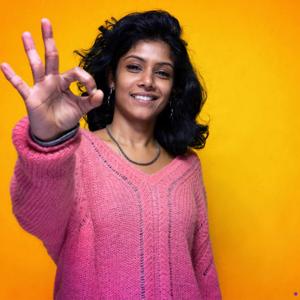


The most important features of a good exercise class are HIIT, repetition and the Borg scale. People want to feel challenged by their fitness classes.
Good class format is also important, moving from Warm Up to Cool Down. The format should be consistent and well-structured. The mark of a good instructor is their ability to follow the format and facilitate the participants through it.
I emphasise that achieving a healthy weight and overall well-being requires a broader approach than solely focusing on exercise. While exercise is important, it's one of five key pillars that contribute to holistic health. These pillars include prioritising nutrient-rich foods, managing stress through breathing techniques, obtaining quality sleep, and fostering strong social connections.
Rather than viewing body fat negatively, I highlight its evolutionary purpose, particularly for people of South Asian descent whose genetics have adapted to store fat for survival. This perspective encourages a more accepting view of body fat fluctuations as a natural process.
I suggest that "bhangra" is widely misunderstood and that its conventional spelling carries negative connotations, particularly within Sikh and Islamic faiths.
I explain why I have created an organisation called Pungra, for which the spelling is inspired by the correct pronunciation of the word bhangra.
I critique the common practice of labeling all movement to Punjabi music as "bhangra," proposing instead a distinction between: socializing, performing, and exercising to Punjabi music.
I also express concern over unqualified individuals teaching "bhangra fit" classes, emphasizing the importance of proper fitness instruction and safety precautions.
Comfort, practicality, and safety are the main takeaways when choosing an outfit. Clothing should be close-fitting but comfortable for a full range of movement, and breathable fabrics are recommended as dance fitness is a high-intensity activity.
Participants should avoid loose clothing or overly baggy styles that could be a tripping hazard. Suitable footwear is essential, and trainers are strongly advised to prevent slipping. While some traditional dance forms are performed barefoot, the importance of trainers in a high-intensity dance fitness setting for safety and injury prevention.
Don't use specialist footwear like dance or jazz shoes, as these are designed to allow for controlled slipping.
John J Ratey in his book Spark highlight the crucial link between physical activity and brain health. They contend that regular exercise is not merely advantageous for physical fitness, but vital for maintaining a healthy and high-functioning brain. This is attributed to exercise's ability to enhance the brain's "infrastructure" by strengthening existing neural connections and promoting the creation of new ones. When a person engages in physical activity, neurotransmitters like dopamine and serotonin, which are crucial for learning and mood regulation, are released in greater quantities.
There are three types of dance: carefree, performing, and fitness. Unlike carefree dancing, which is often spontaneous and informal, or performance dance, which is intended for an audience, dance fitness prioritises physical and mental health benefits.
Dance fitness, as outlined in the sources, offers a wide range of advantages. These include improvements to cardiovascular health, muscular strength and endurance, flexibility, balance, and coordination. Furthermore, it can contribute to weight management, stronger bones, and a reduced risk of osteoporosis. Beyond the physical, dance fitness also enhances mental functioning, boosts self-esteem and confidence, and can even improve social skills.
The most important fitness metric to track is VO2 Max, not calories burned.
While many believe burning calories is key, this metric can be misleading, as it leads to the false equivalence of "burning" calories consumed from unhealthy foods.
Calories burned during exercise are surprisingly low, and the body becomes more efficient over time, further reducing the number burned. Additionally, calorie quality matters; avocados and nuts, though high in calories, don't contribute to body fat as much as junk food does.
VO2 Max, or the amount of oxygen in our blood, is a better indicator of fitness. Higher VO2 Max correlates with improved health markers, including reduced body fat. To improve VO2 Max, engage in high-intensity interval training, including dance-based exercises like "High-intensity interval dancing".
It's difficult to choose the right exercise type for us. With so many different types of exercise available, it can be hard to differentiate between those that are beneficial, mediocre, or potentially harmful.
My mission is to normalise the use of Punjabi music for exercise. I believe that Punjabi music, which is more than just "bhangra", can be used to create engaging and effective dance fitness classes.
I noticed a rise in the popularity of Zumba in the late 2000s and felt there is an opportunity to use Punjabi music in a similar way.
At the same time I noticed a trend of people using Punjabi music for fitness without understanding its cultural context, often mislabeling it as "Indian", "Bollywood", or even "belly dancing".
To address this, I started Pungra, an organization dedicated to educating people about using Punjabi music for fitness in a respectful and authentic way.
The aim is to create certified fitness programs that meet industry standards while celebrating Punjabi music and culture.
The certificates are the easy part. It's important to not lose sight of the need to educate potential participants about the difference between performing and exercising to Punjabi music, meanwhile encouraging them to overcome their inhibitions and embrace this form of fitness.
"Dance” is better understood as a verb than a noun, as this broader understanding allows for a greater appreciation of the many different motivations and ways of dancing. To illustrate this point, the author uses the example of “bhangra”, a term that they argue should not be limited to a singular definition or style.
Using a Venn diagram, the author then outlines three main motivations for dancing: carefree, performing, and fitness. While these categories are not mutually exclusive, the text stresses that the intention behind the dancing should be prioritised. For example, while someone dancing at a club might get some exercise, their main focus is likely social enjoyment. The text concludes by highlighting the benefits of each type of dance and encourages readers to reflect on their own motivations and preferred styles .
From the publisher's feed
18 Listeners
25 Listeners
13 Listeners

0 Listeners
3 Listeners
6 Listeners
1 Listeners

2 Listeners

5 Listeners
3 Listeners
31 Listeners