
Sign up to save your podcasts
Or

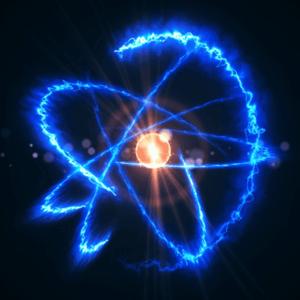

How did a "hand-held" electrical circuit prove the world’s most bizarre physics rules weren't just for atoms? This episode dives into the legendary 1980s Berkeley experiments that won John Clarke, Michel Devoret, and John Martinis the 2025 Nobel Prize in Physics.
Explore the journey from the freezing depths of a dilution refrigerator to the birth of the "artificial atom." We discuss how these pioneers moved the line between the quantum and classical worlds, proving that macroscopic objects can "tunnel" through barriers and exist in multiple states at once. It’s the origin story of the superconducting qubits used by Google and IBM today—a transition from simply observing the quantum world to building a new one from scratch.
 View all episodes
 By TheTuringApp.Com

4.7
33 ratings
How did a "hand-held" electrical circuit prove the world’s most bizarre physics rules weren't just for atoms? This episode dives into the legendary 1980s Berkeley experiments that won John Clarke, Michel Devoret, and John Martinis the 2025 Nobel Prize in Physics.
Explore the journey from the freezing depths of a dilution refrigerator to the birth of the "artificial atom." We discuss how these pioneers moved the line between the quantum and classical worlds, proving that macroscopic objects can "tunnel" through barriers and exist in multiple states at once. It’s the origin story of the superconducting qubits used by Google and IBM today—a transition from simply observing the quantum world to building a new one from scratch.

43,837 Listeners

27,011 Listeners

5,576 Listeners
321 Listeners

2,547 Listeners
4,167 Listeners
2,367 Listeners
1,662 Listeners

3,245 Listeners
384 Listeners

15,506 Listeners

3,858 Listeners
2,131 Listeners

1,314 Listeners
572 Listeners