
Sign up to save your podcasts
Or

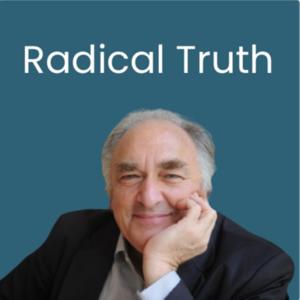


Can a pension fund become an industry leader on net zero — starting from zero? Denise Le Gal did exactly that.
In this TBLI Talk, Robert Rubinstein sits down with Denise Le Gal, founding Chair of Brunel Pension Partnership, one of the UK's largest and most progressive LGPS pools, managing assets on behalf of over £30 billion across 10 likeminded public pension funds. Denise helped sign Brunel into existence and spent eight years ensuring that responsible investment — not as a checkbox but as a core conviction — sat at the heart of everything it did. Her radical truth: pension funds that ignore environmental, social, and governance risk are not protecting their beneficiaries. They are gambling with their futures.
In this episode:
The key insight: Responsible investment is not about tree-hugging. It is about recognising that climate, social, and governance risks are financial risks — and that pension funds which fail to integrate them are failing their beneficiaries, full stop.
⏱️ Episode Guide:
👤 About Denise Le GalDenise Le Gal cut her teeth in the Local Government Pension Scheme world when she became chair of the Surrey Pension Fund Committee in 2009, working for eight years alongside LGPS leaders with a shared aim of improving governance across the scheme. Local Government Chronicle She was among those to sign Brunel Pension Partnership into existence and served two full terms as founding Chair, placing responsible investment at the core of Brunel's priorities from day one — despite early scepticism from some quarters. Brunelpensionpartnership She also served as Chair of the JP Morgan Chase UK Retirement Plan and as Co-Chair of the Local Authority Pension Fund Forum. Esginvestor
For anyone working in institutional investment, pension governance, ESG, or sustainable finance — this episode is essential listening.
ABOUT TBLI RADICAL TRUTHReal experience. Real results. No greenwashing. TBLI Group is the world's leading ESG and impact investing network — educating, advising, and connecting investors for 25 years.🌐 tbligroup.com
#PensionFunds #ResponsibleInvesting #DeniseLegal #BrunelPensionPartnership #ESG #ImpactInvesting #TBLI #TBLITalk #LGPS #NetZero #FiduciaryDuty #ClimateRisk #SustainableFinance #Stewardship #InstitutionalInvesting
©MYSTERY SAX Kevin MacLeod Intro music
What does it take to build a conscience into the financial system — and then do it all over again in China?
In this TBLI Talk, Robert Rubinstein sits down with Wayne Silby, one of the most consequential pioneers in the history of impact investing. In 1982, when colleagues told him he was "on drugs," Wayne co-founded the Calvert Social Investment Fund — the United States' first socially responsible mutual fund. The industry he helped create now manages trillions. He is still at the frontier, now working to build the impact ecosystem in China.
His radical truth: a core vision combined with grassroots effort can still change the world — but only if you are willing to be the only yes vote in the room.
In this episode:
The key insight: At 27, Wayne realised his tombstone would read that he earned 0.20% more for investors than others. That didn't sit well with him. So he built something different — a fund that represented the values of a generation. That instinct to ask "what is this money actually for?" is still the most radical question in finance.
⏱️ Episode Guide:
👤 About Wayne SilbyWayne Silby is the co-founder of Calvert Investments, one of the first and largest socially responsible mutual funds in the United States, and is considered one of the early pioneers of impact investing. In 1982, inspired by a Buddhist conference on "Right Livelihood," he co-founded the Calvert Social Investment Fund — the first socially responsible mutual fund — which was also the first fund to divest from apartheid South Africa and the first to file shareholder resolutions on gender and racial parity in boardrooms. Wikipedia He is also co-founder of Calvert Foundation, a $300 million nonprofit lender, and founding chair of ImpactAssets. ImpactAssets He holds a BS in Economics from the Wharton School and a JD from Georgetown University Law Center. Wikipedia
For anyone serious about the history, present, and future of impact investing — this episode is essential listening.
ABOUT TBLI RADICAL TRUTHReal experience. Real results. No greenwashing. TBLI Group is the world's leading ESG and impact investing network — educating, advising, and connecting investors for 25 years.🌐 tbligroup.com
#WayneSilby #CalvertInvestments #ImpactInvesting #SRI #ESG #ImpactAssets #SocialVentureNetwork #TBLI #TBLITalk #ResponsibleInvesting #SustainableFinance #ChinaImpact #SyntaoChina #ValuesBasedInvesting #PioneerInvestor
In this TBLI Talk, Robert Rubinstein sits down with Professor Tim Jackson, one of the world's foremost ecological economists and the author of the landmark book Prosperity Without Growth — translated into 17 languages and named a Financial Times book of the year — and his follow-up Post Growth: Life After Capitalism. For three decades, Tim has asked the question that terrifies politicians and economists alike: what does prosperity actually mean on a finite planet? His radical truth: the relentless pursuit of more has delivered climate catastrophe, social inequality, and financial instability — and capitalism as we know it is not the solution. It is the problem.
In this episode:
The key insight: The idea of a non-growing economy is an anathema to an economist. The idea of a continually growing economy is an anathema to an ecologist. Tim Jackson sits at that tension — and has spent thirty years showing that building a post-growth economy is not utopia. It is the most urgent task of our times.
⏱️ Episode Guide:
👤 About Prof. Tim JacksonTim Jackson is a British ecological economist and Professor of Sustainable Development at the University of Surrey, and Director of the Centre for the Understanding of Sustainable Prosperity (CUSP). Wikipedia His ground-breaking book Prosperity without Growth (2009/2017) was named a Financial Times book of the year in 2010 and UnHerd's economics book of the decade in 2019, and has been translated into 17 languages. He served as Economics Commissioner for the UK Sustainable Development Commission from 2004 to 2011. University of Surrey Tim holds degrees in mathematics from Cambridge, philosophy, and physics, and was awarded the Hillary Laureate for exceptional international leadership in sustainability in 2016. In addition to his academic work, he is an award-winning dramatist with radio credits for the BBC. University of Surrey
For anyone questioning the purpose of growth, the future of capitalism, and what genuine prosperity looks like — this episode is essential listening.
ABOUT TBLI RADICAL TRUTHReal experience. Real results. No greenwashing. TBLI Group is the world's leading ESG and impact investing network — educating, advising, and connecting investors for 25 years.🌐 tbligroup.com
#PostGrowth #ProsperityWithoutGrowth #TimJackson #Degrowth #ESG #ImpactInvesting #TBLI #TBLITalk #EcologicalEconomics #SystemChange #BeyondCapitalism #SustainableProsperity #ClimateEconomics #Wellbeing #FinitePlanet
In this TBLI Talk, Robert Rubinstein sits down with Barney Swan, founder of ClimateForce and one of the most hands-on regenerative practitioners working in nature today. Raised off-grid and shaped by a lifetime of polar expeditions, Barney has moved from surviving on NASA-designed solar ice melters and biofuel in Antarctica to leading the restoration of over 450 acres of the Daintree Rainforest in Far North Queensland — a 180-million-year-old ecosystem that predates the Amazon by 10 million years. His radical truth: environmental action isn't only something rich people can afford. Sustainability must be open-source, accessible, and local — or it won't work at all.
In this episode:
The key insight: The activist is not the man who says the river is dirty. The activist is the man who cleans up the river. Barney Swan is in the river.
⏱️ Episode Guide:
👤 About Barney SwanBarney Swan is a sustainability advocate and the founder of the Australian non-profit ClimateForce, leading off-grid research and development projects around biodiversity, innovation, and agriculture solutions. In 2017, he skied 1,000 kilometres over 65 days to the South Pole, surviving on NASA-designed solar ice melters, lithium batteries, and biofuel made from waste — a carbon-positive journey that marked the launch of the ClimateForce challenge. Thefounderspirit He is now based in Far North Queensland, pioneering a venture to restore 527 acres of the Daintree, delivering organically managed geo-tagged trees tracked in an interactive biodiversity dashboard. LinkedIn ClimateForce has partnered with NTT DATA to leverage AI, data analysis, and predictive analytics to assess organic reforestation techniques and build models that regenerate ecosystems, protect biodiversity, and foster resilient local economies. NTT DATA Barney is the son of polar explorer Robert Swan, the first person to walk to both poles.
For anyone working in nature-based solutions, regenerative investment, or climate action — this episode is essential listening.
ABOUT TBLI RADICAL TRUTHReal experience. Real results. No greenwashing. TBLI Group is the world's leading ESG and impact investing network — educating, advising, and connecting investors for 25 years.🌐 tbligroup.com
#RegenerativeNature #ClimateForce #BarneySwan #Daintree #NatureBasedSolutions #Biodiversity #ImpactInvesting #ESG #TBLI #TBLITalk #Reforestation #CarbonDrawdown #ClimateTech #SouthPole #Australia
This is one of the last interviews Hazel Henderson gave before her passing in 2022. She will be deeply missed.
Is ESG broken — and what would a truly science-based approach to investing look like?
In this special TBLI Talk, Robert Rubinstein sits down with the legendary Hazel Henderson — futurist, evolutionary economist, author of nine books, and one of the most original and courageous voices in the history of sustainable finance. Long before ESG was an acronym and long before sustainable investing was a marketing category, Hazel was building the intellectual and institutional foundations for a world where capital served life. Her radical truth: ESG, as currently practised, is not enough. What we need is a science-based approach to investing that reflects the true wealth of people and planet — not just what GDP can measure.
In this episode:
The key insight: The economy is a wholly owned subsidiary of the ecology. Until finance recognises that, all the ESG frameworks in the world will not be enough. Hazel Henderson spent fifty years trying to teach us this. The question is whether we are finally ready to learn.
⏱️ Episode Guide:
👤 About Hazel Henderson (1933–2022)Hazel Henderson was the founder of Ethical Markets Media and creator of the Green Transition Scoreboard, which tracked $10 trillion in investments in the green economy, and of Ethical Biomimicry Finance, a regenerative investment model. H Hazel Hendersoner articles appeared in over 250 journals including the Harvard Business Review, New York Times, and Christian Science Monitor, and her editorials were syndicated in 27 languages across 200 newspapers worldwide. S Ethicalmarketshe received the Reuters Award for Outstanding Contribution to Development of ESG & Impact Investing at TBLI Europe, and was honoured multiple times as one of the Top 100 Thought Leaders in Trustworthy Business Behavior by Trust Across America. S Ethicalmarketshe served as a science policy advisor to the US Office of Technology Assessment, the National Science Foundation, and the National Academy of Engineering, and received numerous honorary degrees. W Asbnetworkired magazine nominated her as one of the 50 people most likely to change the world. She was a giant — and a friend to TBLI.
For anyone who cares about the future of ESG, sustainable finance, and what it means to invest for a world worth living in — this episode is essential and essential listening.
ABOUT TBLI RADICAL TRUTHReal experience. Real results. No greenwashing. TBLI Group is the world's leading ESG and impact investing network — educating, advising, and connecting investors for 25 years.🌐 tbligroup.com
#HazelHenderson #EthicalMarkets #ESG #ScienceBasedInvesting #ImpactInvesting #TBLI #TBLITalk #SustainableFinance #GreenEconomy #BeyondGDP #BiomimicryFinance #EcologicalEconomics #ResponsibleInvesting #Futurist #LegacyInterview
Welcome to the TBLI Radical Truth Podcast, where we feature pioneers redefining the purpose of capital. For 25 years, TBLI Group has been the world's leading ESG and impact investing network.
Why Radical Truth is different: most finance podcasts protect the industry. Radical Truth interrogates it. Unfiltered conversations with the founders, fund managers, and system-changers actually moving capital toward a liveable future — and calling out the impact-washing that isn't. No sponsors. No pretending.
What does Beijing actually want, and what happens to the rest of us when the center of gravity moves east? International journalist Isabel Hilton joins Robert Rubinstein to unpack China's ambition to become the world's largest economy.
Real research. No greenwashing.
Germany has created a €24 billion sovereign wealth fund to decommission its nuclear power plants. What happens when that capital is deployed for the green industrial revolution?
In this TBLI Talk, Robert Rubinstein sits down with Jochen Wermuth, one of Europe's most consequential climate impact investors. As founder and CIO of Wermuth Asset Management and investment committee member of KENFO — Germany's Fund for the Financing of Nuclear Waste Management — Jochen sits at the intersection of sovereign capital, climate finance, and the green industrial revolution. His radical truth: the transition from fossil fuels to a circular, renewable economy is not just a moral imperative. It is the most significant investment opportunity of our lifetimes.
In this episode:
The key insight: The green industrial revolution is not a niche. It is a mega-trend at the convergence of multiple reinforcing transitions — in energy, mobility, agriculture, technology, and finance. Investors who understand this are not sacrificing returns. They are capturing the most powerful structural shift in the global economy.
⏱️ Episode Guide:
👤 About Jochen WermuthJochen Wermuth is the founder and Chief Investment Officer of Wermuth Asset Management, a German family office and investment advisory firm committed to sustainable investments, and served as an investment advisory committee member of KENFO, Germany's Nuclear Waste Management Fund, from 2017 to 2024. H Wikipediae studied mathematics and economics at Brown University and pursued doctoral studies in economics at Balliol College, Oxford, and is fluent in German, English, French, and Russian. H Fsicone had a hand in building DivestInvest, with over €30 trillion committed from asset owners to divest from fossil fuels and invest in climate solutions, and has served as a member of the Global Impact Investing Network, Toniic's 100% Impact network, and the Institutional Investor Group on Climate Change.
BrownFor anyone working in institutional investment, climate finance, or the future of sovereign capital — this episode is essential listening.
ABOUT TBLI RADICAL TRUTHReal experience. Real results. No greenwashing. TBLI Group is the world's leading ESG and impact investing network — educating, advising, and connecting investors for 25 years.🌐 tbligroup.com
#JochenWermuth #KENFO #ClimateFinance #GreenIndustrialRevolution #ImpactInvesting #ESG #TBLI #TBLITalk #DivestInvest #SovereignWealthFund #ClimateEndowment #GreenGrowth #SustainableInvesting #NuclearDecommissioning #NetZero
In this TBLI Talk, Robert Rubinstein sits down with Armin Steuernagel, serial entrepreneur, co-founder of the Purpose Foundation, and one of the most original thinkers in the global conversation about corporate governance and ownership. Armin has spent his career asking the question that conventional capitalism avoids: who has the real power in companies — and should it be bought and sold like any other commodity? His radical truth: steward ownership is not a niche legal structure. It is a fundamental rethink of how companies relate to capital, mission, and the long term.
In this episode:
The key insight: In steward-owned companies, control cannot be bought. Voting rights stay with people who are actively involved and values-aligned. Profits are a means to the mission — not an end in themselves. This is not anti-capitalist. It is capitalism redesigned so that it actually works for the long term.
⏱️ Episode Guide:
👤 About Armin SteuernagelA serial entrepreneur and author, Armin founded his first business at the age of 16. He is co-founder and managing partner of Purpose Foundation and Purpose Capital, working to help companies stay mission-driven by transforming their ownership structure into steward-owned companies. TED He is a member of the Club of Rome, co-founder of the international NGO Democracy International, and co-founder of the think tank Neopolis Network. TED He studied Philosophy, Politics and Economics at the University of Witten/Herdecke and Oxford, and has also studied at Columbia University in New York. Platform As a pioneer of steward ownership, he has assisted over 30 companies in structuring and financing this alternative ownership model. Themintmagazine
For anyone working in corporate governance, impact investing, entrepreneurship, or the future of capitalism — this episode is essential listening.
ABOUT TBLI RADICAL TRUTHReal experience. Real results. No greenwashing. TBLI Group is the world's leading ESG and impact investing network — educating, advising, and connecting investors for 25 years.🌐 tbligroup.com
#StewardOwnership #ArminSteuernagel #PurposeFoundation #CorporateGovernance #ImpactInvesting #ESG #TBLI #TBLITalk #PurposeEconomy #MissionDriven #AlternativeOwnership #ResponsibleBusiness #LongTermCapital #PurposeCapital #SystemsChange
Oceans are dying. Pollution, climate change, and overfishing are creating dead zones, destroying coral reefs, and unraveling the marine ecosystems on which all life on Earth depends. Can this still be turned around?
In this TBLI Talk, Robert Rubinstein sits down with Patricia Ricard, President of the Paul Ricard Oceanographic Institute and Vice-President and co-founder of the Ocean & Climate Platform — a consortium of 120 organisations working at the intersection of ocean science, climate policy, and investment. Patricia has spent over 30 years building bridges between scientists, policymakers, and the private sector on one of the most urgent and underinvested challenges of our time: the health of the global ocean. Her radical truth: a healthy ocean is not just an environmental priority. It is the planet's second chance.
In this episode:
The key insight: The ocean regulates our climate, produces half our oxygen, and feeds billions of people. Yet it remains one of the most underfunded areas of environmental action. Patricia Ricard has spent her career changing that — one policy, one partnership, one scientific breakthrough at a time.
⏱️ Episode Guide:
👤 About Patricia RicardPatricia Ricard has been actively engaged in environmental protection for over 30 years and is President of the Paul Ricard Oceanographic Institute. Under her presidency, she has made the balance of ocean, climate, and biodiversity a priority, devoting her energy to raising awareness among policymakers and the public. Iucncongress2025 She is Vice-President and co-founder of the Ocean and Climate Platform, a consortium of 120 organisations acting for ocean protection and science-based policy, building bridges between science, academia, policymakers, and the private sector. Iucncongress2025 She has been Chair of the Paul Ricard Oceanographic Institute since 2005 and sat on its Board since 1986. From 2010 to 2015 she was a member of the French Economic, Social and Environmental Council. Pernod Ricard She is a granddaughter of Paul Ricard, who founded the Institute in 1966 following one of the first cases of industrial pollution in the Mediterranean. Patricia was named by President Macron as leader of the French civil society delegation to key international ocean summits, and holds the Officier rank in the French Ordre du Mérite Maritime.
For anyone working in ocean finance, nature-based solutions, ESG, or climate policy — this episode is essential listening.
ABOUT TBLI RADICAL TRUTHReal experience. Real results. No greenwashing. TBLI Group is the world's leading ESG and impact investing network — educating, advising, and connecting investors for 25 years.🌐 tbligroup.com
#OceanHealth #PatriciaRicard #PaulRicardInstitute #OceanClimate #MarineConservation #ImpactInvesting #ESG #TBLI #TBLITalk #NatureBasedSolutions #BlueEconomy #CoralReefs #Biodiversity #OceanFinance
In this TBLI Talk, Robert Rubinstein sits down with Leonie Schreve, Managing Director and Global Head of Sustainable Finance at ING Group — one of the world's leading banks in green and sustainability-linked finance. ING issued its first green bond in 2015, pioneered the world's first sustainability-linked loan in 2017, and has since become a benchmark for how major financial institutions can integrate sustainability into core banking strategy. Leonie's radical truth: we cannot afford to take small steps. The credibility of the entire sustainable finance market depends on ambition, integrity, and refusing to settle for greenwash dressed up as progress.
In this episode:
The key insight: Sustainable finance is not a niche product line. It is the coming together of sustainability, corporate strategy, and funding — and the companies that understand this are better positioned for the transition to a net-zero economy. But the market's credibility depends on everyone raising their standards together. ING cannot afford to take small steps. Neither can anyone else.
⏱️ Episode Guide:
👤 About Leonie SchreveLeonie Schreve is Global Head of Sustainable Finance at ING, leading the bank's commercial sustainability efforts across its wholesale banking client base through innovative green finance structures including green bonds, green lending, sustainability-linked products, equity, and sustainable advisory. Efx She has represented ING on the board of the United Nations Environment Programme Finance Initiative (UNEP FI) Banking Commission and served as Chair of the Equator Principles Steering Committee. Efx ING issued its first green bond in 2015 and has since funded over €27 billion to clients working to address environmental challenges, with a goal to double its climate finance portfolio. edie ING was the first bank to link financing to a client's sustainability performance, pioneering the sustainability-linked loan market now worth hundreds of billions globally. ING
For anyone working in green finance, sustainable infrastructure investment, ESG banking, or the future of capital markets — this episode is essential listening.
ABOUT TBLI RADICAL TRUTHReal experience. Real results. No greenwashing. TBLI Group is the world's leading ESG and impact investing network — educating, advising, and connecting investors for 25 years.🌐 tbligroup.com
#GreenBonds #LeonieSchreve #ING #SustainableFinance #ESG #ImpactInvesting #TBLI #TBLITalk #SustainabilityLinkedLoans #GreenInfrastructure #ClimateFinance #NetZero #GreenBondMarket #ResponsibleBanking #ParisAgreement
From the publisher's feed