Raise the Line

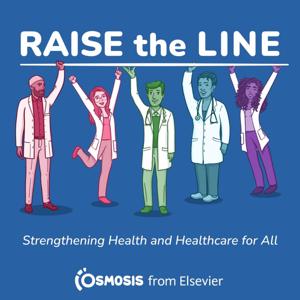
Raise the Line

Download on the App Store

Raise the Line episodes

  • One Key to Behavior Change? Set the Bar Low and Keep It There: Dr. BJ Fogg, Stanford University Researcher and Author of Tiny Habits

    You might not think flossing one tooth a day would be worthy of celebration, but today’s Raise the Line guest says that’s actually the best way to become someone who regularly flosses all of their teeth, and he has decades of research to back it up. Dr. BJ Fogg, a Stanford University researcher perhaps best known for his bestselling book Tiny Habits, says his approach is based in part on the recognition that motivation fluctuates, so setting big goals can set people up for failure. “What you need to do in the tiny habits method is set the bar low, keep it low, overachieve whenever you feel like it, but don't raise the bar.” Creating a positive emotion around accomplishing tiny goals helps wire the brain to make the behavior automatic, which in turn helps create a new identity. “Those identity shifts then lead to a cascade of other changes in your life.” Check out this truly fascinating and fun discussion with host Shiv Gaglani about how to apply these principles in your own life and guide others to do so as well.  Plus, you’ll hear how the “tiny habits” model has impacted Shiv personally and been integrated into what Osmosis offers its learners. Maybe you should make listening to this one podcast your tiny goal for today. If you do, don’t forget to celebrate yourself when you get to the end!  

    Mentioned in this episode: https://www.bjfogg.com

    If you like this podcast, please share it on your social channels. You can also subscribe to the series and check out all of our episodes at www.osmosis.org/podcast

    35 min
  • Rediscovering Healthy Breathing – James Nestor, Author of Breath: The New Science of a Lost Art

    When people hear about James Nestor’s bestselling book on breathing, he says the first question they ask is “Why the heck would I need to relearn how to breathe? I'm breathing all day long.” But as the award-winning science journalist details in Breath: The New Science of a Lost Art, proper breathing is quite uncommon, which causes major health problems given its essential value to the body. Nestor laments that everyday breathing is rarely a concern of most pulmonologists and other doctors, who are generally focused on acute breathing issues. “But prevention is always so much better than treatment,” Nestor tells host Shiv Gaglani. “For the same reasons you would tell your patients to eat a balanced diet, you should bring awareness of their breathing.” Tune in to hear about how healthy breathing can help your physical endurance, sleep quality and mental health, and some easy tricks that can help you establish better breathing practices. 

    Mentioned in this episode: https://www.mrjamesnestor.com/order-now

    If you like this podcast, please share it on your social channels. You can also subscribe to the series and check out all of our episodes at www.osmosis.org/podcast

    26 min
  • Supervised Home COVID Tests - Dr. Michael Mina of eMed
    “We don't need physicians physically in the middle of every step that we take,” argues today's guest, former Buddhist monk and Harvard professor Dr. Michael Mina. “One of my goals has been to break down this massive wall that often exists, where physicians are the gatekeepers of people knowing about themselves in terms of their biology.” In this fascinating discussion with host Shiv Gaglani, hear how a tsunami tore Dr. Mina away from being a monk and led him to fusing together immunology and epidemiology, a skillset that proved especially valuable during the COVID-19 pandemic during which he created a large testing program that served much of the Eastern Seaboard. Tune in to discover how the eMed platform is empowering people to participate in their own healthcare by creating equitable access to actionable testing, and hear where Dr. Mina believes eMed can go from here, including involvement in clinical studies. Plus, hear his perspective on the difference between a career as an MD vs. a PhD, learn why holistic thinking is so important, and get his expert opinion on where the virus is heading. If you like this podcast, please share it on your social channels. You
    can also subscribe to the series and check out all of our episodes at
    www.osmosis.org/podcast
    36 min
  • Pushing Past Perceived Limits - Scott Carney, Journalist and Anthropologist

    Scott Carney trained as an anthropologist, thinking the academic life would facilitate new adventures. He soon found journalism to be a better fit, moved to India, and discovered an organ tracking scandal in a village right next door. His reporting on that helped launch a career fueled by frantic curiosity that frequently centers around habit formation and how the human body integrates with the dizzying world around us, his books The Wedge and What Doesn't Kill Us being prime examples. With a new book on climate change coming out -- and many more books in development -- Carney’s writing testifies to the blurry line between objectivity and subjectivity in journalism and medicine alike. Tune in to hear about the time he partook in a clinical trial for erectile dysfunction, the thing that new research into psychedelics misses, and how Carney set off to debunk Wim Hof’s methods, only to find the real story was far more complicated.


    Mentioned in this episode:

    https://www.scottcarney.com/the-wedge

    https://www.scottcarney.com/what-doesnt-kill-us

    https://www.foxtopus.ink

    If you like this podcast, please share it on your social channels. You can also subscribe to the series and check out all of our episodes at www.osmosis.org/podcast

    31 min
  • Preparing Medical Students to “Be the Difference”- Dr. William Cullinan, Dean of the College of Health Sciences at Marquette University
    The critical and analytical thinking required by research become habits of mind that change your approach to life, explains Dr. Bill Cullinan, dean of the College of Health Sciences at Marquette University. They force you to challenge your own biases, and ask for evidence rather than taking things for granted. That’s one reason Cullinan is pleased to offer students meaningful roles at Marquette's Integrative Neuroscience Research Center, which brings specialists from different domains into collaboration. It’s also why Marquette faculty push students beyond memorization to get them to think critically about clinical scenarios very early in their undergraduate careers. In this instructive episode of Raise the Line with host Shiv Gaglani, you’ll also learn how Marquette helps students understand inequities in healthcare delivery to prepare them for making a positive impact as physicians. The lessons must resonate, because about 40% of graduates choose positions or jobs serving underserved populations. You’ll also hear Dr. Cullinan’s advice for students, and be sure to stay tuned for a fascinating explanation of ganglia that highlights the neurological miracle of everyday actions. If you like this podcast, please share it on your social channels. You
    can also subscribe to the series and check out all of our episodes at
    www.osmosis.org/podcast
    28 min
  • A Medical Device Pioneer Discusses Remote Possibilities – Dr. David Albert, Founder of AliveCor
    A new generation of medical technology has produced endless new rivers of biometric data, and attuned regular people to their own health in new and complicated ways. On today’s episode of Raise the Line, we turn to a pioneer in connected medical devices, Dr. David Albert, to understand more about these influential trends. He founded AliveCor, whose smartphone-enabled heart monitors anticipated the remote monitoring technology that helped the medical system run during the pandemic. Dr. Albert believes the technology -- and the population-scale data it produces -- opens up new possibilities for preventative medicine and, as he tells host Shiv Gaglani, allows patients to be increasingly fluent in the dynamics of their personal health and empowered to take control of their medical future. Check out this lively discussion to hear about a “mobile-first” medical future, Dr. Albert’s early forays into inventing medical technology, and how college wrestling prepared him for healthy aging. If you like this podcast, please share it on your social channels. You
    can also subscribe to the series and check out all of our episodes at
    www.osmosis.org/podcast
    31 min
  • Why Is a Hospital Offering Tutoring and Job Programs? - Dr. Omar Lateef, President and CEO of Rush University Medical Center
    “In life, I feel like you always know what the right thing to do is, it's just hard,” says Dr. Omar Lateef, who runs Rush University Medical Center in the Near West Side of Chicago. Lateef has embraced the challenging path necessitated by Rush’s community-based mission which involves providing services like tutoring, food subsidies and jobs programs in addition to acute care. In this episode of Raise the Line, you’ll find out how this mission shaped RUMC’s COVID response which involved overcoming bureaucratic hurdles to take in hundreds of transfers. Learn how Dr. Lateef went from studying theology, to specializing in pulmonary and critical care medicine, to his current role as a hospital leader. Plus, learn about the importance of having reliable, open-source data on healthcare quality, and hear Dr. Lateef's advice on both addressing the public health crisis of racism, and keeping up motivation when the adrenaline and sense of community support present earlier in the pandemic has diminished. If you like this podcast, please share it on your social channels. You
    can also subscribe to the series and check out all of our episodes at
    www.osmosis.org/podcast
    28 min
  • Making Healthcare Data Meaningful for Learners, Patients and Providers: Josh Schoeller - President of Global Clinical Solutions at Elsevier and CEO of Healthcare for LexisNexis Risk Solutions
    Despite being a self-described “data geek” Josh Schoeller is well aware of the challenges in making sense of the ever-expanding amount of healthcare-related data. As he puts it, “More data doesn't necessarily mean more knowledge.” As president of Global Clinical Solutions at Elsevier and CEO of Healthcare for LexisNexis Risk Solutions, Schoeller is in a unique position to see how all of this data can be leveraged in better ways to support learners, practitioners, patients and the healthcare system at large. “On the LexisNexis side, we have a mission to create healthier communities and on the Elsevier side, it's to improve every patient outcome. So, they're very much aligned and are both mission-driven organizations built around people that are very committed to using data and analytics and content to help improve healthcare in the U.S. and throughout the world.” Check out this penetrating discussion with host Shiv Gaglani as he draws out valuable insights from Schoeller on the current and future role of data in clinical decision-making, patient privacy, health equity, the efficiency of healthcare delivery, and much more. If you like this podcast, please share it on your social channels. You
    can also subscribe to the series and check out all of our episodes at
    www.osmosis.org/podcast
    27 min
  • Virtual Patient Platform Aims to Reduce Misdiagnoses - Dr. Thomas Kelly, Founder and CEO, Oscer
    “Software can keep in its mind a million more things than a doctor can,” explains Dr. Tom Kelly, who started a company in Australia called Oscer that aims to eliminate misdiagnosis. It all started with Dr. Kelly's desire to improve the lives of others, after he saw first-hand the impact that mistakes in diagnosis were having in rural Australia. In this fascinating talk with host Michael Carrese, learn more about Dr. Kelly's path and the important work of his company, whose education platform is now used to teach clinical reasoning by more than 150 universities across 35 countries and counting. Listen in for a glimpse of the technology behind the scenes at Oscer, including their gigantic maps called knowledge graphs, their virtual patients, and their clinical products that Dr. Kelly says will eventually be able to consider all the symptoms a patient has ever reported and hopefully provide “a superhuman level of diagnostic support.” Plus, hear Dr. Kelly's philosophy on what humans are meant to do, and what makes this moment in time especially significant. If you like this podcast, please share it on your social channels. You
    can also subscribe to the series and check out all of our episodes at
    www.osmosis.org/podcast
    30 min
  • Learning is a Contact Sport - Dr. Joshua Courtney, Founder and CEO of TrueLearn
    “We're in the business of empowering students,” explains Dr. Joshua Courtney, who joins host Shiv Gaglani on this episode of Raise the Line. Dr. Courtney's company, TrueLearn, served 60 million practice questions last year, and over 90% of osteopathic medical students use his flagship product COMBANK. If learning is a contact sport, as he likes to say, then Dr. Courtney himself has made possible some serious winning streaks. His initial draw to medicine? His own childhood struggle with leukemia. Tune in to hear Dr. Courtney's fascinating story and find out what makes TrueLearn's data-driven approach to medical exam prep unique. Listen to his take on how COVID has revealed the fragmentation of knowledge as a mass vulnerability, and find out why he thinks physicians should better understand the brain disease of addiction. Plus, hear his advice to students to seize the moment and not go it alone. If you like this podcast, please share it on your social channels. You
    can also subscribe to the series and check out all of our episodes at
    www.osmosis.org/podcast
    23 min

About Raise the Line

From the publisher's feed

Join host Lindsey Smith and other Elsevier team members for a global conversation about improving health and healthcare with prominent figures in education and healthcare innovation as well as senior…

More shows like Raise the Line

Freakonomics Radio by Freakonomics Radio + Stitcher

Freakonomics Radio

32,046 Listeners

Planet Money by NPR

Planet Money

30,701 Listeners

The Daily by The New York Times

The Daily

111,799 Listeners

Hard Fork by The New York Times

Hard Fork

5,557 Listeners

The Megyn Kelly Show by SiriusXM

The Megyn Kelly Show

39,387 Listeners

Huberman Lab by Scicomm Media

Huberman Lab

29,204 Listeners

The Ezra Klein Show by New York Times Opinion

The Ezra Klein Show

15,882 Listeners

The Mel Robbins Podcast by Mel Robbins

The Mel Robbins Podcast

19,254 Listeners

Good Hang with Amy Poehler by The Ringer

Good Hang with Amy Poehler

12,486 Listeners