
Sign up to save your podcasts
Or

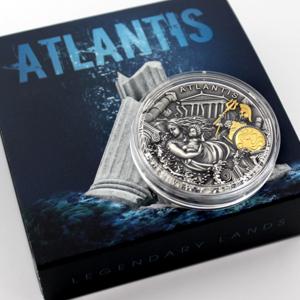


This week, I wanted to expand on Pythagoras and how his work influenced Plato. In order to understand what Plato meant we have to dig deep into his psychology. Plato was well influenced by Pythagoras well into his earlier works, way before he wrote about Atlantis. Both Plato and Pythagorus had a vision of a perfect society.
Now, let's take a moment to assign numbers to those notes. We do this every day with computers. Can we say “auto tune”? If a sound could be mathematically orchestrated, what sound would a computer make? Could we mathematically calculate a human? Could I mathematically predict my future child based on gene expression and sound alone? Could a god be a number?
All of these questions and more were pondered 3000 years ago. Pythagorus and Plato spent most of their professional years pondering those questions. It was Pythagoras who popularized the idea of a human having a soul and reincarnation. Could our next lives be mathematically deduced?
https://science.jrank.org/pages/9578/Harmony-Plato-s-Harmonic-Cosmology.html
https://urbeginnerwitch.medium.com/pythagoras-and-numerology-2ccf6d508a54
A youtube video on numerology started playing and I almost switched it off. I thought about how ridiculous it was but I thought it would be amusing to listen. Well, the narrator said something of interest to me about the numbers 1-9 and how Pythagorus also used this same numbering system.
Pythagoras influenced other ancient Greek authors such as Socrates and Plato. He believed that everything has sound and therefore everything is a number. We can't understand Pythagoras until we understand the myth that inspired him... Orpheus.
https://en.wikipedia.org/wiki/Oeagrus
https://en.wikipedia.org/wiki/Calliope
https://en.wikipedia.org/wiki/Aristaeus
https://en.wikipedia.org/wiki/Taenarus_(mythology)
https://en.wikipedia.org/wiki/Eurydice
https://www.hellasholiday.com/greece-travel-blog/cape-taenaron-mythical-gate-to-hade
I had to make an episode about Edgar Cayce. So many people point to him as the leading expert in Atlantis. Just so that you all are aware, I started working on this episode since episode 30. I have lost interest so many times. I love magic just as much as the next person but Cayce butchered Plato’s work. I am going to disclaim that I think Edgar Cayce is silly in so many ways. I am extremely biased against him. Still, I tried to be as neutral as possible.
As usual, my first section gives a bit of background to Cayce. The next section will be an overview of his accuracy and what Cayce’s genre of predictions were. The official Cayce website gives the number of preserved readings as 14,306.6 In 1971, with processing of the records of the Edgar Cayce readings about 98% complete, they numbered 14,246.
Cayce’s predictions also rely completely on the ice age Atlantis theory. I also want to point out that Cayce’s predictions on Atlantis was written about 40 years after Donnelly. As usual, my sources are linked in my episode description.
https://en.wikipedia.org/wiki/Edgar_Cayce
Stephan A Schwartz - a scholar on edgar cayce
http://www.michaelmandeville.com/phoenix/cayce/cayceverification.htm
https://psi-encyclopedia.spr.ac.uk/articles/edgar-cayce
Recently, we have a new TV series that branches off of the Lord of the Rings called the ring of power. What would you do if you had a ring that could turn you invisible?
Plato’s book “The Republic” ponders just that question with the ring of Gyges. What? Did Tolkien just rip off Plato or was Plato psychic and foresaw Tolkien and wrote about it 2000 years prior? Did Plato know about what Herodotus wrote about the ring of Gyges prior to his thought experiment?
I know, I know. I have more questions than answers. I think that is the way it goes with Classical studies. For this episode, I am going to go over some of Plato’s philosophy and where the Critias and Timeous fairs in his works. There is so much that needs to be known before understanding those two screenplays. I doubt that many will ever really know.
https://www.livius.org/sources/content/herodotus/candaules-his-wife-and-gyges/
https://www.plato-philosophy.org/wp-content/uploads/2016/05/gyges-a.pdf
http://classics.mit.edu/Plato/critias.html
http://classics.mit.edu/Plato/timaeus.html
This episode focuses on Plato and his dialogs. He was pushing an agenda and we need to understand his motivations to understand the Critias and Timaeus. My thought started with the precursor to the Olympic games and ended with a very brief overview of Plato’s other dialogues.
I know that I need to go into more detail at another point and I probably will. Just to point out that there are major universities who detail Plato’s works and none really agree with each other. That is the point of philosophy right?
http://classics.mit.edu/Plato/critias.html
http://classics.mit.edu/Plato/timaeus.html
https://en.wikipedia.org/wiki/Republic_(Plato)
https://en.wikipedia.org/wiki/Timaeus_of_Locri
https://en.wikipedia.org/wiki/Hermocrates
https://en.wikipedia.org/wiki/Critias
https://www.faculty.umb.edu/gary_zabel/Courses/Morals%20and%20Law/M+L/Plato/rligious.htm
I am going to tell you about a little obsession the ancient Greeks had about reincarnation and the afterlife. They were very obsessed about a utopia and what it meant to have an ideal society. Especially during Plato’s time. Plato wrote several books about what it meant to be as a perfect utopia. Part of that utopia was the ability to feed yourself with little work and living in an area where the earth provided all necessities for life. It sounds like not much has changed in the last 3000 years.
Elysium was the final resting place of the souls of heroes and virtuous men. The ancients often distinguished two Elysian realms--the islands of the Blessed and the Lethean fields of Haides.
The first of these--also known as the White Island or the Islands of the Blessed--was an afterlife realm reserved for the heroes of myth. It was an island paradise located in the far western stream of the river Okeanos (Oceanus) ruled by the Titan-King Kronos (Cronus) or Rhadamanthys, son of Zeus.
https://greekgodsandgoddesses.net/myths/arcadia/
https://en.wikipedia.org/wiki/Fortunate_Isles
https://en.wikipedia.org/wiki/Agrarianism
https://en.wikipedia.org/wiki/Eleusinian_Mysteries
https://www.youtube.com/watch?v=wJCUz3Sb6Z
This episode is going to focus on the Richat Structure theory. It was made popular by Jimmy from the youtube channel Bright insight, whom I linked in the episode description. Jimmy cites a show from the Gaia channel who also places Atlantis as the Richat structure. While my own eyes light up when I found this theory I eventually was able to break it down and think about it logically with what I already knew.
For those who may hold on to your beliefs, I want you to keep them. I am not trying to disprove your deeply held beliefs merely I am following the science and forming my opinion on quantifiable facts. Emotionally based decisions are the hardest decisions to change without an equally powerful emotion. Just for clarification, I wanted the Richat structure to be Atlantis. I tried to make the rest of what I knew about it fit.
Sadly, when I start taking away from other known descriptions to fit my own narrative, I am not doing science a justice, instead I am sending people on wild goose chases and potentially causing more harm than good. I am taking what I know from Plato and other ancient writers to try to find that needle in a haystack.
I know that most scholars write off Atlantis as a moral story from the imagination of Plato but I truly want to believe in it. I want Atlantis to be true just as much as I want to own my own dragon eggs and ride my very own dragon to work. However, I can also follow the science and accept that Dragons may be extinct and probably snakes and not the really cool fire breathing Game of Thrones dragons.
https://geologyscience.com/gallery/eye-of-the-sahara-or-richat-structure/
https://en.wikipedia.org/wiki/Atlas_Mountains
https://www.youtube.com/c/BrightInsight
https://earth.nullschool.net/#current/wind/surface/level/orthographic=-3.90,24.25,1192
https://www.volcanodiscovery.com/region/117605/earthquakes/ouadane/largest.html
https://imgs.search.brave.com/cCrd-FR9sjYcMFHXTcNgg4v-VAOAMS5LeiEO_2z4HZg/rs:fit:489:348:1/g:ce/aHR0cHM6Ly9zMy1l/dS13ZXN0LTEuYW1h/em9uYXdzLmNvbS9h/YWltYWdlc3RvcmUv/ZXNzYXlzLzExODEw/MTQuMDA3LnBuZw
https://www.youtube.com/watch?v=I-S06VgA9xE
There is so much emphasis on the Great Flood. Most of use picture it in our head as a LONG time ago. Would it surprise you to know that the great flood has been tentatively dated to the Thera Eruption of 1646 BCE?
As we are learning, there were more people who survived the great flood. I briefly mentioned Dardanus in one of my previous episodes so I thought I would expand a bit more. And focus on Dardanus and the lineage of Troy. My sources are linked in my episode description.
https://en.wikipedia.org/wiki/Dardanus_(son_of_Zeus)
https://www.greeklegendsandmyths.com/dardanus.html
https://www.academia.edu/31415177/The_Flood_of_Deucalion_late_XVI_c_BC_and_the_late_date_of_the_Thera_Santorini_eruption_Mythical_astronomical_and_archaeological_chronology?email_work_card=title
https://en.wikipedia.org/wiki/Arcadia_(utopia)
https://www.greeklegendsandmyths.com/lycaon.html
I did the thing and finished Atlantis: The Antediluvian world and while I learned some, I feel like I lost brain power on this book.
Before I continue, I want to put out a clear disclaimer. I do not agree with Donnelly’s views. Within this episode, I wanted to point out some of the paragraphs that angered me the most. I understand that 1855 was a completely different time but that doesn’t give Donnelly a pass. I have a very hard time being scientifically convinced that skin color determines superiority. I know you all have heard me rant about it and take this book in sizable chunks.
Just like my other ancient sources, I did a background check on Donnelly and tried to paint him in the best light. This book single handedly sparked the Atlantis fever that currently grips the world. He does deserve that credit even if it was politically and religiously motivated. While we are on the subject of religion, I have made reference to the Abrahamic god that is not meant to offend though it probably will.
https://www.eindtijdinbeeld.nl/EiB-Bibliotheek/Boeken/Atlantis_The_Antideluvian_World_by_Ignatius_Donnelly.pdf
This episode focuses on the coorelation between the ancient Greeks and the Sea peoples. Scholars commonly accept that the names given by the Egyptian Pharaohs are the Egyptian names for the different tribes of ancient Greek tribes.
https://www.worldhistory.org/Sea_Peoples/
https://en.wikipedia.org/wiki/Wilusa
https://en.wikipedia.org/wiki/Returns_from_Troy
https://www.greeklegendsandmyths.com/first-sacking-of-troy.html
From the publisher's feed