
Sign up to save your podcasts
Or

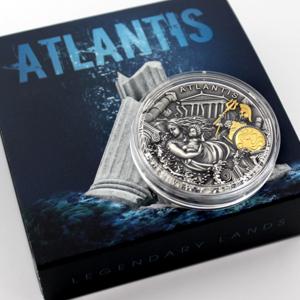


An article ran across my feed last week that made me super excited. I have linked it in my episode description and would love to know your thoughts. The title reads “Ancient Namibian stone holds key to future quantum computers”. This stone is a deep red crystal like in appearance and it is mined on the Atlantic coast of South West Africa. The chemical compound is Cu2O which is two parts copper and one part oxygen. Within the article it states “The research used a naturally mined cuprous oxide (Cu2O) gemstone from Namibia to produce Rydberg polaritons, the largest hybrid particles of light and matter ever created.”
Could this be the infamous “Mountain copper” or Orichalcum? I did a quick look on google maps and it does appear to have some elevations but I am not sure if those would be considered mountains. Either way, It is possible that this stone could be found in North west Africa too. Could it be that Orichalum is not really a metal but a gemstone? Nothing really suggests that it is metal other than it being called “Mountain Copper”.
For this episode, I will continue on with Herakles and talk about the more famous one. I will surprise you with a Herakles that you didn’t know as well as make connections with other figures throughout ancient cultures.
https://www.miragenews.com/ancient-namibian-stone-holds-key-to-future-765520/
Herakles is a very tough subject to approach and I will do my best for this episode and following episodes. The roman Hercules and the Greek Herakles ended up absorbing at least three different people into one story so detangling the storylines is tedious and difficult. I have not spent as much time as I would like making sure that I have all of the points correct. However, if I did that, I wouldn’t have an episode on Herakles for a few years.
For this episode, I will be breaking down the Pheonicians and the Pheonician Herakles. I will use the help of the following Authors:
Herotodus, an ancient Greek historian and geographer from the Greek city of Halicarnassus. Herodotus was the first writer to do systematic investigation of historical events. He is referred to as "The Father of History" and lived from 484 BCE to 425 BCE.
An article from Haaretz.com on the pool of Baal.
An article from greekcitytimes.com on the temple of Melqart found by Cadiz Spain
And a post from forumancientcoins.com on the coin history of Ba’al Melqart.
https://www.haaretz.com/science-and-health/MAGAZINE-monumental-structure-isn-t-phoenician-harbor-it-s-a-sacred-pool-of-baal-1.10679272
https://greekcitytimes.com/2021/12/22/temple-of-hercules-gaditanus-where-the-god-was-worshipped-by-the-ancient-greeks-and-romans-in-the-9th-century-bc-may-have-been-discovered-off-the-coast-of-spain/
https://www.forumancientcoins.com/board/index.php?PHPSESSID=vokpnb71pj27ol2v0i5tr08l5l&topic=25089.100
When I first read book 3 of Diodrus’s account of the Amazons and the Atlanteans, I went down the rabbit hole pretty deep on the Amazons. What a story. In many ways, I am still processing it. I love DC’s Wonder Woman as most women do. DC, borrowed heavily off of the myth of the Amazons. I would love to one day talk to you about some wild theories of mine regarding them. Remember, History is usually written by the conquerors.
What do you think about these myths? Do you think they could be true? For this episode, I will be using Diodorus’s account of the Libyan Amazons. He wrote a very complete history of Greek myths up to Alexander the great. He died around 120 BCE.
We have spent a lot of time on Plato's Atlantis and very little on Diodorus who has an equally mesmerizing account of this lost city. Diodorus gives a different account as to the birthplace of the Gods. Did you know that there were two different Zeuses? Find out more in this episode.
This episode was another one where I wanted to go one way but ended up going another. My question for this episode was “At what point was Athens powerful enough to be victorious against the Atlanteans?” and ended up with a brief overview of Crete and Minoan culture. This rich and intriguing culture deserves more than one episode and perhaps I will bring it up again. For now, this episode should make you feel a bit closer to an old legend and help you get a feel for the political climate a few generations before the Trojan war.
The focus was Athens of course and Theseus was the legendary king of Athens that turned it into the powerhouse that we are led to believe. It couldn’t be that 95% of all recovered ancient Greek texts were found in Athens and that there might be a slight cultural bias. As someone who has read the Iliad and the Odyssey, willingly I might add, it is surprising how little of a presence Athens had. The powerhouse of the day was Mycenae and the legendary king Agamemnon.
wikipedia
The Legend of King Minos from Makrigialos.com
https://www.makrigialos.com/?article=minos
Bronze Age Cyprus and Troy VI-VII from Livius.org
https://www.livius.org/articles/place/cyprus/
For this episode, we do a bit more of a deep dive into ancient mythology. I start by sharing the work of Herodotus and his writings on the Atlantes. We then learn how and why cows are sacred and end with how Egypt and the Greeks had a common ancestor. The focus of this episode is to place a bit more history behind these names and understand how the ancients thought.
Map according to Herodotus
This episode focuses on the history of War-chariots and we try to narrow down a time where Plato is talking about. How plausible is it that the Atlanteans launched a navel battle alone? How large was their army? All of these answers are in this episode.
We are coming to the conclusion of Plato's works. This episode focuses on the remaining details of the Plants and Animals of the land of Atlas. Then we transition into the war between Atlantis, Egypt, and Athens. Do you still think the war happened in 11,500 BCE?
For this episode, I will tell you about Poseidon’s Temple that was located next to the golden palace in the center island. I will discuss how it looked inside and out and you will learn about the ritual with the bull that ends with a sunken city that could be our Atlantis. Take this journey with me as we finish up Plato's works and become mini experts in our search.
https://realhistory.co/2019/06/01/helike-the-real-life-atlantis/
From the publisher's feed