
Sign up to save your podcasts
Or

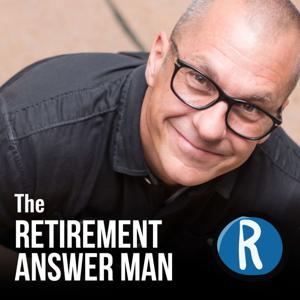
By Roger Whitney, CFP®, CIMA®, RMA, CPWA®


4.6
11971,197 ratings


The podcast currently has 876 episodes available.
The most played episodes among Podcast App listeners.
Social Security is one of the most important pieces of a retirement plan, but how does the system work, and will it remain financially viable for future retirees? Roger begins a five-week series on building your Social Security playbook by exploring the program’s history, funding structure, and current financial outlook. He also discusses potential paths to solvency, how he accounts for Social Security in retirement planning, and why building a resilient plan remains essential. OUTLINE OF THIS EPISODE OF THE RETIREMENT ANSWER MAN[00:00] Roger introduces a new five-week series designed to help you build your Social Security playbook.[01:37] The Retirement Answer Man YouTube channel is relaunching with weekly videos that complement the podcast. PRACTICAL PLANNING SEGMENT[02:35] Roger outlines the five-week Social Security series and explains what you need to understand to build your own playbook.[05:02] A brief history of Social Security provides context for how the program and its purpose have evolved.[08:18] Roger explains how today’s workers fund benefits for today’s retirees through payroll taxes.[11:58] Demographic changes and longer lifespans have caused benefit payments to exceed incoming payroll-tax revenue.[15:45] The 2026 Trustees Report projects what could happen in 2032 if Congress does not address Social Security’s funding shortfall.[21:50] Roger explores possible paths to solvency and explains how he accounts for Social Security when building a resilient retirement plan.LISTENER QUESTIONS[37:40] Will claiming a reduced benefit at age 62 also reduce a spouse’s future survivor benefit?[39:08] Should the decision to claim Social Security early account for the assets that can remain invested?[43:17] Is OpenSocialSecurity.com a useful tool for choosing a claiming strategy, and how can you respond to someone who wants to claim early because they fear Social Security will run out of money? SMART SPRINT[46:42] Claim your personal Social Security account at SSA.gov and consider contacting your federal representatives about addressing the program’s solvency.CLOSING THOUGHTS[48:28] A listener demonstrates how small, consistent efforts can compound into meaningful progress over time.[52:50] Allison reviews The Calamity Club by Kathryn Stockett, and Roger shares his current book recommendation.REFERENCESSocial Security AdministrationOpen Social SecuritySubmit a Question for RogerSign up for The NoodleRetirement Answer Man on YouTubeThe Calamity Club by Kathryn StockettThe Way of Excellence by Brad Stulberg

In this summer replay, Roger talks with Dr. Daniel Crosby about learning what to ignore in an age of information overload. They explore how to filter financial advice, align decisions with your values, and focus your attention on what truly matters to your finances and your life. OUTLINE OF THIS EPISODE OF THE RETIREMENT ANSWER MAN[00:00] Roger introduces this summer replay with Dr. Daniel Crosby and talks about his upcoming Social Security series. SUMMER REPLAY WITH DR DANIEL CROSBY[02:21] Roger revisits his conversation with Dr. Daniel Crosby about filtering out the noise competing for our attention.[09:18] Daniel explains how our spending can reveal whether our choices truly align with our stated values.[14:03] Roger and Daniel share four questions that can help determine whether information deserves our attention.CLOSING THOUGHTS[31:46] Roger looks ahead to the upcoming five-week Social Security series. REFERENCESThe Soul of Wealth by Dr. Daniel CrosbyDeep Work by Cal NewportThe Rational Optimist by Matt RidleySubmit a Question for RogerSign up for The Noodle
This Summer Replay revisits Roger’s 2018 conversation with Gretchen Rubin about the Four Tendencies and how understanding your personality can help you create a retirement plan and daily life that truly fit who you are. OUTLINE OF THIS EPISODE OF THE RETIREMENT ANSWER MAN(00:00) Roger introduces this Summer Replay conversation with Gretchen Rubin about creating a retirement plan that fits your personality. SUMMER REPLAY: CONVERSATION WITH GRETCHEN RUBIN(01:32) Gretchen explains the Four Tendencies and how each responds to expectations.(08:25) Learn how working with your natural tendency can help you achieve your goals.(09:39) Discover how the Four Tendencies can shape your transition into retirement.(16:53) Understanding the tendencies of your spouse, family members, and coworkers can improve communication and reduce conflict.CLOSING THOUGHTS (19:40) Roger shares his thoughts on relaunching YouTube in a way that fits him and the show. REFERENCESTake Gretchen Rubin’s Four Tendencies QuizThe Four Tendencies by Gretchen RubinSubmit a Question for RogerSign up for The Noodle
As part of Roger’s summer replay series, he revisits a conversation with Peter Lazaroff about the value of elegant simplicity in retirement investing. They discuss why more sophisticated strategies are not necessarily better, how added complexity can create unexpected risks, and why the money supporting your retirement should remain separate from any “play money” used to explore alternative investments. OUTLINE OF THIS EPISODE OF THE RETIREMENT ANSWER MAN(00:01) Roger introduces the benefits of simplifying your investments rather than continually adding new strategies.RERUN: KEEPING INVESTMENTS SIMPLE WITH PETER LAZAROFF(01:56) Roger and Peter discuss elegant simplicity, private investments, and why adding complexity to your portfolio may create more risk and work without meaningfully improving your retirement.(20:18) As private investments become more widely available, Peter shares a framework for deciding whether an investment truly belongs in your portfolio.(32:02) Roger and Peter discuss when added complexity may serve a purpose and why private investments should not be a core part of the strategy securing your retirement.CLOSING THOUGHTS(40:05) Roger connects elegant simplicity with the 80/20 rule and the theme of the upcoming Rock Retirement Club Roundup. REFERENCESLearn more about Peter LazaroffPre-Order Peter’s New Book: The Perfect Portfolio Submit a Question for RogerSign up for The Noodle Note: The opinions expressed are for informational purposes only and should not replace personalized advice from licensed professionals.
August is encore month on the Retirement Answer Man podcast, giving Roger an opportunity to step back, reflect, and revisit some of the show's most impactful conversations. This week, he replays his discussion with Tanya Nichols on retiring single—a topic that remains just as relevant today. Together, they explore the unique planning considerations for single retirees, including building a trusted support network, preparing for future care, creating a personal board of directors, balancing flexibility with financial security, and thinking intentionally about legacy. Roger closes the episode by sharing why he's spending August slowing down, revisiting favorite books, and using writing to gain greater clarity and conviction. OUTLINE OF THIS EPISODE OF THE RETIREMENT ANSWER MAN(00:00) Roger explains why August will feature encore episodes, shares his desire to slow down and reflect, and introduces this week's replay with Tanya Nichols on retiring single.RETIREMENT TOOLKIT FEATURING TANYA NICHOLS(02:18) Roger and Tanya discuss the unique planning considerations for single retirees, including future care planning, building a trusted support network, creating a personal board of directors, managing a household alone, balancing flexibility with financial security, and rethinking legacy.CLOSING THOUGHTs(22:47) Roger reflects on why he's spending August revisiting favorite books and encourages listeners to embrace writing and reflection as tools for reconnecting with their own convictions.REFERENCESRetire AgileThe Gospel of Wealth by Andrew Carnegie Mark Troutman's Money Mind Podcast Submit a Question for RogerSign up for The Noodle Note: The opinions expressed are for informational purposes only and should not replace personalized advice from licensed professionals.
The podcast currently has 876 episodes available.

1,993 Listeners

1,960 Listeners

448 Listeners

801 Listeners
458 Listeners
538 Listeners

756 Listeners

556 Listeners

699 Listeners

940 Listeners

837 Listeners
203 Listeners

596 Listeners

425 Listeners

1,069 Listeners