
Sign up to save your podcasts
Or



Based on Podcast App listening data
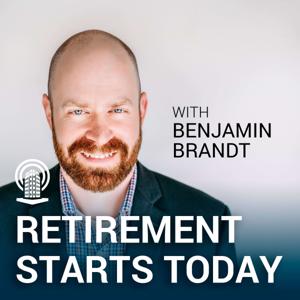
Welcome back to Retirement Starts Today! I have long been a proponent of saving in 401K's, but will this article in Bloomberg make me change my mind? That's the first article in the Retirement Headlines segment. We'll also check out an article about the coin shortage and another about how hobbies can improve your financial fitness. Couple that with some listener questions and you'll gain tons of financial insight. Listen in to continue expanding your financial knowledge.
Outline of This EpisodeThe 401K retirement savings plan was authorized in 1978 and began to take hold in the '80s. Many different employers take advantage of these types of retirement savings plans. Recently there was a Bloomberg article written that questioned whether the 401K still made sense to save in.
The author argued that today's low tax rates and the high fees of many 401K's make it an undesirable vessel for saving. He does make some interesting suggestions on ways to improve the 401K program.
Listen in to hear whether this article changed my opinion about 401Ks and what I think the best way to save for retirement is.
Why are coins so difficult to find during the pandemic?Have you noticed the coin shortage? If you have been just about anywhere lately you have probably seen the signs on various stores and establishments about the shortage of coins.
I have been wondering why there has been a coin shortage during the pandemic until recently. My hometown newspaper, the Bismarck Tribune, published an article that helped me understand why. Listen in if you are curious why there has been a shortage of coins in circulation lately.
How can your hobbies make you financially fit?I often tout the benefits of retiring to something rather than away from something. It's much healthier to keep active with hobbies in retirement, but your hobbies are more than a way to simply keep you busy.
Hobbies can actually help you lower your stress levels. Hobbies can actually get you out of a negative mindset and help you to break away from financial stress. Have you noticed that your hobbies help you reduce stress?
Will I have to pay a penalty for a Roth conversion?A listener is wondering about converting funds from a 401K to a Roth before the age of 59.5 He knows that he will have to pay taxes on the conversion but he was wondering whether he had to pay the 10% withdrawal penalty as well.
The good news is that you don't have to pay a penalty for converting funds into a Roth. However, it is important to have money set aside for the tax liability.
Do you have a question for me? I love answering listener questions on the show, so please send in your questions!
Resources & People MentionedSubscribe to Retirement Starts Today on
Apple Podcasts, Stitcher, TuneIn, Podbean, Player FM, iHeart, or Spotify
So you think you know a thing or two about Social Security? Let's put it to the test! I came across a Social Security Quiz from CNBC that I thought was fun, so I wanted to share it with you all. Stick around after the quiz to hear some listener questions. You'll learn how to compare the 4% rule to a dynamic withdrawal rate. You'll also learn about rolling over an IRA and the tax consequences. Let's have some fun today, so listen in to find out just how much you really know about Social Security.
Outline of This EpisodeSure, you are probably more educated about Social Security than the average Joe, but how much do you really know about Social Security? Take this Social Security quiz to test your knowledge. Let's see how much you really know. Can you get 8 out of 12 correct? You'll have to listen in to hear the answers.
I've mentioned in the past that by using the 4% rule, 96% of the time people will have more money left over than when they started. Pete is curious about how the dynamic withdrawal system compares to that 4% rule. The 4% rule is easy to assess because you can look backward in time to analyze the data. With a dynamic withdrawal system, the amount of money left at the end would depend on your sequence of returns. Since the dynamic withdrawal system looks forward rather than back, there isn't the same kind of data to assess. The difference between the two systems is that one is looking backward and the other is looking forward.
How to draw money from tax-deferred accounts and already taxed accountsOne listener has money in tax-deferred accounts as well as in accounts that have already been taxed. He is trying to decide the best way to withdraw money from these in retirement. My advice is to think about what you are trying to solve. Are you interested in paying taxes now or later? When would you prefer to have the least tax burden? It is also important to note that Roth conversions are very appealing right now.
Resources & People MentionedSubscribe to Retirement Starts Today on
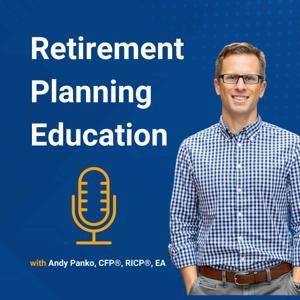
Apple Podcasts,Stitcher,TuneIn,Podbean,Player FM,iHeart, or SpotifyTax expert, Andy Panko, joins me today to discuss taxes in retirement. Andy and I know each other from his Taxes in Retirement Facebook group. I figured he would be the perfect person to have on the show to help me answer several questions about this topic. Retirement is one time in life when you can plan for taxes in the long-term, so you'll want to do as much tax planning as you can. Listen to hear the different types of tax questions that people have about retirement.
Outline of This EpisodeWouldn't it be easier to combine a husband and wife's assets and just take one RMD? If a husband and wife have separate 401K's and IRA's even though it would seem easier to take those RMD's together, they must be taken individually. The RMD is based on your age and each IRA and 401K has its own calculator.
One way to simplify the various retirement accounts is to take a rollover whenever you leave an employer-sponsored 401K. Remember the RMD penalty is steep, 50% of the required amount. So if you can find a way to simplify your retirement accounts then do it.
An IRMAA questionThe next question is actually from me. Normally I help my clients stay within the $174,000 income limit that IRMAA allows. But I recently discovered a case in which a client should go over that limit. Are there cases where people should deliberately go over the IRMAA limit?
If you already have a large pot of tax-deferred money it makes sense to pay those taxes now rather than later. We are experiencing all-time lows in tax rates and those rates are subject to change at any point. It may make sense to pay the $70 extra per month in Medicare costs rather than be stuck with a large tax bill later. Listen in to hear what the next IRMAA income cap is.
What are the rules of converting a Roth IRA?If you are already over 59.5 and the Roth account has been open more than 5 years then you are set. You can withdraw funds from that account without penalty. Any money that comes out is a qualified distribution. However, if you do not meet those requirements there could be a penalty. There are further rules and regulations surrounding Roth IRA's and they can be very confusing. To ensure that you don't encounter any problems with your Roth IRA, open one as soon as possible and fund it with a rollover.
How do RMD's work?When you save into your IRA you are saving into a tax-deferred account. The RMD is simply there to make sure you pay the income tax on that money. It's important to remember that the money isn't entirely yours, you need to split it with Uncle Sam. You want to maximize the amount that you get and minimize Uncle Sam's portion.
You and Uncle Sam see your IRA in different ways. You see that account as an asset and Uncle Sam sees it as (untaxed) income. It won't allow you to put it off paying those taxes indefinitely. The RMD is simply the government's way of ensuring that you pay the taxes owed on that money.
Press play to discover the answers to all of these listener questions and help realize all the tax planning opportunities that retirement brings.
Connect with Andy PankoSubscribe to Retirement Starts Today on
Apple Podcasts,Stitcher,TuneIn,Podbean,Player FM,iHeart, or Spotify
Have you ever wondered what I sound like on a different podcast? Well, today you get to find out. Since I am attempting a family road trip with 6 kids under 12, I can't personally be with you all this week. But I am excited to share with you a bit of my interview with my friend Grant Bledsoe on his podcast, Grow Money Business. Listen in to hear my thoughts on several hot retirement topics like the 4% rule, how to set up your income in retirement, and stay tuned until the end to hear people's biggest problem people in retirement.
Outline of This EpisodeMost people who are deep into retirement planning are familiar with the 4% rule. The idea that if you take 4% out of your retirement portfolio each year and never run out of money is simple and easy to remember. However, I argue that you need more flexibility than the 4% rule offers. In practice, our lives are too dynamic to take such a linear approach. Your income in retirement may end up changing several times and you need to have a retirement plan that can adjust to the changes that life brings.
How do you adjust your retirement planning strategies?So how do you adjust your retirement plan to account for all those life changes? You and I aren't the only ones with this question. Guyton is a retirement researcher who wanted to figure out another way of not running out of money in retirement. In a nutshell, Guyton's guardrails state that you can increase your spending when the market is good and decrease your income when the market takes a downturn. Guyton's guardrails start you off with a higher income at the beginning of retirement. This retirement model takes into account the more human side of retirement planning. Is your retirement plan flexible?
How do you set up your income in retirement?One of the biggest problems people have about retirement planning is, how do they get their money? I think it is important to stick with what you know. You probably aren't used to getting one lump sum of money each year, so that may be hard to adjust to. I like to set up distributions once a month. These distributions come from the boring side of your portfolio. I call it the mullet distribution strategy Just like that memorable 80's haircut your portfolio is business up front and a party in the back. I like to let the exciting stuff ride it out and party while taking from the business end of the portfolio. Listen in to hear more about the mullet distribution strategy.
What is the biggest thing that people get wrong in retirement planning?The number one problem that I see people having in retirement is that they are retiring away from something rather than towards something. Retirement shouldn't only be about telling your boss to kiss-off. It's important to find a meaningful way to spend your time. Find something to do with your newfound time freedom. Take a class, discover a hobby, or mentor someone. Remember you are jumping into a void. You'll need a way to find contentment outside of the things that are related to money. What will you do after you retire?
Resources & People MentionedSubscribe to Retirement Starts Today on
Apple Podcasts,Stitcher,TuneIn,Podbean,Player FM,iHeart, orSpotify
It's true, money can't buy happiness. But does how you choose to spend your money affect your happiness? Today we'll discuss one article that challenges that old adage. We'll also discuss a multifaceted question from a listener who just accepted an early retirement package. We'll help her consider whether to rollover funds into an IRA and figure out what to do with her target-date funds. Listen in to hear the answers to this question and to consider whether money could actually buy happiness.
Outline of This EpisodeAlthough money can't purchase a deep, meaningful feeling, how we choose to spend our money matters. What we spend our money on can contribute to our happiness. The Washington Post recently published an article that reported on a study about how money affects our happiness. Having more money can make life better for those who struggle to make ends meet. Once their basics are covered they may have money to spend on things they enjoy.
How to use your money to make you happyPeople who spend their money on activities and causes that are important to them are more satisfied with their lives. Rather than worrying about how to make more money, start using your money in ways that benefit your happiness. Let's think about how your money can buy you happiness. When you do have extra cash think about what you are trying to accomplish. What makes you happy? Don't buy just something to buy it. Instead, ask yourself whether spending money on a certain product will actually help you lead the type of lifestyle that you want to lead.
Should I roll over my 401K into an IRA after retirement?The short answer is yes. One reason to move from a 401K to an IRA in retirement is that you will have many more investment options in an IRA than a 401K. A 401K is designed to please the general public as they accumulate their wealth. An IRA can be tailored to your individual needs and offer many more options than a 401K. A properly diversified retirement portfolio will have much more diversity than a 401K can provide.
What to do about target-date funds in retirement?I love target-date funds for the accumulation period of life but they don't work as well in retirement. (If you haven't listened to the Set It and Forget It episode about target-date funds, bookmark it for later.) Target date funds are great for keeping your savings well balanced and adjusted according to your target retirement date. But in retirement, you'll want to be more surgical with your investing and slice away at your portfolio as needed.
Resources & People MentionedSubscribe to Retirement Starts Today on
Apple Podcasts,Stitcher,TuneIn,Podbean,Player FM,iHeart, or Spotify
Would you consider adding private equity funds to your 401K? We'll weight the pros and cons of this interesting idea as we explore the retirement headlines. No listener questions today, instead, this episode is all about the headlines. We have news about RMD's, private equity funds, tax strategy in retirement, and a shocking Fidelity study. Make sure to listen until the end to hear the surprise twist.
Outline of This EpisodeYou may have heard of private equity funds before but many people aren't exactly sure what they are. So before we explore this retirement headline I want to define the term. Private equity funds are an investment class of their own which consists of capital that isn't listed on the public exchange. Whereas public equity involves buying shares on the stock exchange, private equity funds invest directly in private companies.
Do Private equity funds belong in your 401K?Recently changes were made that opened the door to allow private equity funds into 401K plans. There are pros and cons to this idea. One positive is that they can provide added diversification to your investments. Another positive is the potential for increased returns.
However, there are 3 serious downsides you need to consider before adding private equity funds to your 401K.
Listen in to hear my opinion about private equity funds in your 401K.
Many Retirees forget to plan for taxes in the long termThe pandemic has caused many of us to reevaluate a number of things in our lives. One of those considerations was taxes. 59% of Americans surveyed said that they are more worried about taxes now than before. And 63% responded that it's more important to develop a tax strategy in retirement. I am a proponent of long-term tax strategy in retirement in conjunction with your yearly tax planning. My takeaway from this article is that it is important to get professional tax advice early on so that the taxman doesn't sneak up on you.
The importance of accurate reportingThe Wall Street Journal published an article that stated that ⅓ of investors over age 65 moved their money out of stocks. But the article published inaccurate data. Although the article was corrected, it took 3 days for the correction, an eternity in this time of instant news. Mistakes in reporting will inevitably happen which is why it is important to read news surrounding statistics and investing with a grain of salt. It's also important to be conscious of your own bias when reading news articles.
Resources & People MentionedSubscribe to Retirement Starts Today on
Apple Podcasts,Stitcher,TuneIn,Podbean,Player FM,iHeart, or Spotify
Retirement Manifesto blogger, Fritz Gilbert joins me today. Fritz was actually my very first guest on the show and is now my first repeat guest. I'm excited to have him join me again since he has recently retired. Fritz shares insight from his research in writing his blog and book but also from his first-hand knowledge of retirement. Listen in to our conversation as we discuss hidden challenges of retirement, how it feels to be newly retired, and how to get the most bang for your buck in retirement planning.
Outline of This EpisodeIn Fritz's book he mentions that the first cup of coffee he drank the day after he retired was the best cup of coffee he ever had in his life. Fritz was obsessed with trying to figure out what retirement would be like, but mentions that it is something that you can never understand until you actually do it. He compares it to marriage or having a child. One metaphor he uses is that it's like having a locked door in front of you your whole life and then you are finally given the key.
Did he always think about retirement?At 38 years old, I can't picture myself retired. So I ask Fritz, did he always picture retirement? His response is that he didn't really begin to think about retirement until his mid 40's and then when he was in his early 50's he began to get serious about retirement planning. When he started running the numbers he realized that retirement was a possibility sooner rather than later. He realized he could get out of the rat race early and enjoy more out of life. He thinks it is important to do some serious planning when you are within 5 years of retiring.
One thing that is important to consider is that many people get pushed into early retirement, so whether you are planning for it or not, it is important to be prepared financially. We both agree that whether you are thinking about retirement or you plan to work forever, it is important to save for it.
The hidden challenges of retirementOne of the chapters of his book discusses the hidden challenges of retirement. I was surprised that market volatility was not one of the challenges that he mentioned in that chapter. His reasoning is that market volatility is not a hidden challenge. It is to be expected and planned for. If you create a sound financial plan then market volatility won't worry you. The hidden challenges that he mentions are not financial and not as widely communicated as the financial aspects of retirement. Listen in to hear what some of those hidden challenges are.
Embrace your passion to create your ideal retirementIn his book, Fritz states that finding a focus or passion in retirement is so important. But what should someone do if they don't have a passion? How should they go about finding their passion? Should they do that before retirement or can they wait until after they have already retired? Fritz answers that finding your passion is a matter of being curious and maintaining a willingness to learn. Discover how Fritz found the passion he never knew he had and how you can find your passion to create an ideal retirement by listening to this chat.
Resources & People MentionedSubscribe to Retirement Starts Today on
Apple Podcasts,Stitcher,TuneIn,Podbean,Player FM,iHeart, or Spotify
I've got an exciting episode planned for you today. This episode will focus solely on listener questions but as an added twist I've asked my friend Grant Bledsoe over at Grow Money Business Podcast to join me in answering these questions. I think you'll benefit from Grant's expertise as a Registered Investment Advisor and enjoy hearing his perspective as he helps me answer your questions. Listen in to hear our two points of view about rebalancing in difficult markets, quarterly tax payments, and choosing between a lump sum or monthly payments.
Outline of This EpisodeWith all of the market turmoil over the past few months, many of us are left scratching our heads when the time comes to rebalance. How are we supposed to rebalance when the stock market is so volatile?
Grant sees 2 sides to this thought equation. One side contains the math and the other part has the psychology. The math side will tell you that you are better off investing all your cash at once. But, psychologically, not many of us are prepared to jump all in today's turbulent market. Grant suggests waiting or using the dollar cost average to divide up the cash over the next year or two. He stresses that you should choose a reasonable method and stick with it. Consistency is key, especially in times of uncertainty. Listen in to hear my response to this timely question.
How should REITs be classified?Do you have REITs in your portfolio? One listener wonders whether they should be classified as a stock or a bond. While Grant thinks they act more like a stock, I tend to put them in the same category as bonds, but really, they are neither. Most REIT funds will invest in big commercial real estate, such as hospitals and shopping malls. They behave in their own way since the returns are driven by rents, interest rates, and appreciation. Having REITs in your 'other' category is one way to diversify your portfolio. Discover the risks of owning REITs as well as the difference between traded and non traded REITs on this episode of Retirement Starts Today.
Should you send in quarterly tax payments when doing a Roth conversion early in the year?One listener asks if you do a Roth conversion early in the year should you be making quarterly tax payments to the IRS? This is a great question to ask your tax professional. If you do your own taxes then the IRS website is the resource to help you with the logistics. Basically, if you have 90-100% of the payments prepaid you won't incur a penalty. This is why it is important to understand what your tax burden will be.
A $200,000 lump sum or $1500 a month payments for life?To people that love math problems, deciding whether to take a lump-sum or monthly payments may seem as easy as plugging in the numbers. But there are more factors to consider beyond the math. You should examine what your retirement plan looks like. Will you be receiving Social Security payments? Think about your risk tolerance and your longevity as well. Grant helps me answer this common listener question, find out his take on it by pressing play.
Connect with Grant BledsoeSubscribe to Retirement Starts Today on
Apple Podcasts,Stitcher,TuneIn,Podbean,Player FM,iHeart, or Spotify
Can you imagine this nightmare? You're newly retired and then a global pandemic comes along and threatens financial markets all over the world leaving you bankrupt in only two weeks. Listen to this cautionary tale in the retirement headlines segment of our show today. But what is more important than hearing the frightening scenario is learning what you can do to prevent yourself from taking this kind of risk.
Outline of This EpisodeHow could someone go from retired to bankrupt in two weeks? This Wall Street Journal article notes that one investor reentered the stock market after the 2008 financial crisis by investing solely in leveraged exchange-traded notes (ETN's). ETN's are similar to ETF's but they don't own the assets they track. The investor's ETN's were earning 18% a year until the bottom dropped out. It's important to remember that highly profitable investments come with added risk.
How to protect yourself from riskHearing a story like that may cause you to think twice about risk, but to stay on top of inflation we have to take on some risk. Instead of running from risk, we must understand it. If you want to maintain your purchasing power your money has to grow beyond inflation. You can do this safely by creating a war chest of cash and bonds that has several years' worth of income. Your war chest will allow you to ride out the market dips so that your portfolio has time to recover. Listen in to learn what else you can do to protect yourself from risk.
Few use the CARES Act to tap into their retirement savingsIf you've listened to this show in the past few months you have heard the different retirement benefits of the CARES Act. One of the provisions waives RMD's for 2020. Another allows individuals younger than 59.5 to access their retirement portfolio without penalty. According to this Investment News article, few people have taken advantage of this aspect of the new law. Even those who did dip into their retirement savings didn't typically take too much out. This leaves me cautiously optimistic about people's retirement plans.
Should you cover non-discretionary expenses with your guaranteed income?Mike has an interesting question. He asks if his essential expenses should be covered by Social Security or other guaranteed income. I think it's a smart idea to pair non-discretionary expenses with your known income. Although I like Mike's idea, it's not what I do.
I create a budget based on expenses then subtract guaranteed income. The deficit is what needs to be covered by the retirement portfolio. Find out more by listening to this episode of Retirement Starts Today.
Resources & People MentionedSubscribe to Retirement Starts Today on
Apple Podcasts,Stitcher,TuneIn,Podbean,Player FM,iHeart, or Spotify
Do you know what you would do if your employer offered you an early retirement package? Before you rush into an answer, I have 4 questions for you to consider. Given the present economic climate, this is an important consideration. On this episode, we'll also talk about survivorship bias and what you can learn from it. Then I answer a listener question about alternative minimum tax and donor-advised funds. Lastly, we'll discuss 3 different retirement headlines. Don't miss out if you have been considering taking an early retirement package from your employer.
Outline of This EpisodeSurvivorship bias can often leave us dead wrong. We often look to the successes to try and learn how to succeed ourselves. This is often because we don't see the failures. But in failure is where we can find the lessons to be learned. For every Amazon or Apple, there are hundreds of potential ideas that didn't pan out. Next time you plan for success look to the failures to guide you. Listen in to hear an interesting story of how to learn from failure.
Will a donor-advised fund be excluded from alternative minimum tax calculations?I don't often get questions about alternative minimum tax (AMT) so I am excited to share some insight on this one. According to the American Endowment Foundation, there are 5 primary tax benefits to becoming a donor with a donor-advised fund (DAF).
I recently read an article from CNBC about employee buyouts. Delta airlines is offering a buyout package to its employees since under the conditions of their federal aid package they cannot layoff or cut the pay of any workers until September 30. Those who qualify for early retirement would receive up to 26 weeks of severance, 2 years of medical coverage, and a year of travel benefits. Given the current economic climate, Delta may not be the only large company we see offering buyouts in the coming months.
Tips to consider if you are offered an early retirement packageHave you considered what you would do if your employer offered you an early retirement package? I chose to highlight the article about Delta's buyouts to get you to think a bit about what to do if you are offered early retirement. Here are 4 questions to ask yourself if your job offers you an early retirement package.
Listen in to hear what you should consider when offered an early retirement package and to learn why you might not want to give too much notice of your retirement.
Resources & People MentionedSubscribe to Retirement Starts Today on
Apple Podcasts,Stitcher,TuneIn,Podbean,Player FM,iHeart, or Spotify
From the publisher's feed
Ranked by our users in the last 21 days
1,984 Listeners

1,963 Listeners
447 Listeners
799 Listeners
1,302 Listeners
459 Listeners
753 Listeners
552 Listeners
700 Listeners
448 Listeners
832 Listeners
200 Listeners
593 Listeners

425 Listeners
1,070 Listeners