
Sign up to save your podcasts
Or

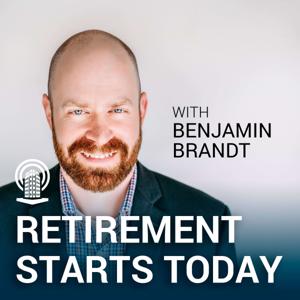


Based on Podcast App listening data
Are you an eternal optimist or a prudent pessimist? It may seem like the stock market is the eternal optimist. Have you seen the headline that Uber laid off 3,000 employees? If you have, you may be wondering why their stock jumped up. Learn why this is a common occurrence by listening in. Then on the other side of the coin, you'll learn how you can be a prudent pessimist after reading the latest Social Security headlines. But first, let's get to a listener question from Jennifer.
Outline of This EpisodeWe may be hearing more and more questions regarding lump sum pension payments in the coming months due to dropping interest rates. These lowered interest rates make lump sum pension payouts more attractive. Jennifer is considering rolling over her lump sum pension payment into a Roth IRA. I would advise against this due to the high tax rate. You don't want to have that heavy tax bill all at at the same time. Instead of rolling everything into a Roth IRA, a partial Roth conversion could be a better option. Listen in to hear why.
Why does the stock market favor bad news?I recently came across an article on Tech Crunch which stated that Uber laid off 3000 employees. However, the stock market's reaction to the tightening of Uber's purse strings was positive. Many people wonder why news like Uber's often leads to increased stock values. This is because the stock market looks forward in time, months, or even years ahead. While the news is bad for the company and the employees right now, this fiscal responsibility may pay off in the long run, or so investors think.
Should you worry about the latest Social Security news?While the stock market may seem overly optimistic, any news surrounding Social Security seems pessimistic. How about this headline from Investment News? Pandemic Will Deplete Social Security Trust Fund, is that scary enough for you? Of course, like all headlines, this one is meant to grab your attention. The truth is, legislators will probably figure this out in the end. The pandemic will not last forever and soon people will get back to work and their Social Security tax contributions will be collected once again. As long as people are paying into Social Security, this fund will not run out of money.
If you want to be a pessimist, be a prudent pessimist the right wayIf you still believe that Social Security is doomed, don't let that cause you to change your retirement plans. If you think that claiming your benefit early at age 62 will be the best way to make use of your contribution, think again. If you really want to be the prudent pessimist you'll wait all the way until age 70 so that you receive a 32% increase on your benefit. Listen in to hear why waiting to take Social Security at age 70 is the best choice for the prudent pessimist.
Resources & People MentionedSubscribe to Retirement Starts Today on
Apple Podcasts,Stitcher,TuneIn,Podbean,Player FM,iHeart, orSpotify
Thanks for participating in the office hours that we've held for the past several weeks. Due to that question and answer period, we have exhausted all of our listener questions. But don't worry we have some interesting articles to discuss on today's episode. Listen in to learn more about the CARES Act, the lack of inflation, market positions from the big, and why so many people plan to return to work after being laid off.
Outline of This EpisodeThe CARES Act was recently passed to provide more options to those affected by the COVID situation. This landmark legislation presents savvy with a few financial planning opportunities. The CARES Act has allowed for money saved in employer-sponsored retirement plans to become more readily available. Up to $100,000 can be moved to a less restrictive plan. Another opportunity is if you have already taken your yearly RMD. If you have done so, you have the opportunity to return the money to the account and let it keep growing tax-deferred.
Be careful when taking a coronavirus distributionOne more benefit from the CARES Act is that if you are under 59 ½ and you take income from a distribution over 3 years without the 10% IRS penalty. This was written into the law to help people economically that have been affected by Coronavirus in some way. If you feel that you qualify to take money out of your IRA it is important to make sure that you only take the amount that you need so that you don't end up with a hefty tax bill at the end of the year.
Where's the inflation?When the government pumps trillions of dollars into the economy all of the economic textbooks say that there should be inflation. But nothing much is happening. Travel and apparel fell 0.4%, gas dropped 20%, and food costs went up 2.6%. While these numbers are interesting, what do they mean for the average investor? We can learn a lesson from this. Every time we think the market is going to zig, it zags. Remember this when you try to insulate your portfolio from a specific type of risk. There is always a different risk that you weren't anticipating. The market will always throw you a curveball. Listen in to hear what you can plan for all kinds of risks in retirement.
80% of laid-off workers believe they will return to their old jobs soonAs the country slowly begins to return to normal after the quarantine over the past couple of months many laid-off workers are optimistic. I find myself sharing their optimistic, albeit cautiously. Typically fewer than half of laid-off workers expect to return to their previous jobs but this time there is hope that things could be different. Only time will tell if this will be the case.
Resources & People MentionedSubscribe to Retirement Starts Today on
Apple Podcasts,Stitcher,TuneIn,Podbean,Player FM,iHeart, orSpotify
Have you been listening to what has been going on in the commodities markets lately? People around the world were shocked when oil prices went negative in the month of May. I didn't even know that this could happen and I'm a financial professional! This interesting turn of events led me to seek the expertise of someone more knowledgable in the oil commodities sector. This is why I've asked oil expert, Dan Eberhart, to come on the show today and explain how the price of oil could drop into negative numbers. We'll also talk about the importance of diversification and not only in your portfolio.
Outline of This EpisodeThe price of oil is actually based on a futures contract. That contract is set for delivery at a certain date and these contracts roll over each month. Oil is traded by commodities brokers who don't actually take possession of the product. Most people who want to trade in oil don't actually want to take over the physical delivery of this commodity. What happened in May is that when it was time for the traders to exit and hand over the delivery of the product no one wanted to take it due to the lack of available storage facilities. This caused a panic in the market and sent the price into negative numbers. Listen in to find out if this could happen again.
Should we start thinking about the city we may end up in?We all know about the importance of diversification in our portfolios, but have you ever thought about the economical drivers of the town that you live in or want to live in during retirement. If that place's sole economy lies in one market you may be taking on extra risk. Before purchasing a home in retirement think about what kind of economy drives the place. North Dakota and Texas have strong ties to oil. Wyoming and Pennsylvania are large producers of natural gas. And Silicon Valley and the tech economy drive much of California. If you do live in one of these places it is a good idea to pay even more attention to the diversification of your portfolio so it is not tied to one of these sectors.
Should we avoid master limited partnerships?Retirees are often looking to have some income-producing investments in their portfolios. Until recently, master limited partnerships (MLPs) seemed like a great way to provide income and diversification. There were some MLPs that were paying between 7-9% annual yield on investments. Since these have been more volatile should we steer away from MLPs in the future? Dan recommends approaching these with caution. They will be less volatile than oil and gas stocks but more volatile than they have been in the past.
What are the long-term implications for the oil industry?With more people working from home, the increasing popularity of electric cars, and the green movement it seems like the future of the oil industry could be bleak. Dan mentions that it's not practical to flip a switch to change our energy from oil and gas to renewables. He is confident that the free market will help solve this puzzle. As those in the sector already know, the oil and gas industry has always followed a boom and bust cycle. The demand for oil is down right now but it will begin to increase over the next 18-24 months.
Has the wild swing in oil changed your diversification strategy?
Resources & People MentionedSubscribe to Retirement Starts Today on
Apple Podcasts,Stitcher,TuneIn,Podbean,Player FM,iHeart, or SpotifyOne of the effects of the Coronavirus has been a number of cancelled plans. Have you had to cancel plans due to the pandemic? Today we'll explore how to get a refund. I'll also share a CNBC article that I use as a cautionary tale. Then we'll look at some cosmic opportunities that may arise post-pandemic. And lastly, we'll listen to a listener question about home mortgages in retirement. We've got an action-packed episode, so press play now.
Outline of This EpisodeA recent CNBC article came across my feed right before I started recording and I wanted to share it with you all as a precaution. The headline states that investors are betting that 2 of the hardest-hit sectors, airlines and energy, have hit their bottoms. ETF's including these 2 sectors have increased in the past few weeks. I want to warn you away from betting on the large companies with household names that have taken a beating recently. Just because a company has suffered huge losses over the past few months doesn't necessarily mean that it will eventually bounce back to its all-time highs. These may seem like huge opportunities but taking risks with your retirement money is a frightening gamble right now.
How to get a refund from your cancelled plans59 million people have been forced to cancel their plans due to the Coronavirus pandemic. But shockingly, only ⅓ of them expect to get a 100% refund. Have you tried to get a refund from your cancelled plans? If you have and haven't been successful try these strategies. Start by calling the merchant. But before you call to ask for a refund develop a plan. Consider whether you are looking for a full refund or if you'll settle for a credit. You may yield better results by being willing to take a credit. If the merchant doesn't cooperate try calling your credit card company.
The cosmic opportunity post-CoronaI'm always looking for positive news coming out of the pandemic. Recently I read an article written by Professor Scott Galloway. If you haven't heard of Professor Galloway, he is a fun follow on Twitter @ProfGalloway. His article showcases the idea that we can use this downtime that Corona has offered to invest in ourselves. By investing in ourselves and our relationships we are really investing in our future. So ask yourself how can you use this time to improve yourself?
A home mortgage questionTo pay off the house or to retain a mortgage? That is a common question folks have as they get closer to retirement. There really is no correct answer. The answer is different for every person and it depends on your own personal goals. On the one hand, no one ever laments their paid-off house. And no mortgage means less risk. But… With interest rates being so low you could see much more growth by leaving those funds in the market. Where do you stand on this subject?
Resources & People MentionedSubscribe to Retirement Starts Today on
Apple Podcasts,Stitcher,TuneIn,Podbean,Player FM,iHeart, or Spotify
With the recent market volatility, people are looking for financial advisors now more than ever. But how can you choose a financial advisor that's right for you? I created a PDF with 8 questions to ask a financial advisor when you are looking. I'll discuss these 8 questions as well as answer 2 listener questions and discuss the retirement headlines on this episode of Retirement Starts Today.
Outline of This EpisodeOften in a marriage, the Social Security benefits vary greatly between the 2 partners. One may be much larger than the other. So how should you determine which one to take when? Many people don't realize that if one spouse has a very small or even no Social Security benefit they are actually entitled to half of their spouse's benefit. Find out how to decide what to do if one of the Social Security benefits is much smaller than the other by listening to this episode of Retirement Starts Today. You can also check out one of the Social Security calculators on the Social Security website.
How much bond diversity should you have in your bond portfolio?I often call the 60-40 portfolio the swiss army knife of portfolios for a good reason. The 60% in stocks is for growth and the 40% in bonds is for short term spending. A listener asks how diversified their bond portfolio should be. I think that just like your stock portfolio, your bond portfolio should be as diversified as possible. It should include short term, intermediate-term, and long term bonds. These types of bonds have different levels of volatility.
8 Questions to ask a financial advisorWith the recent market volatility, people are looking for financial advisors now more than ever. But how do you find the right financial advisor to meet your needs? I created a free PDF of questions you can ask potential financial advisor candidates. Included are these questions:
Download the PDF to see the full questions and my answers.
A Fortune 100 company plans to have 50% of their staff work from home permanentlyThis pandemic has shown that many people can do their jobs from a home office. One company plans to continue this trend in the long term by having 50% of their staff work from home. This is a huge benefit for the company and will save them a lot of money on commercial real estate, but the potential benefits for employees looking for flexibility is even greater. Many people looking to retire are really looking for time flexibility. If your company offered you a semi-retirement option where you could work from home and have flexible hours would you take it? How many more working years would that afford you? This may be the wave of the future.
Resources & People MentionedSubscribe to Retirement Starts Today on
Apple Podcasts,Stitcher,TuneIn,Podbean,Player FM,iHeart, or Spotify
On this episode of Retirement Starts Today I want to share with you the retirement questions I received through my Friday Office Hours. Office Hours is an online space where I am available to answer any financial questions that come to mind. Over the past 2 weeks, we've had a great turn out with about 50 people joining each session. If you want to come to Office Hours make sure you are signed up for my Every Day is Saturday newsletter to get the invite. The next Office Hours session is on Friday, May 1 at 10:30 am CDT. Listen in to hear these retirement questions from my Office Hours session on April 24, 2020.
Outline of This EpisodeThe PBGC or the Pension Benefit Guarantee Corporation is a private insurance company that insures pensions. This corporation is a safety net for private pension plans. Many people are choosing to cash out their pensions in favor of a lump sum. The lump-sum payments are artificially high right now due to low interest rates which and this fact has put extra stress on the PBGC. Whether or not the PBGC remains solvent should not affect your decision to take a lump sum or to keep your pension.
How you should decide whether to take a lump-sum payment or a pensionThe solvency of the PBGC shouldn't play much of a role in your decision to take a lump sum or an annuity, instead, you should first consider other factors. First, consider your lifestyle and then do the math, after you have done both of these things then you can factor in whether you think the PBGC will remain solvent. You should really think about how much flexibility you need with your money. If you need a lot of flexibility the lump sum is the right choice for you. But if you are risk-averse then the annuity is your best bet. You'll also want to factor in your own longevity and how much you value simplicity. Next, you'll want to factor in the math. Listen in to hear all the factors that you should consider when making this decision.
How will the new money being pumped into the economy affect inflation?We have been printing money for years and that should have led to inflation but it hasn't yet. This also should have led to high gold prices but that hasn't happened either. None of the things are happening the way the textbooks told us they would. This may be due to technological advances leading to deflation or it could be because the dollar is the reserve currency of the world. Learn how to outgrow inflation by listening in.
A strategy for tax diversificationIn an ideal world, you would start your retirement with 30% of your assets in a Roth IRA, 30% in tax-deferred accounts like IRAs, and the last 30% in a brokerage account. This would give you a lot of flexibility to live life how you really want. Unfortunately, most of us don't have our assets perfectly distributed so we need to consider how we can diversify our assets before we reach age 72. It's important to figure out what your RMD's will be and planning your taxes. Find out about tax diversification and the answers to many other questions on this episode of Retirement Starts Today.
Connect with Benjamin BrandtSubscribe to Retirement Starts Today on
Apple Podcasts,Stitcher,TuneIn,Podbean,Player FM,iHeart, or Spotify
You may have gotten your stimulus check last week, but whether or not you have received the funds you may still have stimulus check questions. On this episode, I'll answer several common questions surrounding the stimulus checks. I'll also highlight some positive news for most of us. Positive news is hard to find today so let's relish it a bit! Listen in to get your stimulus check questions answered and bask in the glow of some happy news.
Outline of This EpisodeWhen I see good news I want to spread it far and wide, especially during these trying times. Since there has been less traffic on the roads there have been fewer car accidents which, in turn, has led to fewer car insurance claims. Many insurance companies have decided to pass their savings back to their policyholders. Listen in to hear whether your insurance company is one of those that are offering discounts or refunds.
We all have stimulus check questionsThe Senate passed the stimulus package bill in record time and the treasury started rolling out the money even faster. Our government wanted to get the money in the hands of the citizens as soon as possible. We all have questions about the stimulus checks that we will be receiving soon. So, I thought I would do some digging since there is so much information out there it can be difficult to determine what is true and what is false.
Will this stimulus check eat into my 2020 tax refund?One of the biggest questions people have is whether this federal benefit is simply an advance on next year's tax refund. Thankfully I was able to find a reliable source that could help me answer this question. The answer is no. This is considered a special tax credit and is simply an addition to anything you might have otherwise expected.
Will this money count toward my taxable income for 2020?The stimulus funds aren't considered income so the money is not taxable and it won't affect your tax bracket for 2020. Some people also wonder whether they will still get a stimulus check if they don't normally receive tax refunds. Eligibility for a refund check is determined by your 2018 or 2019 AGI. If you look at line 8b on your 2018 1040 or line 7 on the 2019 tax return you will see your AGI. You can check the status of your refund on the IRS website. Did you receive your stimulus check this past week? Listen in to hear more questions about the stimulus money answered.
Resources & People MentionedSubscribe to Retirement Starts Today on
Apple Podcasts,Stitcher,TuneIn,Podbean,Player FM,iHeart, or Spotify
We all know that scammers are out there looking for the next opportunity to prey on their targets. The Coronavirus isn't just a worldwide pandemic, for scammers its an opportunity to try new scams. On this episode of Retirement Starts Today you'll learn how to spot a Coronavirus scam, stimulus check scam, and a grandparent scam. I also have lots of links to resources for you to learn more about this topic so be sure to scroll down to the bottom of this page when you're done listening.
Outline of This EpisodeSince we are all experiencing heightened stress and worry during this pandemic I thought I would try something new. On Friday 4/17 at 10:30 am CDT I'm holding office hours so that we can chat and discuss all things retirement. I've had many attendees during my recent webinars, but they aren't very interactive. During this Zoom meeting, you'll be able to ask questions. If you are nearing retirement and have worries about the virus, the markets, or anything retirement-related this will a great place to bring your questions. So please join me here on Friday 4/17 at 10:30 CDT
The Coronavirus is a great time for scammersAnytime is a good time for scammers, but people are even more susceptible to scams during times of stress. The Coronavirus has brought stress upon us all so scammers are having a field day. A plethora of new scams have sprung up during the past few months. These scams range the gamut from apps with viruses, phishing emails, Robo phone calls, and so many others. Listen in to hear how to identify a Coronavirus scam and find out what you can do to protect yourself and your loved ones from these tricksters.
Stimulus payment scamsThe thought of $1200 per person has scammers ready to pounce. Your stimulus check is not in the mail. Paper checks won't arrive until May. If you receive a paper check for more than you were expecting it's probably a scam. Remember the IRS call, text, or email you to ask you for your bank account information. If you need information about your stimulus check go directly to their website irs.gov/coronavirus.
Grandparent scams with a new Coronavirus twistGrandma, I'm sick in the hospital, please wire money right away! Grandpa, I'm stuck overseas and can't get home, please send me money! These old scams can pull at the heartstrings even more in these challenging times. You are probably savvy enough not to fall for these types of tricks but maybe someone you know and love could be easy prey. Do them a favor and educate them about these tactics. Listen in to hear about all the different types of Coronavirus scams and what you can do to help the ones you love not fall for them.
Resources & People MentionedSubscribe to Retirement Starts Today on
Apple Podcasts,Stitcher,TuneIn,Podbean,Player FM,iHeart, or Spotify
Everyone is talking about buying the dip, but what is the best way to do that? I'm not an investment advisor, but since the stock market has taken a serious downturn, now may be a good time to consider your overall investment strategy. That's why I've invited investing expert, Lawrence Hamtil, co-founder of Fortune Financial Advisors, to chat with me about the ups and downs of investing after the recent stock market collapse. Listen in on this discussion to hear the pros and cons of buying the dip, investment timelines when buying today, and exceptional industries that have stood the tests of time.
Outline of This EpisodeNow that the stock market has dropped everyone is talking about buying the dip, but how should an individual investor approach this? Lawrence recommends sticking to your investment strategy. You need to have an idea of how much of your portfolio you want committed to a particular sector. Once you establish that then it is important to stay within the confines of your plan and rebalance as necessary. He points out that sometimes rebalancing can be a challenge, but the best time to rebalance is when your portfolio is off-kilter. Stay within your target allocations rather than focusing on the daily moves of the market.
What kind of timeline should you consider when investing today?Investing in today's market can be a bit nerve-wracking, but in the long-term, it can really pay off. The stocks of many large corporations are down 20-80%. But that just means that you are getting more for your money now than just a few months ago. The investment that you make today won't immediately bear fruit and it could take up to 5-10 years to really pay off. Rather than trying to pick individual winners and losers a better strategy is to make broad sector bets.
How much research should you do before investing?It is important to understand how a company drives revenue before you purchase their stock. Some important questions to ask are: How do they compete? How does the company react to crises? And how does buying that stock fit into your individual thesis? Don't just study the company before you invest. It is important to study the behavior of the company while you hold the investment. Listen in to hear what else you can consider when investing in individual stocks.
What do exceptional industries have in common?We all know that many companies' valuations have taken a nosedive, but there are some exceptions to note. Tobacco, food, and defense are some examples of industries that are insulated. Some of these are historically undervalued or underappreciated. Think about what can be learned from this downturn. How will this affect your investment strategy going forward? Keep your eyes open to see which companies survive and why.
Connect with Lawrence HamtilSubscribe to Retirement Starts Today on
Apple Podcasts,Stitcher,TuneIn,Podbean,Player FM,iHeart, or Spotify
With the Coronavirus situation bringing so much change into our lives, I decided to bring an abrupt conclusion to the Living Off Your Savings series. Instead, today, we'll talk about some of the changes that the Coronavirus legislation will bring. Now that President Trump signed the Coronavirus stimulus package into law I wanted to give you an idea of what you can expect from this landmark legislation. Join me on this episode of Retirement Starts Today to discover how the Coronavirus stimulus package affects you.
Outline of This EpisodeI wanted to make sure to fulfill my promise of having a webinar to cap off the Living Off Your Savings series especially since the series was shorter than expected. You'll have 2 options to join the webinar. Option A takes place on April 2 at 10:30 AM CDT. Option B is April 2 at 2 PM CDT. This webinar will cover how to turn your accumulated savings into monthly retirement income. We'll cover case studies, portfolio breakdowns, and how to have an amazing retirement even in the midst of a market meltdown! Sign up soon since we are already at ⅔ capacity.
What you should know about the Coronavirus stimulus packageHave you filed your taxes yet? If you haven't, pay attention. If your income was over $150,000 in 2018, but under in 2019 then file immediately. If your income was under $150,000 in 2018 but over in 2019 and you haven't filed then wait to file. The stimulus checks that are coming are based on your AGI in 2018 or 2019 if you have already filed.
Those stimulus checks will be $1200 per adult and $500 for each dependent child. If you filed jointly the income threshold is $150,000. The stimulus checks will be directly deposited into the bank account in which you received your 2018 return. Let's hope that it's still open!
How a retiree can put their stimulus check to good useIf you are losing sleep at night about the stock market then take this money and put it where it is needed most -- put it in a savings account, checking account, or stash the cash under the mattress. Do whatever will help you sleep at night. If you aren't having trouble sleeping and you know where your income is coming from, think about making a Roth IRA contribution. If you have the stomach for it and don't need it for a while, consider using that check for long-term investments. Listen in to hear a great way to teach the grandkids about the power of compound interest.
How else could the Coronavirus stimulus package affect your retirementListen in to hear all the details on how this landmark stimulus package could affect you and your retirement.
Resources & People MentionedSubscribe to Retirement Starts Today on
Apple Podcasts,Stitcher,TuneIn,Podbean,Player FM,iHeart, or Spotify
From the publisher's feed
Ranked by our users in the last 21 days

1,984 Listeners

1,963 Listeners

447 Listeners
799 Listeners
1,302 Listeners

459 Listeners
753 Listeners

552 Listeners
700 Listeners

448 Listeners

832 Listeners

200 Listeners

593 Listeners
425 Listeners

1,070 Listeners