
Sign up to save your podcasts
Or

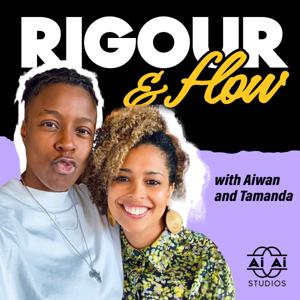


What was it like to grow up Black in Belfast during the Troubles? In Northern Ireland in the late 1990s, religious identity could carry life-or-death consequences: Are you Catholic or Protestant? Which neighbourhood are you from? Which school do you attend?
To prepare Tamanda for her schooling in Belfast in 1997 - for what was supposed to be a three-month stay that turned into three years - her parents sat her down with anxious tongue-in-cheek advice: "If anyone asks if you're Catholic or Protestant, don't say you're either. Tell them you're Muslim."
Entering Hunterhouse College - a mixed-faith school perched right on the boundary line where red, white and blue painted curbs ended and the Catholic neighbourhood began across the traffic lights - she became the only student of colour in the entire school. In a divided society that ran on instantly categorising people based on religions and political allegiance, nobody had a script for where a Black mixed-race girl belonged.
In this episode, Aiwan and Tamanda explore the realities of living through the end of a 30-year sectarian conflict and the beginnings of the peace process.
Tamanda recalls the surreal, triggering experience of watching Derry Girls and realising parts of it had been filmed inside her actual secondary school in Finaghy - from Sister Michael’s office - the exact room where Tamanda was once hauled in front of the headmistress and suspended - to the dining hall where she ate lunch every day.
But behind the teenage friendships, romances and school exchanges lay the realities of sectarian division: painted kerbs, flags, bomb alerts, military presence and classmates whose families had experienced devastating violence.
Together, we explore how conflict shapes identity and belonging, the contradictions of Britain's colonial narratives, and how trauma travels across generations.
As Northern Ireland confronts contemporary racism and anti-immigrant violence, we ask: What happens when peacebuilding addresses one form of division but fails to equip future generations to understand others?
🎙️In this episode:
🎧 Listen wherever you get your podcasts.
🎥 Watch the full episode on YouTube: https://youtu.be/U7muZw2ZIsw
🔁 Share with someone who wants to hear the untold stories of growing up during The Troubles
☕ Support the show: https://buymeacoffee.com/rigourandflow
Please rate, review and subscribe for weekly episodes.
Connect with us on:
This is an AiAi Studios Production
©AiAi Studios 2025
Hosted on Acast. See acast.com/privacy for more information.
When pop star Tyla identified herself as “Coloured,” it broke the internet.
For many Black Americans, the word carries the brutal legacy of Jim Crow segregation. In Britain, it’s an outdated, offensive label once used broadly for non-white people. But in Southern Africa, Coloured is a distinct, recognised cultural and ethnic identity with centuries of its own history, heritage and complex positioning within colonial and apartheid hierarchies.
Same word. Completely different histories.
In this episode of Rigour & Flow, Aiwan and Tamanda untangle what happens when American racial frameworks are projected onto the rest of the world. Aiwan recalls the fierce rejection of “Coloured” in Black British communities, while Tamanda breaks down why being mixed-race does not automatically make someone Coloured in Southern Africa.
The conversation then arrives at the University of the Western Cape (UWC). Established under apartheid specifically for Coloured students, UWC rebelled against its founding purpose to become an intellectual home of the anti-apartheid left. For Tamanda, arriving as a postdoctoral fellow brought epistemic relief and then she met the university registration form: Black African. White. Indian. Coloured. Other.
Which box does a mixed-race Motswana-British academic tick? And what happens when a system designed to tackle historical injustice ends up erasing the very complexities it tries to measure?
🎙️In this episode:
The question here is:
As we try to make sense of the ‘nonsense’ surrounding race, can we acknowledge that race is constructed while still measuring the inequality created through it?
🎧 Listen wherever you get your podcasts.
🎥 Watch the full episode on YouTube: https://youtu.be/toVHNuj6yk8
☕ Support the show: https://buymeacoffee.com/rigourandflow
🔁 If this conversation resonated with you, please share it with a friend
Please rate, review and subscribe for weekly episodes.
Connect with us on:
This is an AiAi Studios Production
©AiAi Studios 2025
Hosted on Acast. See acast.com/privacy for more information.
Philanthropy literally means “the love of humanity.” So why does Aiwan hear something else? The “love of control”?
Last week on Rigour & Flow, we explored the deeply personal side of charity. Aiwan grew up receiving it. Tamanda was socialised to give it. And what surfaced between us in the studio were visceral class differences.
This week, we follow the money. After spending the past year immersed in understanding the UK philanthropic sector through our work with The Phoenix Way, we unpack a system whose roots stretch back well over a thousand years.
The conversation spans from the rise of medieval monasteries and their dissolution under Henry VIII, to the Victorian Poor Laws and the emergence of the modern "Philanthropic Industrial Complex."
Throughout this history, one question keeps resurfacing: Who is deemed “deserving” of help, and who gets to decide? Because those judgments haven’t disappeared. They’ve simply changed hands with the passage of time.
From the transformative power of endowments - perpetual wealth vs. short-term grants - to the uncomfortable origins of institutional fortunes tied to colonialism, slavery and empire, we confront the fundamental issue: If the source of your wealth is exploitation, can “charity” ever truly be considered repair?
This episode moves beyond “giving” toward solidarity - or even reparations. Because true liberation isn't asking for a seat at someone else’s table; it’s building and owning the table ourselves.
🎙️In this episode:
🎧 Listen wherever you get your podcasts
🎥 Watch the full episode on YouTube: https://youtu.be/MSmhkETEhcM
☕ Want to support the show? https://buymeacoffee.com/rigourandflow
🔁 Share with someone working in the sector or exploring wealth justice and agency.
CORRECTION: During this episode, Tamanda incorrectly state that charities regulated by the Charity Commission are required to be “apolitical”. Charities can campaign and engage in political activity where this advances their charitable purposes, but must remain independent of party politics. We’ve kept the discussion in the episode, but explain why this distinction matters - and how it affects the wider argument about the policing of political activity - in our full correction and accompanying resources on Substack: https://rigourandflow.substack.com/
Please rate, review and subscribe for weekly episodes.
Connect with us on:
This is an AiAi Studios Production
©AiAi Studios 2025
Hosted on Acast. See acast.com/privacy for more information.
When it comes to charity, are you the person who gives or the person who receives? That’s where this episode started. Then we got to the question we actually needed to answer: “Who is charity ultimately for?”
We thought we were sitting down to have a routine conversation about charitable giving. Instead, we uncovered just how starkly race, class and colonial legacies have conditioned us to understand what the word charity even means.
Aiwan grew up on a London council estate, receiving free school meals, bright orange uniform vouchers, and jumble-sale clothes. Charity caused her to carry the shame of being poor. Tamanda grew up in Botswana, attended private school and was socialised into “community service” and “charitable giving” as an unquestioned obligation of privilege. Something to be patted on the back for, and document on her CV as a marker of her “good deeds”
One learned charity from the position of the recipient; the other from the position of the giver. And when those two experiences collide in the studio, the conversation gets unexpectedly raw.
From the "single story" of African famine imagery, to the ethics of megachurch tithing and being awarded a certificate for "holding the sickest child" on a school trip to Gambia, we unpack the stories society tells about who deserves help and who gets to provide it.
This is not a neat conversation. It's one about privilege, shame, faith, race, class, white and maybe even Black saviourism! We speak on inequality, community, aid and the psychological need to see ourselves as people who “do good”, while making others feel bad.
In this episode:
🎧 Listen wherever you get your podcasts
🎥 Watch the full episode on YouTube: https://youtu.be/VdQFiJz2VUY
🔁 Share this episode with someone thinking about inequality, classicism, charity and philanthropy
☕ Support the show: https://buymeacoffee.com/rigourandflow
This is Part One of a two-part series interrogating the ethics, psychology and structural politics of charity and philanthropy.
Please rate, review and subscribe for weekly episodes.
Connect with us on:
This is an AiAi Studios Production
©AiAi Studios 2025
Hosted on Acast. See acast.com/privacy for more information.
Is "Kidfluencing" the new child labour?
Last week we explored the UK’s social media ban and whether kids should really consume social media at current rates. This week we dive into the multi-million dollar world of family vlogging and explore a different question: Should kids really be producing cute content on the very platforms they are now banned from? And what does it mean that some kids are now the primary source of income for their families?
We love kid content. Like The Kabs Family and their funny roasts. But when a funny family video becomes a channel, a brand and then a media empire, is the child still just being a child? Or are they now an employee?
In this episode, we follow the journey from cute family vlogs to the darker world of Bad Influence and the fall of Ruby Franke and the Eight Passengers vlog. And Aiwan takes the argument a step up: Are we witnessing a technological version of Victorian child labour? If factories have become family homes and industrial machinery has been replaced by the attention economy, who is safeguarding the children?
🎙️In this episode:
🎧 Listen wherever you get your podcasts
🎥 Watch the full episode on YouTube: https://youtu.be/8SftUZvJtN4
🔁 Share this episode with someone thinking about childhood, parenting or the creator economy
☕ Support the show: https://buymeacoffee.com/rigourandflow
Please rate, review and subscribe for weekly episodes.
Connect with us on:
This is an AiAi Studios Production
©AiAi Studios 2025
Hosted on Acast. See acast.com/privacy for more information.
“Stare at a wall.” That was one teenager’s viral answer to the UK social media ban. Beneath it is a darker reality of algorithmic harm and fragmented minds.
Rigour & Flow is back for Season 6. And we’re decoding the under-16 ban, moving from a "nanny state" debate about over-regulation to some heartbreaking data and evidence from the Molly Rose Foundation. From the "moral panics" of the past to the algorithmic harm of the present, we explore why today’s digital landscape is qualitatively different from the world we grew up with in the 90s - the world of Nokia Snake and MSN Messenger.
Drawing on her years as a teacher, Aiwan shares her firsthand account of the exact moment social media entered the classroom, turning childhood playgrounds and learning spaces into sites of permanent surveillance and fragmented attention. In turn, Tamanda reveals the devastating story and stat that changed her mind, as she moved from scepticism of a "nanny state" ban to advocating for the safeguarding of young minds after reviewing the crucial work of the Molly Rose Foundation.
Together we ask: Isn’t "staring at a wall" actually the radical act of rebellion we all need? And if adults struggle to resist technologies designed to keep us scrolling, what are we really asking of our children?
🎙️ In this episode:
🎧 Listen wherever you get your podcasts
🎥 Watch the full episode on YouTube: https://youtu.be/v3cg-G2SNOQ
🔁 Share with an adult assessing the impact of the UK social media ban for under-16s
☕ Support the show: https://buymeacoffee.com/rigourandflow
Please rate, review and subscribe for weekly episodes.
Connect with us on:
This is an AiAi Studios Production
©AiAi Studios 2025
Hosted on Acast. See acast.com/privacy for more information.
"It's almost comical that you can stand on African land and say it's yours. You're an immigrant, mate."
In this special Living the Archive re-release for International Day of the World's Indigenous Peoples, we revisit one of the defining conversations from Rigour & Flow's first year: ‘The Land Is Still Not Ours!’.
Living the Archive isn't about replaying old conversations. It's about returning to them in light of everything we've learned since.
When we first recorded this episode, it sparked a powerful debate about colonialism, Indigenous land rights, and the enduring legacy of empire. Returning to it now, we're struck not only by how much of that conversation remains unfinished, but by how urgently it speaks to the present. As climate change accelerates, debates around reparations, land ownership and Indigenous sovereignty have only become more urgent.
Inspired by the documentary The Battle for Laikipia, this episode explores the generations-long conflict between the Indigenous Samburu people of Kenya and fourth-generation white settlers. Through the lens of the film, Aiwan and Tamanda connect questions of colonialism, land ownership, climate justice and belonging with their own family histories in Botswana and the UK.
🎙️In this episode:
Whether you're listening for the first time or returning to this conversation, this episode is an invitation to think differently about the stories we inherit. Because before we can decide who owns the land, we first have to ask where the story begins.
🎧 Listen wherever you get your podcasts
🎥 Watch the full episode on YouTube: https://youtu.be/KLF0TuaoYDc
🔁 Share with someone thinking about land, reparations and change
☕ Want to support the show? Buy us a coffee: https://buymeacoffee.com/rigourandflow
Please rate, review and subscribe for weekly episodes.
Connect with us on:
This is an AiAi Studios Production
©AiAi Studios 2025
Hosted on Acast. See acast.com/privacy for more information.
In the next instalment of our Feedwarmer series, we’re sharing the creators and conversations currently shaping our own thinking. This week’s recommendation is a thoughtful, intellectually rich and deeply personal exploration of faith, power and knowledge.
As Tamanda begins her postdoctoral research at the University of the Western Cape's Desmond Tutu Centre for Religion and Social Justice, she introduces Aiwan to Belonging: Gender, Sex & Spirituality - a new podcast hosted by Reverend Mpho Tutu van Furth and Professor Marceline Tutu van Furth.
In this episode, they sit down with leading South African womanist theologian, Professor Sarojini Nadar, to explore embodied knowledge, biblical interpretation and what happens when religious traditions are used to justify oppression.
The conversation resonates deeply with Aiwan’s own experiences growing up around fundamentalist Christianity. This opens up an honest discussion about the lasting impact of religious conditioning before exploring one of Tamanda’s more recent encounters with the Bible as a tool of oppression.
🎙️In this episode:
We are playing the first half of this powerful original conversation. If it leaves you wanting more - and we think it will - we highly encourage you to listen to the full episode of Belonging: Gender, Sex & Spirituality.
🎧 Listen wherever you get your podcasts
🎥 Watch the full episode on YouTube: https://youtu.be/ZeEq_GXV_vA
🔁 Share this with someone whose body knew something long before they had the words to explain it.
☕ Want to support the show? Buy us a coffee: https://buymeacoffee.com/rigourandflow
Please rate, review and subscribe for weekly episodes.
Connect with us on:
This is an AiAi Studios Production
©AiAi Studios 2025
Hosted on Acast. See acast.com/privacy for more information.
"I had a group of people actually instigate a panic attack behind the decks... and I still had to finish the set. That was the closest I came to quitting."
Where are all the Black women composers? It's a simple question but one that reveals just how invisible some of the most important creative work in film, television and audio storytelling still is.
In this special feedwarmer episode of Rigour & Flow, Aiwan sits down with award-winning turntablist, composer and sound designer NikNak for a conversation about creativity, resilience and the hidden power of sound.
Drawing on their collaboration on Audible's Hidden Histories, they explore what it means to build sonic worlds that audiences feel but rarely notice, why sound is one of the most overlooked elements of storytelling, and how Black women continue to navigate industries that struggle to imagine them beyond familiar creative roles.
NikNak reflects on surviving racism in the music industry - including the moment she experienced a panic attack behind the decks - and why staying true to her artistic voice became an act of resistance rather than compromise.
🎙️In this episode:
Whether you're a filmmaker, musician, podcaster, creative practitioner or simply curious about the invisible craft behind the stories we love, this conversation offers a rare glimpse into the people shaping what we hear - and why that matters.
About NikNak:
Award-winning turntablist, DJ, music artist/producer, composer and an afrofuturistic, sonic storyteller. A pioneering figure in the UK turntablism scene, NikNak became the first Black turntablist to win the Oram Award in 2020, and the Pop‑Experimental Award at the ZKM Gigahertz Festival in 2025. Her work pushes the boundaries of what turntables can do, merging live improvisation with immersive electronic production.
🎧 Listen wherever you get your podcasts
🎥 Watch the full episode on YouTube: https://youtu.be/YK1nwrMjSX4
📸 Photo credit for artwork for this Feedwarmer: Sophie Jouvenaar
🔁 Share with someone who'll never hear films, music or podcasts in quite the same way again
☕ Want to support the show? Buy us a coffee: https://buymeacoffee.com/rigourandflow
Please rate, review and subscribe for weekly episodes.
Connect with us on:
This is an AiAi Studios Production
©AiAi Studios 2025
Hosted on Acast. See acast.com/privacy for more information.
"Who gets to decide who you are? And why do systems still shape who you are in the present?"
In the first episode of our new Living the Archive series, we are revisiting one of the most significant and debated conversations from Rigour & Flow’s first year: "Are Mixed Race People Properly Black?"
A year ago, this topic sparked a viral "storm." Our trailer reached hundreds of thousands, generating intense debate across social media and prompting hundreds of messages from listeners sharing their own experiences of identity, belonging and race across our social channels.
But archives shouldn’t gather dust. As we enter Year 2, we are looking back to ask: What has changed, and what do these discussions mean now?
Ahead of Nelson Mandela Day, Tamanda reflects on a recent return to South Africa for her postdoctoral research. An unexpected encounter with apartheid-era racial categories on university diversity monitoring forms reopened questions that have followed her since childhood.
🎙️In this episode:
Whether you're discovering this conversation for the first time or returning to it with us, this episode is an invitation to think differently about race; not as a fixed category but as an evolving story.
🎧 Listen wherever you get your podcasts
🎥 Watch the full episode on YouTube: https://youtu.be/wMHY_t9Z8e0
🔁 Share with someone thinking about systems, power and change
☕ Want to support the show? Buy us a coffee: https://buymeacoffee.com/rigourandflow
👓 Subscribe for more critical deep-dives into history, storytelling and public scholarship
Please rate, review and subscribe for weekly episodes.
Connect with us on:
This is an AiAi Studios Production
©AiAi Studios 2025
Hosted on Acast. See acast.com/privacy for more information.
From the publisher's feed
The show where business meets love, and culture meets critique. We’re Aiwan and Tamanda, two Black women with 20 years each in entertainment, research, and social justice. We’re also a married…
We'll talk about the realities of running a business, making creative work that matters, and navigating research with integrity.
What You’ll Find:
If you’re navigating business, love, and the messiness of life while trying to do meaningful work, you’re in the right place.
Episodes drop every Tuesday!
Hosted on Acast. See acast.com/privacy for more information.