
Sign up to save your podcasts
Or



How do we move beyond stories of victimhood to stories of Black ingenuity and resistance?
In this special summer Feedwarmer, Aiwan and Tamanda explore the power of audio storytelling to reshape how we understand Black history and agency.
Aiwan pulls back the curtain on her experience producing "Escape the Underground Railroad" - the official companion podcast to Barry Jenkins’ acclaimed Amazon Prime series. And dives deep into another experience of producing the Small Axe companion podcast, to reflect on what happens when podcasting, film and historical research come together to centre Black agency rather than passive victimhood.
From a surreal first meeting with Sir Steve McQueen to being "whipped into shape" by legendary executive producer Isis Thompson, Aiwan shares the steep learning curve of bringing cinematic sound design to the podcasting world.
This is a conversation about who gets to write the story, the "silly games" systems play, the responsibility of telling history well, and why we must give people their flowers while they can still smell them.
🎙️In this episode:
Subscribe to our YouTube channel for more critical deep-dives into history, storytelling and public scholarship.
☕ Want to support the show? Buy us a coffee: https://buymeacoffee.com/rigourandflow
🎧 Listen wherever you get your podcasts
🎥 Watch the full episode on YouTube: https://youtu.be/mFX1ccU9ErA
🔁 Share with someone thinking about systems, power and change
Please rate, review and subscribe for weekly episodes.
Connect with us on:
This is an AiAi Studios Production
©AiAi Studios 2025
Hosted on Acast. See acast.com/privacy for more information.
It happened to us right here at Rigour & Flow. One of the stories we needed to tell turned out to be the one the digital world was least willing to amplify.
In this Unfinished Business episode, Aiwan and Tamanda revisit some of the most powerful conversations from our Women's History Month series and ask:
What happens when the systems designed to protect people end up protecting power instead?
Across marriage, the law, academia and technology, this episode explores the uncomfortable reality that the systems built to protect people can sometimes end up protecting power instead.
From debates around sex work and marital rape to the courage of survivors like Gisèle Pelicot and the disturbing rise of online "rape academies", we explore the cultures of silence that continue to shape how violence against women is understood, discussed and challenged.
We also reflect on a fascinating conversation with Washington-based researcher Olga Naidenko about academic authority, survivor knowledge and the ethics of citation. Should influential thinkers still be treated as intellectual authorities when serious allegations of harm surround them? And who gets to decide whose voices deserve to be amplified?
Along the way, we unpack the unexpected suppression of our own content by social media algorithms and what that reveals about technology, safety and the unintended consequences of platform moderation.
🎙️ In this episode:
🎧 Listen wherever you get your podcasts
🎥 Watch the full episode on YouTube: https://youtu.be/CbNxG3UeFx8
🔁 Share this with someone who is tired of being dictated to by the algorithm and is ready for rigorous conversations.
☕ Support the show: https://buymeacoffee.com/rigourandflow
Please rate, review and subscribe for weekly episodes.
Connect with us on:
This is an AiAi Studios Production
©AiAi Studios 2025
Hosted on Acast. See acast.com/privacy for more information.
What happens when your white father, who’s your ultimate hero, has not lived your Black reality? In part two of our fatherhood series, Tamanda shares the intensely personal story of her father.
For years, he was the "encyclopaedic hero" of a "Disney-esque" childhood on a school campus in Botswana. But as the Tamanda of 11 years in age moved to the North of Ireland, the "invisible privilege" of good fatherhood met a complicated reality: a white father who, despite his love and intellectual depth, had not lived the realities of racism his Black-mixed daughter was now navigating.
In this episode, we explore the "secondary wounding" that occurs when the person who represents safety is experientially removed from the systemic oppression you face - simply on account of race or ethnicity.
We discuss the decades-long journey of taking a parent off their pedestal to meet the man beneath the hero you held so high in your heart and mind. And the humbling "once a man, twice a child" transition that emerges, when carer roles are eventually reversed, and your parent enters their twilight years.
With our lens fixed on mixed race family dynamics, we ask: Can we keep loving someone deeply while acknowledging the ways they were unequipped to see us? How do we find our own validation when it isn’t just naturally mirrored back?
🎙️ In this episode:
🎧 Listen wherever you get your podcasts
🎥 Watch the full episode on YouTube: https://youtu.be/NJ1NRqh1CXA
🔁 Share this with someone who is navigating the "different kind of hard" that comes with taking a parent off their pedestal and learning to love the human beneath.
☕ Support the show: https://buymeacoffee.com/rigourandflow
Please rate, review and subscribe for weekly episodes.
Connect with us on:
This is an AiAi Studios Production
©AiAi Studios 2025
Hosted on Acast. See acast.com/privacy for more information.
In this deeply personal episode, Aiwan shares the "three goes" she had at fatherhood and why all of them failed her.
From a biological father known only through fragments, to a step-parenting experience defined by high control religion and mushrooms growing out of tower-block walls, Aiwan and Tamanda peel back the layers of what happens when the "protector" figure is absent, abusive or conditional.
Together we dive into the complex world of Nigerian Pentecostal "Spiritual Fathers" and the moment a violent sermon in 2014 forced Aiwan to choose between her faith and her humanity. As she left home and chose homelessness to keep her self-worth intact.
But this isn't just a story of absence. It’s a conversation about reclaiming the "missing story" and redefining what it means to be meaningfully present as a parent. Aiwan describes the father she never had, the caregiver dads she imagines for the next generation, and how her own experiences shape her own thinking about raising a child herself one day.
🎙️ In this episode:
🎥 Watch the full episode on YouTube: https://youtu.be/6dRWI1PWnBc
🎧 Listen wherever you get your podcasts
🔁 Share this episode with someone healing their inner child or a father figure who understands that presence is the greatest gift of all.
☕ Support the show: https://buymeacoffee.com/rigourandflow
Please rate, review and subscribe for weekly episodes.
Connect with us on:
This is an AiAi Studios Production
©AiAi Studios 2025
Hosted on Acast. See acast.com/privacy for more information.
DEI is under attack. But what exactly is being defended? We take on the three letters that have become everything from a flagellant workplace promise, to an impotent political punchline.
We get into Reform UK’s proposal to scrap the Equality Act, the backlash against diversity, equity and inclusion, and the class conversation that keeps being used as a wedge instead of a route to solidarity.
Tamanda explains what the Equality Act and Public Sector Equality Duty actually do, why the Bank of England internship controversy became such a political flashpoint, and why class and socioeconomic status need to be part of any serious conversation about equality.
Aiwan reflects on the creative industries after BLM, the realities of being treated like a quota, and why marginalised creatives do not need endless “emerging talent” schemes as much as they need infrastructure, commissioning, fair pay and real backing.
Together, we ask: What happened to DEI? How did radical struggles for justice become corporate diversity awards, PR statements, bureaucratic documents and business-case language? And can DEI ever be reclaimed if it cannot talk honestly about race, class and power?
🎙️ In this episode:
🎧 Listen wherever you get your podcasts
🎥 Watch the full episode on YouTube: https://youtu.be/Y2-pmW9WwV0
☕ Support the show: https://buymeacoffee.com/rigourandflow
🔁 Share this episode with someone ready to move beyond the "business case" and toward actual justice
Please rate, review and subscribe for weekly episodes.
Connect with us on:
This is an AiAi Studios Production
©AiAi Studios 2025
Hosted on Acast. See acast.com/privacy for more information.
Why do we let 'experts' from outside our communities decide what we need? Today, we’re talking about the politics of help, the myth of the 'hard to reach' and why genuinely community-led research has the potential to solve global crises like suicide and inequality.
From Black maternal health to Black men’s mental health, in this episode Aiwan and Tamanda explore what could happen when money, power and agency move directly into the hands of communities. When communities set the agenda, choose the questions, shape the process and decide what counts as change.
Aiwan reflects on entering Tamanda’s research world, being baffled by its language and slowly realising that terms like “participatory action research”, “community engagement” and “co-production” point to a pivotal question: who gets to decide what matters and what change is needed?
From there, the episode moves into the anger that surfaces when communities recognise how often they have been studied, used, consulted, underpaid and discarded. Aiwan speaks honestly about the fury of realising how often “help” is designed without the people it is meant to serve. Tamanda unpacks why this anger is not a distraction from the research, but part of the process of knowledge production.
Together, they explore the difference between research that extracts and research that heals.
🎙️ In this episode:
🎧 Listen wherever you get your podcasts
🎥 Watch the full episode on YouTube: https://youtu.be/7f5vKA-hYNQ
🔁 Share with someone who believes communities should lead the change that affects them
☕ Support the show: https://buymeacoffee.com/rigourandflow
Please rate, review and subscribe for weekly episodes.
Connect with us on:
This is an AiAi Studios Production
©AiAi Studios 2025
Hosted on Acast. See acast.com/privacy for more information.
What happens when the oppressed become the oppressor?
In this episode, taking inspiration from an article by Dr Yvon Guest, Aiwan and Tamanda pull back the curtain on the concept of the "wounded activist”, a phenomenon where unresolved trauma drives social movements, often leading to the very oppression, hierarchy and exclusion we claim to fight.
From the "untouchable founder" to "brand activism", we reflect on justice spaces we’ve been in that felt like fundamentalist religions and explore how to understand and break the cycles of trauma-driven bad behaviour.
Aiwan shares about entering Black queer activist spaces with hope, only to find new rules, "pronoun politics" and exclusion. From vegan safe spaces to the murky line of “no hierarchy”, she traces the ways community can quickly turn into conformity.
Tamanda brings the conversation inward, questioning her own journey in antiracism and Diversity, Equity and Inclusion (DEI) work. She takes a vulnerable look at her historical need for recognition from white institutions and the identity collapse that happened when she realised no movement could heal her wounds. That she had to do that work herself.
🎙️ In this episode:
Note: This is not an anti-activism episode. It is a conversation about what happens when people carry their wounds into spaces that promise belonging, then reproduce the same control, hierarchy and judgement we were all trying to escape.
🎧 Listen wherever you get your podcasts
🎥 Watch the full episode on YouTube: https://youtu.be/tmYBzXCMWYo
🔁 Share with someone who has ever loved a movement, left a movement or been hurt by one
☕ Support the show: https://buymeacoffee.com/rigourandflow
#RigourAndFlow #WoundedActivist #PsychologyOfActivism #ActivistBurnout #SocialJusticeAnalysis #DEICritique #BlackQueerThought #CriticalThinking #TraumaInCommunity #SocialMovements
Please rate, review and subscribe for weekly episodes.
Connect with us on:
This is an AiAi Studios Production
©AiAi Studios 2025
Hosted on Acast. See acast.com/privacy for more information.
Have you ever looked at your own neighbourhood and felt like you weren’t actually meant to be there?
In this episode, Aiwan and Tamanda reveal that it’s not in your head. It’s in the blueprints. We dive into the sobering reality that communities are increasingly under surveillance, including how the Metropolitan Police are far more directly involved in the architecture of homes, schools and playgrounds than we might ever imagine.
With memories of the Meridian Estate and the "prison-like" Ferrier Estate, Aiwan explains how our built environment is designed to infantilise us, and why the antidote is teaching the "structure of local politics" from a young age. We explore the possibility of training the next generation of architects directly from the community, so the people designing estates are the same people who call them home. The same people who live, breathe and feel their realities.
Finally, we move beyond the critique of hostile architecture to ask how we take our power back from these structures of control. Tamanda brings in Amahra Spence’s work on "architectures of abolition" - plus learnings from some recent work with The Ubele Initiative - which remind us that safety isn't simply the absence and prevention of crime, but the presence of care, dignity and collective agency.
From Northumberland Park and the shadows of Tottenham Hotspur Stadium to the sterile playgrounds of modern social housing, this is a conversation about race, class and the radical act of reclaiming our agency through architecture that reflects that its communities have been heard.
🎙️ In this episode:
🎧 Listen wherever you get your podcasts
🎥 Watch the full episode on YouTube: https://youtu.be/rsv0XzIrFp0
🔁 Share with someone thinking about housing, class or the places that shaped them
☕ Support the show: https://buymeacoffee.com/rigourandflow
#RigourAndFlow #SpatialJustice #UrbanDesign #PoliceByDesign #LondonHousing #SocialHousing #Architecture #AmahraSpence
Please rate, review and subscribe for weekly episodes.
Connect with us on:
This is an AiAi Studios Production
©AiAi Studios 2025
Hosted on Acast. See acast.com/privacy for more information.
Is body positivity dead in the wake of Ozempic? We're exploring how weight loss culture and the 'heroin chic' aesthetic are making a high-speed comeback under the guise of medical wellness.
☕ Support the show: www.buymeacoffee.com/rigourandflow
With this being Mental Health Awareness week, we couldn’t think of a better time to put the spotlight on one of the most overlooked mental health conditions in the Black community. As just six months ago, body positivity felt like a permanent cultural shift and today, the landscape has changed. People are "shrinking" overnight.
In response, Aiwan and Tamanda interrogate the radical shift in weight loss culture in 2026. From the medicalisation of weight loss using a “miracle” drug to the normalisation of "shrinking," we unpack how quickly the conversation has shifted back toward unhealthy control. We deep dive into how so called “wellness” language - and even medical terminology - is being used to mask aesthetic pressure and the impact of diet culture on Black body image.
Drawing on her personal experience with eating disorders and recovery, Tamanda reflects on the unsettling "seduction" of these new drugs, and what this shift means for a generation of teenagers watching people dwindle in real-time.
🎙️ In this episode:
Subscribe for more critical deep-dives into power, class and the Black experience.
🎧 Listen wherever you get your podcasts
🎥 Watch the full episode on YouTube: https://youtu.be/g-yUKuuTSCU
🔁 Share with someone thinking about what “health” and “beauty” mean today.
Please rate, review and subscribe for weekly episodes.
Connect with us on:
This is an AiAi Studios Production
©AiAi Studios 2025
Hosted on Acast. See acast.com/privacy for more information.
92% of England is off-limits to the public. And 50% of the land is owned by 1% of the population. Most people in Britain believe they are free. But are we really?
Episode description and notes: In this episode of Rigour & Flow, we move between the personal and the structural to interrogate land ownership in Britain today. We start with the film 'Our Land' and its exploration of the politics of walking, before widening the lens to connect British land estates to global colonial histories.
Touching on the Right to Roam movement and contrasting rights of passage in Scotland vs. England, we ask: what does it mean to live in a country where you are legally a trespasser on most of the land?
This conversation is not just about countryside access or a "nice walk". It is about who is allowed to belong, how colonial logic reorganised itself into modern property law, and how community wealth building is being systematically stalled.
🎙️ In this episode:
Subscribe for more critical deep-dives into power, class and the Black experience.
🎧 Listen wherever you get your podcasts
🎥 Watch the full episode on YouTube: https://youtu.be/SQUH9YPO6Lo
🔁 Share with someone thinking about land, freedom or belonging
☕ Support the show: https://buymeacoffee.com/rigourandflow
Please rate, review and subscribe for weekly episodes.
Connect with us on:
This is an AiAi Studios Production
©AiAi Studios 2025
Hosted on Acast. See acast.com/privacy for more information.
From the publisher's feed
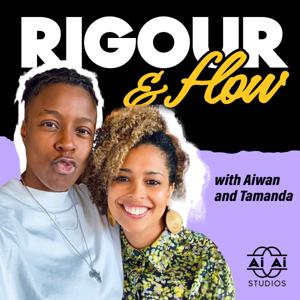
The show where business meets love, and culture meets critique. We’re Aiwan and Tamanda, two Black women with 20 years each in entertainment, research, and social justice. We’re also a married…
We'll talk about the realities of running a business, making creative work that matters, and navigating research with integrity.
What You’ll Find:
If you’re navigating business, love, and the messiness of life while trying to do meaningful work, you’re in the right place.
Episodes drop every Tuesday!
Hosted on Acast. See acast.com/privacy for more information.